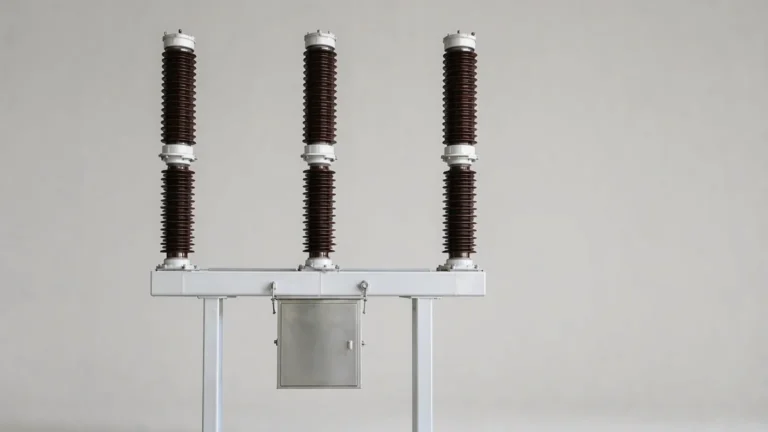
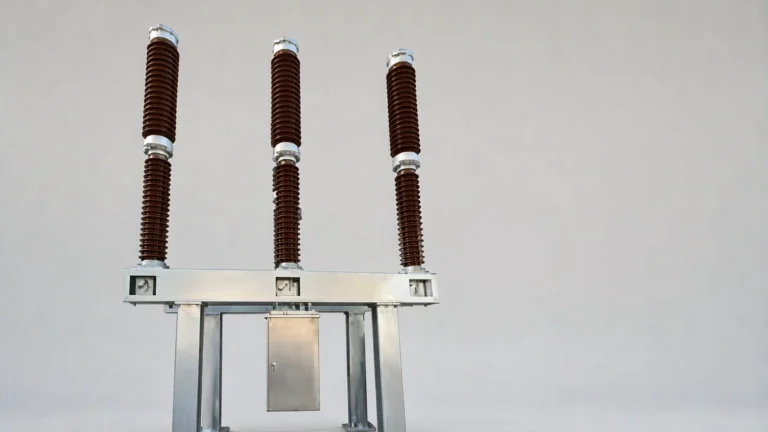
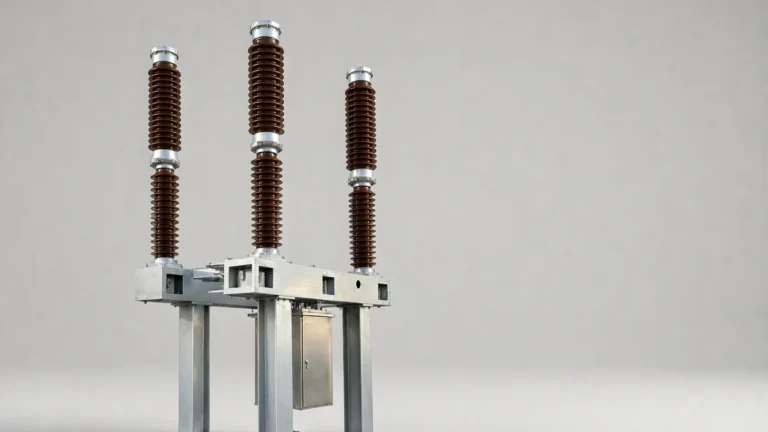
LW36-126 Explained: 3150 A, 40 kA and 40 kA/3 s in Practical Terms
What the LW36-126 model number covers, what it does not, and how to pick between the six variants and specify the items the model omits.
Read More
If you are evaluating medium or high voltage switchgear for the first time, the question is SF6 circuit breaker safe usually arrives together with a dozen others: what happens if the gas leaks, how long does the breaker last, and why can a device filled with a greenhouse gas still be the default choice on most grids. This FAQ answers the fifteen questions buyers actually send us before a purchase order, grouped by theme so you can jump straight to the part that matters for your project.
Short version: an SF6 circuit breaker is safe when it is correctly sealed, correctly rated for its site, and correctly maintained. The risks are real but narrow — arc decomposition byproducts, oxygen displacement in confined spaces, and pressure-related hazards during servicing — and each one has a standard engineering control. The questions below explain what those controls are, and where the honest limits of the technology sit.
Use this table as a quick reference. Each answer is expanded in the sections that follow, with the numbers that matter for specification and inspection.
| # | Question | Short answer |
|---|---|---|
| 1 | Is SF6 gas toxic? | Pure SF6 is non-toxic. Its arcing byproducts are not. |
| 2 | Does SF6 have an odor? | No. Any smell means contamination or decomposition. |
| 3 | Is the breaker safe to operate? | Yes — sealed design, interlocked, with pressure protection. |
| 4 | What happens if it leaks? | Oxygen displacement in pits and basements; a GWP problem outdoors. |
| 5 | Is SF6 flammable? | No. It is used precisely because it extinguishes arcs. |
| 6 | What is the service life? | 25–30 years design life; 20+ years typical in service. |
| 7 | How often does it need maintenance? | Gas checks every 1–2 years, condition checks every 5–6 years. |
| 8 | What does maintenance cost? | Low routine cost, high cost if gas handling is needed. |
| 9 | How does it fail? | Mostly leaks, density relays, and mechanisms — not interrupters. |
| 10 | What voltage range is covered? | 12 kV to 800 kV; this catalogue covers 40.5–252 kV. |
| 11 | How much gas is inside? | Roughly 2–25 kg per pole depending on voltage class. |
| 12 | What pressure does it run at? | 0.4–0.7 MPa gauge, fixed by voltage class and climate. |
| 13 | Advantages and disadvantages? | Compact and quiet, but a greenhouse gas with handling duties. |
| 14 | Can vacuum replace it? | Below 40.5 kV, often yes. Above 145 kV, not yet at scale. |
| 15 | Is it being phased out? | New MV installations in the EU are restricted; HV has longer timelines. |
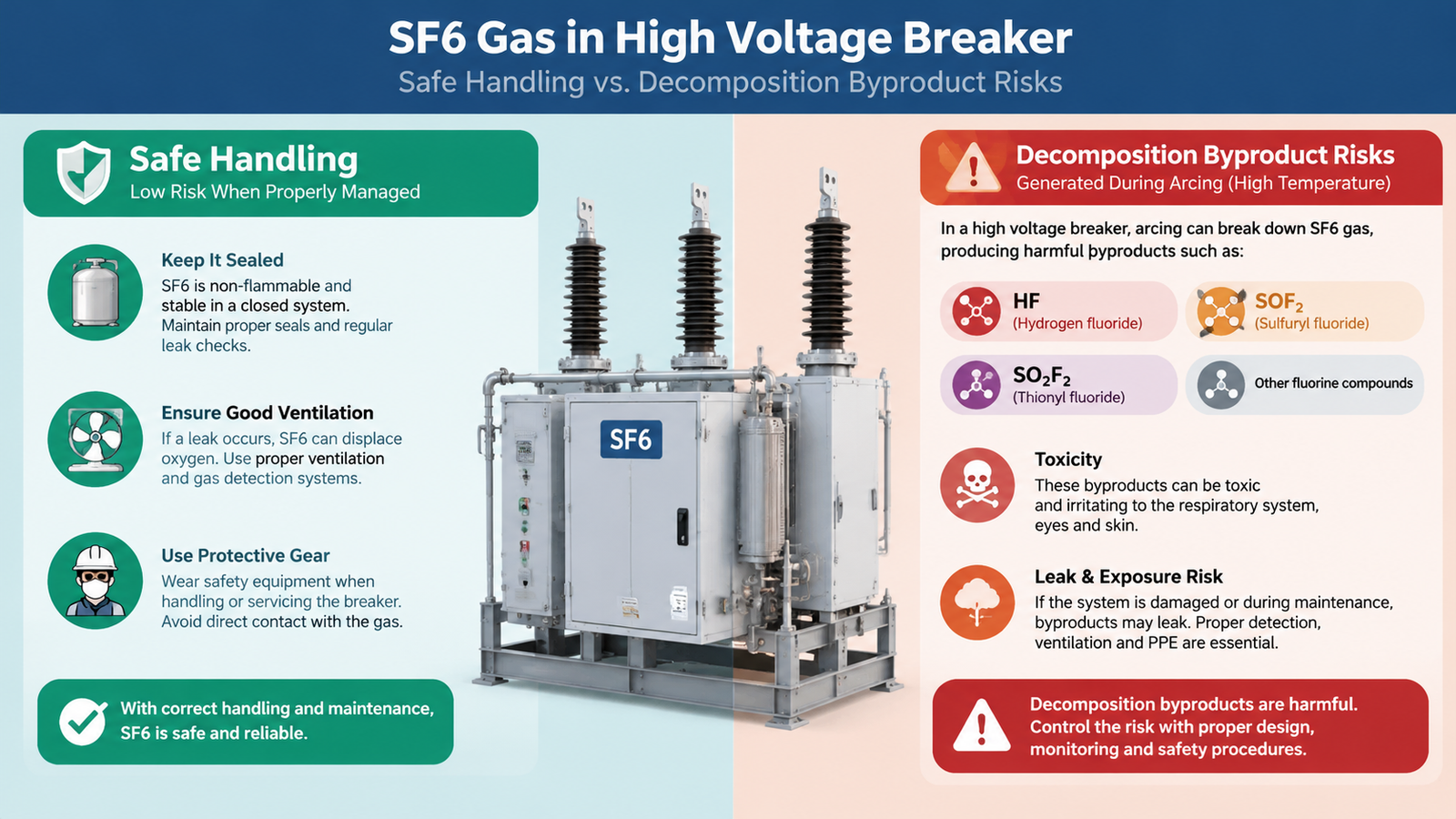
Pure sulfur hexafluoride is classified as non-toxic. It is denser than air, chemically inert at ambient temperature, and has been used in switchgear for more than five decades without a toxicity classification for the gas itself.
The hazard is not the gas you buy. It is what the gas becomes after it has interrupted current. Every arc in SF6 breaks a small fraction of the molecules apart, and the fragments recombine with the metal vapour from the contacts, the nozzle material, and trace moisture. The result is a family of byproducts — sulfur oxyfluorides, sulfur dioxide, hydrogen fluoride among them — that are toxic and corrosive in surprisingly small concentrations. That is why gas removed from a breaker that has cleared faults is never vented to atmosphere and never reused without analysis.
No. SF6 is odorless, colorless, and cannot be detected by smell. This is exactly why enclosed spaces that contain SF6 equipment need fixed oxygen monitoring or forced ventilation rather than human senses.
If someone reports a sharp or pungent smell near SF6 equipment, treat it as an indication of decomposed gas or a contaminated gas source, not as a property of SF6. The same applies to a metallic or acid taste reported after working in a cable basement — that is a byproduct signal, and the area should be ventilated and tested before anyone re-enters.
Yes, and the safety comes from four design features rather than from the gas alone:
The residual risks are procedural: working on a gas compartment without recovery equipment, entering a pit without ventilation, or bypassing a density relay to keep a unit in service. None of these are inherent to the technology.
Two different problems, with two different severities.
For people, the risk is oxygen displacement. SF6 is about five times denser than air, so a leak in a cable basement, a switchroom pit, or a confined GIS gallery accumulates at low level and pushes breathable air upward. Oxygen can drop below the 19.5% threshold in a small, poorly ventilated volume. This is an asphyxiation hazard, not a poisoning hazard, and it is managed with low-level extraction, oxygen monitors, and entry procedures.
For the environment, the risk is cumulative. SF6 has a global warming potential of 23,500 over 100 years, so a single kilogram released is equivalent to roughly 23.5 tonnes of CO2. A well-run sealed-for-life breaker leaks at well under 0.1% of its charge per year; a neglected gasket or a damaged O-ring can lose the whole charge in months. Leak rate is a specification item, not a footnote — see our guide to SF6 emissions and F-gas regulation for the reporting side of this.
No. SF6 is non-flammable and self-extinguishing, which is one of the reasons it displaced oil in high voltage breakers. It does not support combustion, and it does not decompose exothermically in the absence of an arc.
The related misconception is that SF6 “puts out fires”. It suppresses arcs by capturing free electrons, not by smothering flames, and it should not be treated as a fire suppression agent. Its value in a breaker is dielectric strength and arc quenching, both of which depend on gas density staying above a threshold.
Design life is usually quoted at 25 to 30 years, and that figure is a composite of three separate limits:
In service, 20 to 25 years is a realistic expectation for a well-maintained unit in a temperate climate, with gas top-ups becoming more frequent in the final third of that period. Units that sit at 0.5 MPa and never operate can outlast the design life; units that operate daily in a dusty, high-vibration environment will not.
An SF6 breaker is a low-maintenance device, not a no-maintenance device. The practical rhythm looks like this:
Details of what each interval covers are set out in our SF6 circuit breaker maintenance checklist.
Routine maintenance is cheap: a few hours of technician time per year, plus a leak survey. The expensive events are the ones that involve opening a gas compartment.
| Activity | Relative cost | Notes |
|---|---|---|
| Visual and density check | Very low | In-house, annual |
| Leak survey | Low | Portable detector, annual or biennial |
| Mechanism service | Medium | Every 5–6 years, no gas work |
| Gas recovery and refill | High | Requires recovery cart, new gas, analysis |
| Interrupter or chamber replacement | Very high | Usually triggers a replace-versus-repair decision |
Budget for the high-cost items as a lump sum at year 15 rather than as an annual line. It is more honest than spreading a hypothetical average, and it matches how the cost actually lands.
Field failure statistics are consistent across manufacturers: the interrupter is rarely the culprit. The usual sequence of causes is gas system, then mechanism, then control circuit, then interrupter.
Symptom-based diagnosis is covered in more depth in SF6 circuit breaker failure and troubleshooting.
SF6 breakers are built from 12 kV to 800 kV. Below 40.5 kV they now compete with vacuum and are often the second choice; from 72.5 kV upward they remain the mainstream technology; above 550 kV they are effectively the only option in volume production.
The voltage class determines more than size. It sets the number of interrupters per pole, the pressure, the creepage distance, and the test regime. Our voltage class guide maps the transitions in detail.
Charge mass scales with voltage class and with the number of interrupting chambers. Typical per-pole figures are:
| Voltage class | Gas per pole (typical) | Interrupters per pole |
|---|---|---|
| 40.5 kV | 1.5–3 kg | 1 |
| 72.5 kV | 3–6 kg | 1 |
| 126 kV | 6–12 kg | 1–2 |
| 252 kV | 15–30 kg | 2 |
These are working figures for specification and logistics, not catalogue values. The nameplate charge is what counts for F-gas inventory and for ordering top-up gas, and it should be read from the rating plate rather than assumed from the voltage class.
Rated filling pressure for outdoor HV breakers is normally 0.4 to 0.7 MPa gauge. Lower pressure means a lower liquefaction temperature, which matters in cold climates; higher pressure means better dielectric and interrupting performance in a smaller envelope.
The trade-off is why the same 72.5 kV platform can be offered at 0.5 MPa for cold regions and at 0.6 MPa for temperate regions. A breaker rated at 0.5 MPa rated gas pressure is a deliberate choice for sites that see −30 °C, not a downgrade.
| Advantages | Disadvantages |
|---|---|
| Compact footprint at HV — one chamber replaces a large oil tank | SF6 is a greenhouse gas with GWP 23,500 |
| Quiet operation, no oil fire risk | Gas handling equipment and training required |
| Fast interruption, short arcing time, long contact life | Decomposition byproducts must be managed |
| Sealed design, low routine maintenance | Density monitoring and leak management add cost |
| Well-proven above 72.5 kV, with mature test standards | Regulatory pressure on new installations |
At distribution level, frequently yes. Vacuum interrupters now dominate 12 kV and 24 kV, and they hold a strong position at 36 kV and 40.5 kV. Where a site can accept a vacuum retrofit or a new vacuum switchgear line-up, the environmental case is straightforward.
Above 72.5 kV the picture changes. Vacuum interrupters exist at 145 kV in limited production, but the series-connected interrupter designs needed for 252 kV and above are not yet competitive on cost, size, or reliability. For transmission applications, SF6 or SF6-free gas mixtures remain the practical choice. Our comparison of SF6-free alternatives sets out the voltage thresholds honestly.
For new equipment, in some markets, on a schedule. The European F-gas regulation restricts new medium voltage switchgear using SF6 from the mid-2020s onward, with later dates for high voltage, and existing installed equipment is not affected. Other regions are following with reporting obligations first and restrictions later.
The practical consequence for a buyer in 2026 is not “avoid SF6”. It is “know your compliance horizon”. If you are specifying equipment for a European utility with a 40-year asset life, you need a documented plan for the end of life. If you are specifying for a market without a restriction timeline, SF6 remains the lowest-risk technical choice at 72.5 kV and above.
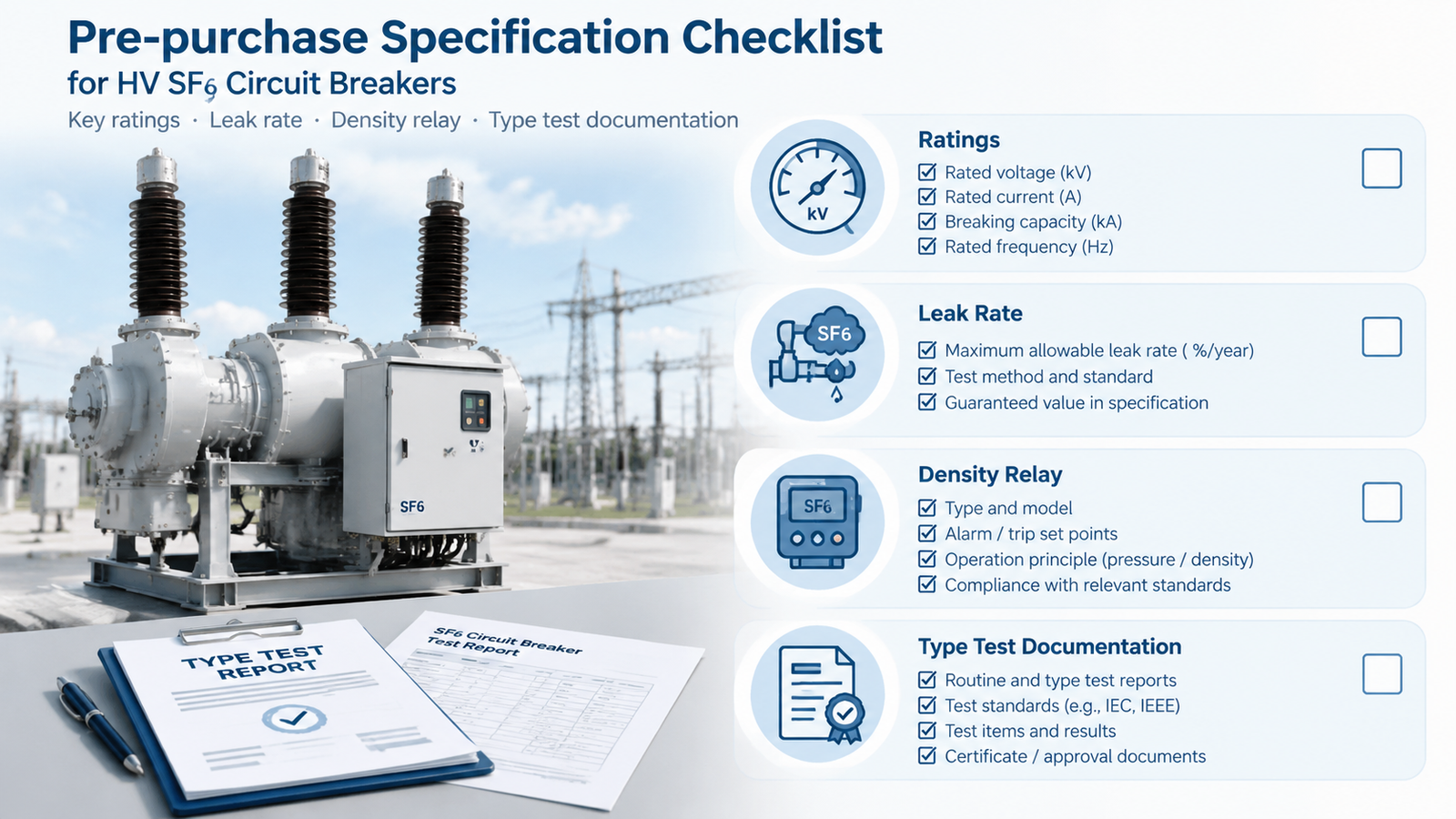
Six items separate a good quotation from an expensive one. Ask for each in writing.
A 252 kV split-type outdoor breaker such as the LW-252 252 kV 4000 A split-type unit is a useful reference point for what a complete datasheet should contain at the top of the range: interrupter count, pressure, creepage, mechanical endurance, and the operating sequence all declared. Comparing a supplier’s sheet against a fully specified reference is faster than reading twenty brochures.
The question is SF6 circuit breaker safe has a clean answer: these breakers are safe when the gas system is sealed, the pressure protection works, and servicing follows gas handling procedure. The risks that remain are procedural and environmental rather than electrical, and both are managed by specification and documentation rather than by operator skill.
If you are still narrowing the field, start with the selection logic in how to select an SF6 circuit breaker, then use the questions above as a checklist against each quotation you receive. You can also browse the full SF6 circuit breaker article library for the topic that matches your next decision, or send us your site conditions and rating requirements for a specification review.
Compare the density gauge reading against the commissioning value at the same temperature, and confirm with a portable leak detector around gaskets, density relay connections, and the operating rod seal. A pressure drop that repeats after a top-up is a leak; a single low reading that returns to normal is usually a gauge or temperature effect.
Only with recovery and filling equipment, a gas cylinder of verified purity, and a dew point check after filling. Topping up without measuring moisture risks introducing water into a compartment that will then generate corrosive byproducts during the next interruption.
No. Pressure falls with temperature, and in cold weather a healthy breaker can show a pressure well below the commissioning value. Density, not pressure, is the correct health indicator — which is why the device that monitors it is a density relay rather than a pressure switch.
Alarm pressure is the first threshold: it signals that the charge needs attention but the breaker remains fully capable. Lockout pressure is the second threshold: it blocks open and close operations because dielectric strength is no longer assured. The gap between the two is typically 0.03 to 0.05 MPa.
They are generally quieter. SF6 interruption produces a muffled pressure pulse inside a sealed chamber, while vacuum interruption produces a sharper mechanical shock through the enclosure. In residential or hospital-adjacent substations, this is a real but secondary selection factor.