LW36-126 Explained: 3150 A, 40 kA and 40 kA/3 s in Practical Terms
Published: Author: Lisa
Most 126 kV breakers in service are bought by model number, not by specification. An engineer writes “LW36-126, 3150 A, 40 kA” on a requisition because that is what the last project used, and the supplier quotes it. Nobody in that chain has necessarily checked whether the four numbers behind the model actually match the fault level, the load, the pollution class or the ambient temperature of the site. This article unpacks the LW36-126 platform rating by rating, so the model number becomes a set of decisions rather than a habit.
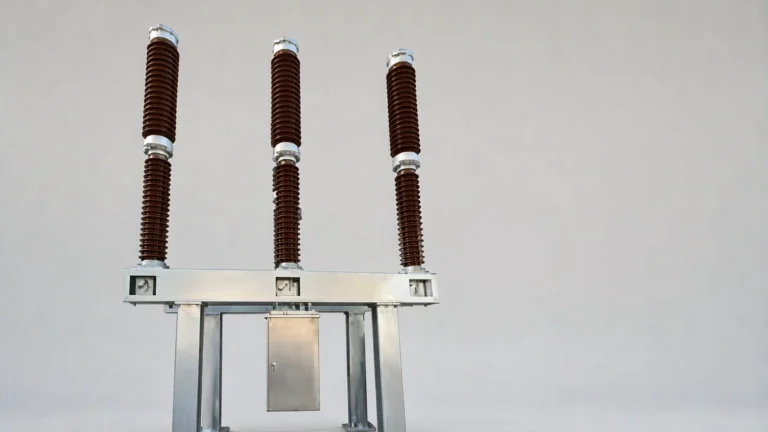
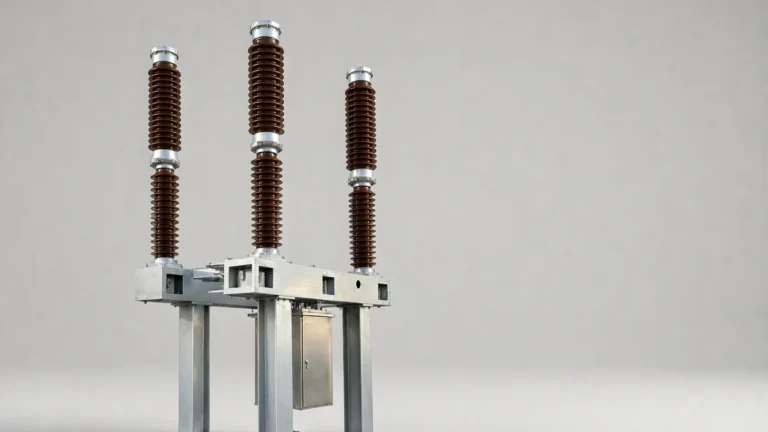
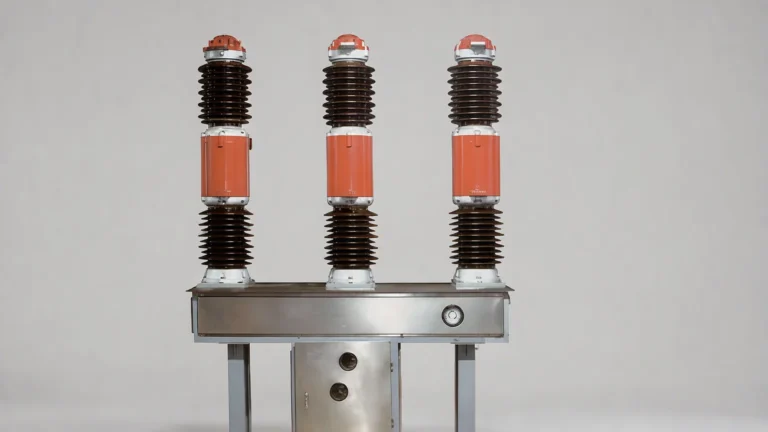
The LW36-126 is a three-pole outdoor SF6 circuit breaker for the 126 kV (110 kV class) network, rated 3150 A continuous and 40 kA short-circuit breaking, with a 40 kA / 3 s short-time withstand rating. It is the workhorse class of equipment for sub-transmission and industrial infeed substations across the SF6 circuit breaker range, and understanding what each of those numbers constrains is the difference between a breaker that lasts thirty years and one that is replaced early.
Reading the model designation
The designation follows the Chinese HV switchgear naming convention, and it is worth decoding once because it makes every similar model readable.
L — SF6 circuit breaker (the medium is part of the type designation).
W — outdoor construction.
36 — design sequence number for this platform.
126 — rated voltage in kV, which is the highest voltage for equipment in the 110 kV nominal class.
So the model number tells you the medium, the installation type and the voltage class, and nothing at all about current, breaking capacity or insulation level. Those come from the specification that follows the model number, and they are where the real decisions are.
The four ratings that define the breaker
Rating
Value
What it constrains
Rated voltage
126 kV
Insulation level, clearances, the network class it can be installed in
Rated current
3150 A
Continuous load capability; conductor and terminal sizing; heat rejection
Rated short-circuit breaking current
40 kA
The maximum fault level the breaker can interrupt
Rated short-time withstand current
40 kA / 3 s
How long it can carry fault current while backup protection operates
Those four numbers are a matched set, and the pairing of 40 kA breaking with 40 kA / 3 s withstand is not accidental. It means the breaker can both interrupt the fault itself and survive long enough for a remote backup to clear it if its own trip circuit fails.
Why 3150 A is more headroom than it sounds
At 126 kV, 3150 A corresponds to roughly 690 MVA through a single circuit. For a transformer incomer or a heavily loaded tie bay, that is genuine capacity rather than a nominal figure, and it is the rating that decides whether you can defer a substation upgrade by a few years.
Two practical consequences follow. First, the terminals and the conductor connections have to be sized for 3150 A continuously, which means the cable or tubular busbar entering the breaker is part of the thermal design, not an afterthought. Second, at 3150 A the dominant design problem in the breaker stops being arc interruption and becomes heat rejection from the main contacts and the terminal pads — which is why the high-current variants of a platform often differ more in their cooling and contact design than in their interrupter.
Why 40 kA / 3 s is the rating engineers forget
Breaking capacity gets all the attention because it is dramatic. Short-time withstand is the rating that decides whether the breaker survives a coordination failure.
The scenario is ordinary: a fault occurs, the breaker’s own protection operates, but for some reason — a failed trip coil, a wiring error, a protection setting mistake — the breaker does not open. Now the fault current keeps flowing through a closed breaker while the backup protection at the upstream substation runs its time delay. If that delay is 1.5 seconds and the breaker is rated for 1 second, the breaker is destroyed by thermal stress even though it did nothing wrong.
The 3-second rating is sized for exactly that window. The thermal duty is I²t, so at 40 kA the energy the breaker must absorb is 40,000² × 3 = 4.8 × 10⁹ A²s. That number, not the kA figure, is what the contact and conductor cross-sections are designed around. Where the site’s backup clearing time is longer than 3 seconds, the breaker is the wrong choice regardless of its breaking capacity.
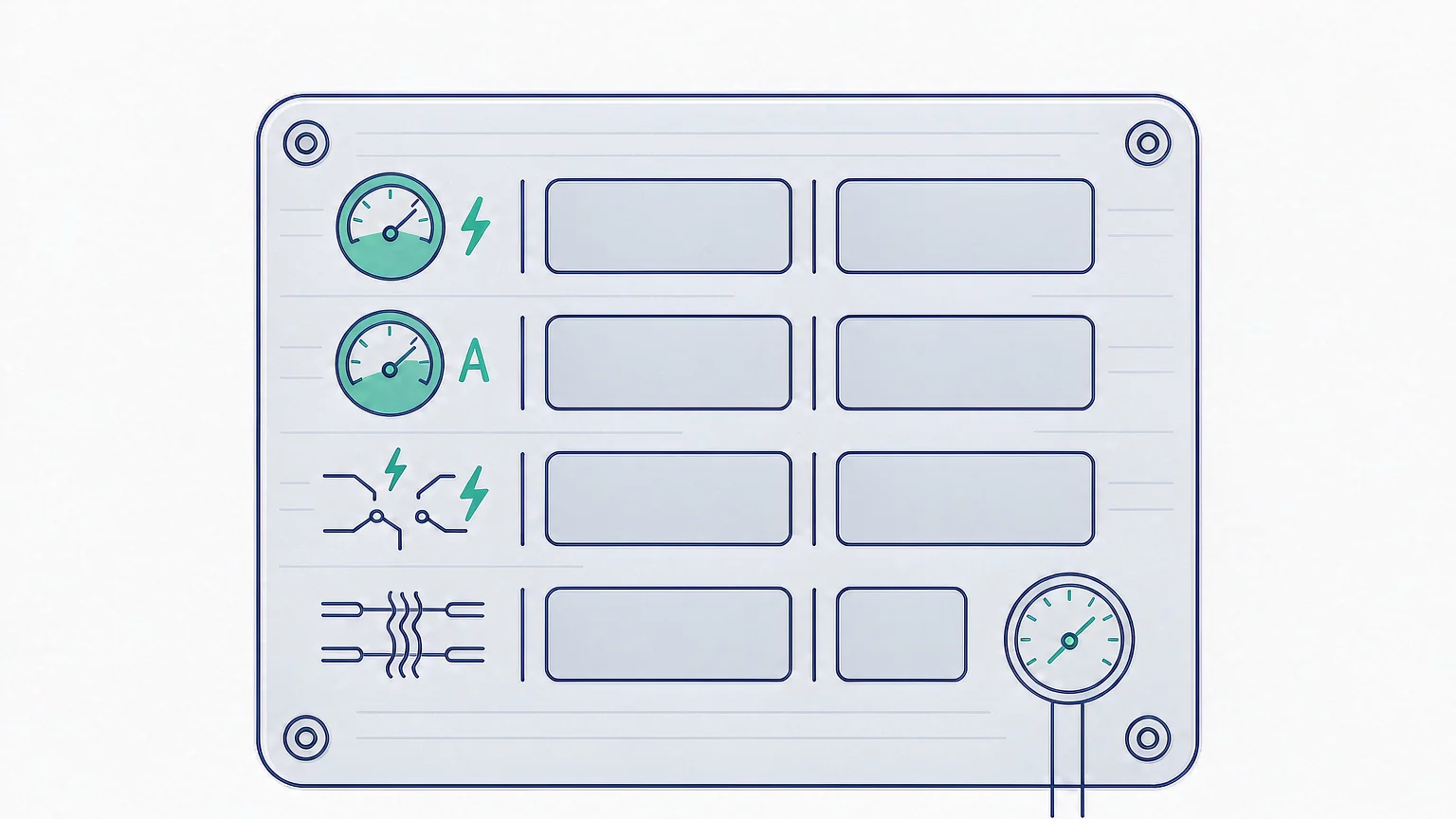
Four ratings on the plate, and five specification items that never appear on it.
Where the 126 kV class sits
The 126 kV class is the upper end of sub-transmission: the voltage at which a regional network steps down from the 220 kV or 400 kV transmission system to distribute at 110 kV, 66 kV, 35 kV or 33 kV. It is also the voltage at which large industrial sites — steel plants, chemical complexes, mining operations, large manufacturing campuses — take their bulk supply and run their own switchyards.
That dual role explains why the same platform is offered with different specification emphases. A utility sub-transmission bay and an industrial infeed have different priorities: the utility cares about protection coordination, auto-reclosing and documentation for the transmission operator; the industrial site cares about fault level, dust and heat, and keeping the plant running. The voltage class overview puts 126 kV in context against 40.5 kV, 72.5 kV and 252 kV.
The variant map
The LW36-126 is supplied in several configured variants. They share the core platform and the 126 kV / 3150 A / 40 kA / 40 kA-3s rating set; what changes is the frequency rating, the protection functions included and the rating emphasised for the project’s governing requirement.
Variant emphasis
Governing requirement
Choose it when
Standard 126 kV / 3150 A / 40 kA
General sub-transmission protection
The project is a conventional utility or industrial bay with no special constraint
52 Hz rated frequency
Network frequency
The grid operates at 52 Hz, so timing, resonance and insulation coordination are matched to it
40 kA / 3 s short-time withstand emphasis
Backup clearing time
Upstream backup protection takes longer than a second or two to operate
Industrial grid protection
Breaker failure and overcurrent functions
The site runs its own network and needs dedicated protection functions in the breaker package
3150 A rated current emphasis
Continuous load
Heavily loaded feeders, transformer incomers or tie bays where thermal headroom is the binding constraint
40 kA breaking capacity emphasis
Fault level
The substation is specified around a 40 kA fault level and breaking capacity is the governing number
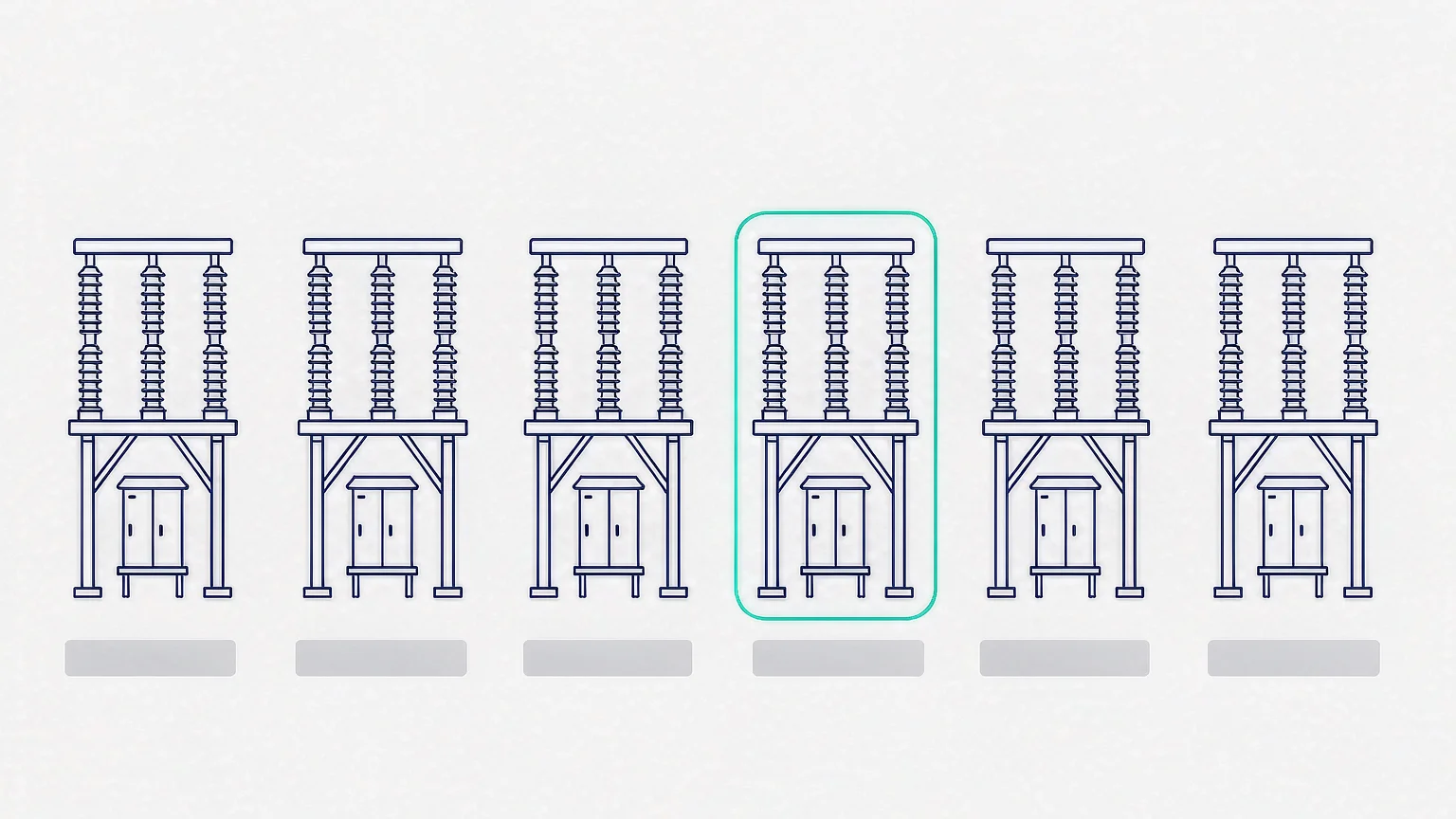
The six variants share one platform; the selection is a matter of which requirement binds on the project.
What the model number does not tell you
Six things are outside the four ratings and have to be specified separately. Getting them wrong is more common than getting the kA figure wrong, because the kA figure is the one everybody checks.
Insulation level
For 126 kV equipment the insulation level is normally specified as a lightning impulse withstand voltage and a one-minute power-frequency withstand voltage. In Chinese GB and IEC practice the 126 kV class is commonly specified at 550 kV lightning impulse and 230 kV power frequency, but the required level follows the project’s insulation coordination study, not the model number. Altitude correction applies above 1000 m and pushes both values up.
Pollution class and creepage
The creepage distance of the porcelain or composite columns is set by the site’s pollution severity, not by the voltage class. A coastal or industrial site needs a longer creepage distance for the same 126 kV, which means a physically larger breaker. Specify the pollution class and the required creepage distance in mm/kV rather than accepting the standard column.
Ambient temperature range
The SF6 filling pressure has to be chosen so the gas does not liquefy at the site minimum temperature, and heaters may be needed below about −25 °C. A breaker specified for −10 °C and installed at −30 °C will alarm on density every winter. The cold climate and altitude guide covers the liquefaction arithmetic.
Operating mechanism
The platform is normally supplied with a high-speed spring operating mechanism, which suits the 126 kV duty well: the energy required is modest and the spring is simple to maintain. Where the project calls for a different drive, the mechanism type changes the auxiliary supply requirement, the charging time and the maintenance routine. The mechanism comparison sets out the trade-offs.
Protection and control interfaces
Whether the breaker package includes breaker failure protection, overcurrent protection, a trip circuit supervision relay or just the bare mechanism determines the secondary design. Specify the functions, not the model.
Current transformers
If the CTs are mounted on the breaker bushings or on a separate frame, the ratios, classes and core counts are a separate specification. On a 126 kV outdoor breaker the CTs are usually separate, which is one of the practical differences from a dead-tank design where they are integrated.
Five mis-specifications worth avoiding
Matching the breaking capacity to the present fault level with no margin. Networks grow. A 40 kA breaker on a 38 kA fault level has almost no headroom for the next transformer.
Ignoring the short-time withstand rating. A 40 kA breaker with a 1 s withstand where the backup takes 2 s is a thermal failure waiting for a protection fault.
Accepting the standard pollution column. The cheapest way to fail an insulation test in year three is to install a standard-creepage breaker on a coastal site.
Not specifying the low temperature. The gas pressure rating and the heater provision both depend on it, and neither can be added later without a rebuild.
Assuming the model number is the specification. Two breakers both called LW36-126 can differ in insulation level, creepage, CT provision and protection functions.
Documentation and delivery
For a 126 kV breaker the documents matter as much as the hardware, because the buyer usually has to submit them to a utility or a consultant. Ask for the type test report with the tested configuration identified, the routine test certificate for the specific unit, the gas handling and filling procedure, the density relay calibration record, and the mechanical characteristics record from the factory — the last one being the baseline for every future travel curve comparison.
Delivery for this class of equipment is typically measured in months rather than weeks, and the schedule is driven by the type test evidence and the insulation configuration rather than by assembly time. The manufacturer sourcing guide covers what to verify in a factory audit and what a realistic schedule looks like.
Conclusion
The LW36-126 is a well-understood 126 kV platform with a sensible rating set: 3150 A of continuous capacity, 40 kA of breaking capability and a 3-second thermal rating that covers realistic backup clearing times. The model number does not, however, tell you the insulation level, the creepage, the temperature range, the protection functions or the CT provision — and those five items are where most specification errors happen.
Pick the variant by identifying which requirement binds on your project, then specify the six items outside the model number explicitly. That is what turns a model number into a breaker that fits. For the selection logic behind the ratings themselves, see how to select an SF6 circuit breaker, and for the rest of the equipment the SF6 circuit breaker article library.
FAQ
What does LW36-126 mean?
L for SF6 circuit breaker, W for outdoor, 36 as the design sequence number of the platform, and 126 as the rated voltage in kV. The designation does not encode current, breaking capacity or insulation level.
What are the ratings of the LW36-126?
126 kV rated voltage, 3150 A rated current, 40 kA rated short-circuit breaking current, and 40 kA / 3 s rated short-time withstand current, in a three-pole outdoor SF6 construction.
What is the difference between the LW36-126 variants?
They share the core rating set and differ in what the project needs: rated frequency (50 Hz or 52 Hz), inclusion of breaker failure and overcurrent protection functions, and which rating is emphasised for the governing requirement — continuous current, breaking capacity or short-time withstand.
Why does a 40 kA breaker need a 3-second withstand rating?
Because the breaker may have to carry the fault current while upstream backup protection completes its time delay, if its own trip circuit fails. The I²t energy over that window is what the contact and conductor design is sized for, so a breaker with a shorter withstand rating can be destroyed by a fault it never had to interrupt.
Can the LW36-126 be used at high altitude or in cold climates?
Yes, with the insulation level corrected for altitude and the gas filling pressure and heater provision corrected for low temperature. Both have to be specified at the order stage, because neither can be retrofitted cheaply.
Is the LW36-126 available with a different frequency rating?
Yes — a 52 Hz rated variant is offered for networks operating at that frequency, with the mechanical timing and insulation coordination matched to it rather than to 50 Hz.
How to read a circuit breaker travel curve: the phases of an operation, the six parameters worth extracting, and the five failure patterns that account for most real defects.
Inside the SF6 circuit breaker interrupter: how puffer and self-blast designs find the blast energy, why nozzle ablation matters, and what double motion contacts change.
M1 and M2 mechanical endurance, E1 and E2 electrical endurance, C1 and C2 capacitive switching: what each IEC 62271-100 class means and how to turn it into a twenty-year cost number.