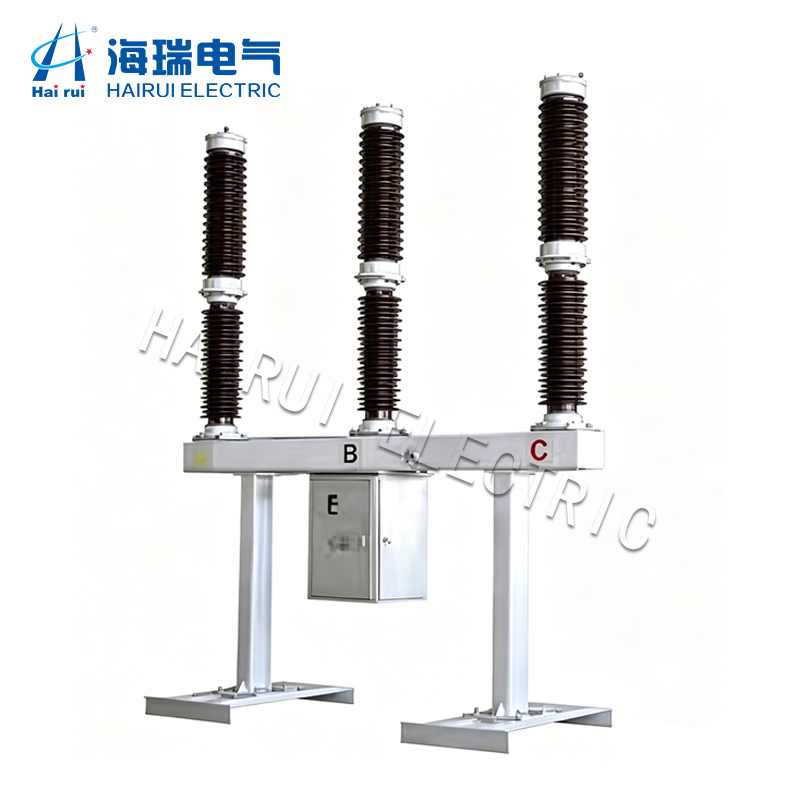
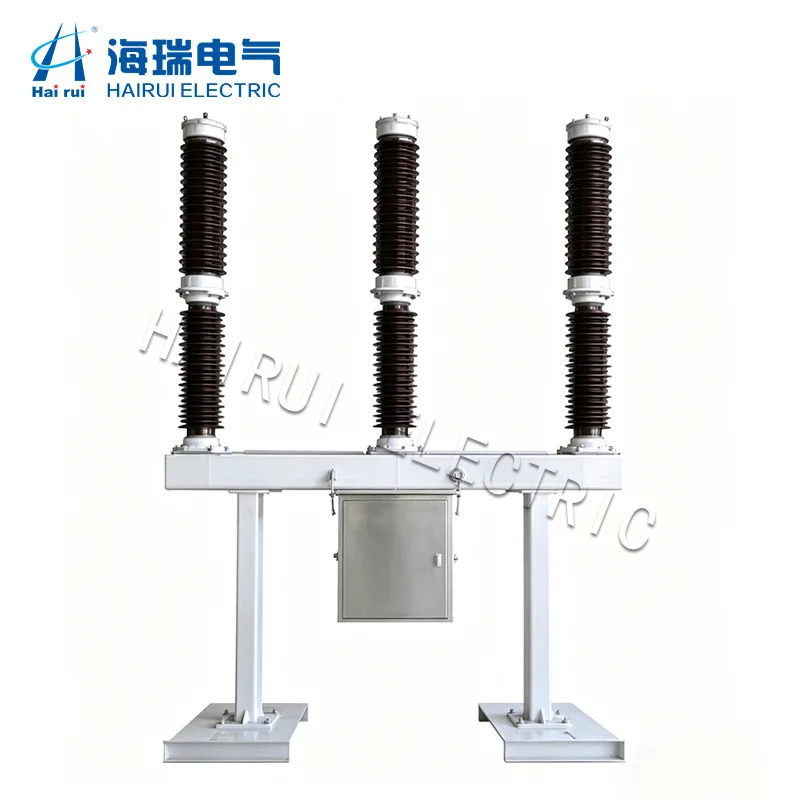
Product Overview
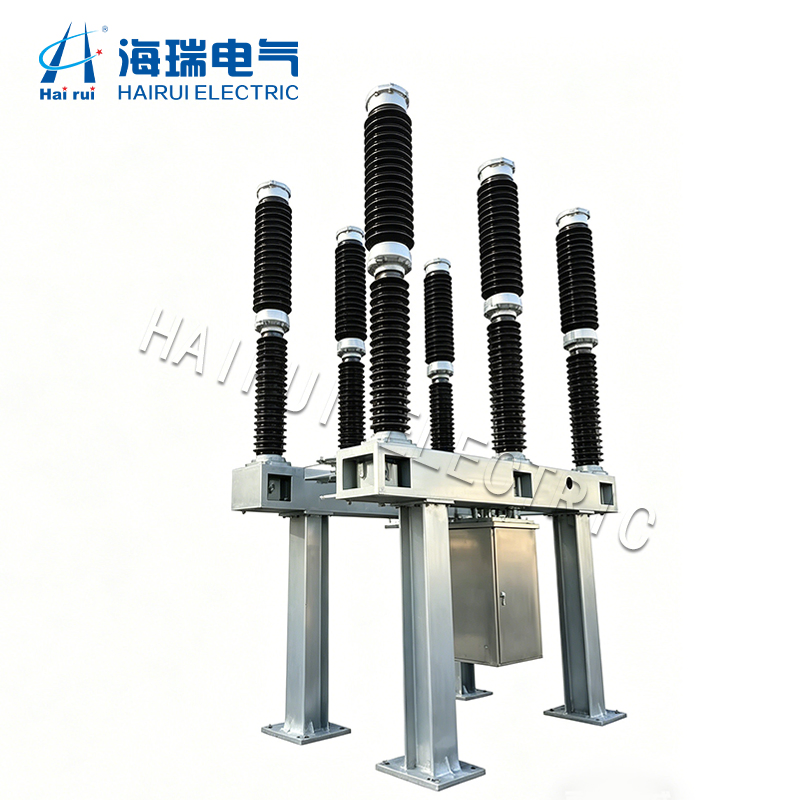
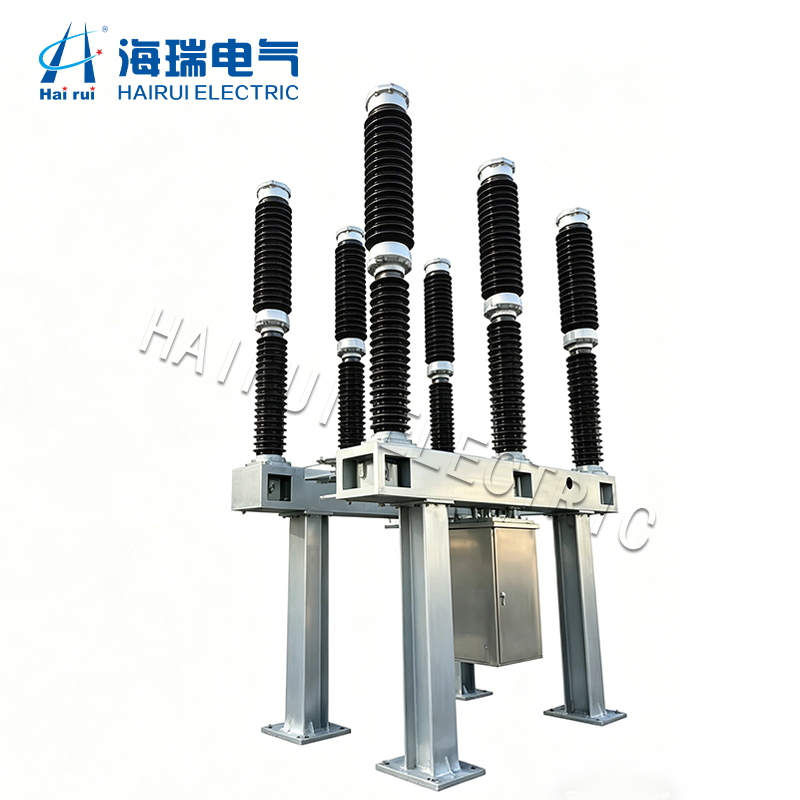
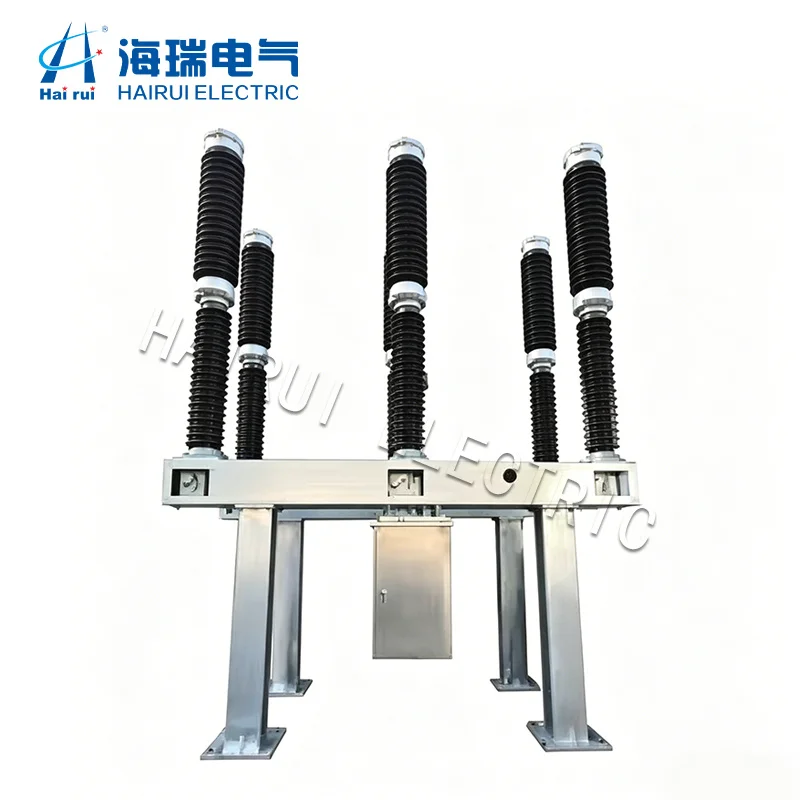
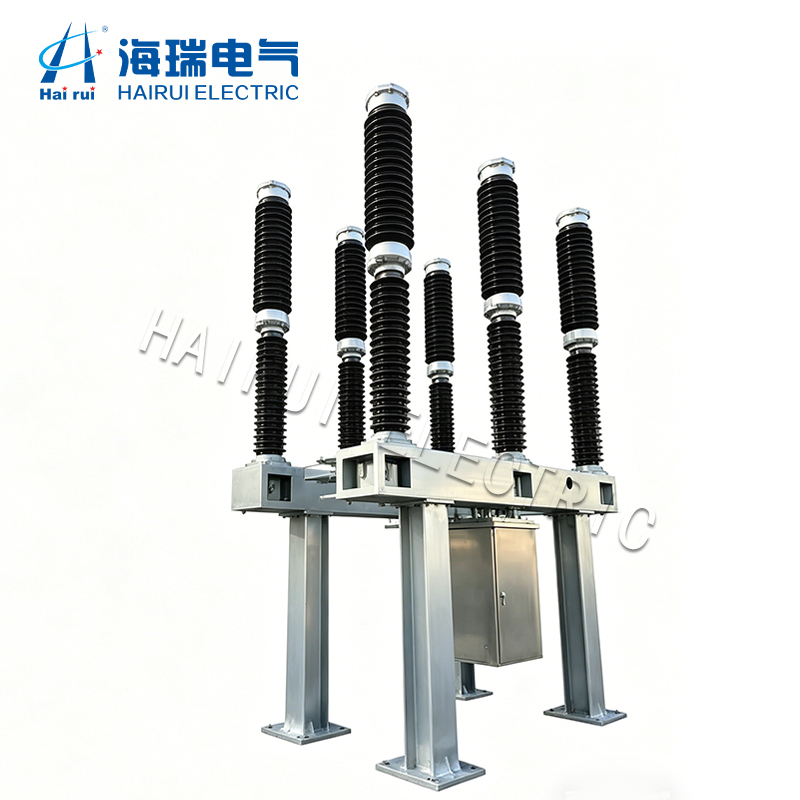
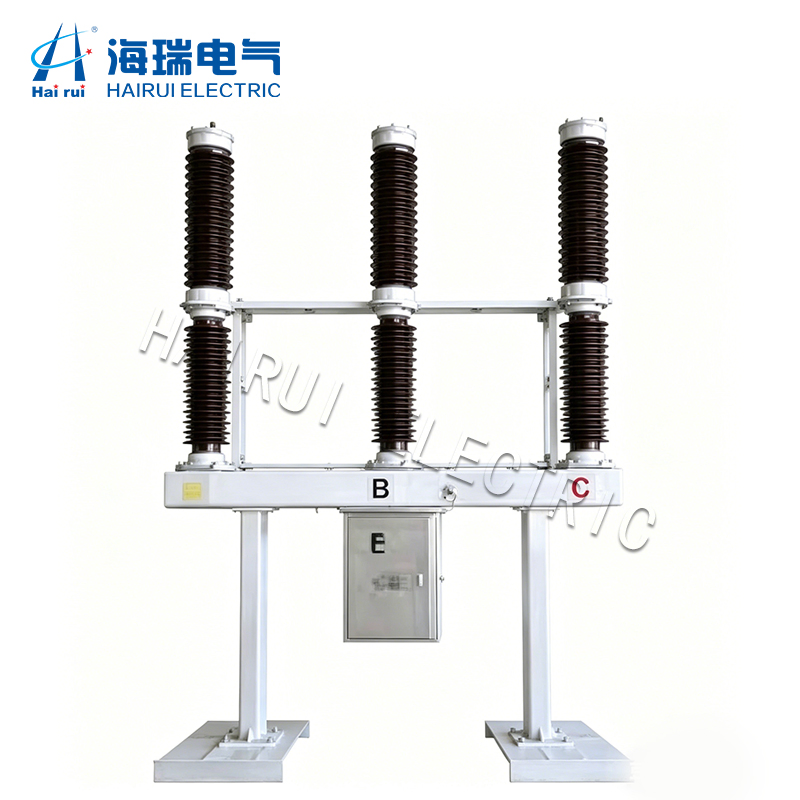
Breaking capacity is the number a fault study produces and the number a breaker is bought against. The LW36-126 is rated 40 kA at 126 kV — about 8730 MVA, or 7620 MVA on a 110 kV busbar — with 40 kA / 3 s short-time and 100 kA peak withstand on the same unit. It is a three-pole outdoor SF6 breaker, 3150 A continuous, spring-operated, 230 kV power frequency and 550 kV impulse insulation.
What 40 kA does not tell you is which fault currents it was proven on. A breaking rating is a family of test duties, not a single number, and two breakers quoting 40 kA can differ in whether the asymmetrical case, the close-open case and the short-line fault case were part of the evidence. This page is about that family.
What a 40 kA Rating Actually Covers
Converted first, then unpacked. At 126 kV, 40 kA is about 8730 MVA; at 110 kV it is about 7620 MVA. Those are three-phase symmetrical values, which is the way the fault study usually reports them — and only the starting point of the type-test programme.
| Test duty | What is applied | Why it is harder than it looks |
| T10 | 10% of rated breaking current | Low current, long arc duration; the chamber must still interrupt before the contact travel runs out |
| T30 | 30% of rated breaking current | Transition region between thermal and dielectric dominance |
| T60 | 60% of rated breaking current | Where many interrupters are least comfortable |
| T100s | 100%, symmetrical | The headline number: full fault current, no DC component |
| T100a | 100%, asymmetrical | Full current with a DC component; the peak is higher and the current zero arrives late |
| Close-open | Making onto a fault, then breaking it | The mechanical and thermal worst case: pre-arcing energy on closing before any interruption |
The lowest-current duties in that table are not the easy ones. At 10% of rated current the arc lasts longer in time terms, and the interrupter has to keep the arc stable long enough to interrupt it at a current zero rather than let it restrike. This is why a breaker that passes T100s is not automatically proven for capacitive or small inductive duty, and why the switching currents of a reactor or capacitor bank are declared separately from the breaking capacity. The test sequence itself is set out in breaking-capacity test duties T10 to T100a.
Two further duties decide whether a 40 kA rating is enough for your network. The first is the DC component: fault current on a network with a high X/R ratio is asymmetrical for the first few cycles, and the peak and the late current zero are what the asymmetrical duty covers. The second is the short-line fault: a fault a few kilometres down the line produces a steep recovery voltage, and a breaker comfortable at the busbar can be marginal there. If your fault study quotes only the symmetrical value, ask what the X/R ratio is before accepting the rating.
Key Features
- 40 kA rated breaking current: about 8730 MVA at 126 kV, with the full type-test duty family behind the number.
- 100 kA peak withstand: the first asymmetrical peak, sized for networks with a high X/R ratio.
- 40 kA / 3 s short-time withstand: 4800 kA²s of thermal duty while backup protection decides.
- 3150 A continuous current: about 600 MVA at 110 kV, so the bay is not current-limited before it is fault-limited.
- 230 kV power frequency, 550 kV impulse: the 126 kV class envelope, valid at the 0.6 MPa rated gas density.
- 0.6 MPa rated / 0.52 MPa alarm / 0.5 MPa lockout: a narrow supervision band, because interrupting capability depends on density rather than on gauge pressure.
- Spring mechanism: trip energy mechanically latched, so fault clearing does not depend on the station battery at the instant of the fault.
- ISO 9001 quality management, 12-month warranty, MOQ 1 piece, OEM/ODM: type test reports to IEC 62271-100 available with the offer.
Technical Specifications
Standard build. Breaking capacity and current are fixed by the order; creepage class, ambient range and auxiliary supply follow the site.
| Model | LW36-126 |
| Type | Outdoor, live-tank, three-pole SF6 circuit breaker |
| Rated voltage | 126 kV (110 kV system) |
| Rated current | 3150 A |
| Rated frequency | 50 Hz |
| Rated short-circuit breaking current | 40 kA |
| Rated short-time withstand current | 40 kA / 3 s |
| Rated peak withstand current | 100 kA (2.5 × breaking current at 50 Hz) |
| Power frequency withstand, 1 min | 230 kV |
| Lightning impulse withstand, 1.2/50 µs | 550 kV |
| Rated SF6 gas pressure at 20 °C | 0.6 MPa |
| Alarm pressure | 0.52 MPa |
| Lockout pressure | 0.5 MPa |
| Operating mechanism | Spring, motor-charged |
| Number of poles | 3, ganged |
| Installation | Outdoor, fixed on concrete foundation |
| Net weight | 1900 kg |
| Transport packing | Sea-worthy plywood case, 2200 kg packed |
| Standards | IEC 62271-100 / GB 1984 (type test reports on request) |
| Certification | ISO 9001 quality management system |
| Warranty | 12 months |
| MOQ | 1 piece |
| Origin | Zhejiang, China |
Note the relationship between the three current values: 40 kA is what the interrupter is proven to break, 40 kA / 3 s is what the current path is proven to carry, and 100 kA is the instantaneous peak the structure is proven to survive. Only the first is about the arc; the other two are about copper and steel.
Where 40 kA Is the Binding Constraint
Whether the fault level or the load sets the specification depends on where the substation sits in the network.
Africa: single-source substations
In Nigeria, Kenya, Tanzania and Zambia a 110 kV substation is often fed by one circuit from a distant source, so the fault level at the busbar is limited by line impedance and rarely reaches the breaker’s rating. The exception is a substation close to generation, where the same 40 kA rating is fully used and the X/R ratio matters more than the symmetrical figure.
Southeast Asia: high fault levels in dense networks
Jakarta, Manila, Bangkok and Ho Chi Minh City 110 kV networks have short cable runs, multiple sources and fault levels close to the breaker rating at the busbar itself. Both the symmetrical and asymmetrical duties are exercised in the same event, and the short-line fault duty matters on the overhead sections that still exist.
Central Asia: long 110 kV lines and weak sources
Kazakhstan, Uzbekistan, Tajikistan and Kyrgyzstan run long 110 kV lines between load centres, which pushes the fault level down at the receiving end and the short-line fault duty up on the line sections. A breaker sized only on busbar fault level can be marginal for a fault a few kilometres out.
Middle East: generation close to load
Iraqi, Saudi, Emirati and Omani 110 kV substations are frequently adjacent to captive or utility generation, which raises the fault level and the X/R ratio together. That combination is exactly where the asymmetrical duty and the 100 kA peak become the deciding ratings rather than the symmetrical 40 kA.
CIS: grading and duty evidence
In Russia, Belarus, Azerbaijan and Uzbekistan the protection grading determines how long the breaker carries the fault before its own trip, and the inspection authority expects the withstand evidence to match the settings. Test reports naming the duties actually performed are more useful than a certificate quoting the headline number.
Packing, Shipping Weight and Foundation Data
Freight does not change with breaking capacity; it changes with voltage class. This model’s own figures are in the first column, with the 252 kV split-type unit alongside.
| 126 kV / 110 kV system (LW36-126) | 252 kV / 220 kV system (LW-252) | |
| Interrupter columns shipped | 3 | 6 |
| Net weight | 1900 kg | approx. 3800 kg |
| Total shipping weight, packed | 2200 kg | approx. 4400 kg |
| Column packing | 3 cases, 3500 × 740 × 650 mm, 450 kg each | 6 cases, 3500 × 740 × 650 mm, 450 kg each |
| Base frame packing | 3880 × 700 × 2350 mm, 850 kg | 2 base cases, approx. 1700 kg total |
| Dynamic load, upward / downward | 24 kN | 24 kN per foundation |
| Height difference between the two foundation surfaces | ≤ 2 mm | ≤ 2 mm |
| Levelness of each foundation surface | ≤ 2 mm | ≤ 2 mm |
| Recommended container | 1 × 20 GP | 1 × 40 HQ or 40 FR |
The 252 kV column doubles the 126 kV one because a split-type pole carries two interrupter columns — six columns and two base frames for three poles. Loading from Ningbo or Shanghai, EXW through DAP, LCL consolidation for single units. Invoice, packing list, bill of lading, certificate of origin, routine test report and IEC 62271-100 declaration travel with the goods.
Price Guide
Indicative RMB prices, standard builds, ex-works Zhejiang, current as of 2026 — a budget reference rather than a quotation.
| Voltage class | Reference model | Interrupter columns | Indicative price |
| 40.5 kV (35 kV system) | LW8-40.5 | 3 | approx. RMB 40,000 |
| 72.5 kV (66 kV system) | LW9-72.5 | 3 | approx. RMB 75,000 |
| 126 kV (110 kV system) | LW36-126 | 3 | approx. RMB 80,000 |
| 252 kV (220 kV system) | LW-252 | 6 | approx. RMB 160,000 |
Within a voltage class, breaking capacity is a modest price driver: the interrupter changes, the frame, mechanism and control gear do not. Across classes it is decisive — 126 kV to 252 kV doubles the price because it doubles the hardware, while 72.5 kV to 126 kV adds only a few percent. A buyer choosing between a 31.5 kA and a 40 kA unit at the same voltage is paying for interrupter capability, not for a different machine.
Included: breaker, base frame, gas density monitor, foundation bolts, gas filling per contract and an English O&M manual. Quoted separately: spare SF6 cylinders, disconnectors, current transformers, special creepage bushings, witness testing and third-party inspection. Typical terms are 30% deposit with order and the balance against a copy of the bill of lading, with L/C at sight for container volumes. Cost structure is in SF6 circuit breaker price and cost drivers.
Ordering: What to Send in the Inquiry
For a fault-led specification, the fault study is the document that matters:
- Three-phase fault level at the busbar — and at the line side, if the two differ.
- X/R ratio or DC time constant — the parameter that decides whether the asymmetrical duty is relevant.
- Line length on the outgoing circuits — for the short-line fault duty.
- Neutral earthing arrangement — single-phase fault levels follow from it.
- Continuous load and transfer case — in amperes or MVA.
- Ambient, altitude and pollution class — the site corrections.
- Destination port and Incoterm — EXW, FOB, CFR, CIF or DAP.
- Documentation — type test reports naming the duties performed, certificate of origin.
Minimum order is one piece. The commercial sequence is in how to buy SF6 circuit breakers from a manufacturer; the current-rating side of the same breaker is on the LW36-126 3150 A page.

FAQ
What is the short-circuit breaking capacity of this breaker?
The LW36-126 has a rated short-circuit breaking current of 40kA, together with a 40kA/3s rated short-time withstand current.
Why choose a 40kA breaker?
Networks with high short-circuit power require breakers whose breaking capacity meets or exceeds the calculated maximum fault current; 40kA coverage provides margin for strong grids at 126kV.
What are the other key ratings?
Rated voltage is 126kV, rated current is 3150A, rated frequency is 52Hz, and the breaker operates at high speed using SF6 arc extinguishing.
Is the breaker suitable for outdoor substations?
Yes. It is an outdoor installation type with a 3-pole configuration, designed for open-air switchyard service.
What service and certification are provided?
HaiRui offers OEM/ODM service and customization from an ISO 9001 certified factory, with MOQ of one piece, wooden-box packing, and a 12-month warranty.
What is 40kA in MVA at 126kV?
About 8730MVA at 126kV and about 7620MVA at 110kV. The rating also covers the asymmetrical, close-open and short-line fault duties, which is why a 40kA quotation should name the duties tested.
How much does a 126kV SF6 circuit breaker cost?
The LW36-126 is approximately RMB 80,000 ex-works Zhejiang for a standard build. For reference: 40.5kV about RMB 40,000, 72.5kV about RMB 75,000 and 252kV about RMB 160,000. Final price depends on breaking capacity, creepage class, accessory set and freight term.
What is the shipping weight and how is the breaker packed?
The LW36-126 is 1900kg net and 2200kg packed, in four cases: three column cases of 3500 x 740 x 650mm at 450kg each and a base case of 3880 x 700 x 2350mm at 850kg. One 20 GP carries a single unit.
What is the MOQ and what documentation comes with the shipment?
MOQ is 1 piece, with OEM/ODM customization of ratings, nameplate and monitoring contacts. Documents include invoice, packing list, bill of lading, certificate of origin, routine test report and IEC 62271-100 declaration.
Request Quote
Tell us your specifications, quantity, or application scenario and we will reply with a tailored quote.