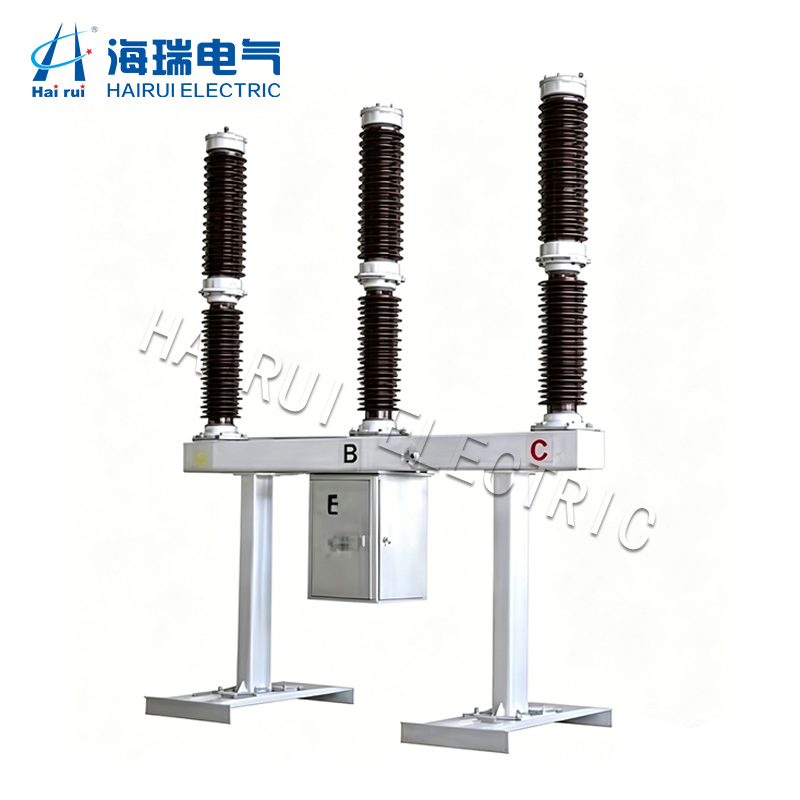
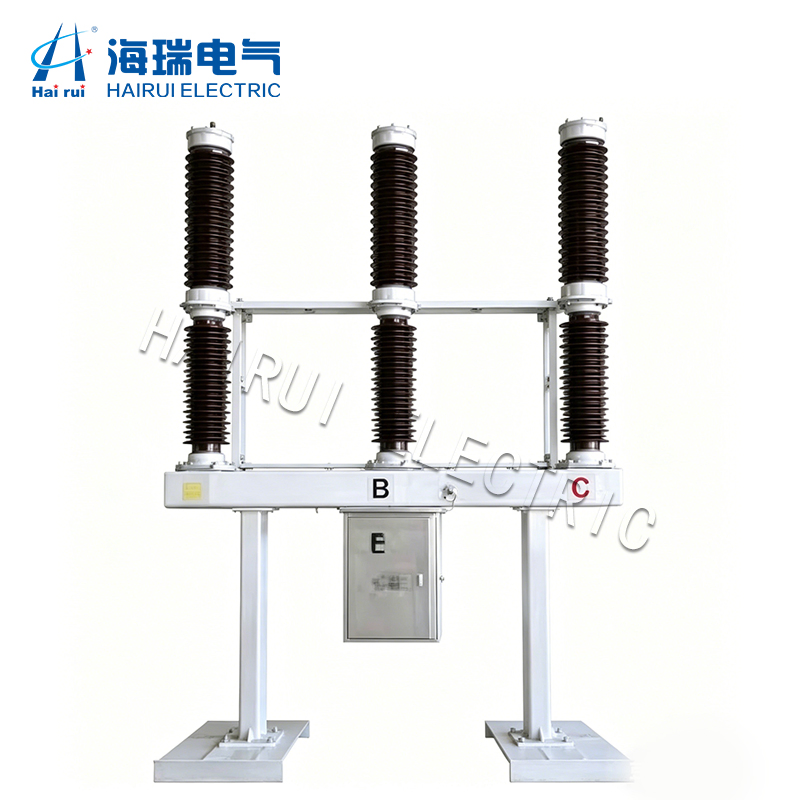
Product Overview
In an industrial plant the 110 kV breaker is rarely the last line of defence — it is the one device that has to work when the protection scheme above it has already failed. Industrial grids — steel, cement, petrochemical, mining, large manufacturing campuses — run captive generation alongside a utility supply, which produces fault levels that change with the operating mode and protection settings that have to be tested against more than one configuration.
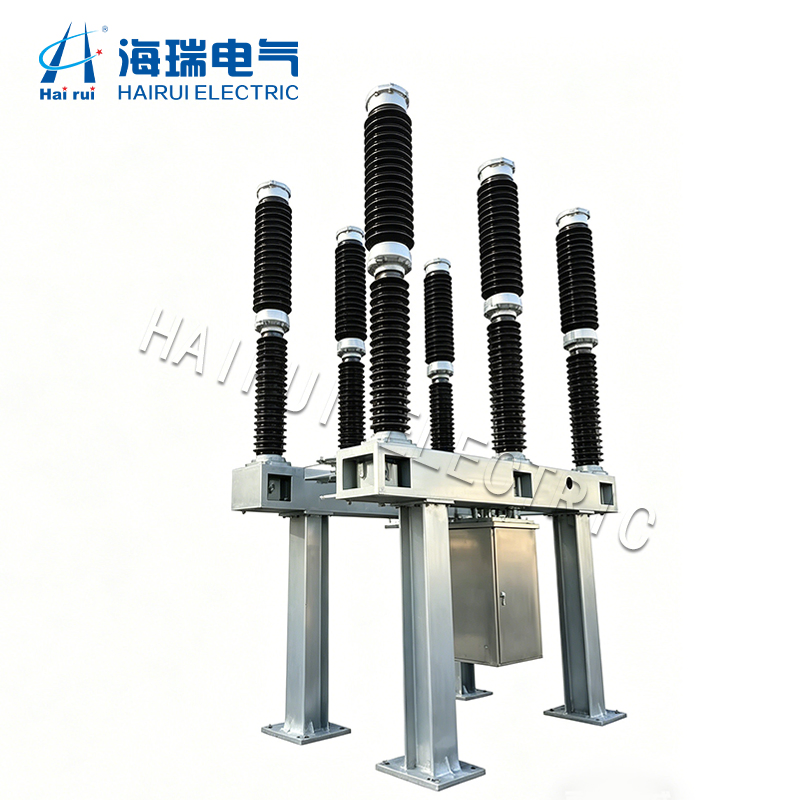
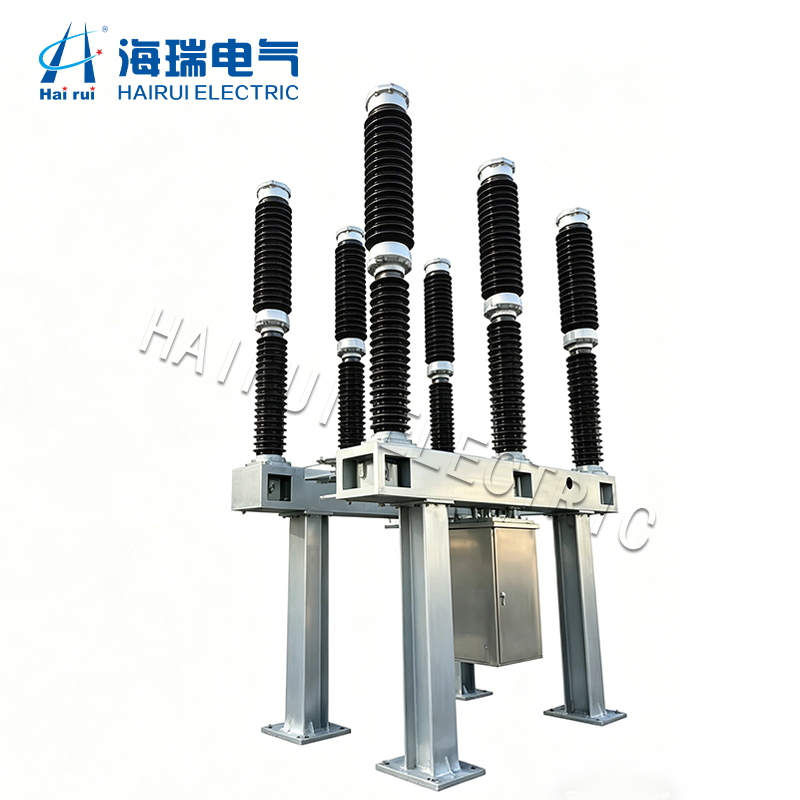
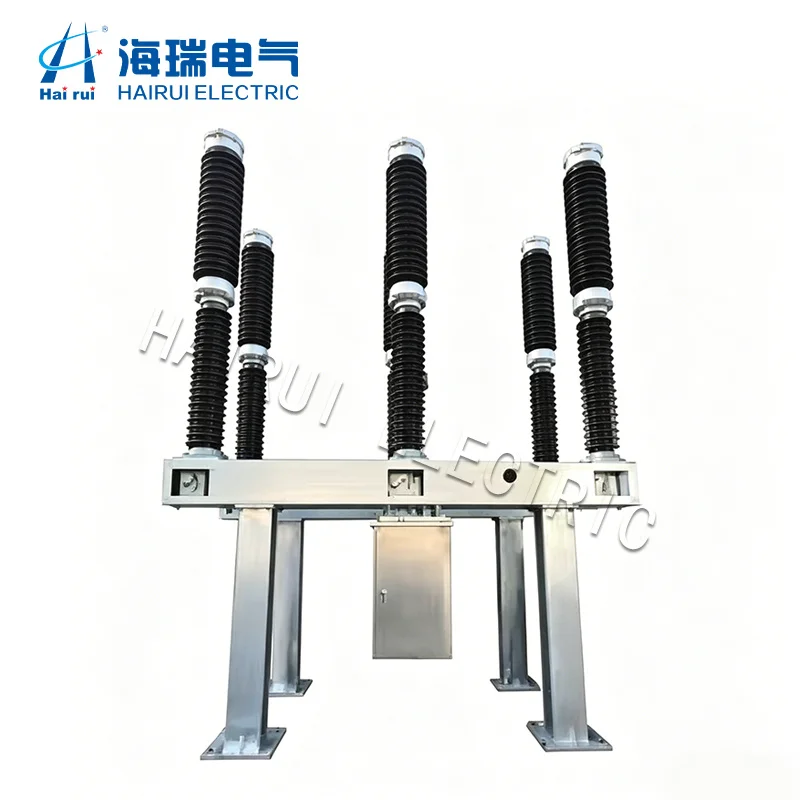
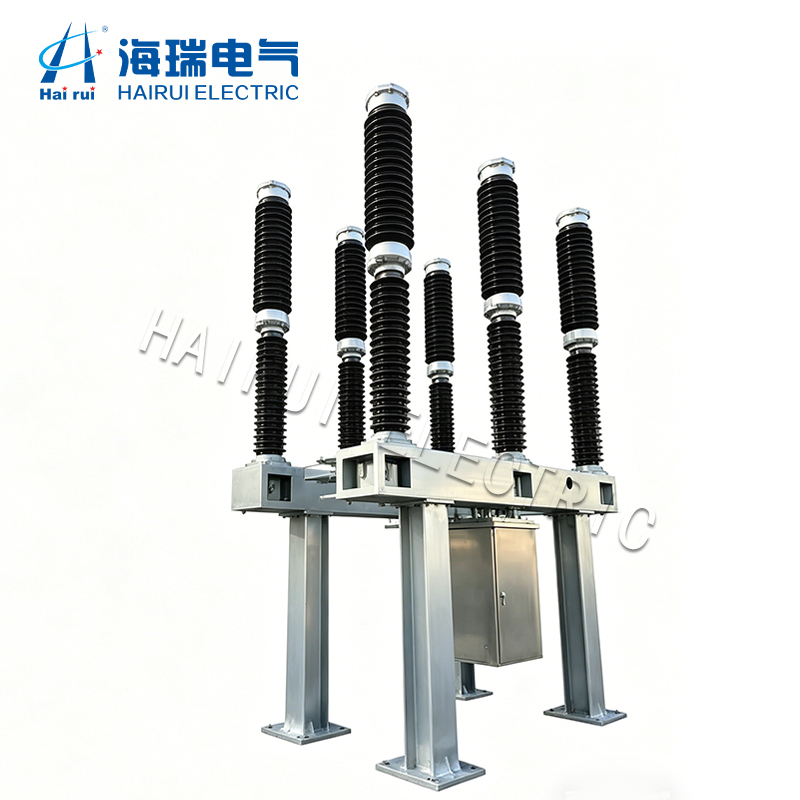
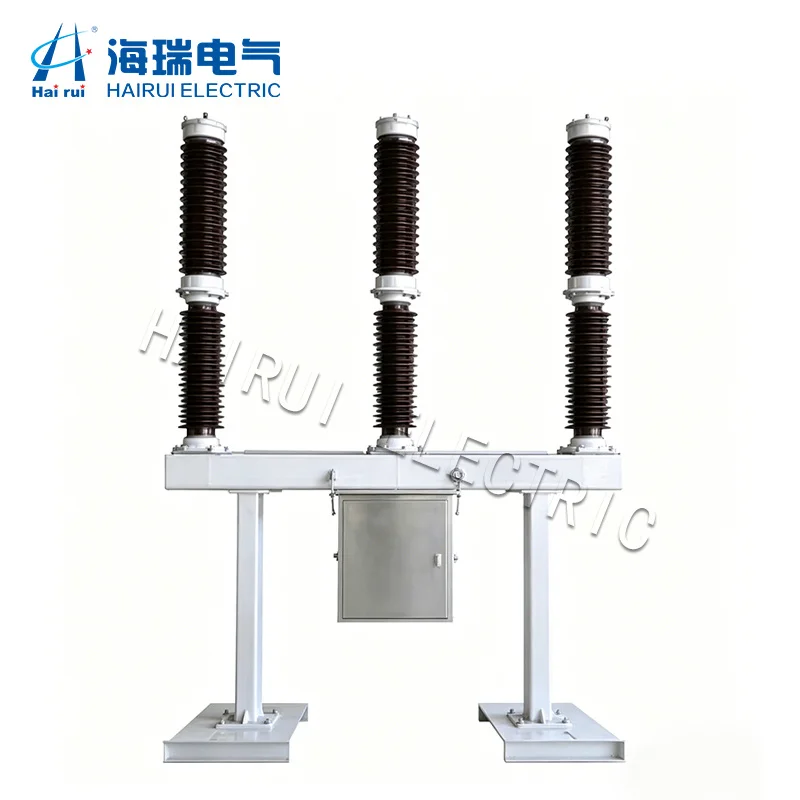
The LW36-126 is the breaker in that arrangement: 126 kV, 3150 A, 40 kA breaking, 40 kA / 3 s short-time, three poles, spring mechanism, 230 kV power frequency and 550 kV impulse. Two protection functions are listed for it — circuit-breaker failure protection and overcurrent protection — and the honest way to read those is as scheme functions the breaker participates in, not as a relay built into the tank. This page explains what the breaker contributes to each, and what the plant has to provide.
What the Breaker Provides to a Protection Scheme
A protection scheme is a division of labour. The relay measures and decides; the breaker carries, interrupts, and reports its own state. Most industrial protection failures are not relay failures — they are interface failures between the two.
| Scheme function | What the breaker contributes | What the relay or plant provides |
| Overcurrent protection | Trip circuit, interrupting capability at 40 kA, mechanically latched trip energy | Current transformers, measurement, time grading |
| Breaker failure protection | Status contacts (52a/52b), and a second trip coil where specified | Fault detector, timer, backup trip to the upstream breaker |
| Auto-reclosing | Mechanism able to execute open-close-open repeatedly at rated current | Reclose logic and dead-time setting |
| Monitoring | Gas density relay contacts, spring-charged status, operation counter | SCADA mapping, alarm philosophy |
Breaker failure protection is the function that most often exposes a weak interface. The scheme relies on the breaker reporting that it has opened — if the 52a contact is wired to the wrong auxiliary contact, or the trip circuit has a single coil and that coil has failed, the backup trip fires late or not at all. Industrial plants with captive generation usually specify a second trip coil and separate trip-circuit supervision for exactly that reason, and both are order-time options on this breaker rather than standard content.
Overcurrent protection is a simpler interface but has one trap on industrial networks: the fault level changes with the number of generators on line. A grading study done with all generation running can be invalid at three in the morning with one unit on, and the breaker is the same in both cases. What changes is the settings, and what the breaker has to guarantee is that 40 kA of breaking capacity covers the highest of those configurations.
Key Features
- 40 kA breaking at 126 kV: headroom for the highest fault level the plant can produce, which is usually with all captive generation on line.
- Dual trip coil available: independent trip paths for breaker-failure schemes and trip-circuit supervision.
- Status and monitoring contacts: 52a/52b auxiliary contacts, spring-charged indication, gas density alarm and lockout contacts — the inputs a breaker-failure or SCADA scheme actually needs.
- Mechanically latched trip energy: the spring holds the energy for the trip; a disturbance that takes the station battery does not prevent the next opening operation.
- 40 kA / 3 s short-time withstand: covers slow upstream grading, which is normal where a plant protection scheme has several zones in series.
- 3150 A continuous: about 600 MVA at 110 kV, sized for a plant incomer carrying both captive generation and utility import.
- 1900 kg net, single 20 GP: straightforward logistics for a plant retrofit where the crane window is short.
- ISO 9001 quality management, 12-month warranty, MOQ 1 piece, OEM/ODM: terminal arrangement, auxiliary contacts and trip circuits configured to the plant’s protection drawings.
Technical Specifications
Standard build. The protection interface — auxiliary contacts, trip coils, density relay wiring — is configured at order against the plant’s protection drawings, which is the part of the specification most often left to the last minute.
| Model | LW36-126 |
| Type | Outdoor, live-tank, three-pole SF6 circuit breaker |
| Rated voltage | 126 kV (110 kV system) |
| Rated current | 3150 A |
| Rated frequency | 50 Hz |
| Rated short-circuit breaking current | 40 kA |
| Rated short-time withstand current | 40 kA / 3 s |
| Rated peak withstand current | 100 kA (2.5 × breaking current at 50 Hz) |
| Power frequency withstand, 1 min | 230 kV |
| Lightning impulse withstand, 1.2/50 µs | 550 kV |
| Rated SF6 gas pressure at 20 °C | 0.6 MPa |
| Alarm pressure | 0.52 MPa |
| Lockout pressure | 0.5 MPa |
| Operating mechanism | Spring, motor-charged |
| Number of poles | 3, ganged |
| Installation | Outdoor, fixed on concrete foundation |
| Net weight | 1900 kg |
| Transport packing | Sea-worthy plywood case, 2200 kg packed |
| Standards | IEC 62271-100 / GB 1984 (type test reports on request) |
| Certification | ISO 9001 quality management system |
| Warranty | 12 months |
| MOQ | 1 piece |
| Origin | Zhejiang, China |
The 0.6 / 0.52 / 0.5 MPa band deserves a comment in an industrial context. Plant operators often run a single shift pattern with limited night cover, so the alarm has to be visible remotely: map the density relay contacts to SCADA and treat the 0.52 MPa alarm as a maintenance trigger rather than an event. The physics is in SF6 gas density monitor and alarm pressure.
Where Industrial Protection Differs
The same breaker is specified differently in each of the five markets we serve, because the protection philosophy and the operating pattern differ.
Africa: single-source plants without night cover
Industrial sites in Nigeria, Kenya, Tanzania and Ghana often run a single 110 kV incomer with a small captive generator and no night-shift electrical cover. Remote monitoring does more work here than local indication: density alarm, spring-charged status and trip-circuit supervision mapped to a control room is what turns a silent failure into a work order.
Southeast Asia: corrosive air and dense plant layouts
Coastal industrial estates in Indonesia, Malaysia, Vietnam and the Philippines combine salt air with tight layouts where the breaker sits close to process equipment. Creepage and corrosion protection on terminals become specification items alongside the protection interface, because a corroded auxiliary contact is a breaker-failure scheme that fails silently.
Central Asia: captive generation and cold
Kazakhstan, Uzbekistan, Tajikistan and Kyrgyzstan industrial plants often run substantial captive generation alongside the utility supply, so the fault level varies widely with dispatch. Cold winters add a commissioning constraint: protection tests have to be completed at ambient, not only in a warm workshop.
Middle East: fault level near the rating
Iraqi, Saudi, Emirati and Omani industrial plants are frequently built next to utility generation, producing fault levels that sit close to the breaker’s 40 kA rating and X/R ratios that make the asymmetrical duty relevant. Where the plant also runs at 50 °C, the 3150 A continuous rating needs derating before the current path is chosen.
CIS: documented protection settings
In Russia, Belarus, Azerbaijan and Uzbekistan the protection settings and the breaker’s duty evidence are reviewed together by the inspecting authority, and the documentation has to be in Russian. Test reports naming the duties performed carry more weight than a headline certificate.
Packing, Shipping Weight and Foundation Data
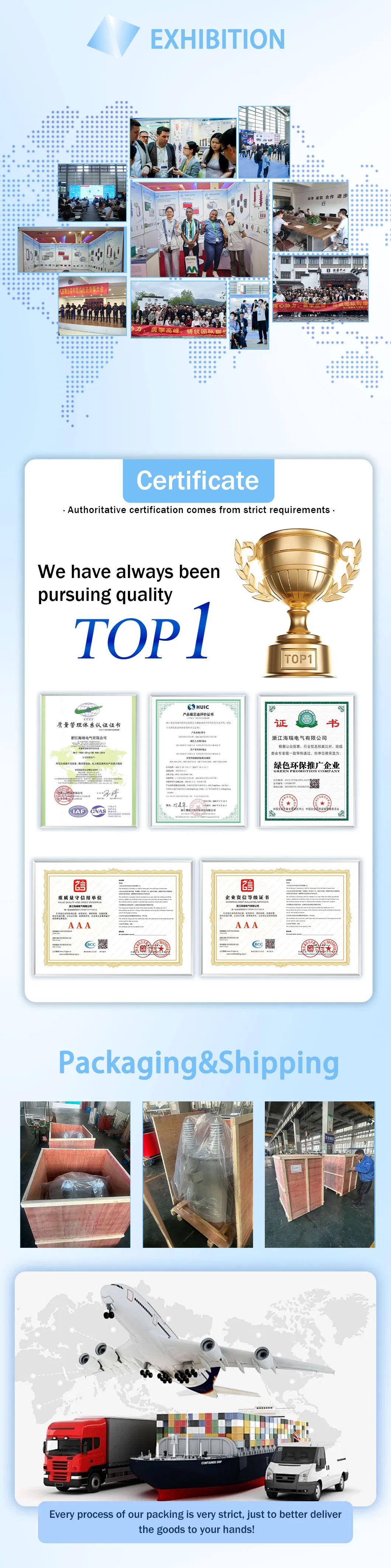
For a plant retrofit the packing matters as much as the rating: one 20 GP, four cases, lifting points marked, and a crane window that can be planned. This model’s own figures are in the first column.
| 126 kV / 110 kV system (LW36-126) | 252 kV / 220 kV system (LW-252) | |
| Interrupter columns shipped | 3 | 6 |
| Net weight | 1900 kg | approx. 3800 kg |
| Total shipping weight, packed | 2200 kg | approx. 4400 kg |
| Column packing | 3 cases, 3500 × 740 × 650 mm, 450 kg each | 6 cases, 3500 × 740 × 650 mm, 450 kg each |
| Base frame packing | 3880 × 700 × 2350 mm, 850 kg | 2 base cases, approx. 1700 kg total |
| Dynamic load, upward / downward | 24 kN | 24 kN per foundation |
| Height difference between the two foundation surfaces | ≤ 2 mm | ≤ 2 mm |
| Levelness of each foundation surface | ≤ 2 mm | ≤ 2 mm |
| Recommended container | 1 × 20 GP | 1 × 40 HQ or 40 FR |
The 252 kV column doubles the 126 kV one because a split-type pole carries two interrupter columns — six columns and two base frames for three poles. Loading from Ningbo or Shanghai, EXW through DAP, LCL consolidation available. Invoice, packing list, bill of lading, certificate of origin, routine test report and IEC 62271-100 declaration travel with the goods.
Price Guide
Indicative RMB prices, standard builds, ex-works Zhejiang, current as of 2026 — a budget reference rather than a quotation.
| Voltage class | Reference model | Interrupter columns | Indicative price |
| 40.5 kV (35 kV system) | LW8-40.5 | 3 | approx. RMB 40,000 |
| 72.5 kV (66 kV system) | LW9-72.5 | 3 | approx. RMB 75,000 |
| 126 kV (110 kV system) | LW36-126 | 3 | approx. RMB 80,000 |
| 252 kV (220 kV system) | LW-252 | 6 | approx. RMB 160,000 |
In an industrial project the breaker is a small line item against the switchgear, protection panels and civil works, which is why the interface options — second trip coil, additional auxiliary contacts, terminal drilling — are worth specifying rather than retrofitting. They cost little at order and a great deal during a shutdown.
Included: breaker, base frame, gas density monitor, foundation bolts, gas filling per contract and an English O&M manual. Quoted separately: second trip coil, extra auxiliary contacts, spare SF6 cylinders, disconnectors, current transformers, special creepage bushings, third-party inspection and witness tests. Typical terms are 30% deposit with order and the balance against a copy of the bill of lading, with L/C at sight for container volumes. Cost structure is in SF6 circuit breaker price and cost drivers.
Ordering: What to Send in the Inquiry
For an industrial plant, the protection drawings matter as much as the single-line diagram:
- Protection philosophy — breaker-failure scheme, trip-circuit supervision, single or dual trip coil.
- Auxiliary contact count and type — 52a/52b quantities, and whether they must be break-before-make.
- Fault level in each operating mode — utility import only, captive generation only, and both together.
- Continuous load and transfer case — in amperes or MVA.
- Ambient, altitude and pollution class — the site corrections, and the derating that follows.
- Terminal arrangement — overhead line or cable, conductor or busbar size.
- Destination port and Incoterm — EXW, FOB, CFR, CIF or DAP.
- Documentation — type test reports, wiring diagrams, Russian-language manuals where required.
Minimum order is one piece. The commercial sequence is in how to buy SF6 circuit breakers from a manufacturer; the fault-level side of the same breaker is on the LW36-126 40 kA page.
FAQ
What protection functions does the LW36-126 support?
The specification lists circuit-breaker failure protection and overcurrent protection functions, allowing the breaker to integrate into coordinated industrial grid protection schemes.
Can it handle industrial fault levels?
Yes. It offers a 40kA short-circuit breaking current and 40kA/3s short-time withstand current at 126kV with a 3150A continuous rating.
Is the breaker suitable for harsh industrial environments?
The outdoor installation design and 3-pole construction are suited to open-air industrial switchyards, including dusty and high-temperature sites.
Do you support OEM/ODM for industrial projects?
Yes. OEM/ODM service and customization are available, with ISO 9001 certified manufacturing and a minimum order of one piece.
How is the product delivered?
Each breaker is packed in a wooden transport box, covered by a 12-month warranty, and shipped from Zhejiang, China.
Does the breaker include overcurrent and breaker-failure protection?
Those are scheme functions. The breaker provides the trip circuit, status contacts (52a/52b), mechanically latched trip energy and an optional second trip coil; the relay performs measurement, timing and backup tripping.
How much does a 126kV SF6 circuit breaker cost?
The LW36-126 is approximately RMB 80,000 ex-works Zhejiang for a standard build. For reference: 40.5kV about RMB 40,000, 72.5kV about RMB 75,000 and 252kV about RMB 160,000. Final price depends on breaking capacity, creepage class, accessory set and freight term.
What is the shipping weight and how is the breaker packed?
The LW36-126 is 1900kg net and 2200kg packed, in four cases: three column cases of 3500 x 740 x 650mm at 450kg each and a base case of 3880 x 700 x 2350mm at 850kg. One 20 GP carries a single unit.
What is the MOQ and what documentation comes with the shipment?
MOQ is 1 piece, with OEM/ODM customization of ratings, nameplate and monitoring contacts. Documents include invoice, packing list, bill of lading, certificate of origin, routine test report and IEC 62271-100 declaration.
Request Quote
Tell us your specifications, quantity, or application scenario and we will reply with a tailored quote.