LW36-126 Explained: 3150 A, 40 kA and 40 kA/3 s in Practical Terms
What the LW36-126 model number covers, what it does not, and how to pick between the six variants and specify the items the model omits.
Read More
Every SF6 breaker datasheet claims a long life. Almost none of them define it. “Long mechanical life”, “high reliability”, “low maintenance” — these are marketing adjectives, and they cannot be compared between suppliers or written into a purchase order. The circuit breaker mechanical endurance class exists precisely to replace those adjectives with something a buyer can hold a supplier to, and it is one of three classification axes in IEC 62271-100 that together decide what the breaker will actually cost to own over twenty years.
This article decodes M1 and M2, E1 and E2, and C1 and C2: what each class means, what test evidence proves it, how the three axes interact, which one matters for which duty, and how to translate a class into a life-cycle cost number rather than a sales claim. It applies to breakers across the SF6 circuit breaker range, from 40.5 kV distribution equipment to 252 kV transmission units.
The confusion starts because people talk about “breaker life” as a single quantity. It is at least three, and they degrade by different mechanisms at different rates.
A breaker can be strong on one axis and weak on another. A unit with an excellent mechanism and a tightly designed interrupter might be M2 but only E1. A unit designed for capacitor bank duty might be C2 but only M1. Reading the classes separately is the whole point.
IEC 62271-100 defines two mechanical endurance classes by the number of operating cycles the breaker must complete without mechanical failure:
| Class | Operating cycles | What it implies | Typical duty |
|---|---|---|---|
| M1 | 2,000 | Normal mechanical endurance | Line positions, infrequent switching, substation breakers |
| M2 | 10,000 | Extended mechanical endurance | Capacitor banks, reactor switching, frequent reclosing, generator breakers |
The test is not a bench exercise on the mechanism alone. It is performed on the complete breaker, at rated gas density, with the interrupter in circuit, and it includes the auxiliary contacts, the position indicators, the anti-pumping circuit and the interlocks. That matters, because a mechanism that survives 10,000 operations in a test rig may not survive them attached to an interrupter with a heavy moving contact and a set of flexible connections that fatigue.
Two thousand operations sounds small until you count what a line breaker actually does. A 126 kV transmission line position in a temperate network typically operates 10 to 30 times a year, most of those being auto-reclose cycles on transient faults. At 20 operations a year, 2,000 cycles is a hundred years of service. The mechanism will be limited by seals, lubrication and corrosion long before it is limited by cycle count.
Now count a capacitor bank breaker: 100 to 1,000 operations a year is normal for daily switching of a compensation bank. At 500 a year, an M1 breaker reaches 2,000 cycles in four years. The same equipment that would last a century on a line position is worn out before the first major maintenance interval.
This is the practical value of the class. It is not about whether the breaker is “good”. It is about whether the breaker’s cycle budget matches the switching duty of the position it is going into.
An M2 mechanism is not simply an M1 mechanism made of better steel. The differences are usually in the details that only show up at high cycle counts: spring materials and shot-peening, bearing selection, lubrication retention, the fatigue design of the flexible shunt, the wear resistance of the latch and the cam surfaces, and the sealing arrangement on the drive shaft.
The commercial consequence is a price premium, typically in the range of 10 to 25% over an equivalent M1 unit, and a longer delivery because the testing takes time. Against that, a single mechanism overhaul on an HV breaker — including the outage, the crane, the labour and the re-commissioning tests — usually costs more than the entire premium. The arithmetic favours M2 whenever the position will genuinely use the cycles.
Where M classes count operations, E classes count fault interruptions. The distinction is that an open-close operation at rated current does almost no damage to the interrupter, while an interruption at rated breaking current consumes a measurable amount of arcing contact and nozzle material.
| Class | Definition | Test evidence |
|---|---|---|
| E1 | Basic electrical endurance | Standard short-circuit test duties, maintenance permitted between duty groups |
| E2 | Extended electrical endurance | Extended series of breaking operations completed without maintenance of the interrupter |
E2 is the class that matters when the breaker will see repeated fault clearing without an opportunity to open it up. That is normal in networks with high lightning activity, in reclosing schemes that go to multiple attempts, and in positions where the fault level is close to the breaker rating so every operation is near the design limit.
E1 is not a defect. Most breakers in most positions are E1, and it is the honest specification for a line position that clears a handful of faults a year and gets inspected on a five-year cycle anyway.
Unlike M2, E2 does not come with a single operation count stamped on the plate. It certifies that the breaker completed an extended test series without interrupter maintenance. To turn that into a maintenance plan you still need the manufacturer’s contact wear curve — the relationship between accumulated I²t and contact erosion — because a breaker that clears twenty faults at 30% of rating has consumed far less contact life than one that clears five at 100%.
The maintenance planning guide covers how to convert that into an inspection interval, and the testing guide covers the contact resistance measurement that tells you how much has actually been consumed.
The C classes are the least understood and the most often mis-specified, because they do not describe wear at all. They describe the probability of re-strike when the breaker interrupts a small capacitive current.
| Class | Definition | Practical meaning |
|---|---|---|
| C1 | Low probability of re-strike | Acceptable for line and cable charging currents in most networks |
| C2 | Very low probability of re-strike | Required for capacitor bank switching and for cable circuits where voltage escalation is a concern |
The C2 test is more demanding in a specific way: it is performed at a higher recovery voltage and with longer arcing times than C1, precisely because the failure mode — a re-strike that produces a voltage step and can escalate on the next interruption — is a dielectric recovery problem that shows up only under those conditions.
Why this matters commercially: a breaker that is C1 but not C2 can be perfectly safe on a line position and entirely unsuitable on a capacitor bank, where successive re-strikes can double the voltage across the bank and destroy it. The failure is not the breaker’s; it is a specification mismatch. The physics of trapped charge and voltage escalation is covered in capacitive current switching.
The three axes are not independent in service, even though they are tested separately. A breaker on a capacitor bank is doing three things at once: it is operating frequently (mechanical), it is interrupting inrush and outrush currents (electrical, though at modest magnitude), and it is interrupting small capacitive currents with a re-strike risk (dielectric). The correct specification for that position is M2 plus C2, with E class chosen on the basis of the fault level behind the bank.
Conversely, a bus coupler in a substation operates rarely, clears faults only when a fault occurs in the busbar zone, and never switches capacitance. M1 / E1 / C1 is the honest specification, and paying for M2 / E2 / C2 on that position is money spent on capability that will never be used.
| Position | Operations per year | Governing class | Typical specification |
|---|---|---|---|
| Transmission line, auto-reclose | 10 – 30 | Electrical (fault clearing) | M1 / E1 or E2 / C1 |
| Capacitor bank | 100 – 1,000 | Mechanical + dielectric | M2 / E1 / C2 |
| Shunt reactor | 50 – 300 | Mechanical + dielectric | M2 / E1 / C2 |
| Generator circuit breaker | 200 – 500 | Mechanical + electrical | M2 / E2 / C1 |
| Bus coupler | 5 – 20 | Electrical only | M1 / E1 / C1 |
| Transformer feeder | 10 – 50 | Electrical | M1 / E1 / C1 |
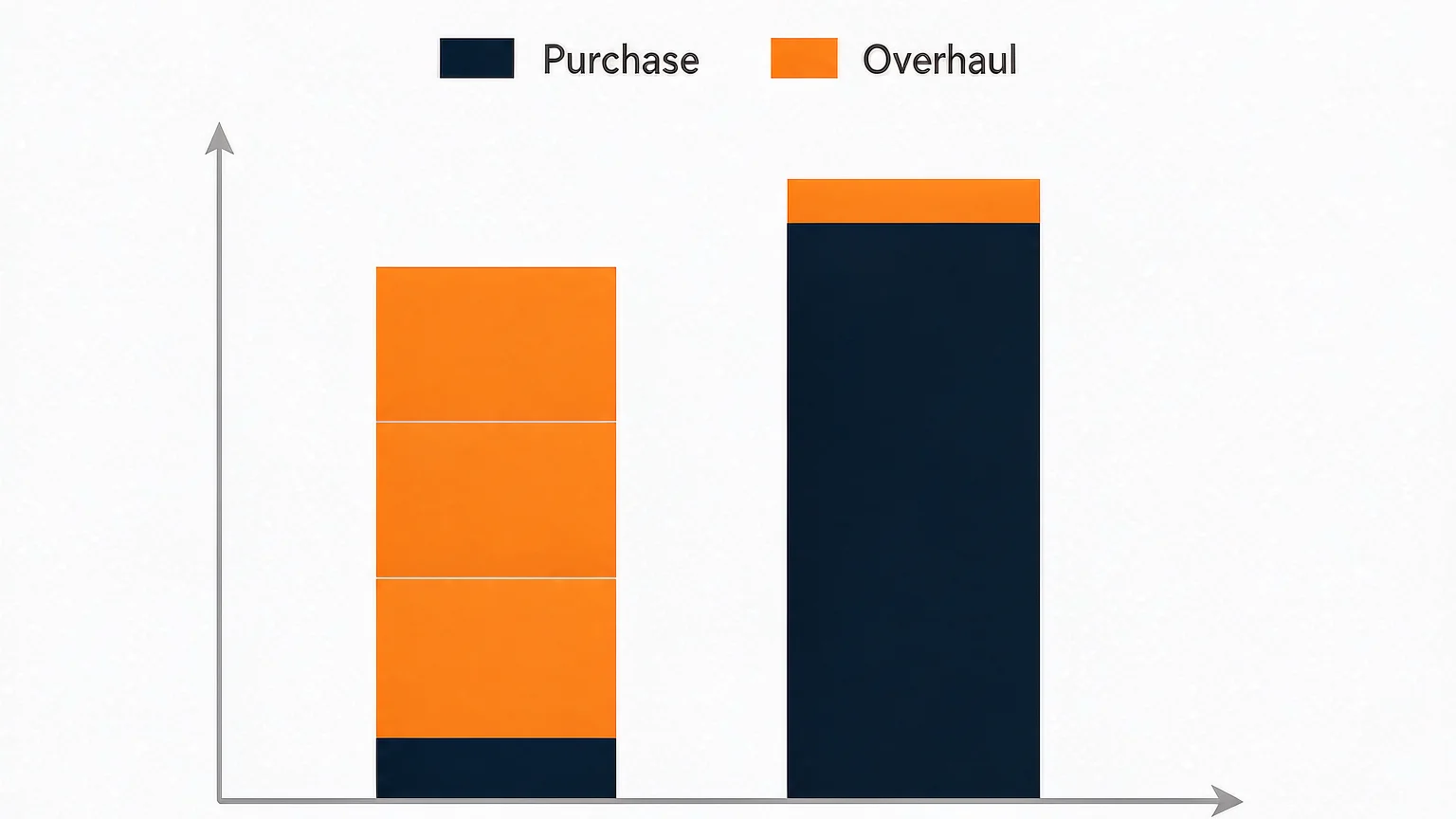
The reason to care about M2 rather than accept “long life” is that the class lets you put a number on the twenty-year cost. The comparison below uses a capacitor bank position at 500 operations per year, which is a realistic figure for daily compensation switching.
| Item | M1 breaker | M2 breaker |
|---|---|---|
| Purchase premium | baseline | +15% |
| Cycle budget | 2,000 operations | 10,000 operations |
| Years to budget at 500 ops/year | 4 | 20 |
| Mechanism overhauls in 20 years | 4 | 0 – 1 |
| Outages for overhaul | 4 | 0 – 1 |
| Spare breaker required | Yes | No |
| 20-year cost position | Premium + 4 overhauls + spares | Premium only |
The purchase premium is the small number in that table. The overhauls and the spare unit are the large ones, and they are the reason the class is worth arguing about in a tender rather than accepting whatever the supplier volunteers.
Classes are only worth the paper they are printed on if the evidence exists. Five things to check.
The IEC 62271-100 and IEEE C37 standards comparison explains which clause of the standard each class comes from and how the IEEE scheme handles the equivalent requirements, which is useful when a project mixes both.
The classification is only meaningful when it is attached to a specific rating, because a breaker’s cycle budget and its breaking capacity trade against each other. A 40.5 kV distribution breaker with 3,000 operations declared is doing well within the M2 band, and is the right choice for a 35 kV capacitor bank or a frequently switched feeder: the LW8-40.5 with 3,000-operation mechanical life is specified for exactly that role.
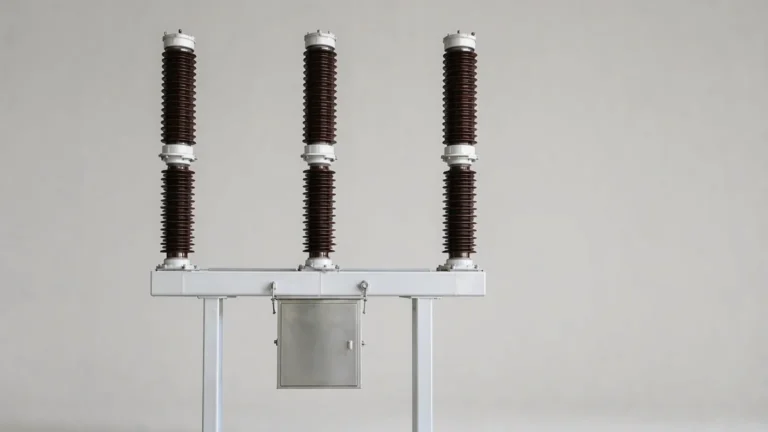
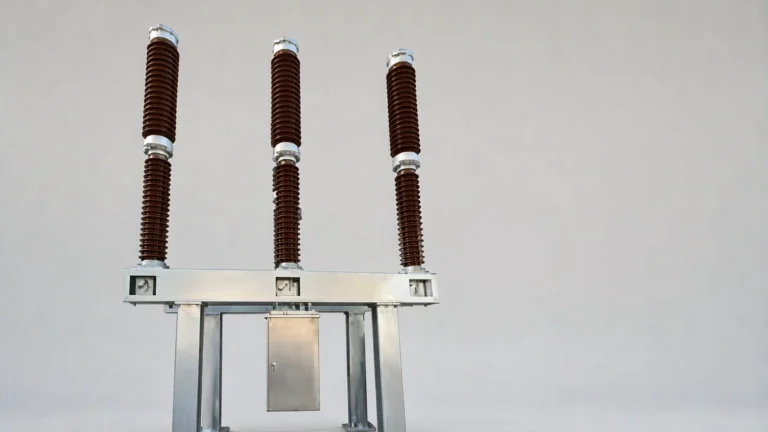
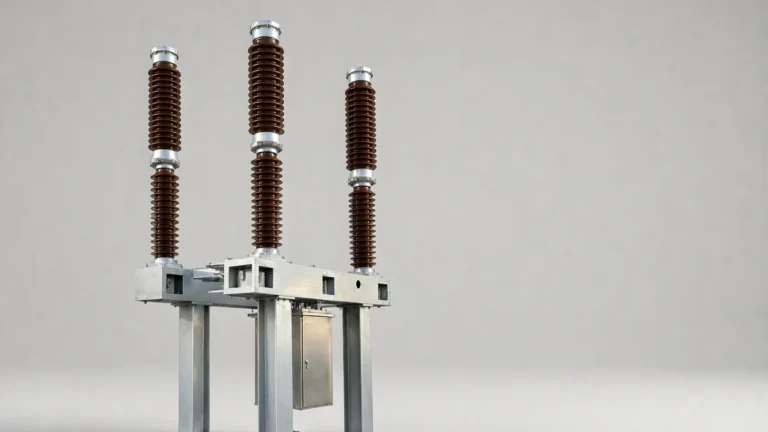
At 72.5 kV, the class that usually governs is electrical rather than mechanical, because the fault level is higher and each interruption consumes more contact material — the LW9-72.5 with 40 kA short-time withstand is built around that duty. At 126 kV the thermal requirement becomes the binding constraint, which is why the LW36-126 with 40 kA / 3 s short-time withstand pairs a 40 kA breaking rating with a 3-second thermal rating. At the top of the range, the 252 kV 4000 A split-type breaker carries the highest contact wear per operation and the strongest case for E2 evidence.
The three classification codes are the difference between buying a capability and buying an adjective. M1 and M2 tell you how many operations the mechanism will survive, E1 and E2 tell you whether the interrupter can take repeated fault clearing without being opened up, and C1 and C2 tell you whether the breaker is safe to switch capacitance.
Specify all three, ask for the test report reference for each, and match them to the switching duty of the actual position rather than to the highest available grade. The position that needs M2 / C2 will pay for itself; the position that does not need it never will. For the wider picture of how these classes sit alongside the other ratings, the SF6 circuit breaker article library covers the rest of the equipment.
M1 requires 2,000 operating cycles and M2 requires 10,000, both tested on the complete breaker with the interrupter in circuit. M2 is the extended mechanical endurance class and carries a price premium of roughly 10 to 25%.
10,000 mechanical operating cycles as defined by the class, achieved with the manufacturer’s specified minor maintenance at the specified intervals. The calendar life may still be limited by seals and lubrication rather than by cycle count.
That the breaker completed an extended series of short-circuit breaking operations without maintenance of the interrupter. Unlike M2, E2 does not fix a single operation count — the maintenance plan still has to come from the manufacturer’s contact wear curve.
Yes, in practice. C2 means very low probability of re-strike, which is what prevents the voltage escalation that can damage the bank. A C1 breaker on a capacitor bank is a specification mismatch even if the breaker itself is healthy.
Usually not. A transmission line position operates 10 to 30 times a year, so 2,000 cycles is a hundred years of mechanical service. The premium buys capability the position will never consume; spend it on electrical endurance evidence or on spares instead.
They can claim it, but it is not a class until a type test report on the complete breaker supports it. Ask for the report reference and check that the tested configuration matches the one being offered.