Product Overview
A distribution breaker rarely dies of a fault it could not interrupt. It dies of being operated: every trip, every auto-reclose shot and every manual isolation strokes the same spring mechanism, and the linkage and contacts accumulate that count whether the current was 40 kA or 400 A. The LW8-40.5 is rated for 3000 mechanical operations, and this page is written around what that number actually buys on a 33 kV or 35 kV feeder.
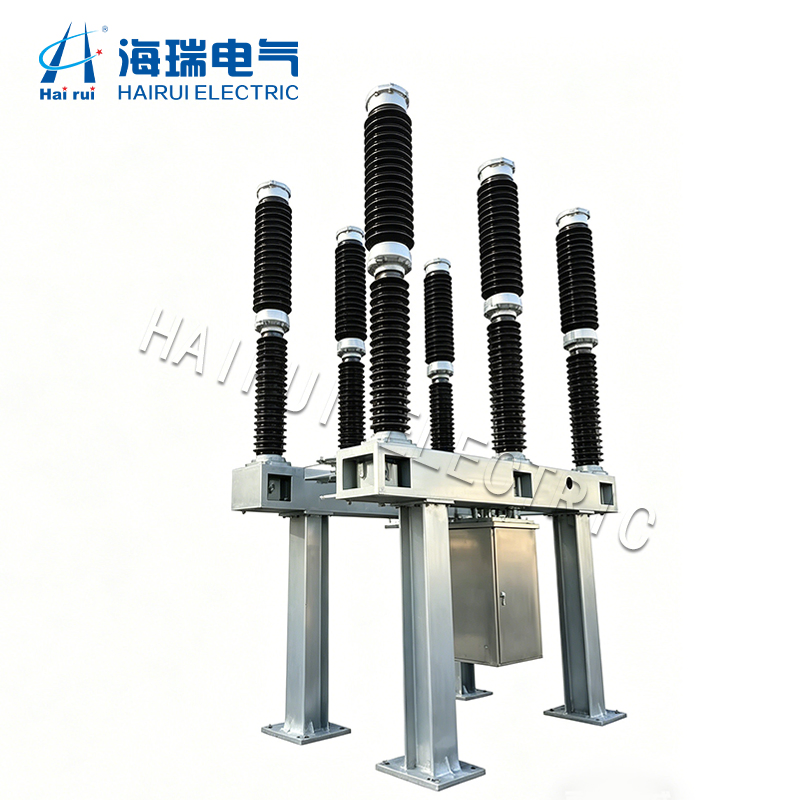
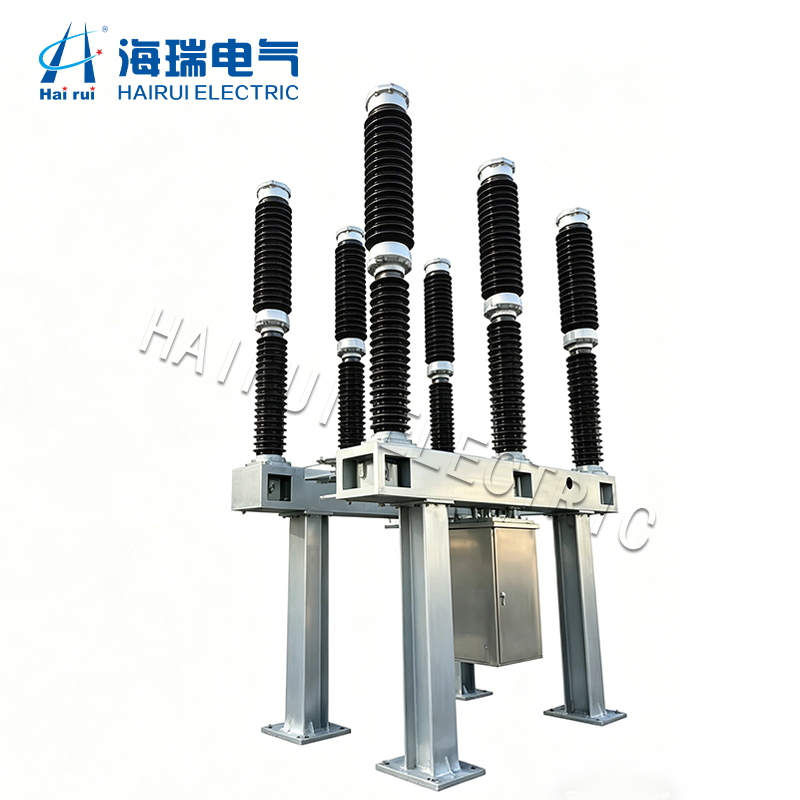
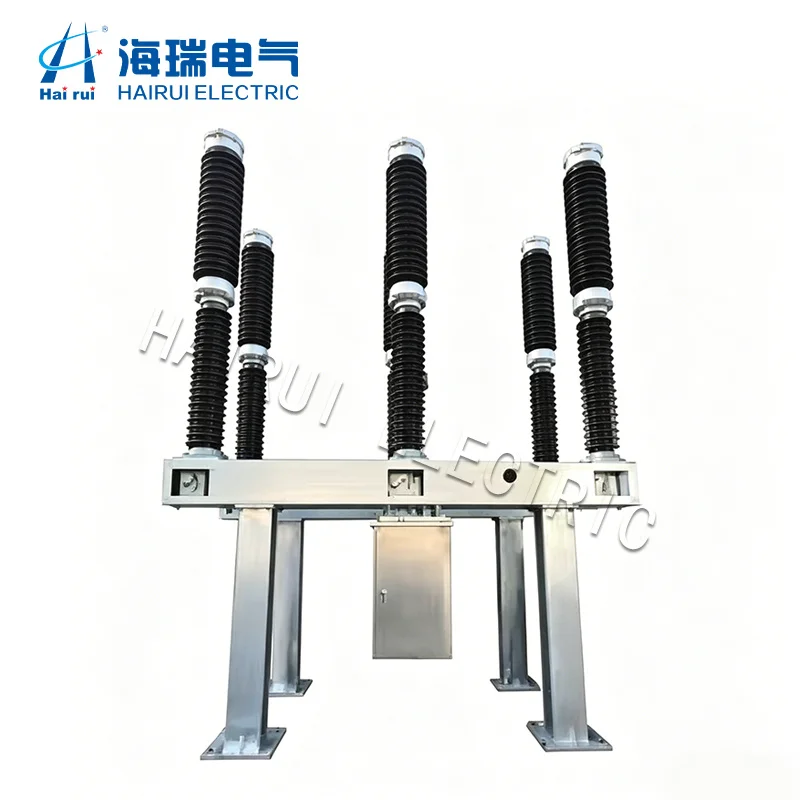
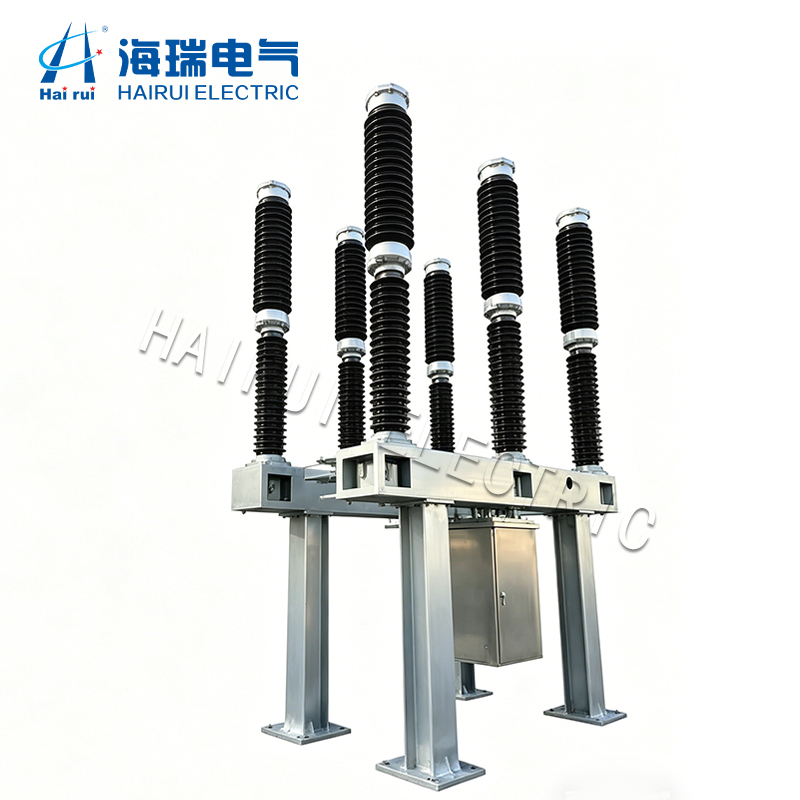
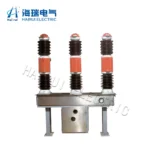
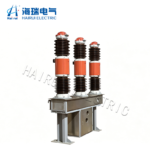
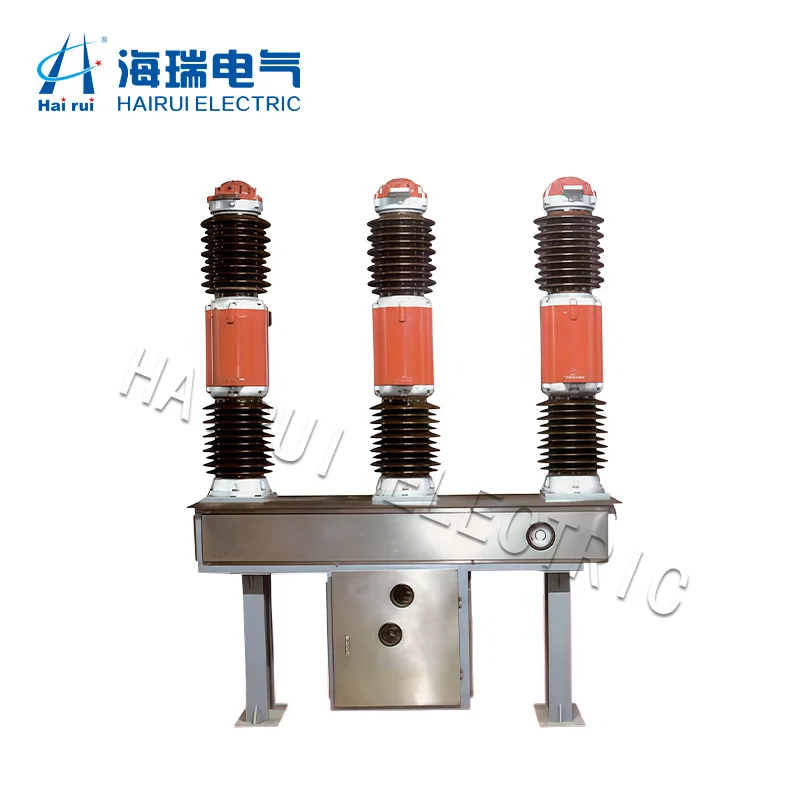
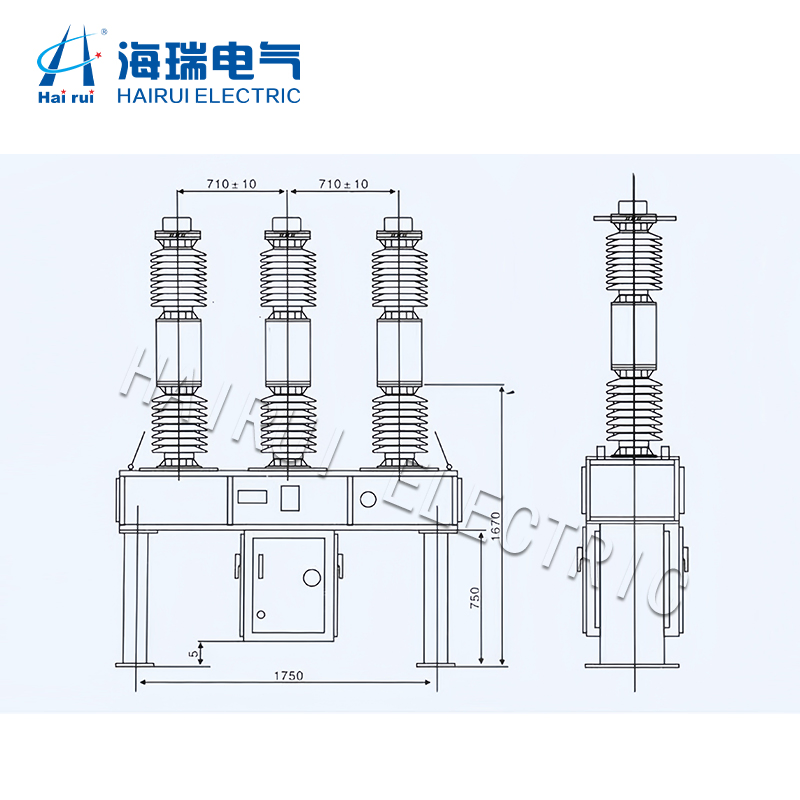
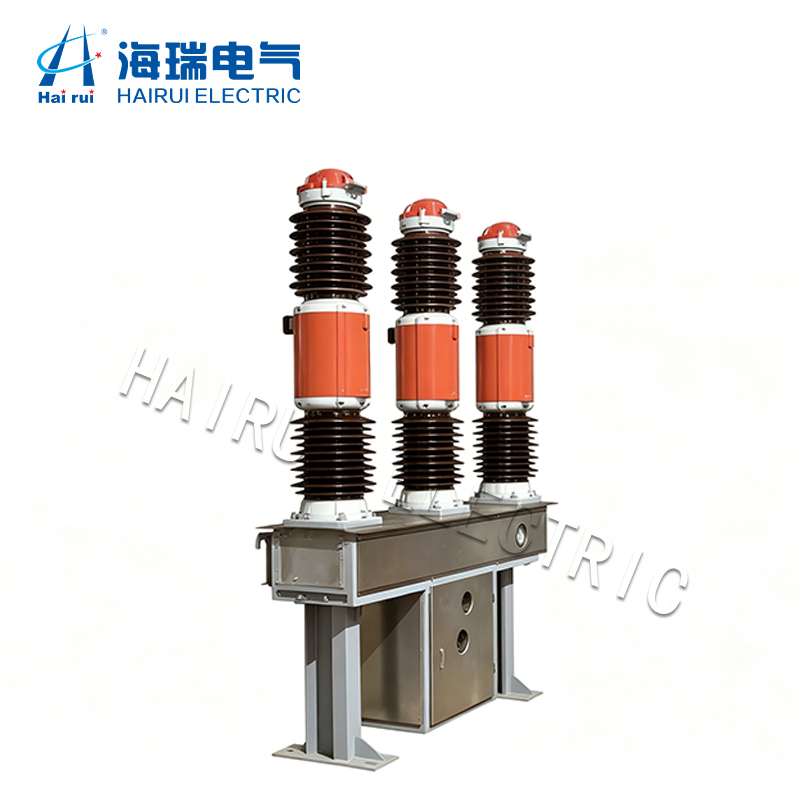
Electrically it is a conventional three-pole live-tank unit: 40.5 kV, 1600 A or 2000 A, an SF6 interrupter sealed at 0.5 MPa with a 0.47 MPa alarm and a 0.15 MPa minimum functional pressure, spring-charged mechanism, 185 kV lightning impulse and 95 kV power frequency withstand. Mechanically it is three columns on one base frame — which matters for endurance, because pole alignment is set once at installation instead of being re-set every time a column is serviced.
What 3000 Operations Buys on a Real Feeder
3000 sounds like a large number until you count a specific duty. The rows below use our own assumptions — treat the operations-per-year column as an illustration, not a rating — and show why the same breaker is effectively immortal on one feeder and a consumable on another.
| Duty profile | Operations per year | Years to 3000 operations |
| Rural 33 kV feeder: fault trips plus one reclose shot | about 24 | over 120 |
| Urban feeder with sectionalising and isolation for works | about 40 | about 75 |
| Substation bus coupler, parallel switching | about 150 | about 20 |
| Capacitor bank or reactor switching, twice daily | about 730 | just over 4 |
| Routine test and maintenance operations | about 50 | about 60 |
Two conclusions follow. Fault clearing is not what consumes endurance — a feeder that trips thirty times a year will outlive its transformer. Switching duty with a daily rhythm is what turns 3000 into a four-year figure, and if that is your application the answer is not a larger mechanical number but a breaker classified for the duty. Mechanical and electrical endurance are separate classifications, and the M1/M2 and E1/E2 codes are what a tender should specify: see M1/M2, E1/E2 and C1/C2 classification codes.
The second half of the endurance story is gas. A sealed interrupter holds its charge for years, but every annual top-up is an intervention that disturbs seals and introduces handling risk. Keeping the 0.5 MPa charge stable is what makes a 3000-operation mechanism useful rather than theoretical.
Key Features
- 3000 mechanical operations: the design basis for the linkage, latch and spring system, not a marketing ceiling. Beyond it the mechanism is due for overhaul, not for scrap.
- Sealed SF6 interrupter at 0.5 MPa: stable dielectric and arc-quenching performance without routine top-up, so endurance is not eroded by gas handling every service visit.
- Operation counter and density relay contacts: both readings can be wired to SCADA, which is how a 3000-operation budget gets tracked in practice instead of being discovered at year fifteen.
- Spring-charged mechanism: a single motor-charged spring set, mechanically latched trip energy. No compressor plant, no hydraulic oil, and tripping does not depend on the station battery being healthy at the instant of the fault.
- Short arcing time, low contact erosion: a fast interrupter keeps the energy per fault interruption small, which is what preserves the contact surface across thousands of fault trips.
- Three poles on one base frame: alignment shimmed once to within 2 mm; a pole replaced later does not re-open the alignment question for the other two.
- 185 kV lightning impulse / 95 kV power frequency: insulation margin for polluted and high-altitude sites where the flashover path, not the contact, is the limiting element.
- ISO 9001 quality management, 12-month warranty, MOQ 1 piece, OEM/ODM: single replacement units accepted, with customization of ratings, nameplate and auxiliary contacts.
Technical Specifications
The ratings that decide endurance are the mechanical life, the gas tightness and the mechanism type; the rest are the electrical envelope. Both are listed together because a 3000-operation mechanism behind an undersized interrupter is not a long-life breaker — it is a short-life breaker with a good mechanism.
| Model | LW8-40.5 |
| Type | Outdoor, live-tank, three-pole SF6 circuit breaker |
| Rated voltage | 40.5 kV |
| Rated current | 1600 A / 2000 A |
| Rated frequency | 50 Hz |
| Rated short-circuit breaking current | 25–31.5 kA (selected against your fault level) |
| Power frequency withstand voltage, 1 min | 95 kV |
| Lightning impulse withstand voltage, 1.2/50 µs | 185 kV |
| Rated SF6 gas pressure at 20 °C | 0.5 MPa |
| Alarm pressure | 0.47 MPa |
| Minimum functional pressure | 0.15 MPa |
| Operating mechanism | Spring, motor-charged |
| Mechanical life | 3000 operations |
| Number of poles | 3, ganged |
| Installation | Outdoor, fixed on concrete foundation |
| Auxiliary supply | DC 110 V / 220 V (confirmed at order) |
| Standards | IEC 62271-100 / GB 1984 (type test reports on request) |
| Certification | ISO 9001 quality management system |
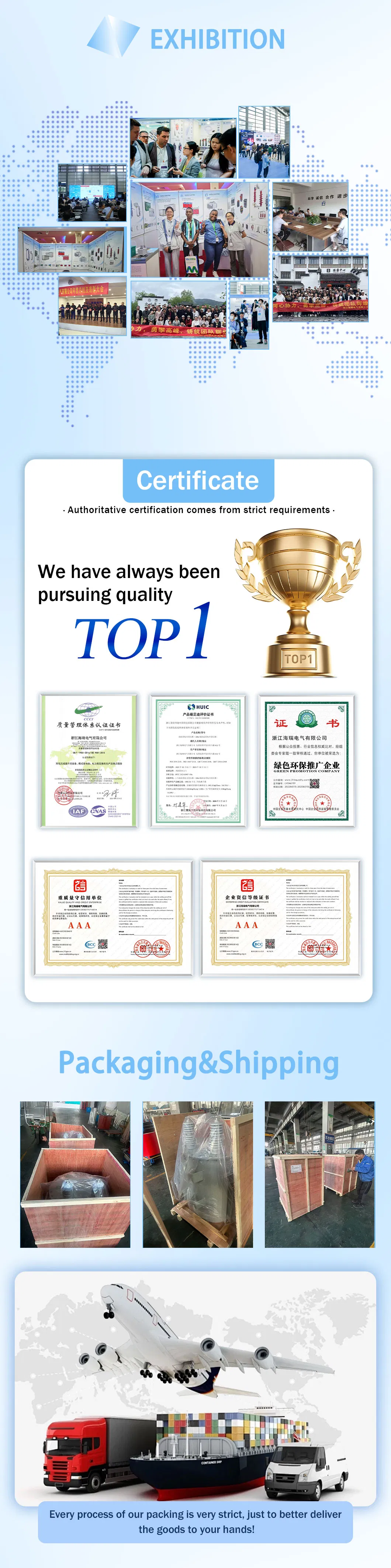
| Transport packing | Sea-worthy plywood case |
| Warranty | 12 months |
| MOQ | 1 piece |
| Origin | Zhejiang, China |
Two values here are frequently misread. The 0.5 MPa is the fill pressure at which the type tests were performed, not a working range; 0.47 MPa is the alarm contact and 0.15 MPa the point at which interrupting capability is withdrawn. And the 185 kV lightning impulse is the insulation level, not an operating voltage — 40.5 kV breakers are tested at 95 kV power frequency and 185 kV impulse to prove margin, which is a separate question from how many operations the mechanism survives.
Applications: Where Operating Counts Run High
Endurance is decided by duty, and duty looks different in each of the five regions we ship into. These are the ones where the operating count, not the fault level, sets the replacement date.
Africa: fault trips on long rural feeders
33 kV feeders out of Nigerian, Kenyan and Tanzanian substations are long, lightly loaded and exposed, with high fault incidence and aggressive auto-reclose settings. That combination produces the most operating cycles of any normal duty — but still only a few dozen a year, so a 3000-operation mechanism is not the constraint there. What is the constraint is having no compressor to maintain and no gas to top up between visits. Counters and density contacts wired to a control room let a remotely supervised station be monitored without travel.
Southeast Asia: reclose storms and salt
In Indonesia, the Philippines, Vietnam and Malaysia a single thunderstorm can produce several reclose sequences on the same feeder within an hour. The mechanism sees the operations; the linkage sees the humidity and the salt. Coastal sites need the mechanism treated as a corrosion item during commissioning, not just the bushings, and that is the argument for specifying the outdoor paint system and the greasing regime at order time. Creepage requirements for the same sites are covered in pollution class and salt spray selection.
Central Asia: cold-start mechanism behaviour
At −30 °C the question is not operations per year but whether the first operation of the winter works. Grease stiffness, spring charge time and latch friction all change at the low end, and a mechanism validated only at +20 °C can refuse a trip when it is needed. Sites in Kazakhstan, Uzbekistan, Tajikistan and Kyrgyzstan should state the winter minimum so the lubrication and any heater are specified against the real figure; the physics of low temperature operation is set out in cold climate and high altitude guidance.
Middle East: heat ages the mechanism, not the contacts
At 50 °C ambient in Iraq, Saudi Arabia, the UAE and Oman, grease oxidises and spring charge times stretch. The practical rule of thumb is that lubricant life roughly halves for every 10 °C of extra operating temperature, so a mechanism that needs attention every five years in a temperate climate needs it sooner here. Nothing about the operation counter changes — the calendar does.
CIS: documentation and lifecycle tracking
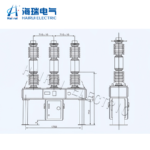
Networks in Russia, Belarus, Azerbaijan and Uzbekistan are run on planned-maintenance cycles, and the maintenance plan is built from the operation counter and the gas log. Russian-language O&M manuals, a dimensional drawing for the civil works and an operation-count schedule that an inspector will accept are part of the delivery here, not an extra.
Packing, Shipping Weight and Foundation Data
Weight and crate count are the two numbers that decide freight, and they scale with the voltage class rather than with the mechanism. The reference figures below cover the two tiers where a single unit no longer fits in a light case.
| 126 kV / 110 kV system (LW36-126) | 252 kV / 220 kV system (LW-252) | |
| Interrupter columns shipped | 3 | 6 |
| Net weight | 1900 kg | approx. 3800 kg |
| Total shipping weight, packed | 2200 kg | approx. 4400 kg |
| Column packing | 3 cases, 3500 × 740 × 650 mm, 450 kg each | 6 cases, 3500 × 740 × 650 mm, 450 kg each |
| Base frame packing | 3880 × 700 × 2350 mm, 850 kg | 2 base cases, approx. 1700 kg total |
| Dynamic load, upward / downward | 24 kN | 24 kN per foundation |
| Height difference between the two foundation surfaces | ≤ 2 mm | ≤ 2 mm |
| Levelness of each foundation surface | ≤ 2 mm | ≤ 2 mm |
| Recommended container | 1 × 20 GP | 1 × 40 HQ or 40 FR |
The 252 kV line doubles the 126 kV line because the hardware doubles: six interrupter columns instead of three, two base frames instead of one. The LW8-40.5 on this page is a single three-pole unit on one base frame and travels in one plywood case; its net weight, case dimensions and lifting points are issued with the proforma invoice, and mixed orders are consolidated where the loading plan allows.
Shipment is from Ningbo or Shanghai on EXW, FOB, CFR, CIF or DAP terms, with LCL consolidation for single units. The document set — invoice, packing list, bill of lading, certificate of origin, routine test report and IEC 62271-100 declaration — travels with the goods, and third-party or witness testing can be booked before loading.
Price Guide
Indicative RMB figures for standard builds, ex-works Zhejiang, current as of 2026. They are a budget reference, not a quotation: breaking capacity, creepage class, accessory set and freight term all shift the final number.
| Voltage class | Reference model | Interrupter columns | Indicative price |
| 40.5 kV (35 kV system) | LW8-40.5 | 3 | approx. RMB 40,000 |
| 72.5 kV (66 kV system) | LW9-72.5 | 3 | approx. RMB 75,000 |
| 126 kV (110 kV system) | LW36-126 | 3 | approx. RMB 80,000 |
| 252 kV (220 kV system) | LW-252 | 6 | approx. RMB 160,000 |
Mechanical endurance is not a price driver, which is worth knowing when a tender asks for a longer life. Going from a standard mechanism to a higher classified one changes the linkage and the test evidence rather than the steel, so the cost step is modest; going from 126 kV to 252 kV doubles the hardware and therefore the price. Per kilovolt the two low tiers are the expensive ones, because the mechanism, control cabinet and density monitoring cost nearly the same whatever the voltage.
The price includes breaker, base frame, gas density monitor, foundation bolts, gas filling per contract and an English O&M manual. Spare SF6 cylinders, disconnectors, current transformers, special creepage bushings and third-party inspection are quoted separately. Typical terms are 30% deposit with order and the balance against a copy of the bill of lading, with L/C at sight for container volumes. Cost structure by voltage is broken down in SF6 circuit breaker price and cost drivers.
Ordering: What to Send in the Inquiry
For an endurance-led specification, three of the usual eight items decide the answer on their own:
- Duty profile — feeder, bus coupler or capacitor switching, and roughly how many operations per year you expect.
- Reclose settings — single shot or multi-shot, and the dead time, since each shot is a full operation.
- Required endurance class — M1 or M2, E1 or E2, where the tender specifies one.
- Network voltage and rated current — 33 kV or 35 kV system, 1600 A or 2000 A.
- System fault level — so breaking capacity is selected rather than assumed.
- Ambient range and site altitude — the two figures that change insulation and gas pressure.
- Pollution class or site description — coastal, desert or industrial.
- Destination port, Incoterm and documentation — certificate of origin, third-party inspection, witness testing.
Minimum order is one piece, so a single replacement on an existing 33 kV board is a normal order. The commercial sequence is described in how to buy SF6 circuit breakers from a manufacturer, and the full range including the 0.5 MPa variant and the price reference for every tier is on the LW8-40.5 main product page.
FAQ
What does the 3000-operation mechanical lifespan mean?
The operating mechanism is rated for 3000 mechanical operations - open-close cycles - before requiring overhaul. This endurance rating supports long maintenance intervals in distribution service.
How does mechanical life affect maintenance planning?
Maintenance intervals can be scheduled based on accumulated operation count. Feeders with frequent switching consume mechanical life faster; the 3000-operation rating provides headroom for such duty.
What is the difference between mechanical life and electrical life?
Mechanical life counts operations of the mechanism regardless of current interrupted; electrical life depends on fault current levels cleared. SF6 technology supports both, with the interrupter designed for repeated fault clearing duty.
What are the electrical ratings of this breaker?
Rated voltage is 40.5kV with 1600A or 2000A rated current options, 95kV power frequency and 185kV lightning impulse withstand. See the technical specifications table for the complete rating list.
Is the breaker suitable for frequently switched feeders?
Yes. The combination of a 3000-operation mechanism rating and SF6 arc-extinguishing medium suits feeders with regular switching duty. Contact HaiRui with your switching frequency and load current for configuration advice.
How many operations does the LW8-40.5 last?
3000 mechanical operations. On a rural 33kV feeder that is over a century of fault trips; on twice-daily capacitor bank switching it is about four years, so quote the duty with the rating.
What is the shipping weight and how is it packed?
The LW8-40.5 ships in one sea-worthy plywood case; its weight and case dimensions are issued with the proforma invoice. For reference, the 126kV model is 1900kg net and 2200kg packed in four cases, and the 252kV model doubles both pole count and weight.
What is the MOQ and what documentation comes with the shipment?
MOQ is 1 piece, with OEM/ODM customization of ratings, nameplate and monitoring contacts. Documents include invoice, packing list, bill of lading, certificate of origin, routine test report and IEC 62271-100 declaration.
Request Quote
Tell us your specifications, quantity, or application scenario and we will reply with a tailored quote.