Product Overview
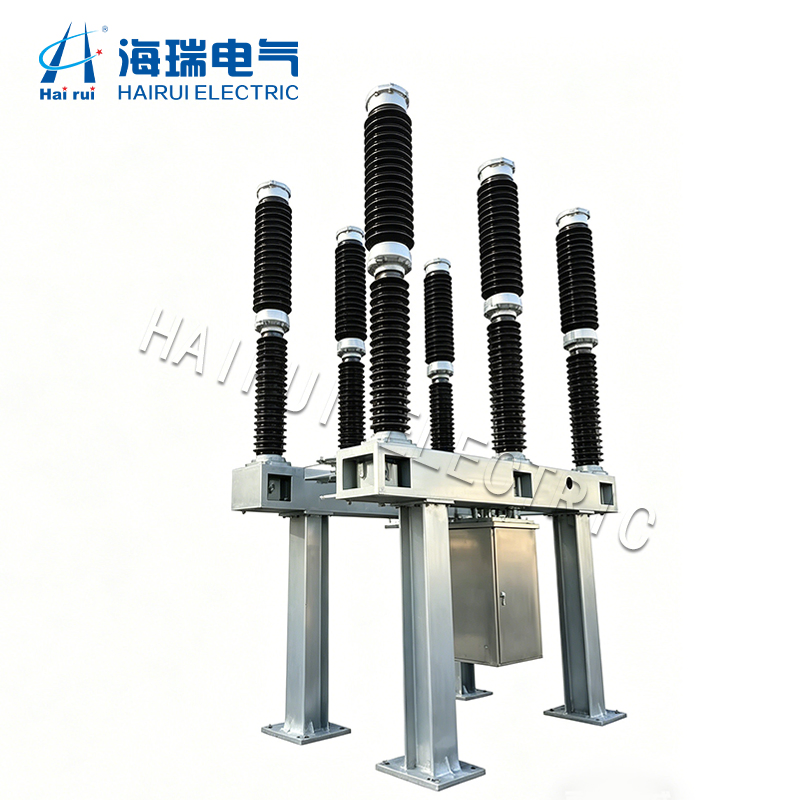
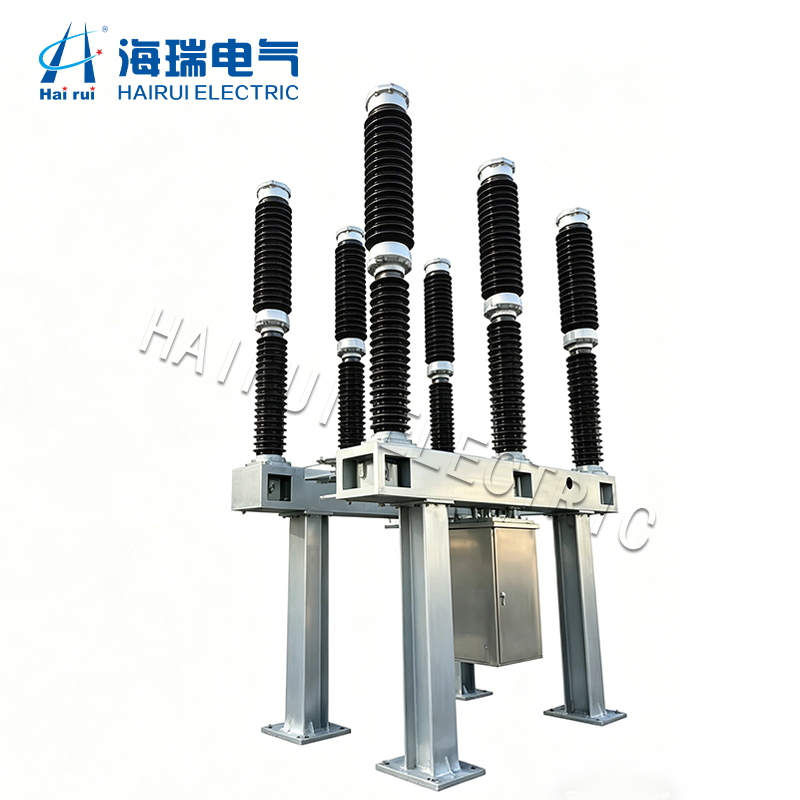
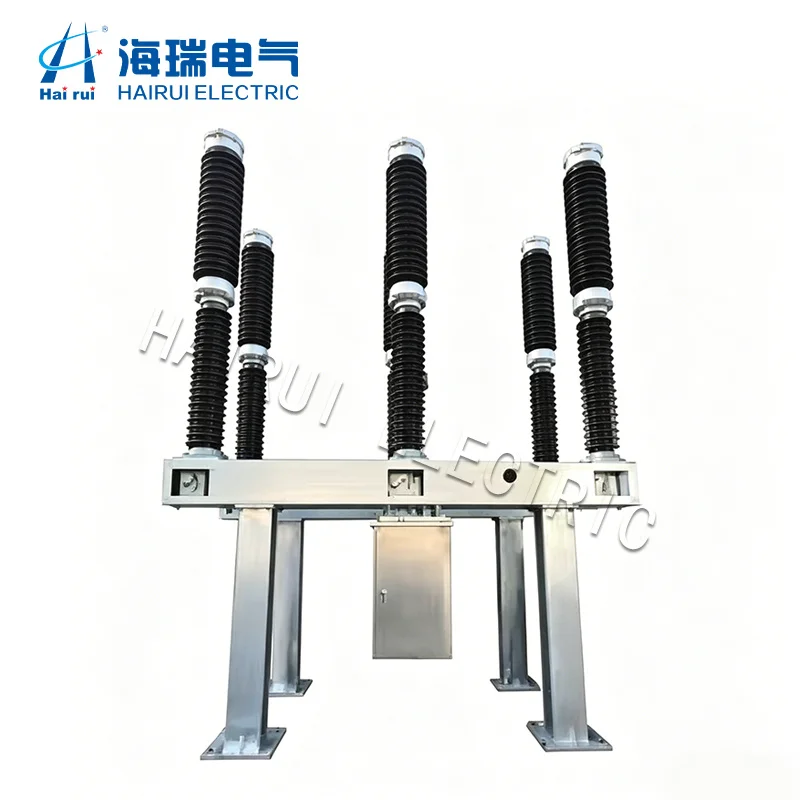
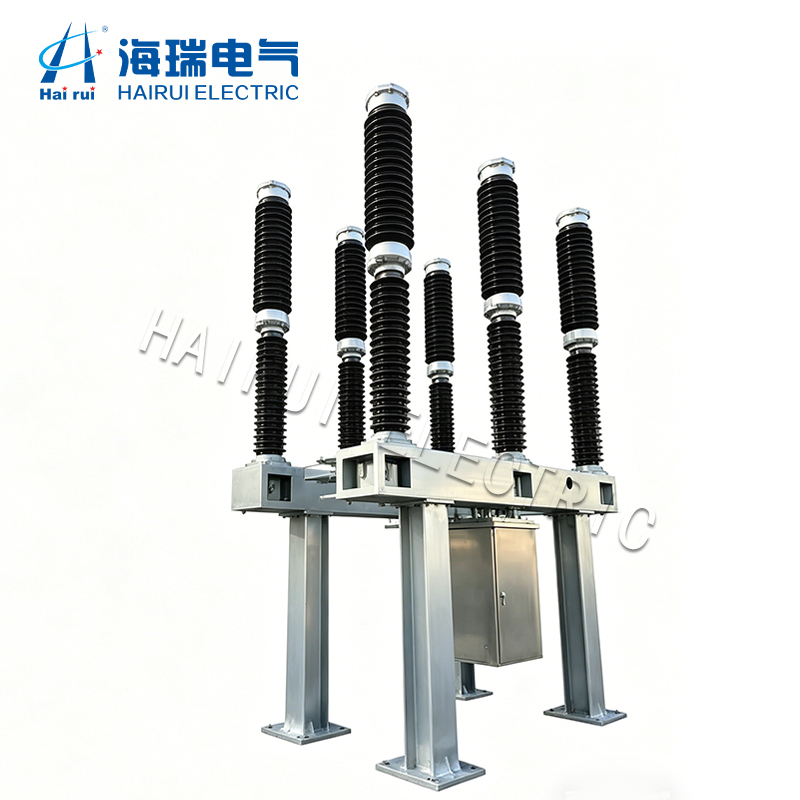
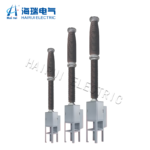
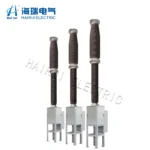
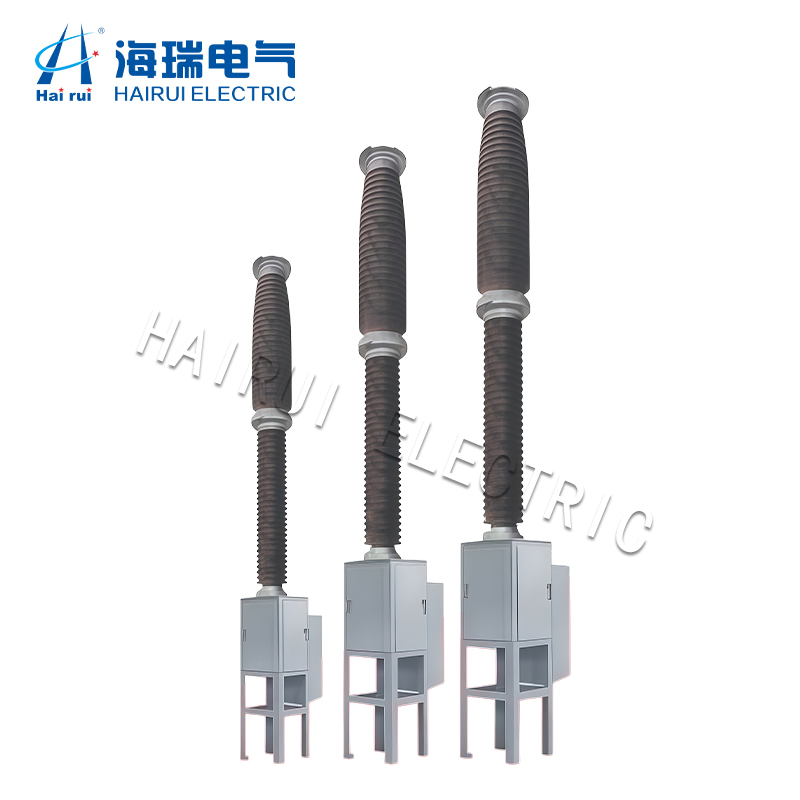
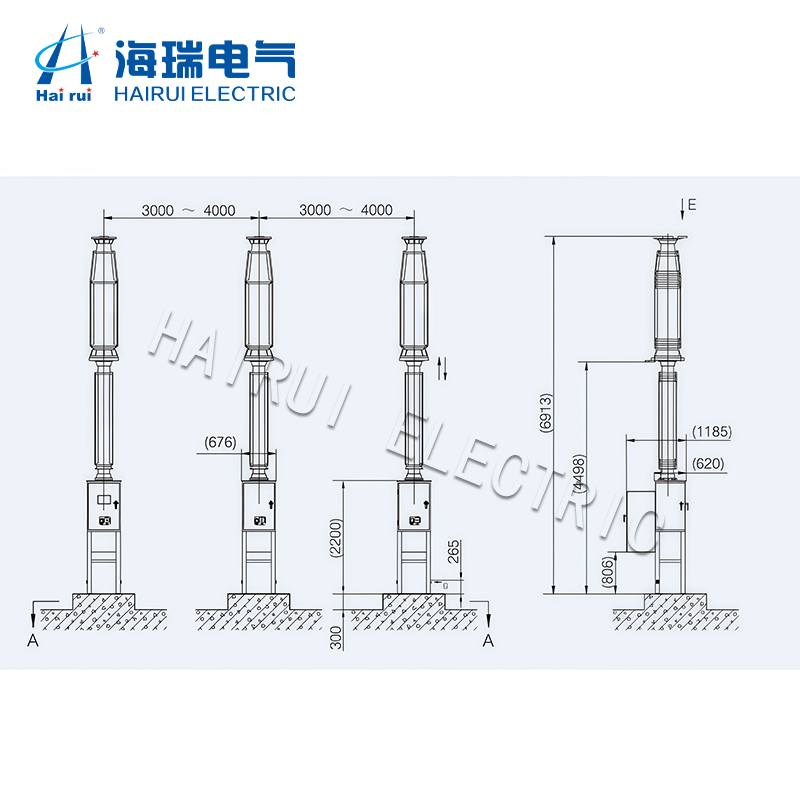
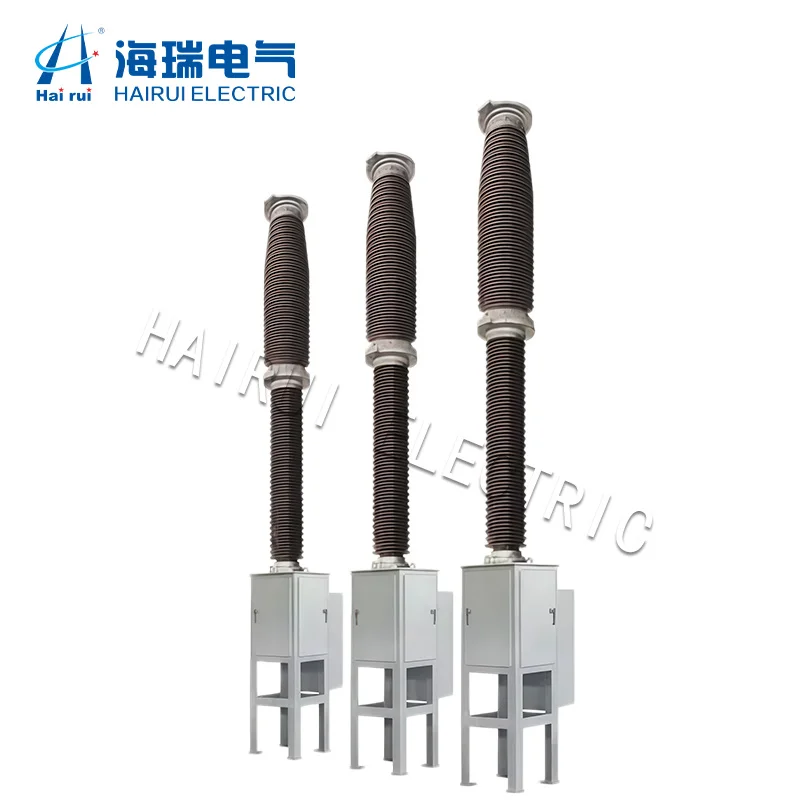
At 220 kV the breaker is no longer one column per phase. The LW-252 is a split-type outdoor SF6 breaker: two interrupter columns in series per pole, six columns in total, mounted on two base frames. Rated 252 kV, 4000 A, 50 kA breaking, with 460 kV power frequency and 1050 kV lightning impulse withstand, it is the top of our outdoor range and the unit that sits at 220 kV substation incomers, busbar sectionalisers and transformer bays.
The split arrangement is not a preference. At 252 kV the recovery voltage after interruption is too high for a single chamber to handle comfortably, so the duty is divided between two chambers in series; and a single 7-metre porcelain column would be a transport and handling problem before it was an electrical one. Six columns of the same 3.5 m case that ships the 126 kV units are easier to move, easier to replace individually, and easier to align on site.
Physically that means 3800 kg net, 4400 kg packed, eight cases, and a 40 HQ or 40 FR rather than the 20 GP that carries a 126 kV unit. This page is the reference for the series; four sibling pages take one specification each: the 1050 kV impulse level, the 460 kV power frequency withstand, the 50 kA breaking capacity and project customization.
What Split Type Changes
Six columns instead of three is the visible difference. The electrical and logistical consequences are less obvious and more important.
| Item | 126 kV / 110 kV (LW36-126) | 252 kV / 220 kV (LW-252) |
| Interrupter columns | 3 (one per pole) | 6 (two in series per pole) |
| Base frames | 1 | 2 |
| Net / packed weight | 1900 kg / 2200 kg | approx. 3800 kg / 4400 kg |
| Cases shipped | 4 (3 columns + 1 base) | 8 (6 columns + 2 bases) |
| Container | 1 × 20 GP | 1 × 40 HQ or 40 FR |
| Recovery voltage per chamber | Full system recovery across one break | Shared between two breaks in series |
Two breaks in series halve the recovery voltage each chamber has to withstand, which is the reason the arrangement exists at this voltage class. What it does not do is halve the current: both chambers carry the same 50 kA, and both see the same thermal duty. It also does not halve the alignment work — two base frames means two foundations to bring to within 2 mm of each other, and the 24 kN dynamic load applies per foundation rather than once per breaker.
The split also changes the maintenance arithmetic. A failed column is replaced as a 450 kg unit rather than a complete pole, which matters on a 220 kV bay where the alternative is a crane lift of the whole assembly. Replacing one column of a pair does mean the other is inspected at the same time, because the two chambers share a voltage distribution and a mismatch is not worth carrying.
One consequence on site is often missed in planning: with six columns the site needs somewhere to lay out three columns per phase before lifting, and the compound has to allow for that during commissioning even though the finished footprint is compact.
Key Features
- Split-type construction: two interrupter columns in series per pole, six columns total, halving the recovery voltage per chamber at 252 kV.
- 50 kA breaking, 125 kA peak: about 21 800 MVA at 252 kV, with 50 kA short-time withstand on the same unit.
- 460 kV power frequency / 1050 kV impulse: to earth, with 460 + 146 kV and 1050 + 206 kV across the open break.
- 4000 A continuous: about 1525 MVA at 220 kV, sized for 220 kV incomers and busbar sectionalisers.
- Six 3.5 m column cases: each column ships as a manageable 450 kg unit, replaceable individually without lifting a complete pole.
- Spring operating mechanism: motor-charged, mechanically latched trip energy, ganged operation across all six columns.
- Two base frames, 2 mm alignment, 24 kN per foundation: the civil works are quoted with the drawing rather than guessed.
- ISO 9001 quality management, 12-month warranty, MOQ 1 piece, OEM/ODM: frame height, terminal arrangement and monitoring contacts configured at order.
Technical Specifications
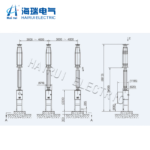
Standard build. Voltage, current and breaking capacity are fixed by the order; creepage class, frame height, ambient range and auxiliary supply are selected against the site, and the outline drawing issued with the offer shows the resulting dimensions.
| Model | LW-252 |
| Type | Outdoor, live-tank, split-type (two interrupter columns per pole), three-pole SF6 circuit breaker |
| Rated voltage | 252 kV (220 kV system) |
| Rated current | 4000 A |
| Rated frequency | 50 Hz |
| Rated short-circuit breaking current | 50 kA |
| Rated short-time withstand current | 50 kA (duration stated on the type test report) |
| Rated peak withstand / making current | 125 kA |
| Power frequency withstand, 1 min, to earth | 460 kV |
| Power frequency withstand, across the break | 460 + 146 kV |
| Lightning impulse withstand, 1.2/50 µs, to earth | 1050 kV |
| Lightning impulse withstand, across the break | 1050 + 206 kV |
| Interrupter columns | 6 (two in series per pole) |
| Operating mechanism | Spring, motor-charged |
| Number of poles | 3, ganged |
| Installation | Outdoor, fixed on concrete foundation |
| Net weight | approx. 3800 kg |
| Transport packing | Sea-worthy plywood cases, approx. 4400 kg packed |
| Standards | IEC 62271-100 / GB 1984 (type test reports on request) |
| Certification | ISO 9001 quality management system |
| Warranty | 12 months |
| MOQ | 1 piece |
| Origin | Zhejiang, China |
The across-break figures carry more weight here than on a single-break breaker. With two chambers in series the open gap is longer and the voltage distribution between them is a design property of the interrupter rather than a simple arithmetic split; the type test is what demonstrates the 1050 + 206 kV rating, and the test report should be read as evidence for the assembly, not for one column alone.
Applications: 220 kV Duty Across Five Regions
220 kV is transmission-level voltage in most of the markets we serve, and the duty it carries differs enough between regions that the specification should follow the site.
Africa: the backbone between generation and the city
In Nigeria, Kenya, Tanzania, Ghana and Zambia a 220 kV substation is usually the point where bulk power leaves the transmission system for a city distribution network, often on a single or double circuit. That makes the incomer breaker’s breaking capacity the critical rating, and the split-type layout matters practically: spares can be held as single columns rather than complete poles, which is the difference between a two-week and a two-month outage in a country where the crane and the crew come from the capital.
Southeast Asia: high fault levels, high humidity
Indonesian, Malaysian, Thai, Vietnamese and Philippine 220 kV networks are short, meshed and heavily loaded, with fault levels that approach the breaker rating at major busbars. Coastal substations add salt to every external surface, including six columns instead of three. Creepage class rather than rated current usually decides the order — see pollution class and salt spray selection.
Central Asia: 220 kV and 500 kV layers
Kazakhstan, Uzbekistan, Tajikistan and Kyrgyzstan operate 220 kV as an intermediate layer under a 500 kV transmission system, with cold winters and mountain substations where external clearance has to be corrected for altitude. A 220 kV breaker specified for a valley substation is not automatically correct at 1800 m; the correction is applied to the clearance, not to the interrupting capability.
Middle East: 50 °C and heavy load transfer
Iraqi, Saudi, Emirati, Omani and Jordanian 220 kV substations run at shade temperatures above 50 °C and carry large block transfers between regions. Both the 4000 A continuous rating and its terminal connections need derating for that ambient, and the highest-current position — usually the incomer — is where the margin goes first. See temperature rise limits above 40 °C ambient.
CIS: planned outage windows
Networks in Russia, Belarus, Azerbaijan and Uzbekistan schedule 220 kV outages in fixed windows, which makes the split-type layout an operational advantage: a single column swap fits inside a planned window where a full pole replacement does not. Russian-language manuals, stamped drawings and test certificates an inspector will accept are part of the delivery.
Packing, Shipping Weight and Foundation Data
Eight cases, 4400 kg, one 40 HQ — the 252 kV unit is the one in this range where freight planning changes a project schedule. The comparison column shows the 126 kV unit for scale.
| 126 kV / 110 kV system (LW36-126) | 252 kV / 220 kV system (LW-252) | |
| Interrupter columns shipped | 3 | 6 |
| Net weight | 1900 kg | approx. 3800 kg |
| Total shipping weight, packed | 2200 kg | approx. 4400 kg |
| Column packing | 3 cases, 3500 × 740 × 650 mm, 450 kg each | 6 cases, 3500 × 740 × 650 mm, 450 kg each |
| Base frame packing | 3880 × 700 × 2350 mm, 850 kg | 2 base cases, approx. 1700 kg total |
| Dynamic load, upward / downward | 24 kN | 24 kN per foundation |
| Height difference between the two foundation surfaces | ≤ 2 mm | ≤ 2 mm |
| Levelness of each foundation surface | ≤ 2 mm | ≤ 2 mm |
| Recommended container | 1 × 20 GP | 1 × 40 HQ or 40 FR |
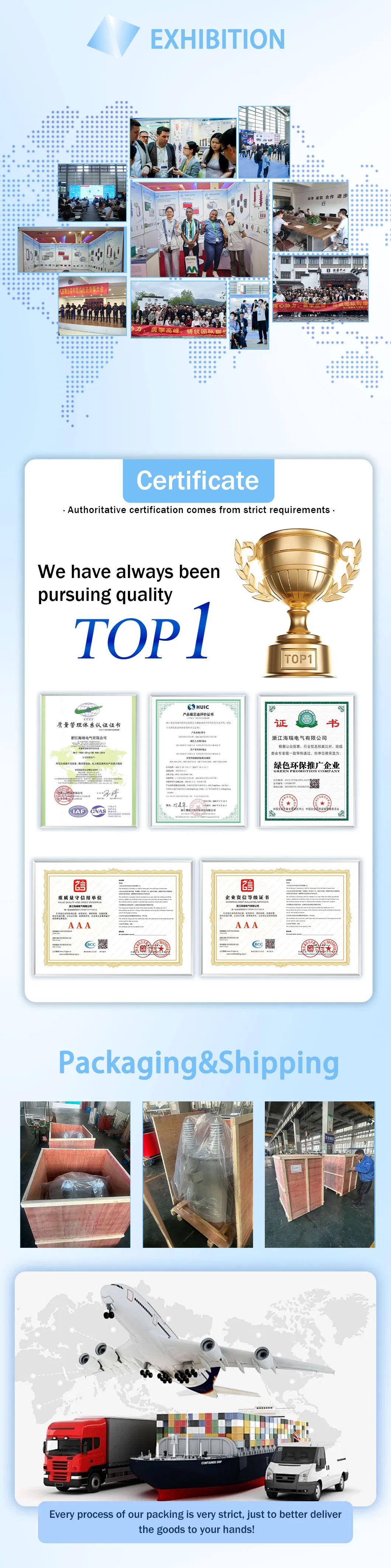
The doubling is structural rather than incremental: two columns per pole means six column cases, two base frames mean two base cases, and the whole assembly needs a 40 HQ or a 40 FR rather than a 20 GP. Loading is from Ningbo or Shanghai on EXW, FOB, CFR, CIF or DAP terms. Invoice, packing list, bill of lading, certificate of origin, routine test report and IEC 62271-100 declaration travel with the goods, and third-party or witness testing can be booked before loading.
Price Guide
Indicative RMB prices for standard builds, ex-works Zhejiang, current as of 2026 — a planning reference for budget approval, not a quotation. Creepage class, frame height, accessory set and freight term move the final number.
| Voltage class | Reference model | Interrupter columns | Indicative price |
| 40.5 kV (35 kV system) | LW8-40.5 | 3 | approx. RMB 40,000 |
| 72.5 kV (66 kV system) | LW9-72.5 | 3 | approx. RMB 75,000 |
| 126 kV (110 kV system) | LW36-126 | 3 | approx. RMB 80,000 |
| 252 kV (220 kV system) | LW-252 | 6 | approx. RMB 160,000 |
252 kV is where the curve steepens. The step from 126 kV doubles the price because it doubles the hardware — six columns, two base frames, twice the steel and twice the SF6 — while the step from 72.5 kV to 126 kV adds only a few percent. On a per-kilovolt basis the 252 kV tier is the cheapest in the range, which is why a project that can operate at 220 kV instead of 110 kV gets considerably more transmission capacity per unit of switchgear spend.
Included: breaker, two base frames, gas density monitor, foundation bolts, gas filling per contract and an English O&M manual. Quoted separately: spare interrupter columns, spare SF6 cylinders, disconnectors, current transformers, surge arresters, special creepage bushings, third-party inspection and witness tests. Typical terms are 30% deposit with order and the balance against a copy of the bill of lading, with L/C at sight for container volumes. Cost structure is in SF6 circuit breaker price and cost drivers, and the step changes between tiers in the LW series model comparison.
Ordering: What to Send in the Inquiry
For a 220 kV bay the drawing follows from the first four items, so they are worth settling before the inquiry goes out:
- Terminal arrangement and height — overhead line entry or cable, and the required terminal height for the layout.
- Continuous load and transfer case — in amperes or MVA for this position.
- System fault level and X/R ratio — the second sets the peak duty the foundations carry.
- Pollution class and altitude — six columns mean six times the creepage surface to specify.
- Ambient range and seismic requirement — the two site figures that change frame and anchorage.
- Auxiliary supply and monitoring — DC 110 V or 220 V, and density relay contacts to SCADA.
- Destination port and Incoterm — EXW, FOB, CFR, CIF or DAP, and whether a 40 FR is available at destination.
- Documentation — type test reports, stamped drawings, certificate of origin, third-party inspection.
Minimum order is one piece. The commercial sequence is in how to buy SF6 circuit breakers from a manufacturer; if you are still comparing voltage classes, start from how to select an SF6 circuit breaker.
FAQ
What does split type mean for this circuit breaker?
The split type construction divides the breaker into separately assembled sections, which supports precise manufacturing quality control and easier transport, installation, and maintenance on site.
What are the main ratings of the LW-252?
It is rated 252kV voltage, 4000A continuous current, 50kA short-circuit breaking and withstand current, 125kA making current peak and peak withstand current, at a 50Hz rated frequency.
What insulation levels does the breaker provide?
The power-frequency withstand voltage is 460kV to earth (460kV + 146kV across the fracture), and the lightning impulse withstand voltage is 1050kV to earth (1050kV + 206kV across the fracture).
Is the breaker suitable for outdoor installation?
Yes. It is specified for outdoor installation in a 3-pole configuration, designed for open-air transmission switchyards.
Can I order a customized version?
Yes. Customization is supported with OEM/ODM service from an ISO 9001 certified factory, MOQ of one piece, and a 12-month warranty from HaiRui.
Why does a 252kV breaker use six interrupter columns?
Two chambers in series per pole halve the recovery voltage each chamber has to withstand, which is what makes 50kA practical at 252kV in a live-tank design. It also lets each 450kg column travel and be replaced as a separate unit.
How much does a 252kV SF6 circuit breaker cost?
The LW-252 is approximately RMB 160,000 ex-works Zhejiang for a standard build. For reference: 40.5kV about RMB 40,000, 72.5kV about RMB 75,000 and 126kV about RMB 80,000. Final price depends on creepage class, frame height, package scope and freight term.
What is the shipping weight and how is the breaker packed?
The LW-252 is about 3800kg net and 4400kg packed, in eight cases: six column cases of 3500 x 740 x 650mm at 450kg each and two base cases totalling about 1700kg. The assembly needs a 40 HQ or 40 FR container.
What is the MOQ and what documentation comes with the shipment?
MOQ is 1 piece, with OEM/ODM configuration of creepage class, frame height, auxiliary contacts and documentation language. Documents include invoice, packing list, bill of lading, certificate of origin, routine test report and IEC 62271-100 declaration.
Request Quote
Tell us your specifications, quantity, or application scenario and we will reply with a tailored quote.