Product Overview
Auto-reclosing is a relay function, not a breaker feature. What the breaker contributes is the ability to follow a reclose sequence — open on a fault, close back into a possibly still-faulted line, and open again — without losing its interrupting capability or its contact life. The LW9-72.5 is rated 72.5 kV, 4000 A, 40 kA, and declares two switching currents that matter more than the headline ratings on a network with reactors and capacitor banks: 3150 A for combined reactor circuits and 4000 A for back-to-back capacitor banks.
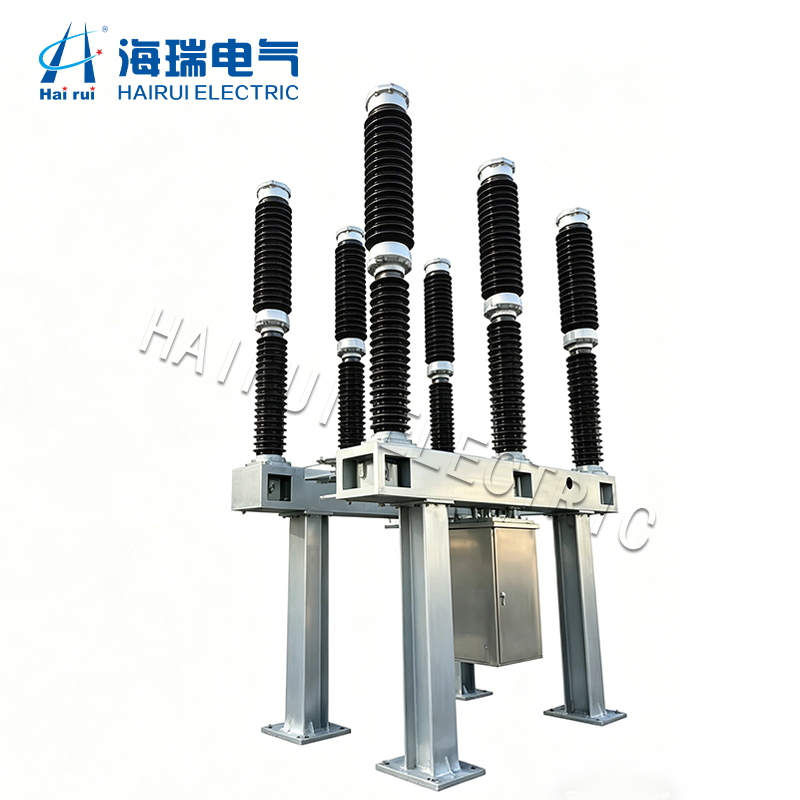
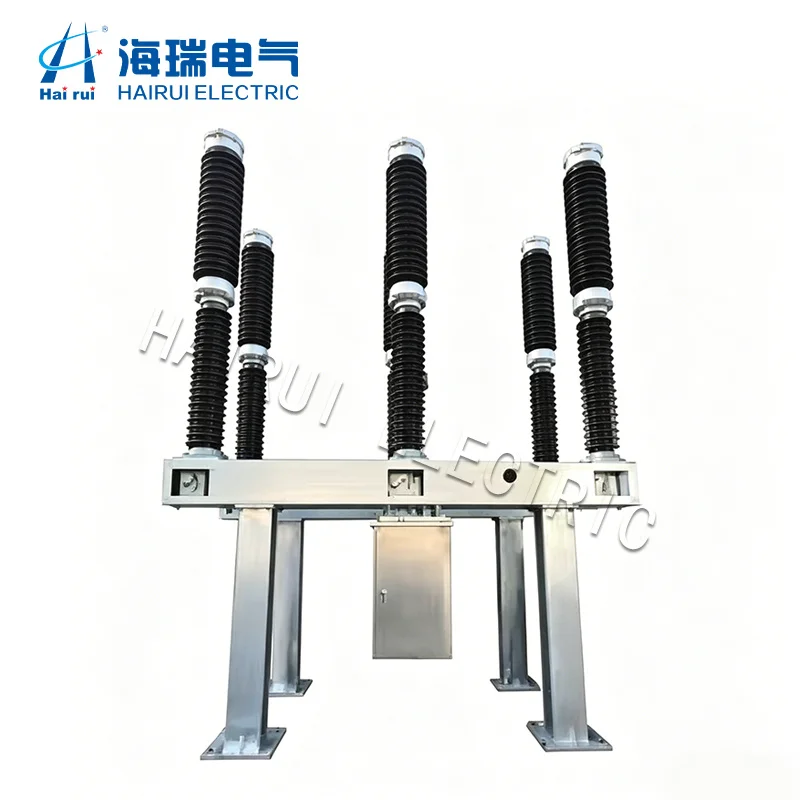
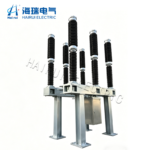
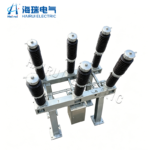
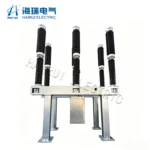
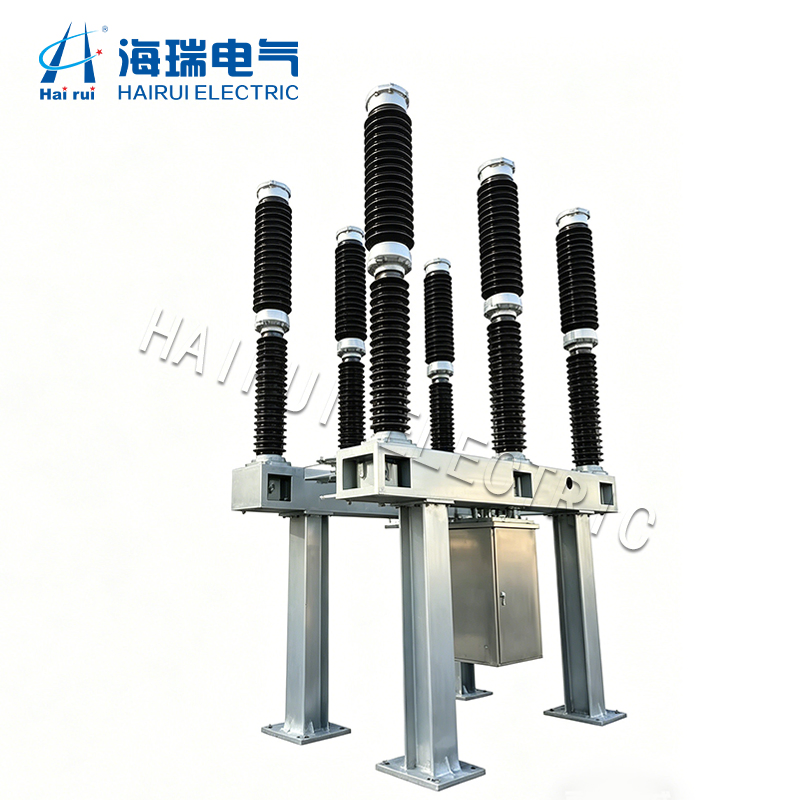
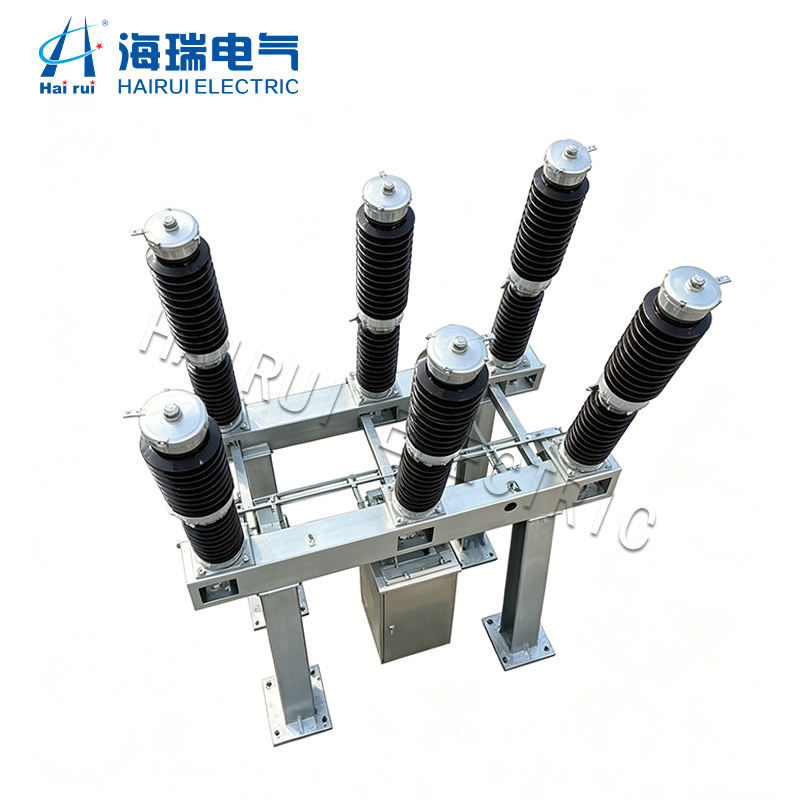
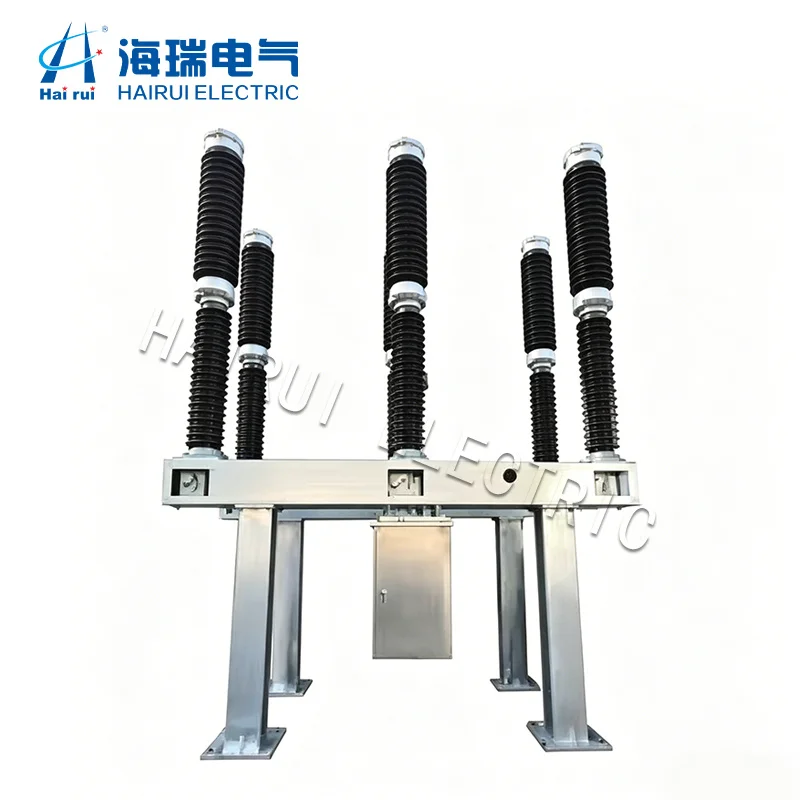
Three poles, live tank, spring mechanism, one base frame. Insulation is 160 kV power frequency and 350 kV lightning impulse to earth, with 160 + 42 kV and 350 + 60 kV across the break — the figure that decides whether a line-side surge crosses an open breaker into the busbar while a reclose is pending.
What Reclosing Actually Demands
A reclose sequence is a mechanical and thermal duty before it is anything else. The breaker closes into a circuit that may still be faulted, then interrupts at full fault current a few hundred milliseconds after a previous interruption, with the arc chamber still hot and the contacts still recovering.
| Parameter | Rating | What it governs |
| Rated short-circuit breaking current | 40 kA | Each interruption in the sequence, including the second one into a persistent fault |
| Rated short-time withstand current | 40 kA / 3 s | How long the breaker carries fault current while backup protection decides |
| Rated peak withstand current | 100 kA | Dynamic stress on the first asymmetrical peak, and inrush peaks on closing |
| Combined reactor switching current | 3150 A | Switching shunt reactor circuits without reignition |
| Back-to-back capacitor bank switching current | 4000 A | High-frequency inrush when a second bank is energised next to an already-charged one |
| Insulation across the open break | 350 + 60 kV impulse | Dielectric strength between contacts during the dead time |
Two of these are routinely missed in tenders. The first is the open-break insulation level: during the dead time the breaker is open, the line side may still be carrying a surge, and the gap between contacts is the only thing between that surge and the busbar. The second is the back-to-back capacitor current, which is a frequency problem rather than a magnitude problem — energising a bank next to an already-charged one produces an inrush at hundreds or thousands of hertz, and a breaker that is comfortable with 4000 A at 50 Hz is not automatically comfortable with it at that frequency. The mechanism is set out in back-to-back capacitor bank switching.
The reclose sequence itself — single shot or multi-shot, three-phase or phase-segregated, and the dead time — is decided by the protection scheme, not by the breaker. What the breaker has to guarantee is that it can execute the sequence repeatedly at the declared fault level. See how auto-reclosing works in practice.
Key Features
- Reclose-ready at 40 kA: breaking capacity applies to every interruption in a sequence, including the second one into a persistent fault.
- 350 + 60 kV impulse across the open break: dielectric strength during the dead time, when the gap between contacts is the only barrier on the line side.
- Declared switching currents: 3150 A combined reactor current and 4000 A back-to-back capacitor bank current, quoted as separate duties rather than buried in a general rating.
- 100 kA peak withstand: covers the first asymmetrical peak of a close-in fault and the inrush peak of a capacitor bank energisation.
- Spring operating mechanism: closing energy is recharged by a motor between operations, so a multi-shot reclose sequence is not limited by an air or hydraulic system recovering.
- Three poles on one base frame: one foundation, alignment to within 2 mm, one commissioning window per bay.
- SF6 interrupter with fast dielectric recovery: what makes a second interruption shortly after the first possible at all.
- ISO 9001 quality management, 12-month warranty, MOQ 1 piece, OEM/ODM: protection interface, auxiliary contacts and monitoring contacts customized at order.
Technical Specifications
Standard build. The ratings that govern reclosing are the breaking current, the two switching currents and the open-break insulation; the rest define the bay they fit into.
| Model | LW9-72.5 |
| Type | Outdoor, live-tank, three-pole SF6 circuit breaker |
| Rated voltage | 72.5 kV (66 kV system) |
| Rated current | 4000 A |
| Rated frequency | 50 Hz |
| Rated short-circuit breaking current | 40 kA |
| Rated short-time withstand current | 40 kA / 3 s |
| Rated peak withstand current | 100 kA |
| Power frequency withstand, 1 min, to earth | 160 kV |
| Power frequency withstand, across the break | 160 + 42 kV |
| Lightning impulse withstand, 1.2/50 µs, to earth | 350 kV |
| Lightning impulse withstand, across the break | 350 + 60 kV |
| Combined reactor switching current | 3150 A |
| Back-to-back capacitor bank switching current | 4000 A |
| Operating mechanism | Spring, motor-charged |
| Number of poles | 3, ganged |
| Installation | Outdoor, fixed on concrete foundation |
| Standards | IEC 62271-100 / GB 1984 (type test reports on request) |
| Certification | ISO 9001 quality management system |
| Transport packing | Sea-worthy plywood case |
| Warranty | 12 months |
| MOQ | 1 piece |
| Origin | Zhejiang, China |
Read the three insulation rows together. To earth is the level the column provides against a surge arriving on any phase; across the break is the level between an open contact pair. On a reclose scheme the second value is used in service far more often than the first, because the breaker spends the dead time open with the line side still exposed.
Where This Configuration Fits
Reclose-heavy duty is not evenly distributed across the five regions we ship to. These are the patterns that decide it.
Africa: radial feeders that must be restored fast
Radial 66 kV links in Nigeria, Kenya, Tanzania and Zambia have no alternate path, so a transient fault that is not reclosed means an outage until a crew drives out. Multi-shot reclose schemes are common, which is precisely the duty that consumes contact life fastest — and the reason the breaker’s second-interruption capability matters more than its first.
Southeast Asia: lightning-driven reclose storms
In Indonesia, Malaysia, Vietnam and the Philippines a single thunderstorm can produce several reclose sequences on one feeder within an hour. The breaker sees repeated open-close-open cycles at short dead times, and the arc chamber never fully cools between them. Impulse withstand and open-break insulation are both tested on the same afternoon.
Central Asia: reactors on the same busbar
Kazakhstan, Uzbekistan and Tajikistan operate 66 kV and 110 kV networks with shunt reactors for voltage control, which brings the 3150 A reactor switching current into play. Reactor switching is where reignition shows up as overvoltage rather than as a breaker failure, and the current chopping behaviour of the interrupter is what decides it — see shunt reactor switching and current chopping.
Middle East: capacitor banks and 50 °C
Iraqi, Saudi, Emirati and Omani 66 kV substations use capacitor banks for reactive support, often several per busbar, which is the back-to-back duty the 4000 A figure covers. At 50 °C ambient the same switching currents run against a lower temperature margin, so the bank configuration and the breaker rating should be quoted together.
CIS: sequence discipline and documentation
Networks in Russia, Belarus, Azerbaijan and Uzbekistan run reclose settings that are written into the operating procedure, and the breaker’s capability is checked against that document rather than against a datasheet claim. Russian-language manuals and test certificates an inspector will accept are part of the delivery.
Packing, Shipping Weight and Foundation Data
Crate count follows the voltage class, not the switching duty. Reference figures for the two larger tiers are below; the 72.5 kV unit’s own weight and case dimensions are issued with the proforma invoice.
| 126 kV / 110 kV system (LW36-126) | 252 kV / 220 kV system (LW-252) | |
| Interrupter columns shipped | 3 | 6 |
| Net weight | 1900 kg | approx. 3800 kg |
| Total shipping weight, packed | 2200 kg | approx. 4400 kg |
| Column packing | 3 cases, 3500 × 740 × 650 mm, 450 kg each | 6 cases, 3500 × 740 × 650 mm, 450 kg each |
| Base frame packing | 3880 × 700 × 2350 mm, 850 kg | 2 base cases, approx. 1700 kg total |
| Dynamic load, upward / downward | 24 kN | 24 kN per foundation |
| Height difference between the two foundation surfaces | ≤ 2 mm | ≤ 2 mm |
| Levelness of each foundation surface | ≤ 2 mm | ≤ 2 mm |
| Recommended container | 1 × 20 GP | 1 × 40 HQ or 40 FR |
The 252 kV line doubles the 126 kV line because a split-type pole carries two interrupter columns, so three poles mean six columns and two base frames. Loading from Ningbo or Shanghai, EXW through DAP, LCL consolidation for single units. Invoice, packing list, bill of lading, certificate of origin, routine test report and IEC 62271-100 declaration travel with the goods.
Price Guide
Indicative RMB prices, standard builds, ex-works Zhejiang, current as of 2026 — a budget reference, not a quotation. Switching duty, creepage class, accessory set and freight term all move the final figure.
| Voltage class | Reference model | Interrupter columns | Indicative price |
| 40.5 kV (35 kV system) | LW8-40.5 | 3 | approx. RMB 40,000 |
| 72.5 kV (66 kV system) | LW9-72.5 | 3 | approx. RMB 75,000 |
| 126 kV (110 kV system) | LW36-126 | 3 | approx. RMB 80,000 |
| 252 kV (220 kV system) | LW-252 | 6 | approx. RMB 160,000 |
Declaring reactor and capacitor switching currents is not a price item on a standard build: the interrupter is the same, and what changes is the evidence. Where a project needs switching tests witnessed or a non-standard bank configuration covered, that is quoted as an addition rather than built into the base price.
Included: breaker, base frame, gas density monitor, foundation bolts, gas filling per contract and an English O&M manual. Quoted separately: spare SF6 cylinders, disconnectors, current transformers, special creepage bushings, witness testing and third-party inspection. Typical terms are 30% deposit with order and the balance against a copy of the bill of lading, with L/C at sight for container volumes. Cost structure is in SF6 circuit breaker price and cost drivers.
Ordering: What to Send in the Inquiry
For a reclose or switching-led specification, four items decide the answer:
- Reclose scheme — single or multi-shot, three-phase or phase-segregated, and the dead time.
- Switching duties on the busbar — shunt reactors, single capacitor banks or back-to-back banks.
- Fault level and X/R ratio — the second governs the asymmetry the 100 kA peak has to cover.
- Protection interface — auxiliary contacts, trip circuits and whether density relay contacts go to SCADA.
- Network voltage and continuous load — 66 kV system, load and transfer case in amperes or MVA.
- Ambient, altitude and pollution class — the three site figures that change insulation and derating.
- Destination port and Incoterm — EXW, FOB, CFR, CIF or DAP.
- Documentation — type test reports, switching test evidence, certificate of origin.
Minimum order is one piece. The commercial sequence is in how to buy SF6 circuit breakers from a manufacturer, and the current and fault-level side of the same breaker is covered on the LW9-72.5 4000 A product page.
FAQ
What is the combined reclosing current rating of the LW9-72.5?
The LW9-72.5 has a rated combined reactor current of 3150A and a cut back-to-back capacitor bank current of 4000A, supporting auto-reclosing operations for overhead line protection.
What is the rated short-circuit breaking current?
The rated short-circuit breaking current is 40kA, with a rated short-time withstand current of 40kA for 3 seconds and a rated peak withstand current of 100kA.
Is this circuit breaker suitable for outdoor installation?
Yes, the LW9-72.5 is designed for outdoor installation in high-voltage substations and power transmission networks.
What customization options are available?
OEM/ODM customization is supported for parameters including rated current, voltage class, IP protection level, size, and operating environment. Contact the manufacturer with your project specifications.
What documentation is provided with the breaker?
English operation manuals, ISO 9001 certificates, factory test reports, and wiring diagrams are included. These documents support customs clearance, installation, and commissioning.
Can this breaker perform multi-shot auto-reclosing?
Yes. Breaking capacity of 40kA applies to each interruption in the sequence, and the open-break impulse level of 350+60kV covers the dead time between shots. The number of shots and the dead time are set by the protection relay, not the breaker.
How much does a 72.5kV SF6 circuit breaker cost?
The LW9-72.5 is approximately RMB 75,000 ex-works Zhejiang for a standard build. For reference: 40.5kV about RMB 40,000, 126kV about RMB 80,000 and 252kV about RMB 160,000. Final price depends on breaking capacity, creepage class, accessory set and freight term.
What is the shipping weight and how is the breaker packed?
Packing is a sea-worthy plywood case, with the LW9-72.5's own weight and case dimensions issued on the proforma invoice. For reference, the 126kV model is 1900kg net and 2200kg packed in four cases, and the 252kV split-type model doubles both column count and weight.
What is the MOQ and what documentation comes with the shipment?
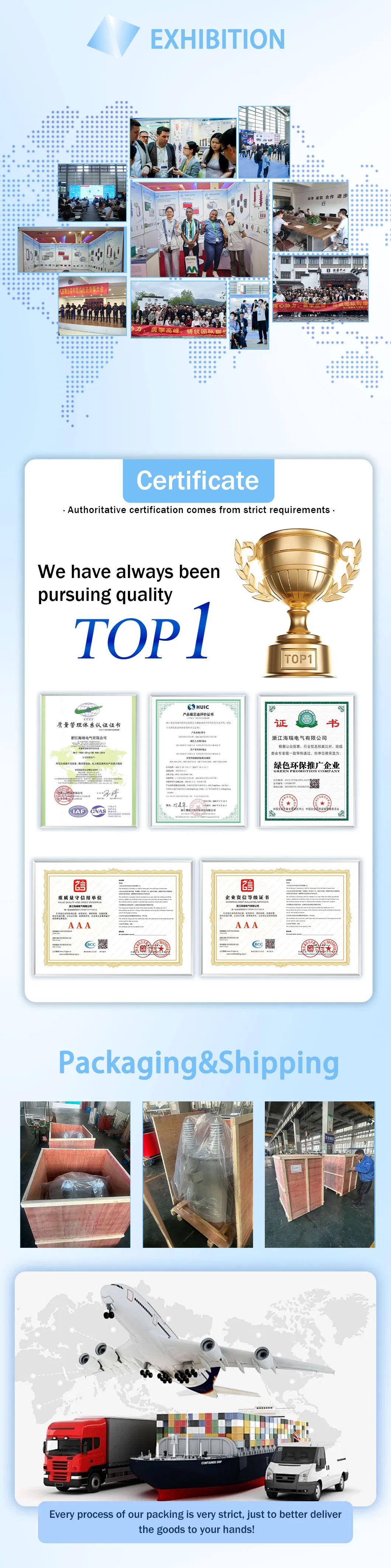
MOQ is 1 piece, with OEM/ODM customization of ratings, nameplate and monitoring contacts. Documents include invoice, packing list, bill of lading, certificate of origin, routine test report and IEC 62271-100 declaration.
Request Quote
Tell us your specifications, quantity, or application scenario and we will reply with a tailored quote.