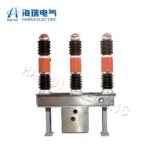
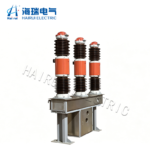
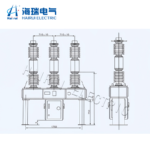
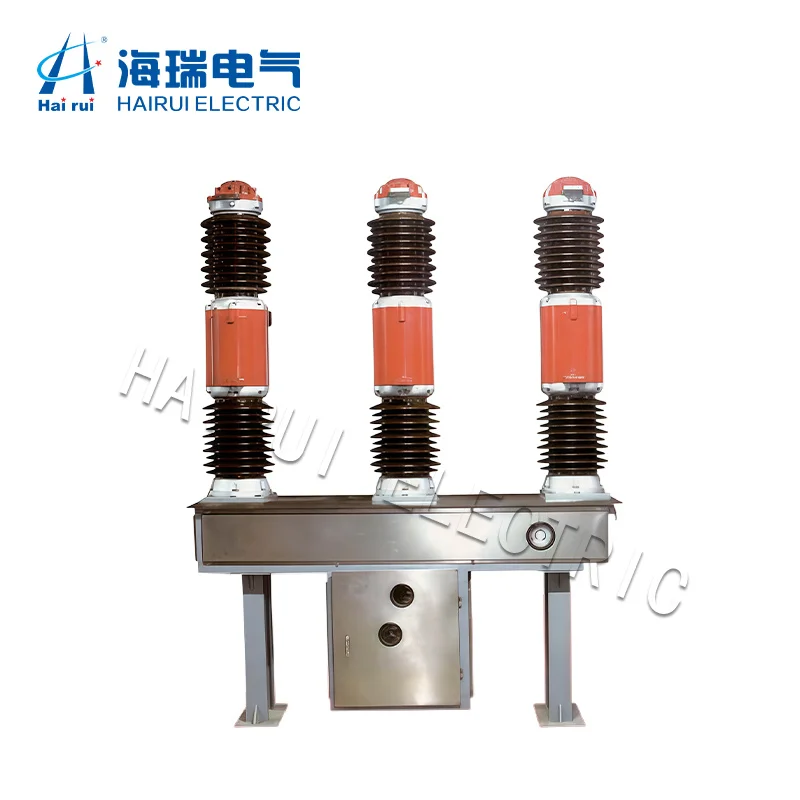
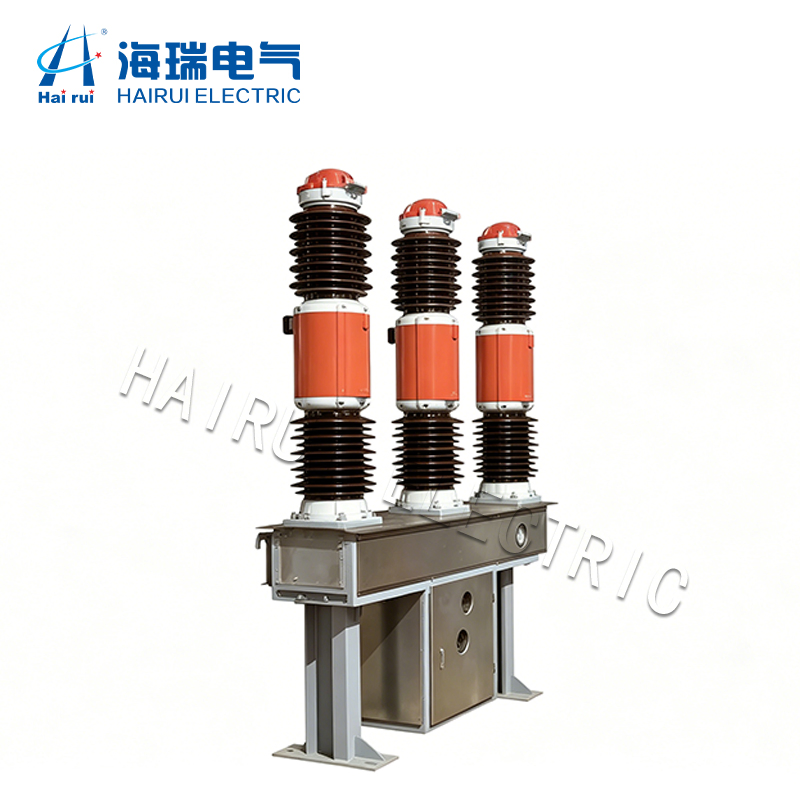
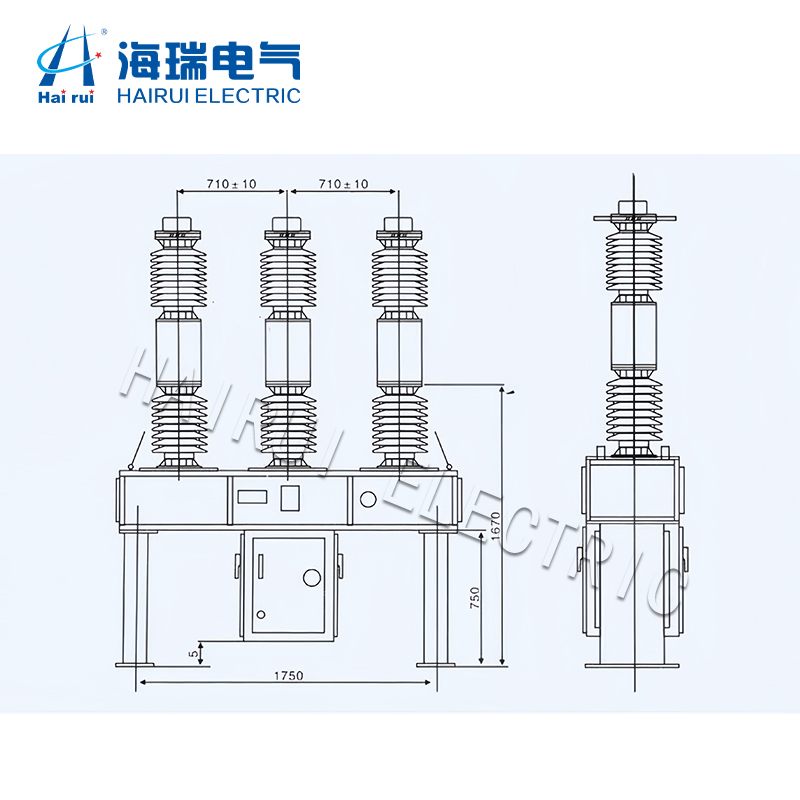
Product Overview
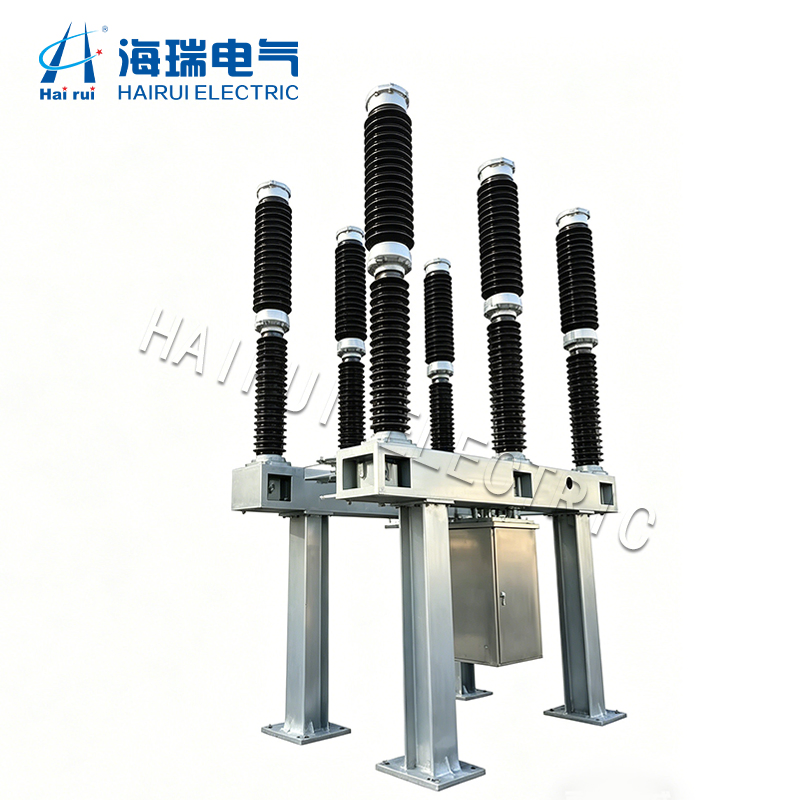
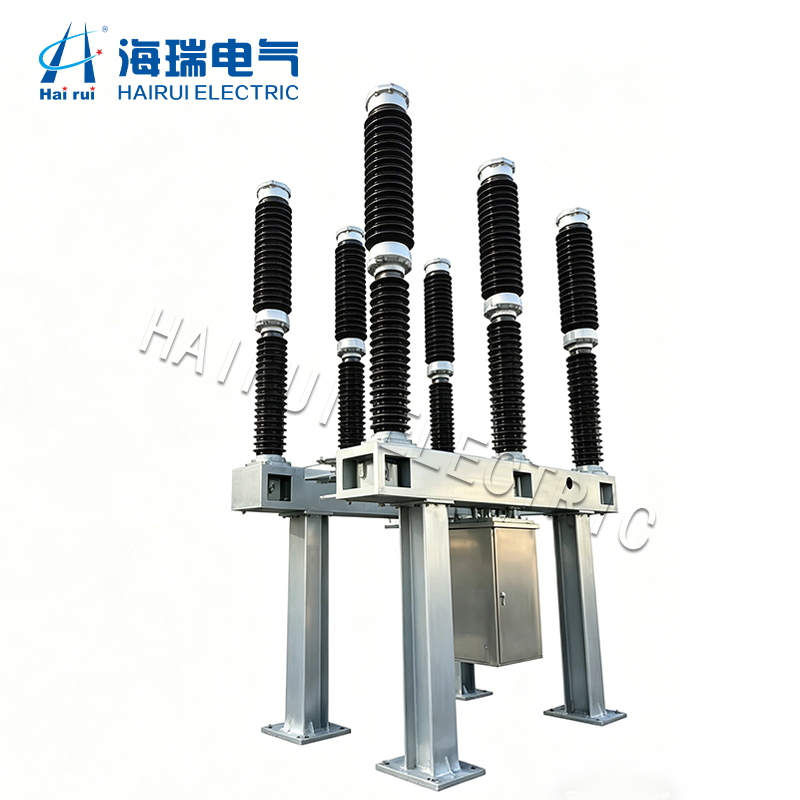
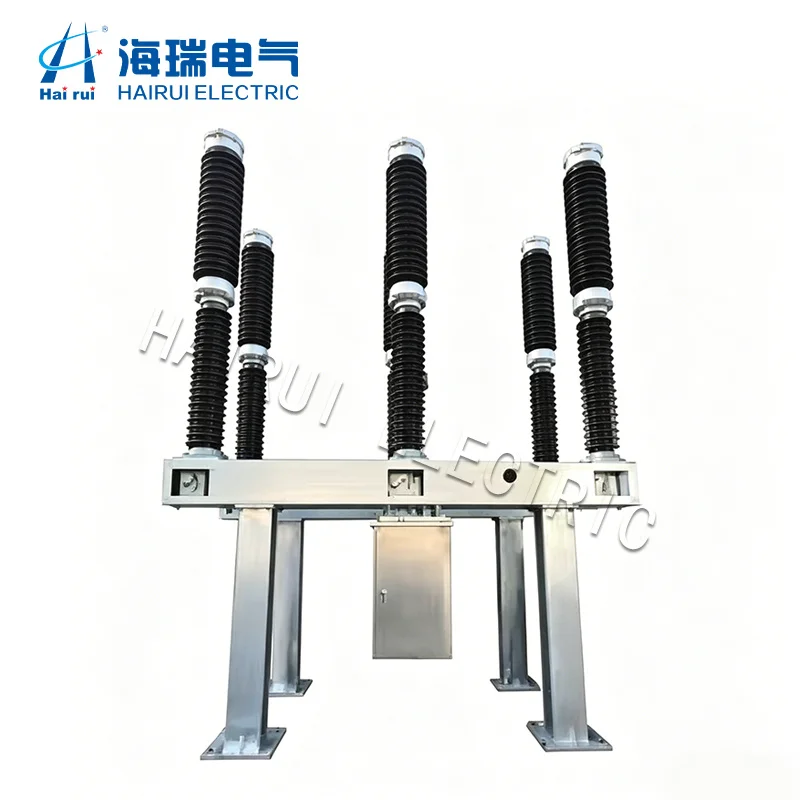
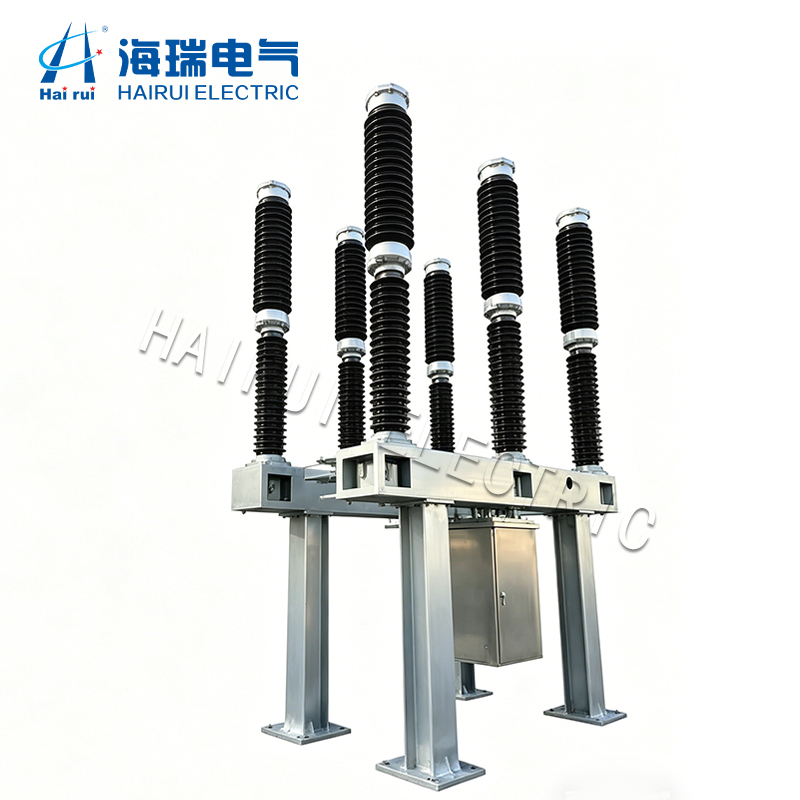
The LW8-40.5 is a three-pole, live-tank 40.5 kV outdoor SF6 circuit breaker rated at 1600 A or 2000 A continuous current. The interrupter is sealed and charged to a 0.5 MPa rated gas pressure — the design condition at which its insulation and interrupting ratings apply — and it is supervised through a graduated pressure scheme: 0.47 MPa alarm, 0.15 MPa minimum functional pressure.
40.5 kV is the equipment rating that covers 33 kV and 35 kV networks, which is why this model ends up on distribution substations from Lagos and Nairobi to Ho Chi Minh City, Tashkent and Basra. Closing and tripping energy is stored in springs, so the substation needs no compressor plant, no nitrogen bottles and no hydraulic pump — a decisive advantage where maintenance crews are thin and station auxiliary power is unreliable. The same breaker sits in the high voltage SF6 circuit breaker range alongside the 72.5 kV, 126 kV and 252 kV models.
Key Features
- 0.5 MPa rated SF6 gas pressure: the reference condition for both dielectric strength and arc-quenching capability. Gas density, not gauge pressure, is what the rating depends on, so the value holds across the ambient temperature range of the site.
- Graduated pressure supervision (0.47 MPa alarm / 0.15 MPa minimum functional): the alarm arrives while there is still interrupting margin left, which turns a gas leak into a scheduled maintenance task instead of a forced outage. Below 0.15 MPa the breaker must be taken out of service.
- Spring operating mechanism: motor-charged closing springs with mechanically latched trip energy. No compressed air system to drain, no hydraulic oil to condition, and operation remains possible on battery-backed DC auxiliaries during a station outage.
- 40.5 kV / 1600–2000 A / 95 kV power frequency / 185 kV lightning impulse: insulation levels with margin for polluted, coastal and high-altitude sites where flashover, not current, is the limiting factor.
- 3000 mechanical operations: paired with a sealed gas system, this supports multi-year routine maintenance intervals at normal distribution duty rather than annual servicing.
- Three-pole ganged operation on one base frame: one civil foundation, one alignment job, shimmed to within 2 mm. Fewer interfaces to get wrong on site and a shorter commissioning window.
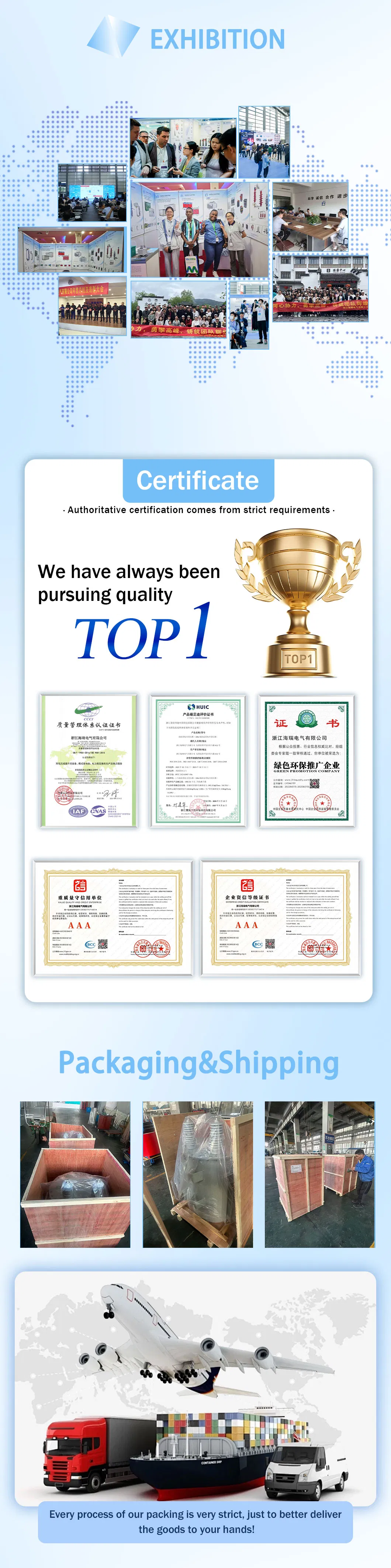
- Sea-worthy plywood export case: fumigation-free packing accepted at destination ports without phytosanitary delay, braced for container and breakbulk handling.
- ISO 9001 quality management, 12-month warranty, MOQ 1 piece: single units are accepted, and OEM/ODM customization covers nameplate, ratings, auxiliary contacts and gas monitoring contacts.
Technical Specifications
Values below describe the standard build. Where a figure genuinely depends on your network — breaking capacity, creepage, ambient range — it is marked as an order-time selection rather than fixed here, because quoting a default value you do not need is how buyers end up overpaying.
| Model | LW8-40.5 |
| Type | Outdoor, live-tank, three-pole SF6 circuit breaker |
| Rated voltage | 40.5 kV |
| Rated current | 1600 A / 2000 A |
| Rated frequency | 50 Hz |
| Rated short-circuit breaking current | 25–31.5 kA (selected against your fault level) |
| Power frequency withstand voltage, 1 min | 95 kV |
| Lightning impulse withstand voltage, 1.2/50 µs | 185 kV |
| Rated SF6 gas pressure at 20 °C | 0.5 MPa |
| Alarm pressure | 0.47 MPa |
| Minimum functional pressure | 0.15 MPa |
| Operating mechanism | Spring, motor-charged |
| Mechanical life | 3000 operations |
| Number of poles | 3, ganged |
| Installation | Outdoor, fixed on concrete foundation |
| Auxiliary supply | DC 110 V / 220 V (confirmed at order) |
| Standards | IEC 62271-100 / GB 1984 (type test reports on request) |
| Certification | ISO 9001 quality management system |
| Transport packing | Sea-worthy plywood case |
| Warranty | 12 months |
| MOQ | 1 piece |
| Origin | Zhejiang, China |
The three pressure values are not interchangeable settings. 0.5 MPa is the fill condition that the type tests were run at; 0.47 MPa is the alarm contact on the gas density monitor; 0.15 MPa is the point where the interrupter can no longer be trusted to clear a fault. Reading them as one number is the most common specification mistake we see — the IEC 62271-100 ratings framework treats them as three separate duties.
Applications: Africa, Southeast Asia, Central Asia, Middle East and CIS
These are the five regions we ship into most often, and each one stresses a breaker in a different way. The notes below are the checks that actually decide whether a standard 40.5 kV unit survives on your site — not the catalogue headline figures.
Africa: long feeders, thin maintenance crews
33 kV distribution in Nigeria, Kenya, Tanzania, Ghana and Zambia runs long rural feeders with high fault incidence and frequent trip-reclose cycles. Two things matter more than price here: a spring mechanism that does not depend on a station compressor, and a sealed gas system that holds its charge with no top-up between annual visits. Specify spare density relay contacts and a spare set of auxiliary contacts at order time, because the local substitute is usually unavailable. Practical maintenance intervals are covered in our SF6 breaker maintenance guide.
Southeast Asia: humidity, salt and lightning
Indonesia, the Philippines, Vietnam, Thailand and Malaysia combine 80–90% relative humidity, coastal salt deposition and some of the highest lightning flash densities in the world. Creepage distance, not rated current, is usually the specification that decides the order — pollution class III or IV sheds are the norm for coastal and industrial sites, and a plain standard-creepage bushing will track within a few wet seasons. If your site is within a few kilometres of the sea, say so at inquiry; see pollution class and salt spray selection.
Central Asia: continental cold, dust and altitude
Uzbekistan, Kazakhstan, Tajikistan and Kyrgyzstan bring −30 °C winters, +45 °C summers and, in the mountain regions, altitudes above 1500 m where air insulation and external clearance both have to be corrected upward. Low temperature is the real constraint: SF6 liquefies as ambient falls, so the fill pressure and any heating arrangement must be agreed against the recorded winter minimum rather than a national average. Our cold climate and high altitude guidance sets out the calculation.
Middle East: 50 °C ambient and airborne sand
Iraq, Saudi Arabia, the UAE, Oman and Jordan run outdoor switchyards in shade temperatures above 50 °C, which derates every current-carrying path in the breaker. A 2000 A rating selected against a 40 °C ambient will not deliver 2000 A at 50 °C, and the same applies to cable terminals and busbar interfaces on either side of it. The derating arithmetic is in temperature rise limits above 40 °C ambient. Sand ingress is managed by orientation and enclosure detailing rather than by a single IP number.
CIS: legacy 50 Hz networks and cold commissioning
Russia, Belarus, Kazakhstan, Azerbaijan and Uzbekistan mostly inherit 50 Hz networks built to GOST practice, where documentation matters as much as hardware: Russian-language O&M manuals, dimensional drawings for civil works, and test certificates that a local inspector will accept. Winter commissioning at −40 °C is common, so gas filling, density relay setting and mechanism lubrication all need to be validated at the low end of the range, not just at the factory’s ambient.
Packing, Shipping Weight and Foundation Data
Ocean freight is typically 5–10% of the landed cost of a 40.5 kV breaker but 15–20% once you step up to 126 kV and 252 kV, because the crate count grows with the voltage class. The table below gives the figures we quote against for the two larger tiers — the ones where a single unit no longer fits in a light case.
| 126 kV / 110 kV system (LW36-126) | 252 kV / 220 kV system (LW-252) | |
| Interrupter columns shipped | 3 | 6 |
| Net weight | 1900 kg | approx. 3800 kg |
| Total shipping weight, packed | 2200 kg | approx. 4400 kg |
| Column packing | 3 cases, 3500 × 740 × 650 mm, 450 kg each | 6 cases, 3500 × 740 × 650 mm, 450 kg each |
| Base frame packing | 3880 × 700 × 2350 mm, 850 kg | 2 base cases, approx. 1700 kg total |
| Dynamic load, upward / downward | 24 kN | 24 kN per foundation |
| Height difference between the two foundation surfaces | ≤ 2 mm | ≤ 2 mm |
| Levelness of each foundation surface | ≤ 2 mm | ≤ 2 mm |
| Recommended container | 1 × 20 GP | 1 × 40 HQ or 40 FR |
The 252 kV column is simply double the 126 kV one: six interrupter columns instead of three, two base frames instead of one, twice the steel and twice the SF6. The LW8-40.5 on this page is a single three-pole unit on one base frame and ships in one plywood case; its own net weight, case dimensions and lifting points are issued with the proforma invoice, and mixed orders are consolidated where the loading plan allows.
Loading is from Ningbo or Shanghai. EXW, FOB, CFR, CIF and DAP terms are all quoted; LCL consolidation is available for single units. The document set travels with the goods: commercial invoice, packing list, bill of lading, certificate of origin (a Form E certificate where the destination qualifies for preferential duty), routine test report, and IEC 62271-100 declaration. Third-party inspection at works, and client witness testing, can be arranged before shipment.
Price Guide
The figures below are indicative RMB prices for standard builds, ex-works Zhejiang, current as of 2026. They are a planning reference for budget approval, not a quotation: breaking capacity, creepage class, accessory set, freight term and destination port all move the final number.
| Voltage class | Reference model | Interrupter columns | Indicative price |
| 40.5 kV (35 kV system) | LW8-40.5 (this page) | 3 | approx. RMB 40,000 |
| 72.5 kV (66 kV system) | LW9-72.5 | 3 | approx. RMB 75,000 |
| 126 kV (110 kV system) | LW36-126 | 3 | approx. RMB 80,000 |
| 252 kV (220 kV system) | LW-252 | 6 | approx. RMB 160,000 |
Read the shape of the curve rather than the absolute numbers. Per kilovolt, the two low tiers are the expensive ones — roughly RMB 1,000 per kV at 40.5 kV and 72.5 kV, against about RMB 635 per kV at 126 kV and 252 kV — because the mechanism, control cabinet and gas density monitoring cost almost the same whatever the voltage, so fixed content dominates a small breaker. The 72.5 kV to 126 kV step adds only about 7% in money for nearly double the voltage, while 126 kV to 252 kV doubles again, because it doubles the hardware: six interrupter columns instead of three and two base frames instead of one.
What is included in the price: breaker, base frame, gas density monitor, foundation bolts, gas filling per contract and an English O&M manual. What is quoted separately: spare SF6 cylinders, disconnectors and current transformers, special creepage bushings, third-party inspection and witness tests, and any certification your customs or utility requires. Typical payment terms are 30% deposit with order and the balance against a copy of the bill of lading, with L/C at sight accepted for container-volume orders. The full cost structure is broken down in SF6 circuit breaker price and cost drivers, and the step changes between voltage tiers are compared in the LW series model comparison.
Ordering: What to Send in the Inquiry
Eight items let us return a complete offer — ratings, packing list, freight and lead time — in one document instead of five rounds of email:
- Network voltage and rated current — 33 kV or 35 kV system, 1600 A or 2000 A.
- System fault level — so breaking capacity is selected rather than guessed.
- Ambient temperature range and site altitude — the two figures that change insulation and gas pressure.
- Pollution class or site description — coastal, desert, industrial; creepage follows from this.
- Auxiliary DC voltage — 110 V or 220 V, and whether density relay contacts must be wired to SCADA.
- Configuration — bare breaker, or with disconnectors, CTs and surge arresters on a common frame.
- Destination port and Incoterm — EXW, FOB, CFR, CIF or DAP.
- Documentation and certification — certificate of origin, third-party inspection, witness testing.
Minimum order is one piece, so a single replacement breaker for an existing 33 kV substation is a normal order rather than an exception, and customization of ratings, nameplate and monitoring contacts is handled under the same OEM/ODM route. The commercial sequence — MOQ, QC points, lead time and inspection — is set out in how to buy SF6 circuit breakers from a manufacturer; if you are still comparing voltage classes, start from how to select an SF6 circuit breaker.
FAQ
What is the rated SF6 gas pressure?
The rated gas pressure of sulfur hexafluoride is 0.5MPa. This is the design pressure at which the breaker's insulation and interrupting performance ratings apply.
What happens if gas pressure drops?
An alarm is triggered at 0.47MPa, providing early warning of gas loss while performance margin remains. At 0.15MPa - the minimum functional pressure - interrupting capability can no longer be guaranteed and the breaker should be removed from service for inspection and refilling.
How is gas pressure monitored in service?
Gas pressure or density monitoring devices track SF6 condition and can be integrated with substation supervisory systems. The defined 0.47MPa alarm and 0.15MPa minimum functional thresholds support monitoring logic and lockout schemes.
What are the breaker's electrical ratings?
Rated voltage is 40.5kV with 1600A or 2000A rated current options and 95kV power frequency withstand voltage. See the product attributes table for the full rating list.
Is gas pressure monitoring equipment included or customizable?
OEM/ODM customization is available for monitoring configurations and other parameters. Contact HaiRui with your supervisory system requirements for a tailored solution.
How much does a 40.5kV SF6 circuit breaker cost?
The LW8-40.5 is approximately RMB 40,000 ex-works Zhejiang for a standard build. For reference across the range: 72.5kV (66kV system) about RMB 75,000, 126kV (110kV system) about RMB 80,000 and 252kV (220kV system) about RMB 160,000. Final price depends on breaking capacity, creepage class, accessory set and freight term, so send system voltage, rated current and fault level for a firm offer.
What is the shipping weight and how is the breaker packed?
The LW8-40.5 ships as one sea-worthy plywood case. For the larger tiers the figures scale with pole count: the 126kV LW36-126 is 1900kg net and 2200kg packed, in three column cases of 3500 x 740 x 650mm at 450kg each plus a base case of 3880 x 700 x 2350mm at 850kg. The 252kV model carries six columns instead of three, so both pole count and weight double. Exact weights for your build are issued with the proforma invoice.
What is the MOQ and what documentation comes with the shipment?
MOQ is 1 piece, and OEM/ODM customization of ratings, nameplate and gas monitoring contacts is available. The document set includes commercial invoice, packing list, bill of lading, certificate of origin, routine test report and IEC 62271-100 declaration; third-party inspection and witness testing can be arranged before shipment.
Request Quote
Tell us your specifications, quantity, or application scenario and we will reply with a tailored quote.