Product Overview
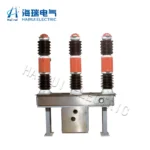
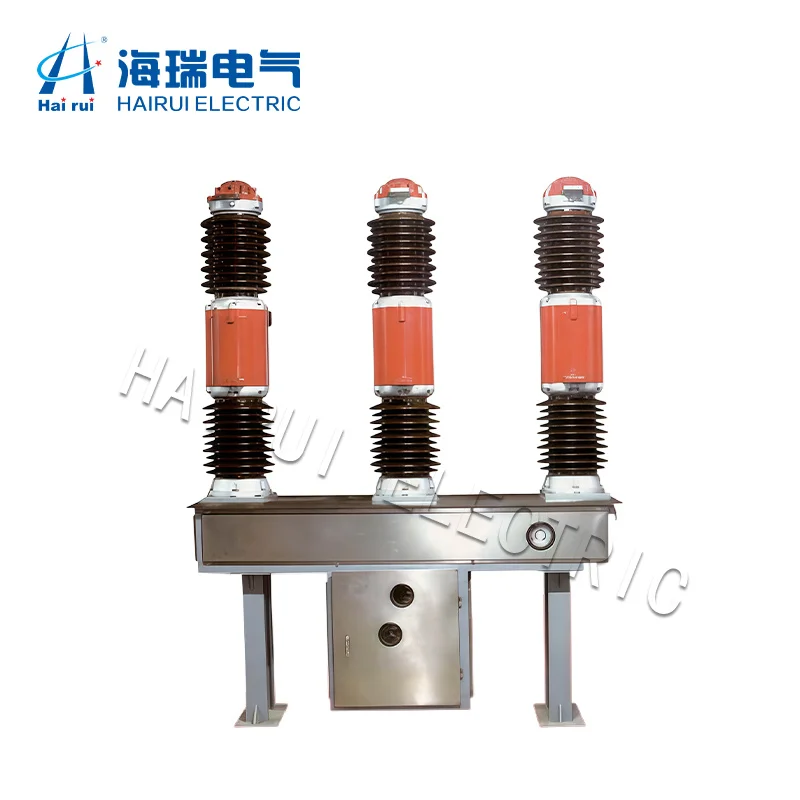
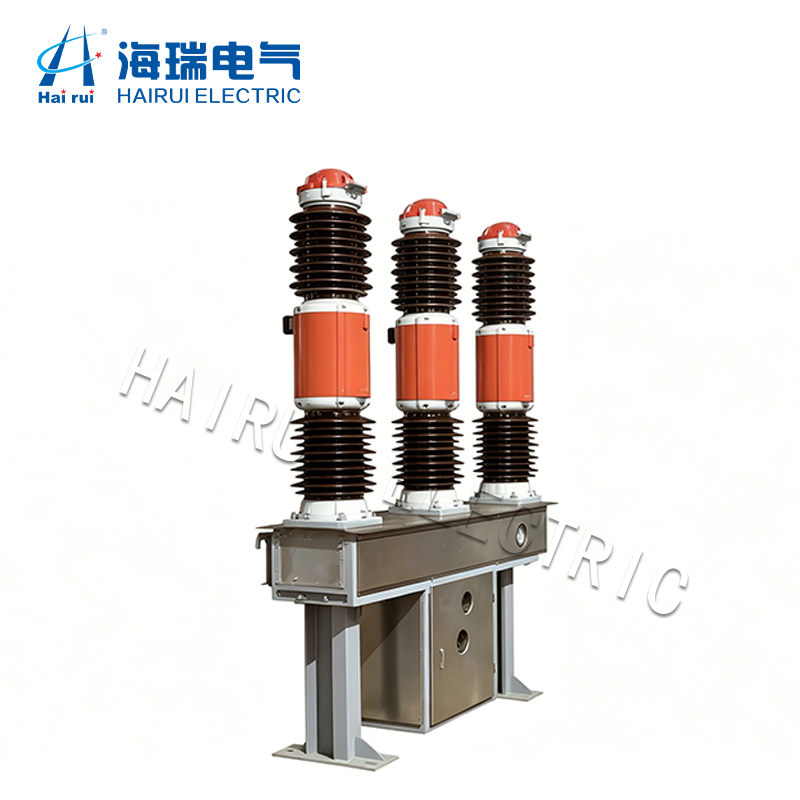
The LW8-40.5 is the entry point to the LW family: a 40.5 kV outdoor SF6 breaker for the 33 kV and 35 kV networks that carry most distribution load in Africa, South and Southeast Asia, the Middle East and the CIS. Three poles, live tank, one base frame, spring mechanism, interrupter sealed at 0.5 MPa with a 0.47 MPa alarm and a 0.15 MPa minimum functional pressure, 1600 A or 2000 A, 95 kV power frequency and 185 kV impulse withstand.
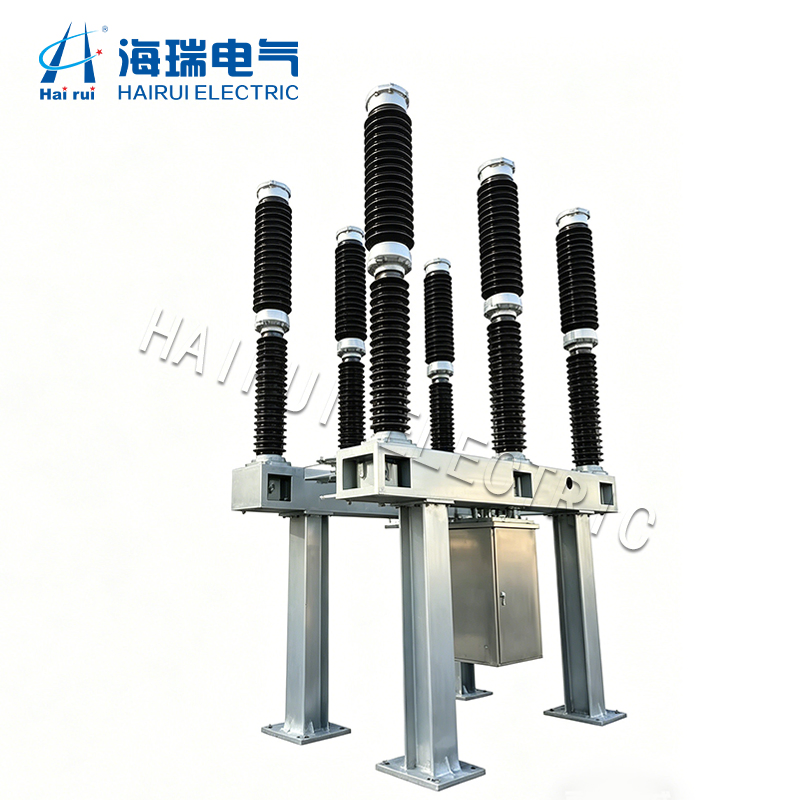
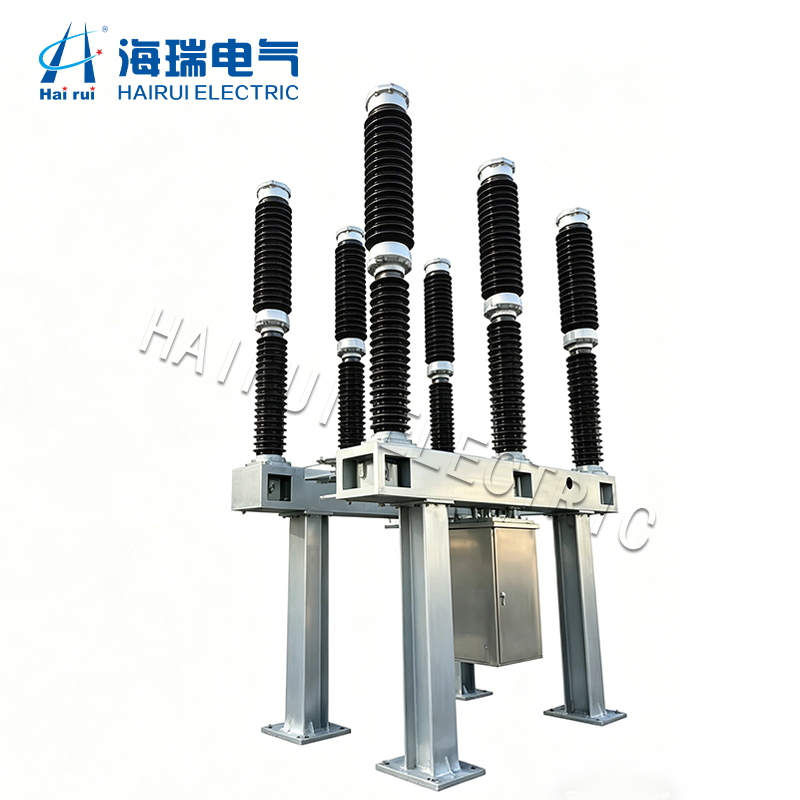
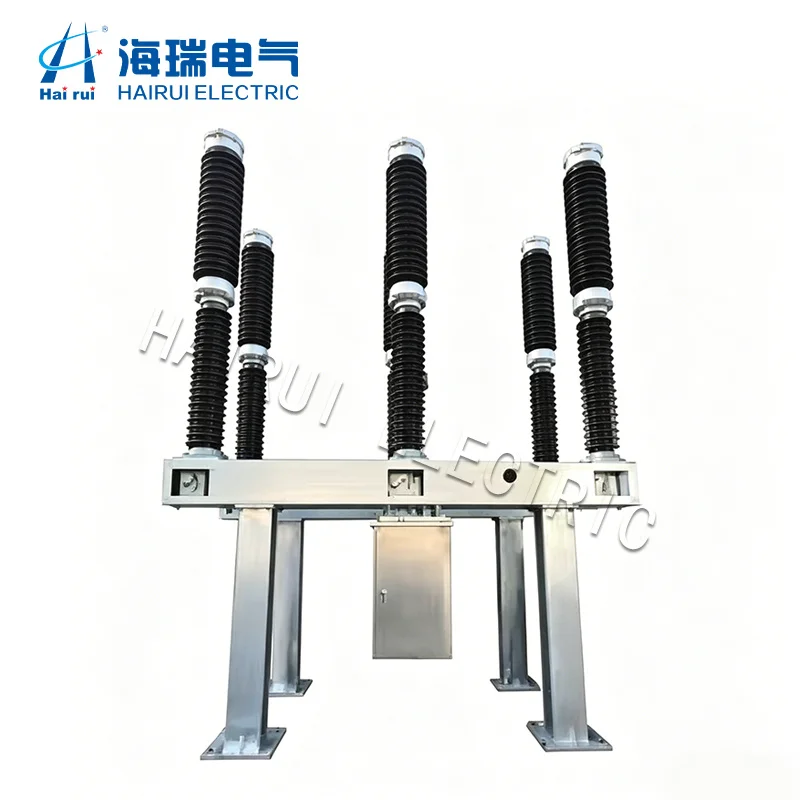
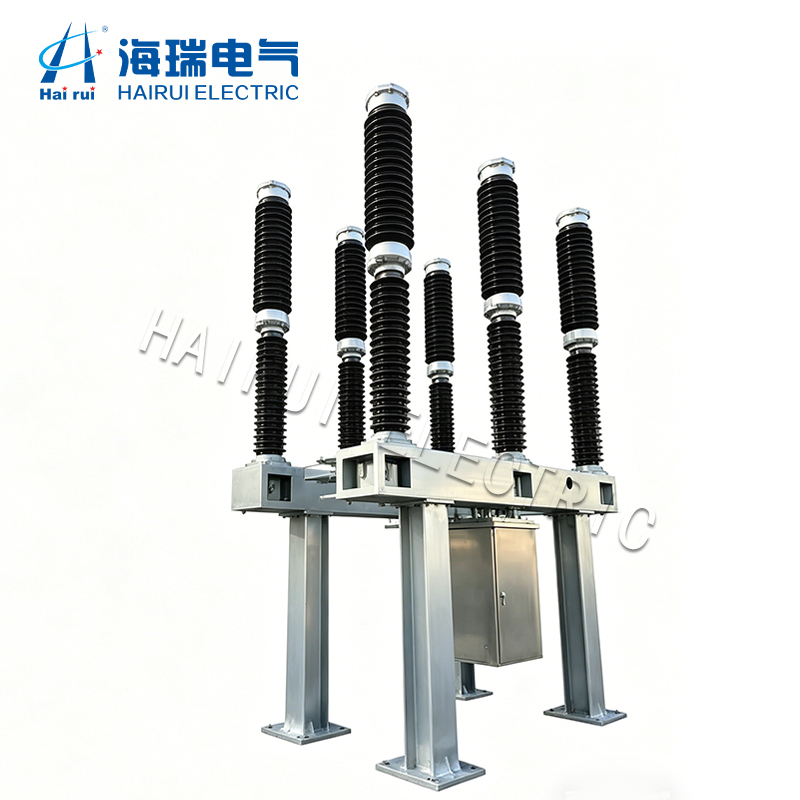
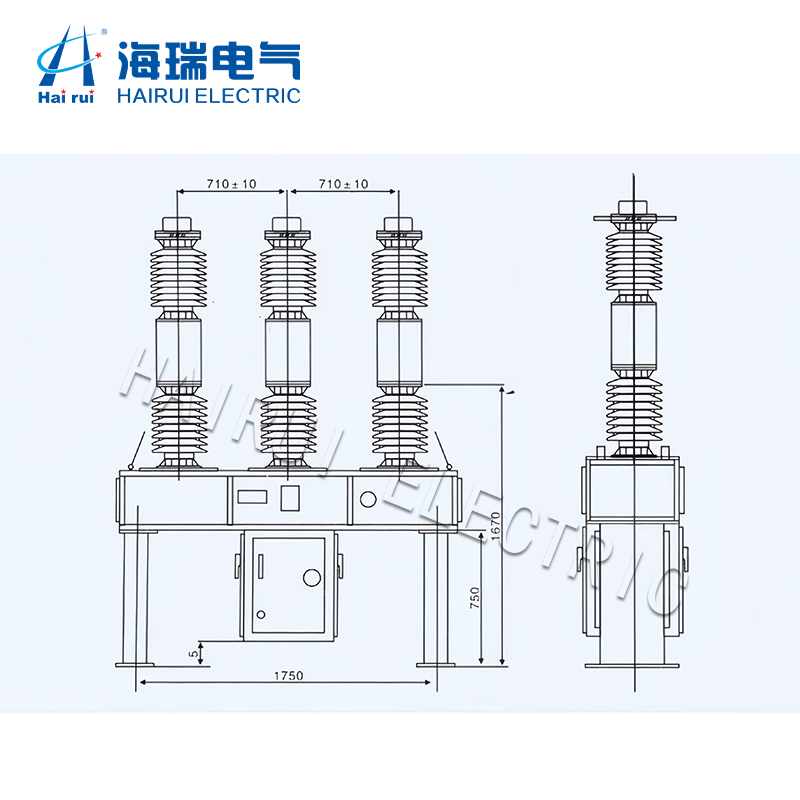
The “medium-mounted” part of the description is the one that matters for civil works: the poles sit on a single fabricated base frame at the terminal height the layout needs, rather than on a tall steel structure or directly on a concrete plinth per phase. One foundation, one alignment, one lifting operation — and a footprint that fits inside a fenced compound without a structural frame around it.
This page covers the product and its installation envelope. Four variants of the same breaker are documented separately, because buyers arrive with different questions: the 0.5 MPa gas pressure and price reference, the 3000-operation mechanical life, the 185 kV lightning impulse specification and the 2000 A current rating.
What Medium-Mounted Means for the Site
Three decisions get made together at the layout stage, and getting them wrong is expensive after the concrete is poured.
Foundation and alignment. The breaker sits on two foundation surfaces and is levelled with shims. The tolerance is tight for a reason: 2 mm maximum height difference between the two surfaces and 2 mm maximum levelness on each. Outside that, the frame carries a permanent bending load, the poles lean, and the gas tightness of the column joints becomes a future leak. Design the foundation for a 24 kN upward and downward dynamic load at the frame, and cast it before the unit arrives rather than around it.
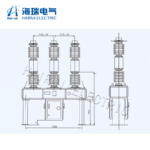
Terminal height and entry. With a single base frame the terminal height is set by the frame, so overhead-line entry and cable entry need different frame heights and different arrester positions. Overhead entry puts the arresters close to the bushings, which is what the impulse level assumes; cable entry through a trench moves them further away and the lead length becomes part of the insulation coordination. Tell us which at inquiry — the outline drawing follows from it.
Clearances and access. Phase-to-phase and phase-to-earth distances are set by the 40.5 kV class, but the working space around the unit is a local decision: room for a bucket truck or a ladder on the operating side, room to swing the mechanism cover, room to replace a density relay without dismantling the terminal connections. Compounds that are tight to the fence are the usual cause of a breaker being maintained from an awkward angle for twenty years.
Key Features
- Single base frame, three poles: one civil foundation, alignment to 2 mm, one lifting operation on site.
- 40.5 kV class: serves 33 kV and 35 kV networks with 95 kV power frequency and 185 kV impulse withstand.
- 1600 A or 2000 A: feeder and sectionaliser duty on the lower rating, main incomer and tie positions on the higher one.
- Sealed SF6 interrupter, 0.5 MPa rated: 0.47 MPa alarm and 0.15 MPa minimum functional, with density contacts available for SCADA.
- Spring operating mechanism: motor-charged closing springs, mechanically latched trip energy, 3000 mechanical operations. No compressor plant and no hydraulic system to maintain.
- Three-pole ganged operation: a single operating linkage, so no risk of pole discrepancy from independently driven phases.
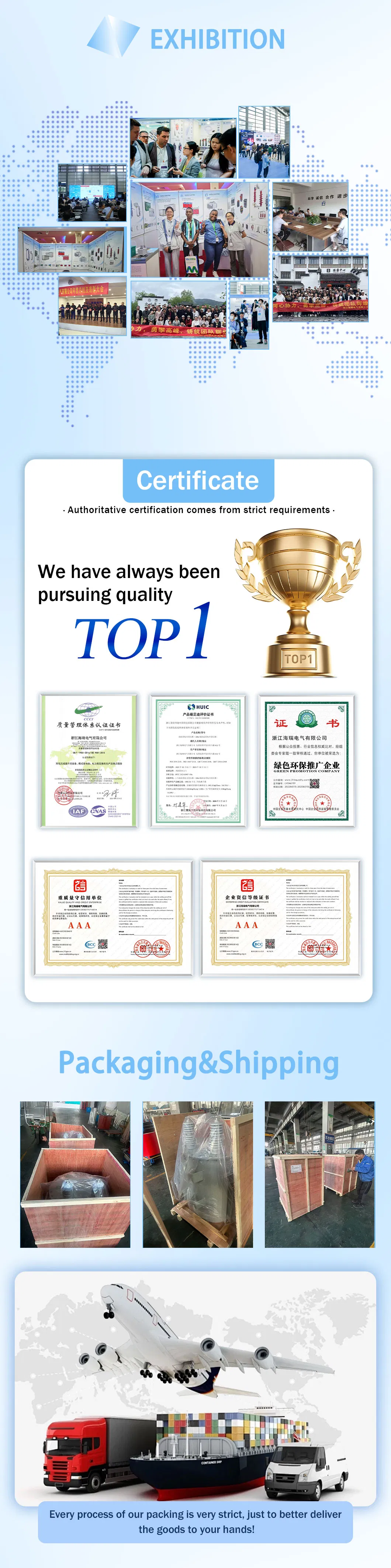
- Sea-worthy plywood case: fumigation-free export packing, braced for container and breakbulk handling.
- ISO 9001 quality management, 12-month warranty, MOQ 1 piece, OEM/ODM: frame height, terminal arrangement, nameplate and auxiliary contacts customized at order.
Technical Specifications
Standard build values. Where a figure depends on the site — breaking capacity, creepage, frame height, ambient range — it is an order-time selection, and the outline drawing issued with the offer shows the resulting dimensions.
| Model | LW8-40.5 |
| Type | Outdoor, live-tank, three-pole SF6 circuit breaker |
| Rated voltage | 40.5 kV |
| Rated current | 1600 A / 2000 A |
| Rated frequency | 50 Hz |
| Rated short-circuit breaking current | 25–31.5 kA (selected against your fault level) |
| Power frequency withstand voltage, 1 min | 95 kV |
| Lightning impulse withstand voltage, 1.2/50 µs | 185 kV |
| Rated SF6 gas pressure at 20 °C | 0.5 MPa |
| Alarm pressure | 0.47 MPa |
| Minimum functional pressure | 0.15 MPa |
| Operating mechanism | Spring, motor-charged |
| Mechanical life | 3000 operations |
| Number of poles | 3, ganged |
| Installation | Outdoor, fixed on concrete foundation |
| Auxiliary supply | DC 110 V / 220 V (confirmed at order) |
| Standards | IEC 62271-100 / GB 1984 (type test reports on request) |
| Certification | ISO 9001 quality management system |
| Transport packing | Sea-worthy plywood case |
| Warranty | 12 months |
| MOQ | 1 piece |
| Origin | Zhejiang, China |
Two notes on reading this table. The 0.5 MPa is the fill density at which the dielectric and interrupting ratings apply, not an operating band; 0.47 MPa is the alarm and 0.15 MPa the point at which the breaker must come out of service. And the frame height shown on the drawing is the civil interface — the breaker’s own dimensions do not change with it, but the foundation bolt pattern and the terminal positions do.
Applications: Layout and Site Practice by Region
The same breaker is installed five different ways depending on where it lands. These are the layout and civil points that come up in each region.
Africa: remote compounds, no lifting equipment
In Nigeria, Kenya, Tanzania, Ghana and Zambia the unit often arrives at a site where the only lifting gear is a hired crane, and the foundation was cast weeks earlier by a contractor who has not seen the drawing. Send the outline and the anchor bolt template with the order, not with the shipment. The single base frame helps here: one lift, one alignment, and no per-phase plinths to bring into tolerance relative to each other.
Southeast Asia: coastal compounds and corrosion
Indonesian, Philippine, Vietnamese, Thai and Malaysian sites within a few kilometres of the sea add salt to every external surface, including the base frame and the mechanism housing. Specify the paint system and the degree of galvanizing at order; the bushings get the attention, but the frame is what fails first in a coastal compound. Creepage requirements for the same sites are covered in pollution class and salt spray selection.
Central Asia: altitude, cold and seismic detailing
Compound layouts in Kazakhstan, Uzbekistan, Tajikistan and Kyrgyzstan have to account for altitudes above 1500 m in the mountain regions, winter minimums near −30 °C, and in places seismic anchoring. Altitude increases external clearance, cold changes what the foundation and the mechanism have to tolerate, and seismic detailing changes the anchor design. All three are drawing-level decisions, so they need to be in the inquiry rather than discovered at installation.
Middle East: heat, dust and sun
Iraqi, Saudi, Emirati, Omani and Jordanian compounds run at shade temperatures above 50 °C with sand moving across the site. Orient the operating side away from the prevailing wind, keep the density relay accessible in shade where possible, and allow for the fact that a steel frame in direct sun runs considerably hotter than the air. Derating for that ambient is covered in temperature rise limits above 40 °C ambient.
CIS: documentation before concrete
In Russia, Belarus, Azerbaijan and Uzbekistan the civil works cannot start without a stamped drawing set: foundation drawing, dimensional drawing, loading data and a Russian-language O&M manual. The 2 mm tolerances and the 24 kN dynamic load are exactly what the civil designer needs, and they are worth sending ahead of the commercial documents rather than with them.
Packing, Shipping Weight and Foundation Data
One case for this breaker; more cases as the voltage class rises. The reference figures below cover the two tiers where a single unit no longer fits in a light case, and they are the numbers freight forwarders ask for.
| 126 kV / 110 kV system (LW36-126) | 252 kV / 220 kV system (LW-252) | |
| Interrupter columns shipped | 3 | 6 |
| Net weight | 1900 kg | approx. 3800 kg |
| Total shipping weight, packed | 2200 kg | approx. 4400 kg |
| Column packing | 3 cases, 3500 × 740 × 650 mm, 450 kg each | 6 cases, 3500 × 740 × 650 mm, 450 kg each |
| Base frame packing | 3880 × 700 × 2350 mm, 850 kg | 2 base cases, approx. 1700 kg total |
| Dynamic load, upward / downward | 24 kN | 24 kN per foundation |
| Height difference between the two foundation surfaces | ≤ 2 mm | ≤ 2 mm |
| Levelness of each foundation surface | ≤ 2 mm | ≤ 2 mm |
| Recommended container | 1 × 20 GP | 1 × 40 HQ or 40 FR |
The 252 kV line doubles the 126 kV line because the hardware doubles: six interrupter columns instead of three, two base frames instead of one. The LW8-40.5 on this page is a single three-pole unit on one base frame in one plywood case; its net weight, case dimensions and lifting points are issued with the proforma invoice, and mixed orders are consolidated where the loading plan allows.
Loading from Ningbo or Shanghai, EXW, FOB, CFR, CIF or DAP, with LCL consolidation for single units. Invoice, packing list, bill of lading, certificate of origin, routine test report and IEC 62271-100 declaration travel with the goods; third-party inspection and witness testing can be booked before loading.
Price Guide
Indicative RMB prices for standard builds, ex-works Zhejiang, current as of 2026 — a planning reference for budget approval rather than a quotation. Breaking capacity, creepage class, frame height, accessory set and freight term move the final number.
| Voltage class | Reference model | Interrupter columns | Indicative price |
| 40.5 kV (35 kV system) | LW8-40.5 | 3 | approx. RMB 40,000 |
| 72.5 kV (66 kV system) | LW9-72.5 | 3 | approx. RMB 75,000 |
| 126 kV (110 kV system) | LW36-126 | 3 | approx. RMB 80,000 |
| 252 kV (220 kV system) | LW-252 | 6 | approx. RMB 160,000 |
Per kilovolt the low tiers carry the most cost, because the mechanism, control cabinet and density monitoring cost nearly the same whatever the voltage; the 126 kV step is where that flattens out. A single-unit order therefore pays a higher price per kilovolt than a board order, which is one reason consolidation is worth planning.
Included: breaker, base frame, gas density monitor, foundation bolts, gas filling per contract and an English O&M manual. Quoted separately: spare SF6 cylinders, disconnectors, current transformers, special creepage bushings, alternative frame heights, third-party inspection and witness tests. Typical terms are 30% deposit with order and the balance against a copy of the bill of lading, with L/C at sight for container volumes. Cost structure is broken down in SF6 circuit breaker price and cost drivers.
Ordering: What to Send in the Inquiry
Because the frame is built to the layout, the first three items below determine the drawing:
- Overhead or cable entry — and the required terminal height if the layout fixes it.
- Frame height and foundation constraints — existing plinth, compound dimensions, anchor arrangement.
- Site altitude, ambient range and seismic requirement — the three site figures that change the drawing.
- Network voltage and rated current — 33 kV or 35 kV, 1600 A or 2000 A.
- System fault level — so breaking capacity is selected rather than assumed.
- Pollution class or site description — coastal, desert or industrial.
- Destination port and Incoterm — EXW, FOB, CFR, CIF or DAP.
- Documentation — stamped drawings, Russian-language manual, certificate of origin, third-party inspection.
Minimum order is one piece, and a single replacement on an existing 33 kV board is a normal order rather than an exception. The commercial sequence is set out in how to buy SF6 circuit breakers from a manufacturer, and if you are still comparing voltage classes, start from how to select an SF6 circuit breaker.
FAQ
What does SF6 gas insulated mean for this circuit breaker?
SF6 (sulfur hexafluoride) gas serves as both the insulation medium inside the interrupter and the arc-extinguishing medium during breaking. Its high dielectric strength allows a compact outdoor design with reliable switching performance at 40.5kV.
What are the rated current options?
The LW8-40.5 is available with 1600A or 2000A rated current. Select the rating based on the continuous load current of the feeder or busbar where the breaker will be installed.
What protection functions does the breaker provide?
The breaker provides circuit-breaker failure protection and overcurrent protection functions, supporting system security against breaker malfunction and overload or fault conditions.
What type of operating mechanism is used?
A spring operating mechanism is used. It provides high-speed operation with mechanically stored tripping energy, ensuring reliable fault clearing independent of the auxiliary power supply state.
Is customization available?
Yes. The breaker is supplied with OEM/ODM service support, ISO 9001 quality management, a 12-month warranty, and a minimum order quantity of 1 piece. Contact the manufacturer with your specifications for a tailored configuration.
What does medium-mounted mean for the foundation?
The three poles sit on one fabricated base frame, so the site casts two foundation surfaces and aligns the frame with shims to 2mm. There are no per-phase plinths to bring into tolerance against each other.
What is the shipping weight and how is it packed?
The LW8-40.5 ships in one sea-worthy plywood case; its weight and case dimensions are issued with the proforma invoice. For reference, the 126kV model is 1900kg net and 2200kg packed in four cases, and the 252kV model doubles both pole count and weight.
What is the MOQ and what documentation comes with the shipment?
MOQ is 1 piece, with OEM/ODM customization of ratings, nameplate and monitoring contacts. Documents include invoice, packing list, bill of lading, certificate of origin, routine test report and IEC 62271-100 declaration.
Request Quote
Tell us your specifications, quantity, or application scenario and we will reply with a tailored quote.