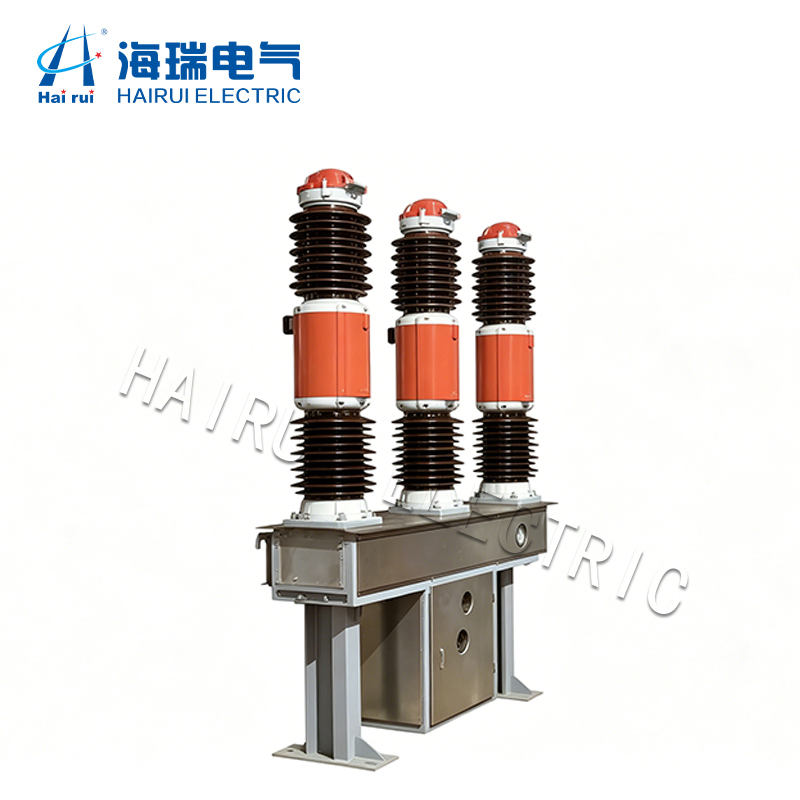
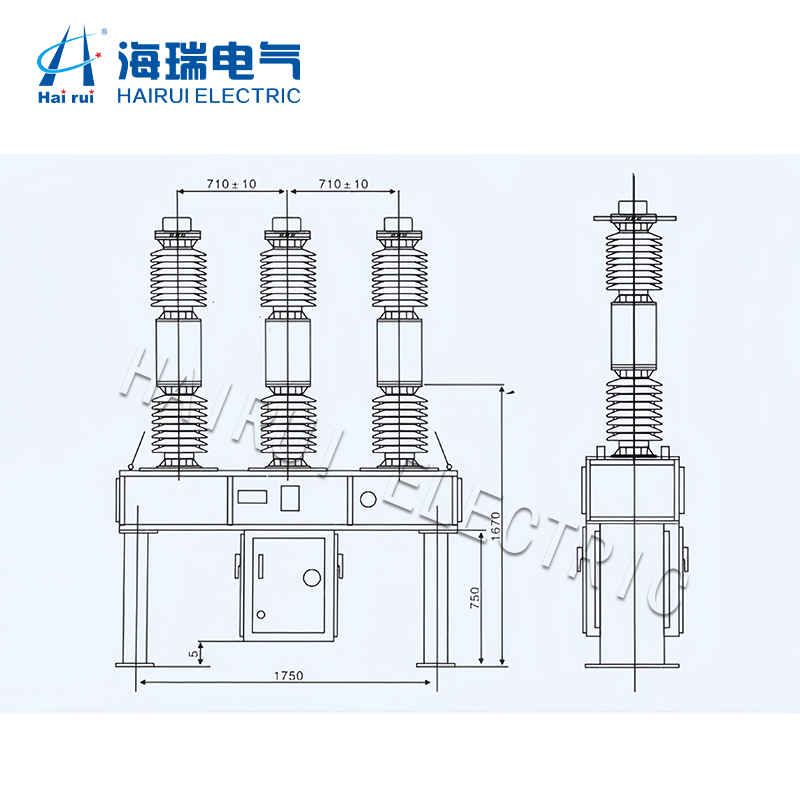
Product Overview
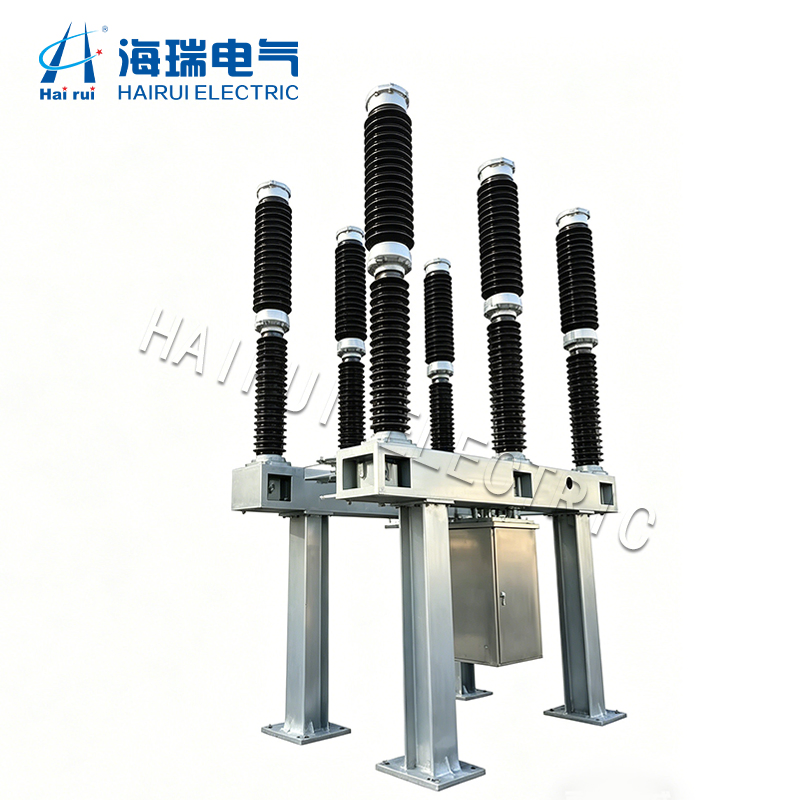
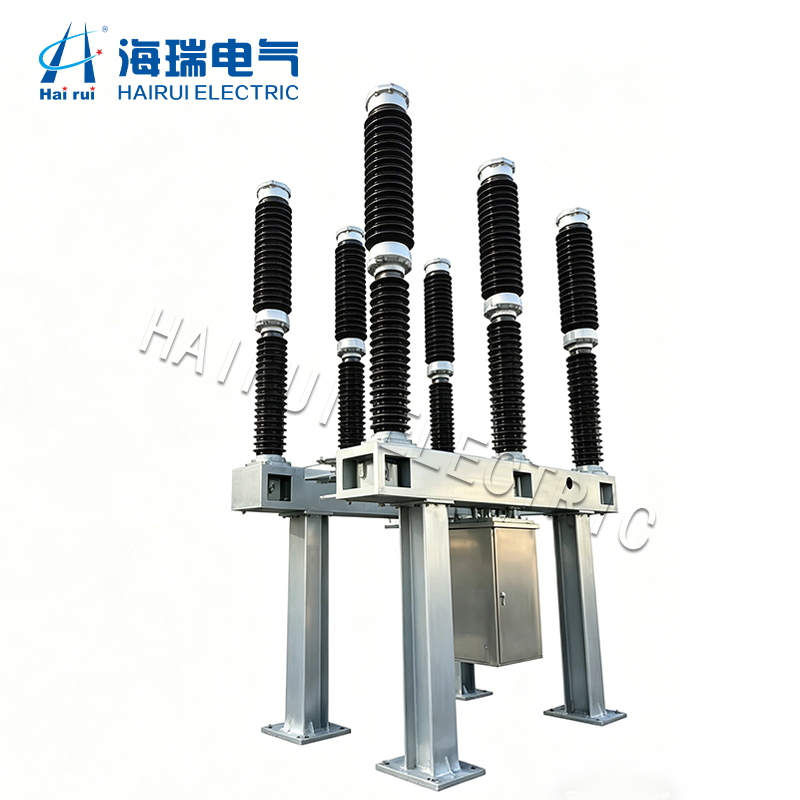
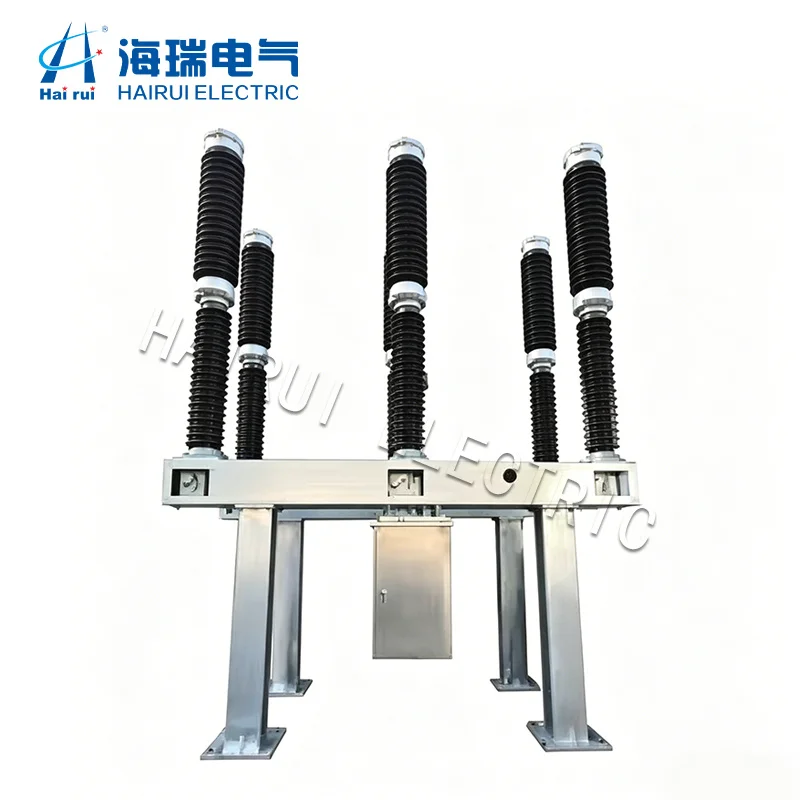
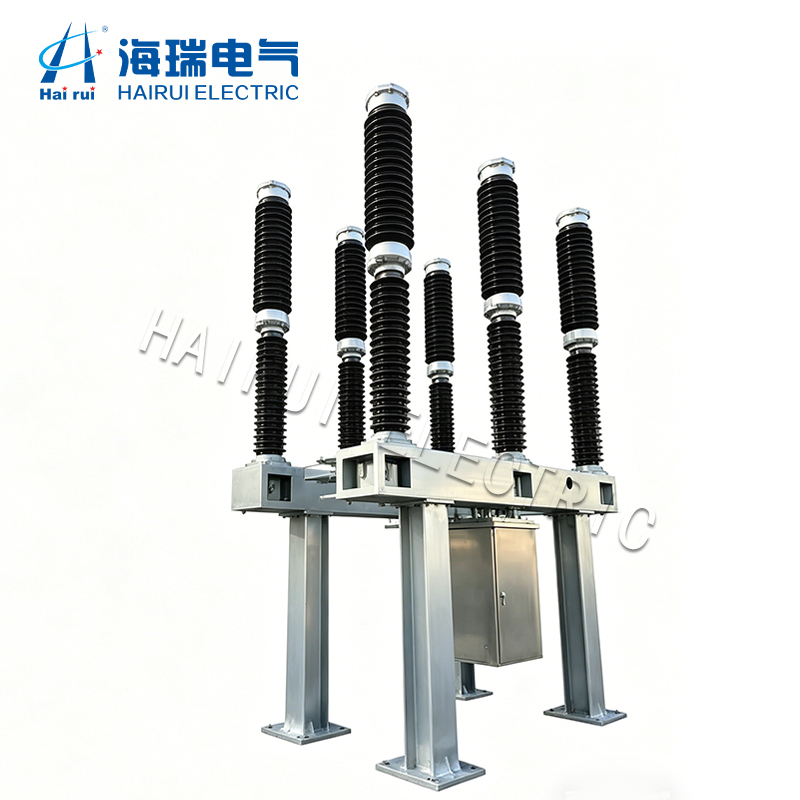
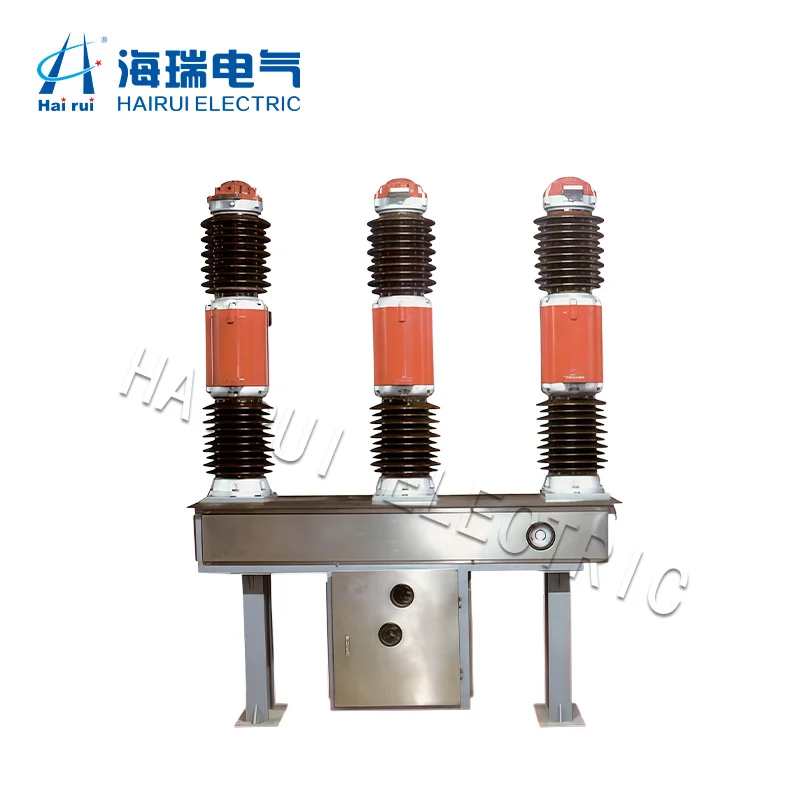
Insulation coordination is the part of a breaker specification that gets decided in a spreadsheet six months before anyone looks at a catalogue. The question is not how much insulation a 40.5 kV breaker needs in a clean laboratory; it is how much survives ten years of coastal humidity, a 185 kV impulse arriving down an overhead line, and a surge arrester that is thirty metres of busbar away. The LW8-40.5 is built to the standard 40.5 kV insulation envelope: 95 kV power frequency withstand and 185 kV lightning impulse, three poles, 1600 A or 2000 A, spring mechanism, SF6 interrupter sealed at 0.5 MPa.
This page concentrates on that envelope. The gas pressure scheme (0.5 MPa rated, 0.47 MPa alarm, 0.15 MPa minimum functional) matters to impulse strength as well, because a breaker holding its rated density is a breaker holding its rated insulation — the two are the same fact measured two ways.
Reading 185 kV Impulse Withstand on a 40.5 kV Breaker
Three different test voltages get quoted for the same unit, and buyers routinely compare the wrong pair.
| Parameter | Value | What it proves |
| Rated voltage | 40.5 kV | The system class the breaker serves: 33 kV and 35 kV networks |
| Power frequency withstand, 1 min | 95 kV | Continuous insulation strength, contaminated and dry, at operating stress with margin |
| Lightning impulse withstand, 1.2/50 µs | 185 kV | Surge strength against a lightning wave arriving on the line side |
| Rated SF6 pressure at 20 °C | 0.5 MPa | The density at which both of the above are valid |
The impulse number is the one that gets argued about, because it is the only one that depends on things outside the breaker. A 185 kV basic insulation level has to sit above the residual voltage of the surge arresters protecting the same busbar, plus the volt drop along the leads between arrester and breaker, plus a margin. Push the arresters to a distant marshalling point, or fit a lower-rated arrester to save money, and a compliant breaker becomes an unprotected one. The working rule is that BIL should exceed the arrester residual voltage with margin to spare — how much depends on your lead length and the outage risk you are willing to carry.
Altitude and pollution are separate corrections again. Above 1000 m the impulse strength of air falls and external clearance has to grow, while pollution affects creepage along the surface rather than the impulse level through the gas. A breaker can be electrically correct for 185 kV and still flash over externally at a coastal site, which is why the two specifications are listed separately in any proper datasheet. Standard requirements are in IEC 62271-100 and the IEEE C37 series, and the test sequence itself is covered in lightning impulse, power frequency and chopped wave tests.
Key Features
- 185 kV lightning impulse withstand: the insulation level matched to 40.5 kV, 33 kV and 35 kV systems, valid at the rated 0.5 MPa gas density.
- 95 kV power frequency withstand, 1 minute: the routine-test figure that proves the insulation after assembly and again on site, dry and with the unit in its transport condition.
- Sealed interrupter, 0.5 MPa rated: impulse strength in SF6 is a function of density, so a sealed unit holds its insulation level; 0.47 MPa triggers the alarm and 0.15 MPa withdraws interrupting capability.
- External clearance sized for the class: phase-to-phase and phase-to-earth distances are set for the 40.5 kV class, so the impulse level is not undermined by a layout that was drawn for 24 kV equipment.
- Spring mechanism: impulse performance is a static property; surviving the surge that follows is not. Mechanically latched trip energy means the breaker still opens after a lightning event has disturbed the auxiliary supply.
- Three-pole, live-tank, single base frame: one foundation, alignment to within 2 mm, and a terminal arrangement that lets arresters be mounted close to the bushings instead of at the end of a long lead.
- 3000 mechanical operations: reclose sequences after lightning are the duty this breaker sees most, and the operation counter records them.
- ISO 9001 quality management, 12-month warranty, MOQ 1 piece, OEM/ODM: type test reports to IEC 62271-100 available on request with the offer.
Technical Specifications
Values below describe the standard build. Insulation figures are fixed by the voltage class; breaking capacity, creepage and ambient range are order-time selections, because quoting a default you do not need is how a specification ends up both expensive and wrong.
| Model | LW8-40.5 |
| Type | Outdoor, live-tank, three-pole SF6 circuit breaker |
| Rated voltage | 40.5 kV |
| Rated current | 1600 A / 2000 A |
| Rated frequency | 50 Hz |
| Rated short-circuit breaking current | 25–31.5 kA (selected against your fault level) |
| Power frequency withstand voltage, 1 min | 95 kV |
| Lightning impulse withstand voltage, 1.2/50 µs | 185 kV |
| Rated SF6 gas pressure at 20 °C | 0.5 MPa |
| Alarm pressure | 0.47 MPa |
| Minimum functional pressure | 0.15 MPa |
| Operating mechanism | Spring, motor-charged |
| Mechanical life | 3000 operations |
| Number of poles | 3, ganged |
| Installation | Outdoor, fixed on concrete foundation |
| Auxiliary supply | DC 110 V / 220 V (confirmed at order) |
| Standards | IEC 62271-100 / GB 1984 (type test reports on request) |
| Certification | ISO 9001 quality management system |
| Transport packing | Sea-worthy plywood case |
| Warranty | 12 months |
| MOQ | 1 piece |
| Origin | Zhejiang, China |
The 185 kV figure replaced an error that appears on several 40.5 kV datasheets in circulation, where the lightning impulse row repeats the rated voltage. A 40.5 kV breaker cannot have a 40.5 kV impulse level — that is below its own power frequency withstand — and any quotation showing it should be queried before the order, because it usually means the specification was copied rather than read.
Applications: Insulation Under Real Site Conditions
Impulse strength is decided on the drawing board; whether it is enough is decided by the site. These are the conditions that actually break under-rated insulation in the five regions we ship to.
Southeast Asia: the highest flash density in the world
Indonesia, Malaysia, Thailand, Vietnam and the Philippines sit in a lightning belt where flash density is measured in tens of strikes per square kilometre per year, and much of the 33 kV and 35 kV network is overhead. Insulation coordination here is an economic decision as much as an electrical one: 185 kV BIL, arresters at the bushings, and shielding on the incoming span. Where that combination is not affordable, the weakest point moves to the transformer rather than disappearing. Coastal sites add salt to the same surface that has to withstand the surge — see pollution class and salt spray selection.
Africa: long overhead feeders, sparse arresters
Rural 33 kV lines in Nigeria, Kenya, Tanzania and Zambia run for tens of kilometres with few arresters and no shielding, so a surge that starts twenty kilometres away arrives with most of its energy intact. The breaker is usually the best-protected item on the feeder and the transformer the least, which is why specifying the impulse level of the switchgear above the minimum is cheap insurance: the differential in price between insulation classes is small compared with a failed 33/11 kV transformer.
Central Asia: altitude cuts the margin
Above 1000 m the impulse strength of air falls away and external clearances must be corrected upward; parts of Tajikistan and Kyrgyzstan operate well above that. The correction is not optional and cannot be recovered by choosing a higher BIL alone, because the flashover path is external. Sites in Kazakhstan and Uzbekistan add dust deposition to the same surfaces, which further reduces effective creepage in the wet season.
Middle East: sand, not lightning, is the enemy
Iraq, Saudi Arabia, the UAE, Oman and Jordan see comparatively few thunderstorm days, but deposited sand and salt haze on bushing surfaces create conductive paths that no impulse rating protects against. The specification that matters here is shed profile, creepage and cleaning access — plus a BIL high enough that a switching surge during a dust storm does not become a flashover.
CIS: cold, and the impulse that arrives in winter
In Russia, Belarus and northern Kazakhstan the highest-risk period is not the thunderstorm season but the freeze-thaw around it: ice on the sheds, then a wet surface at −5 °C, then a switching surge. Insulation that passes an impulse test in July is not automatically the same insulation in January, and the gas pressure scheme has to be validated at the winter minimum rather than at factory ambient.
Packing, Shipping Weight and Foundation Data
Nothing about packing changes with the insulation level, but freight is decided by crate count, and crate count is decided by the voltage class. The reference figures below cover the two tiers where one unit no longer fits in a light case.
| 126 kV / 110 kV system (LW36-126) | 252 kV / 220 kV system (LW-252) | |
| Interrupter columns shipped | 3 | 6 |
| Net weight | 1900 kg | approx. 3800 kg |
| Total shipping weight, packed | 2200 kg | approx. 4400 kg |
| Column packing | 3 cases, 3500 × 740 × 650 mm, 450 kg each | 6 cases, 3500 × 740 × 650 mm, 450 kg each |
| Base frame packing | 3880 × 700 × 2350 mm, 850 kg | 2 base cases, approx. 1700 kg total |
| Dynamic load, upward / downward | 24 kN | 24 kN per foundation |
| Height difference between the two foundation surfaces | ≤ 2 mm | ≤ 2 mm |
| Levelness of each foundation surface | ≤ 2 mm | ≤ 2 mm |
| Recommended container | 1 × 20 GP | 1 × 40 HQ or 40 FR |
The 252 kV line is double the 126 kV line because the hardware is double: six interrupter columns instead of three, two base frames instead of one. The LW8-40.5 on this page is a single three-pole unit on one base frame in one plywood case; its net weight, case dimensions and lifting points are issued with the proforma invoice, and mixed orders are consolidated where the loading plan allows.
Loading from Ningbo or Shanghai, on EXW, FOB, CFR, CIF or DAP terms, LCL consolidation available for single units. Inspection before loading is worth insisting on for switchgear that will sit outdoors: the packing list, routine test report and IEC 62271-100 declaration travel with the goods, and third-party or witness testing can be booked at works.
Price Guide
Indicative RMB prices for standard builds, ex-works Zhejiang, current as of 2026 — a planning reference for budget approval, not a quotation. Breaking capacity, creepage class, accessory set and freight term all move the final figure.
| Voltage class | Reference model | Interrupter columns | Indicative price |
| 40.5 kV (35 kV system) | LW8-40.5 | 3 | approx. RMB 40,000 |
| 72.5 kV (66 kV system) | LW9-72.5 | 3 | approx. RMB 75,000 |
| 126 kV (110 kV system) | LW36-126 | 3 | approx. RMB 80,000 |
| 252 kV (220 kV system) | LW-252 | 6 | approx. RMB 160,000 |
Insulation level is not a meaningful price driver inside a voltage class: a 40.5 kV breaker built to 185 kV impulse costs essentially the same as one built to any other compliant level, because the envelope is fixed by the class rather than by the order. What does move the price is the voltage class itself — and the 126 kV step is where the curve flattens, since going from 72.5 kV to 126 kV adds only a few percent in money for nearly double the voltage.
Included: breaker, base frame, gas density monitor, foundation bolts, gas filling per contract and an English O&M manual. Quoted separately: spare SF6 cylinders, disconnectors, current transformers, special creepage bushings, surge arresters, third-party inspection and witness tests. Typical terms are 30% deposit with order and the balance against a copy of the bill of lading, with L/C at sight for container volumes. The full cost structure is in SF6 circuit breaker price and cost drivers.
Ordering: What to Send in the Inquiry
For an insulation-led specification, the four items that decide the answer are:
- System voltage and earthing arrangement — 33 kV or 35 kV, solidly earthed or resistance-earthed.
- Site altitude and pollution class — the two corrections that change external clearance and creepage.
- Arrester rating and mounting position — so the impulse margin is checked against real protection, not assumed.
- Overhead or cable entry — overhead entry is what makes surge performance a live question.
- Rated current and fault level — 1600 A or 2000 A, and the breaking capacity your fault study requires.
- Ambient range — for ice, dust and low-temperature operation.
- Destination port and Incoterm — EXW, FOB, CFR, CIF or DAP.
- Documentation — type test reports, certificate of origin, third-party inspection.
Minimum order is one piece and single replacement units are routine. The commercial sequence is described in how to buy SF6 circuit breakers from a manufacturer; the price reference for every voltage tier and the gas pressure detail are on the LW8-40.5 main product page.

FAQ
What is the lightning impulse withstand voltage?
The lightning impulse withstand voltage is 185kV at the standard 1.2/50 microsecond wave, the insulation level for the 40.5kV class, alongside 95kV power frequency withstand for one minute. The rating is valid at the 0.5MPa rated gas density, which is why the 0.47MPa alarm matters.
Why does lightning performance matter for an outdoor circuit breaker?
Outdoor substations connected to overhead lines are directly exposed to lightning surges. The breaker's insulation must coordinate with surge arresters and connected equipment so that lightning-induced transients do not cause insulation failure.
How is lightning protection coordinated in practice?
Surge arresters installed near the breaker limit incoming overvoltages, and the breaker's impulse withstand rating provides the insulation margin above the arrester protective level. Verify coordination during substation design.
What other insulation rating does the breaker carry?
The breaker has a 95kV power frequency withstand voltage for sustained overvoltage conditions, in addition to its lightning impulse rating.
Can the breaker be customized for high-lightning-exposure sites?
Yes. OEM/ODM customization is available with ISO 9001 quality management. Contact HaiRui with your site's lightning exposure data, system voltage, and current requirements for a tailored configuration.
What is the lightning impulse withstand voltage of the LW8-40.5?
185kV at the standard 1.2/50 microsecond wave, with 95kV power frequency withstand for one minute. A datasheet quoting 40.5kV for the lightning impulse row is repeating the rated voltage by mistake.
What is the shipping weight and how is it packed?
The LW8-40.5 ships in one sea-worthy plywood case; its weight and case dimensions are issued with the proforma invoice. For reference, the 126kV model is 1900kg net and 2200kg packed in four cases, and the 252kV model doubles both pole count and weight.
What is the MOQ and what documentation comes with the shipment?
MOQ is 1 piece, with OEM/ODM customization of ratings, nameplate and monitoring contacts. Documents include invoice, packing list, bill of lading, certificate of origin, routine test report and IEC 62271-100 declaration.
Request Quote
Tell us your specifications, quantity, or application scenario and we will reply with a tailored quote.