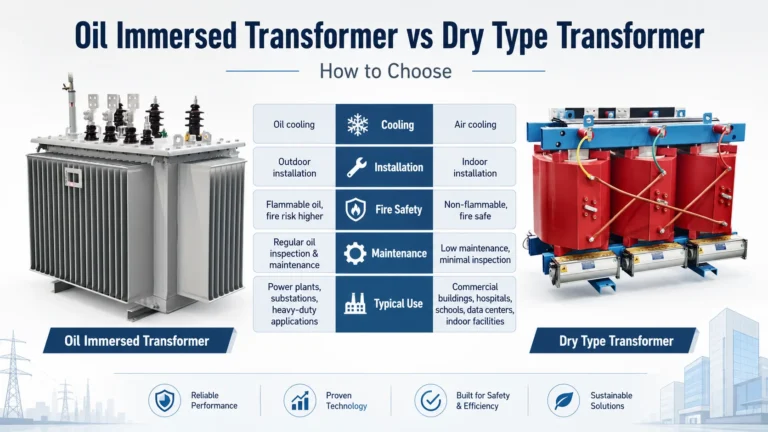
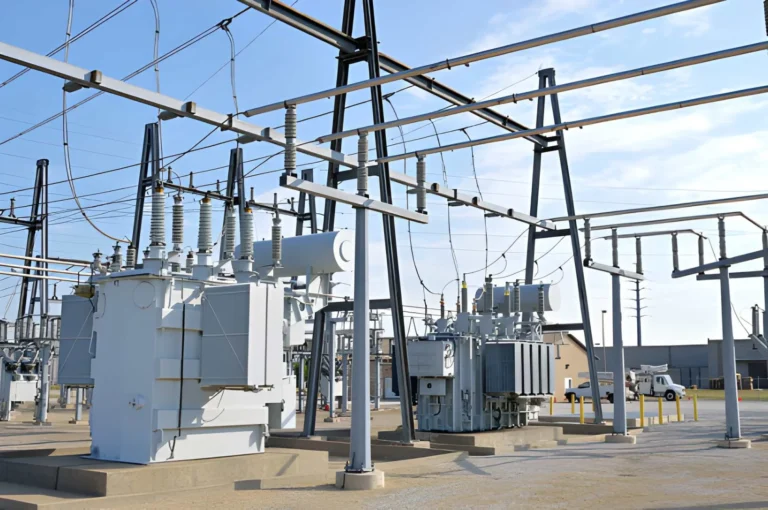
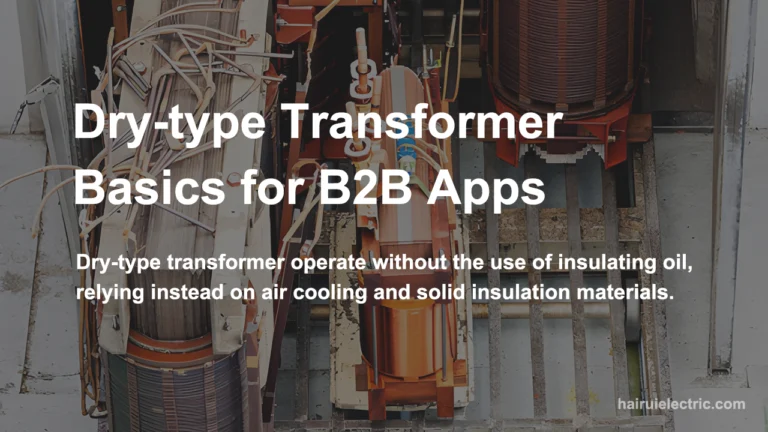
Oil Immersed Transformer vs Dry Type Transformer How to Choose
The single factor that separates an oil immersed transformer from a dry type transformer is the cooling and insulation medium
Read More
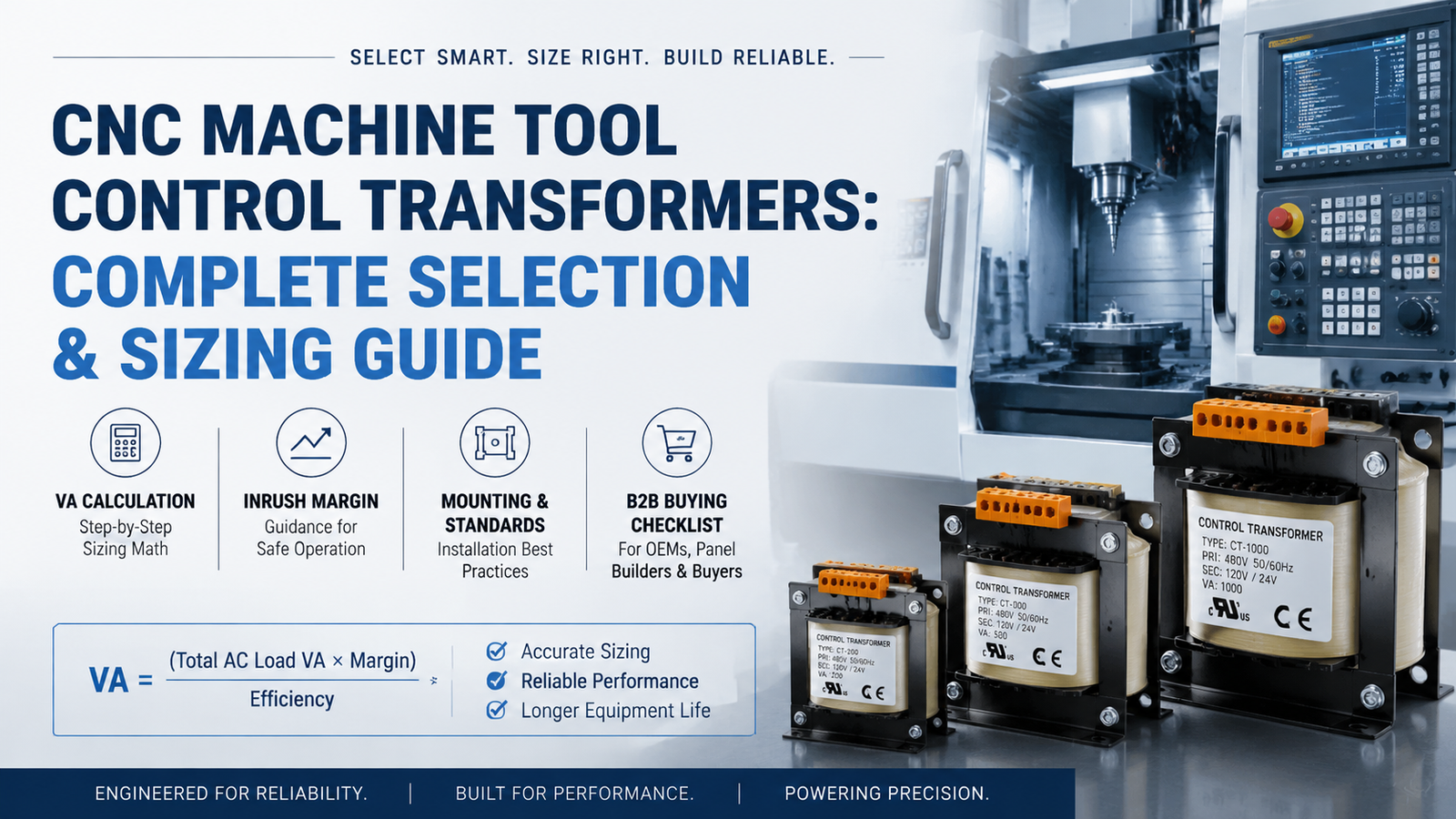
If you build, retrofit, or service CNC lathes, machining centers, or any automated production line, the control transformer you specify decides whether the cabinet powers up cleanly or trips at every cycle. This guide walks procurement engineers, panel builders, and OEMs through how to select and size a CNC machine tool control transformer with confidence — covering the specs that matter, the math behind inrush margin, and the B2B buying checklist that keeps bulk orders on schedule.
A CNC cabinet is not just a spindle and servos. Inside the enclosure you’ll find contactors, relays, a PLC power supply, 24 VDC indicator lamps, solenoid valves, an encoder interface, and a step-down for any safety relay or HMI. Each of these loads runs on a different voltage than the three-phase mains feeding the spindle drive. A CNC machine tool control transformer steps that mains voltage down to the clean, isolated low voltage (typically 110 V, 24 V, or both) that the control section requires — while keeping the high-current spindle circuit on its own bus.
General-purpose transformers will technically “work” on a CNC, but they are usually oversized for thermal duty, lack finger-safe terminals for panel wiring, and miss the short-time inrush rating that contactor coils demand on every cycle. Dedicated machine-tool series such as the Hairui BKJ5 machine tool control transformer are designed for exactly this duty: 50/60 Hz, screw terminals, vertical or horizontal mounting, and insulation class B/F suitable for the temperature rise inside an enclosed panel.
Three jobs, all at the same time:
Whether you source a single sample for a prototype or a 500-piece bulk order for a machine series, these eight parameters make or break the spec sheet:
| Parameter | What to confirm | Why it matters for CNC |
|---|---|---|
| Rated capacity (VA) | Continuous VA at the chosen ambient temperature | Defines how many contactors, relays, and 24 V supplies you can run simultaneously |
| Input voltage | Match the cabinet mains: 220 V or 380 V (some markets use 400 V or 460 V) | Mismatched primary = immediate failure on energization |
| Output voltage | 110 V, 220 V, 24 V, or a dual-tap combination | Most CNCs need at least two control voltages (e.g., 110 V for contactors + 24 V for PLC) |
| Frequency | 50/60 Hz dual-rated for export machines | Cores and noise optimized at one frequency; wrong frequency reduces VA capacity |
| Insulation class | Class B (130 °C) or Class F (155 °C) | Higher class = longer life inside a sealed cabinet at 40 °C+ ambient |
| Protection level | IP20 minimum for an enclosed panel; IP2LX if finger-safe | Operator safety during commissioning and service |
| Mounting | Vertical DIN/base mount, horizontal foot mount | Defines drilling pattern and panel layout; base mounting is most common in CNC builds |
| Cooling | Natural air cooling (AN) is standard for control transformers | No fans to fail; verifies the unit can dissipate rated losses without external airflow |
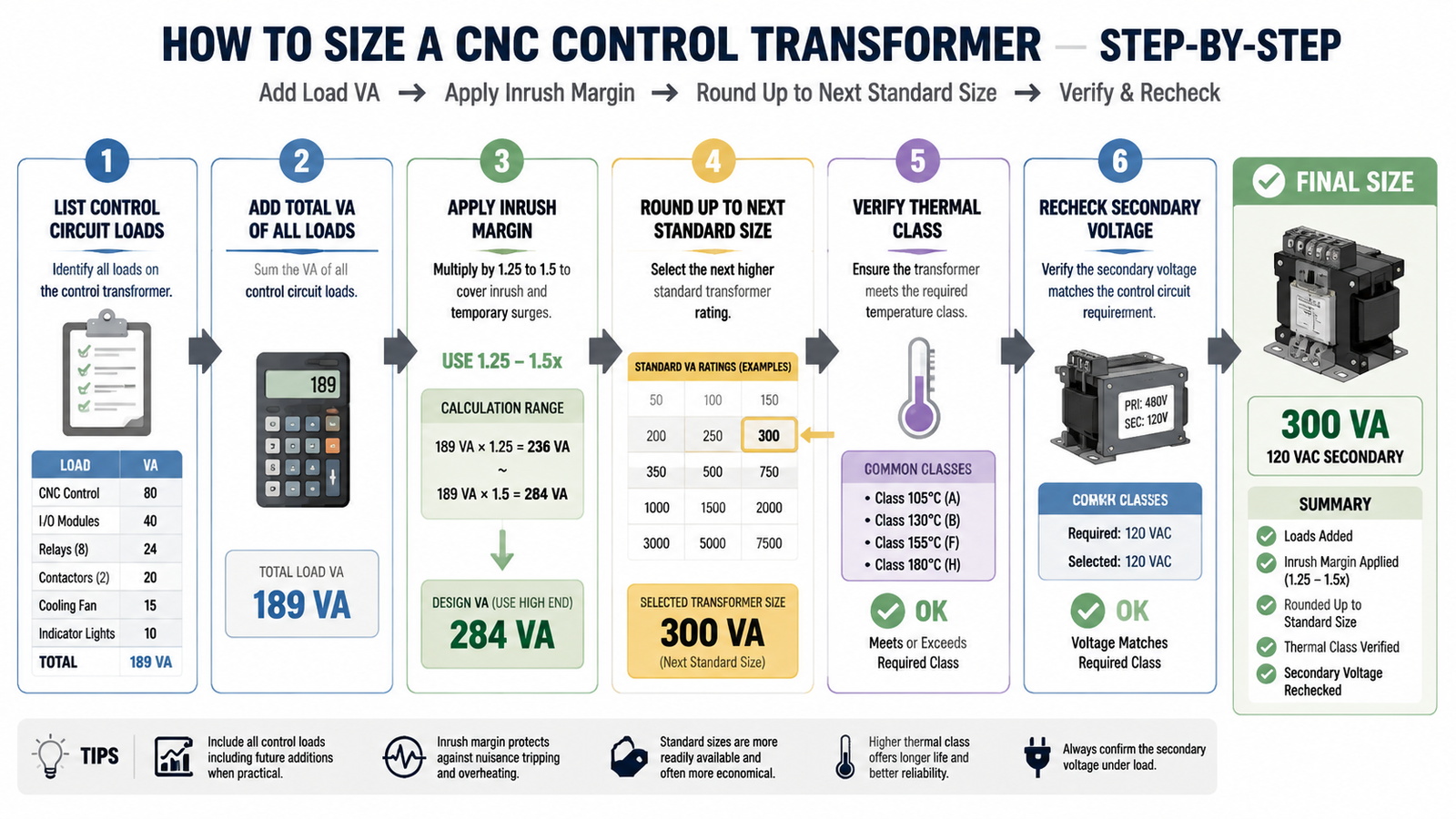
Sizing is the most common failure point on CNC projects. Undersize, and the transformer sags the secondary on every contactor pull-in; oversize, and you’ve spent budget you didn’t need to. Use this procedure:
Hairui’s BKJ5 is a compact, multi-tap control transformer commonly specified for CNC retrofits and small machining centers. The published configuration is 2500 VA with 220/380 V input and optional 24 V / 110 V / 220 V output. Here’s how that maps to typical CNC control buses:
| CNC control section | Typical voltage | BKJ5 fit |
|---|---|---|
| Contactor coils, indicator lamps, HMI backlight | 110 V AC (legacy) or 220 V AC (Asian-built) | Select 110 V or 220 V tap to match coil nameplate |
| PLC / servo drive control power | 24 V DC via on-board PSU | Use the 24 V tap on the secondary side; verify PLC PSU input range |
| Safety relay, encoder supply, panel socket | 24 V DC | Same 24 V tap, fused distribution terminal downstream |
| Work light, fan | 220 V or 110 V depending on lamp | Wire to the matching tap through a separate fuse |
Because the BKJ5 series uses a shared lamination between primary and secondary taps, you can mix 110 V and 24 V on the same physical unit without ordering two transformers — a useful cost saving on small CNC cells.
Three practical details that don’t appear in a catalog page:
For panel builders standardizing on one footprint across multiple SKUs, the JBK3 machine tool control transformer shares the BKJ5 mounting pattern but covers lower VA ratings from 40 VA upward — letting you keep the same drilling across a product family.
Print this and pin it next to the engineering workstation:
Specifying correctly is half the job — the other half is buying well. Whether you’re a procurement officer at an OEM or a panel shop buying monthly, follow this sequence:
Pair this buying flow with the broader machine-tool decision criteria covered in our JBK3 selection guide and the deeper VA-rating math in our control transformer VA rating article.
From field returns, these are the four most frequent errors panel builders make when specifying control transformers for CNC cabinets:
A CNC machine tool control transformer is small compared with the spindle drive, but it powers everything that keeps the machine coordinated. Spec it from the load list, add inrush margin, pick the next standard size, and verify the cooling — then order from a supplier that can back the spec with QA documents and consistent bulk capacity. When the next prototype needs a sample, and the third batch needs 1,000 units, the same product code should fit both jobs.
Next step: Request a BKJ5 datasheet and quotation with your VA, voltage combination, and quantity — or browse the full Hairui control transformer catalog for related series including JBK3, BK, and R-type.
For a bench-top CNC lathe with two 24 VDC PSUs, a few 110 V contactors, and indicator lamps, a 250–400 VA control transformer is the typical starting point. Apply the 1.25–1.5× inrush margin in step 3 of the sizing procedure above before selecting the next standard rating.
Dual-rated units such as the BKJ5 (50/60 Hz) can. The published VA rating is typically the lower of the two values, so a 2500 VA transformer delivers 2500 VA at 50 Hz and 3000 VA at 60 Hz. For single-frequency export cabinets, match the label to the destination market.
Two common causes: undersized transformer relative to inrush duty (transformer saturates at pull-in and overheats during continuous running), or insufficient cabinet ventilation. Verify sizing against the procedure above, and confirm at least 30 mm clearance around the unit.
Not exactly. An isolation transformer focuses on breaking the fault path and attenuating noise; a control transformer focuses on stepping voltage down and handling inrush duty. CNC cabinets often use both — one at the cabinet feed (isolation) and one on the control section (machine-tool series). See our control transformer vs isolation transformer page for the full comparison.
For machines exported to the EU, yes — CE marking under the Low Voltage Directive (with EN 61558 for control transformers specifically) is mandatory. Hairui’s machine-tool series complies with VDE0550, IEC 204-1, IEC 439, JB/T 5555, and GB 5226, with CE documentation provided per shipment on request.