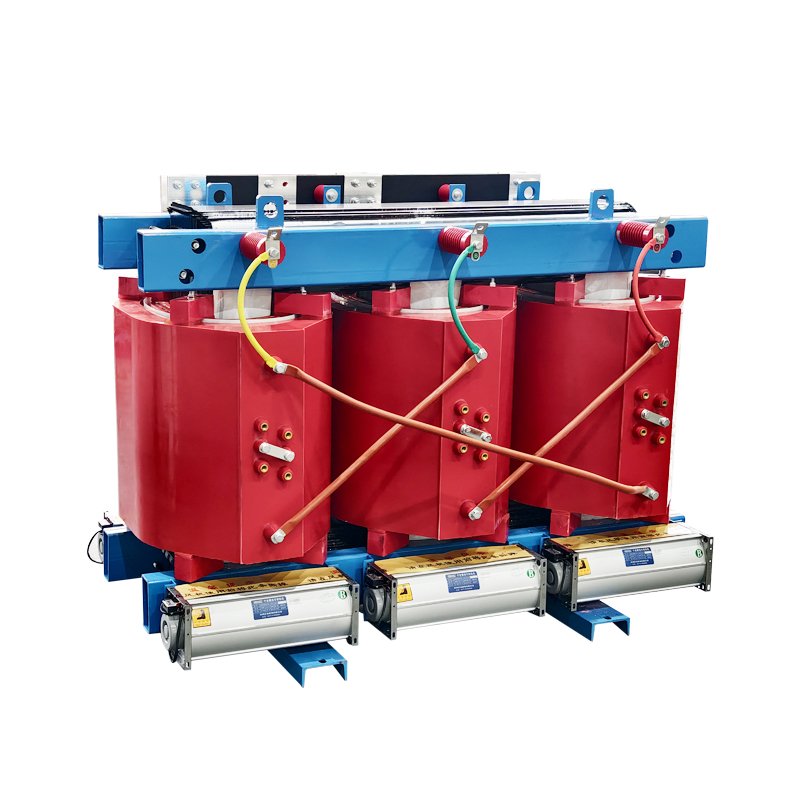
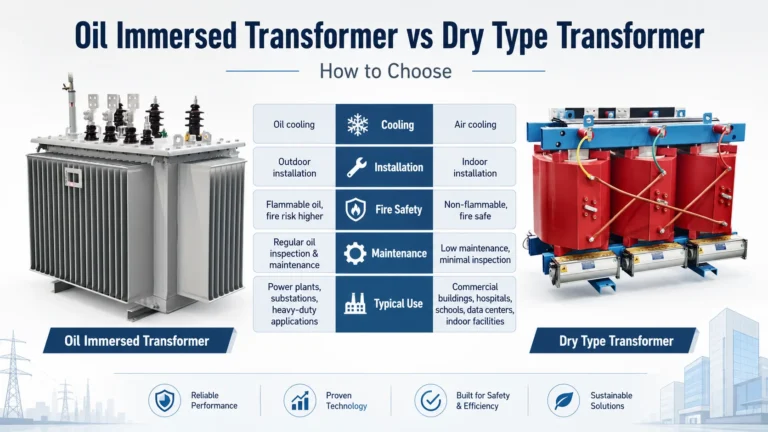
Dry-type transformer operate without the use of insulating oil, relying instead on air cooling and solid insulation materials. This design makes them inherently safer and more environmentally friendly compared to traditional oil-filled transformers. They are widely used in schools, hospitals, factories, and commercial buildings.
This blog explains what a dry-type transformer is, why it matters for B2B clients, and how to choose the right solution for your facility. We’ll cover structure, cooling, advantages, applications, and practical buying tips. If you’d like this tailored to your industry or region, tell me your sector and location and I’ll adjust the details.
Core Concepts of Dry-type Transformer
Dry-type transformers are electrical power transformers whose windings are not immersed in oil. Instead, windings are encapsulated or cast in epoxy resin and cooled by air. This design enhances fire safety, reduces environmental risk, and simplifies maintenance. The key components are:
If you’re evaluating options, you’ll often see terms like “dry-type resin transformer” and “dry-type distribution transformer.” They share the same oil-free principle but may differ in design details and ratings. Want to see how these differences affect your facility? I can map them to your load profile.
Structure and Classifications
Dry-type transformers can be broadly categorized by winding construction and cooling method. Common classifications include:
Resin-cast (epoxy) dry-type transformers
Vacuum-impregnated (VPI) dry-type transformers
Air-insulated enclosures (AIE) for outdoor use
The typical ratings range from small branch sizes up to high-power distribution units. For B2B applications, it’s crucial to align your selection with your electrical system voltage, fault tolerance requirements, and environmental conditions. Here is a quick comparison:
Type
Winding Form
Typical Use
Pros
Cons
Resin-cast
Epoxy-encapsulated
Indoor/outdoor distribution
Excellent insulation, compact
Higher material cost
VPI
Vacuum impregnation
Indoor
Low odor, robust
More complex manufacturing
Air-insulated
Open or enclosed
Outdoor rugged environments
Easy to inspect
Larger footprint
Would you like help mapping these types to your site’s layout and clearance requirements?
Cooling Methods and Efficiency
Cooling is critical for performance and longevity. Dry-type transformers use air cooling rather than oil. There are two main approaches:
Natural air cooling (NAC): Passive cooling relying on natural convection.
Forced air cooling (FAC): Fans or blowers move air to accelerate heat removal.
Efficient cooling can reduce no-load and load losses, improving overall energy efficiency. In harsh environments, enhanced cooling maintains stable temperatures and protects insulation.
A practical tip: consider your ambient temperature, humidity, and expected load profile when choosing NAC vs. FAC. If you’re unsure, share your site conditions and I’ll suggest a cooling strategy that fits.
Cooling Method
Best For
Key Benefit
Natural Air
Low-load, clean environments
Simple and reliable
Forced Air
High-load, hot environments
Higher heat removal
If you’re planning a project, let me help you estimate the cooling needs based on your max ambient temperature and typical loads. You could also ask for a thermal model from your supplier to verify performance.
Affordable price, huge discount!
Upgrade your power system today with reliable dry-type transformer! Contact us now for custom solutions and expert support.
Dry-type transformers offer several advantages that align well with industrial and commercial needs:
Fire safety: Oil-free design minimizes fire risk in occupied spaces.
Environmental safety: Absence of mineral oil reduces spill risk and maintenance cleanup.
Low maintenance: Fewer fluids to monitor; easier inspections.
Compact footprint: Modern dry-type units can be space-efficient for retrofit projects.
Outdoor suitability: Sealed enclosures tolerate weather and pollution.
One quick question to understand your priorities: Is fire safety or space efficiency more critical for your project? I can tailor a recommendation accordingly.
Priority
Why it matters
How a dry-type transformer helps
Fire safety
Reduces risk in occupied or sensitive spaces
Oil-free design lowers fire hazard
Space
Limited room
Compact, modular designs
Maintenance
Lower lifecycle cost
Fewer leaks, simple checks
If you’re exploring, I can draft a short checklist for your RFP that highlights these advantages.
Applications and Case Considerations
Dry-type transformers are versatile. They are commonly used in:
Data centers and IT rooms (reliable power, clean environment)
Hospitals and laboratories (low fire risk, hygiene)
Commercial buildings and high-rise complexes (compact footprints, safety)
When evaluating, consider the following questions:
What is the required voltage and kVA rating?
Do you need indoor or outdoor installation?
What are ambient temperature and humidity profiles?
Are there strict fire-safety codes to meet?
Our team can provide performance data for models in your range and propose site-ready installation layouts. Ready to start a quick design sketch for your facility?
Buying Guide and Installation Tips
Selecting a dry-type transformer involves balancing capacity, voltage, cooling, and enclosure requirements. Here are practical steps:
Define load profile and voltage levels. 2) Choose cooling method (NAC vs FAC) based on heat load. 3) Confirm enclosure and IP rating for outdoor use. 4) Check standards (IEC/ISO or local codes) and lead times.
A few installation best practices:
Ensure adequate clearance for ventilation and maintenance.
Plan for cable entries and internal wiring routing.
Include fault protection and monitoring (temperature sensors, bushings health).
Curious about a rough BOM or project timeline? I can prepare a starter plan and questions for your supplier.
Choosing a Dry-type Transformer Equipment dry-type transformer is about matching performance with safety, environment, and cost. With the right model, you gain energy efficiency, reliability, and peace of mind for your critical operations. If you’d like, I can tailor this article to feature case studies from your industry, or add a downloadable technical brief for procurement teams. For inquiries or project requests, just send a message and we’ll respond quickly.
FAQ
What is a Dry-type Transformer?
A dry-type transformer is a dielectric transformer whose windings are insulated and cooled by air, avoiding oil.
What are common ratings?
Typical distribution ratings include 100 kVA to 2500 kVA, with HV options like 11 kV or 22 kV and LV of 0.433 kV in indoor/outdoor designs. AIE or enclosure choices depend on the environment.
Indoor vs outdoor?
Indoor units are sealed and rely on natural or forced air cooling; outdoor units have weatherproof enclosures and may incorporate rain shields.
How long do they last?
With proper selection and maintenance, dry-type transformers can last several decades depending on load and environment.
How do I size one for a facility?
Start with your peak load in kVA, consider voltage levels, and plan for future growth; we can help map this to a recommended model set.
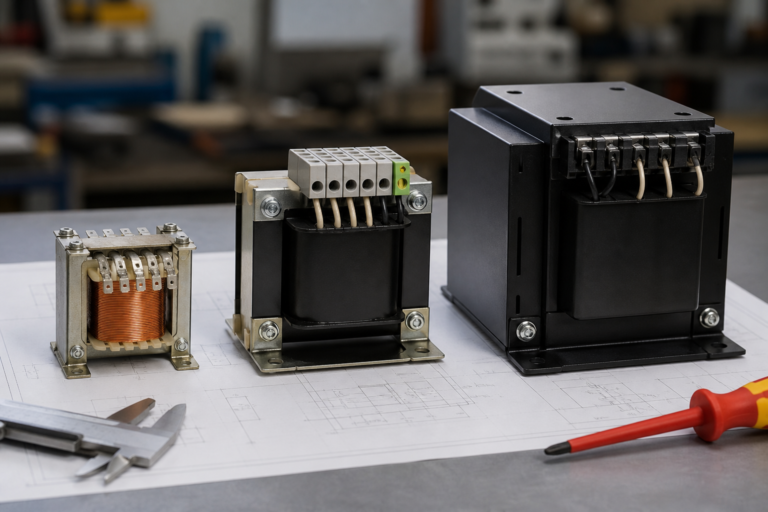
If you build, retrofit, or service CNC lathes, machining centers, or any automated production line, the control transformer you specify decides whether the cabinet powers up cleanly or trips at every cycle. This guide walks procurement engineers, panel builders, and OEMs through how to select and size a CNC machine tool control transformer with confidence […]
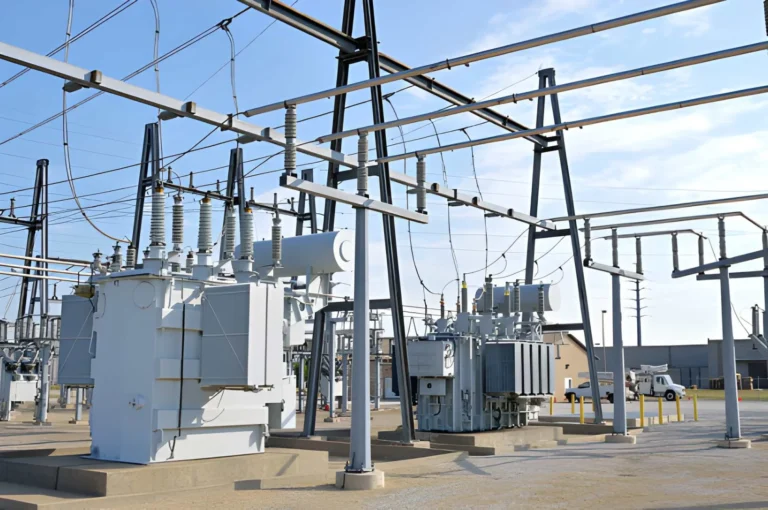
When buyers ask me whether an Oil Type Single Phase Transformer is still worth serious attention in a market full of bigger systems and louder marketing, my answer is simple: absolutely. In real distribution work, especially in rural lines, light commercial loads, street lighting, remote facilities, and utility edge networks, the right single-phase unit is […]