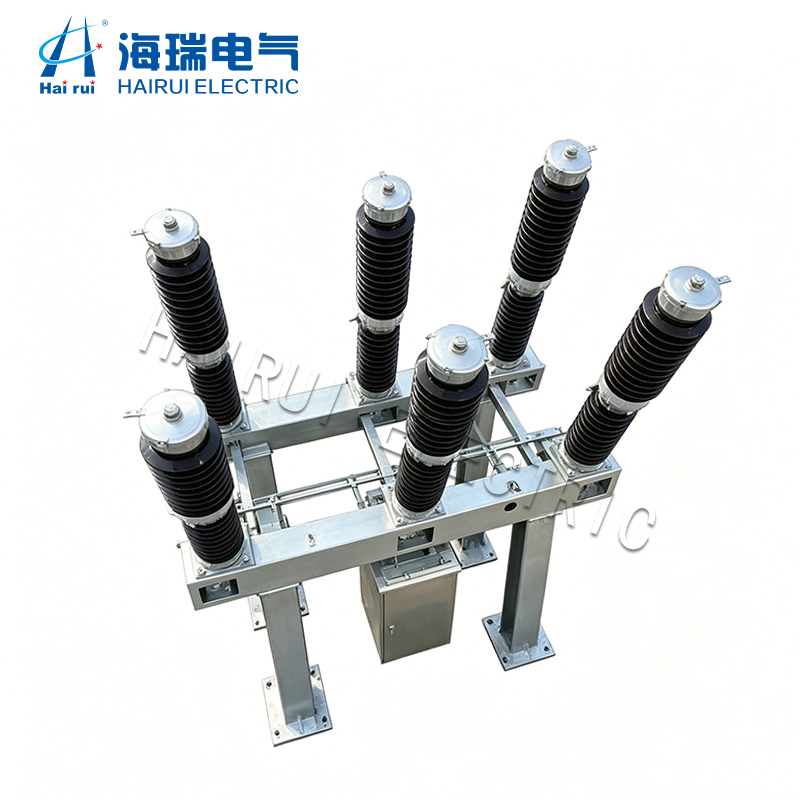
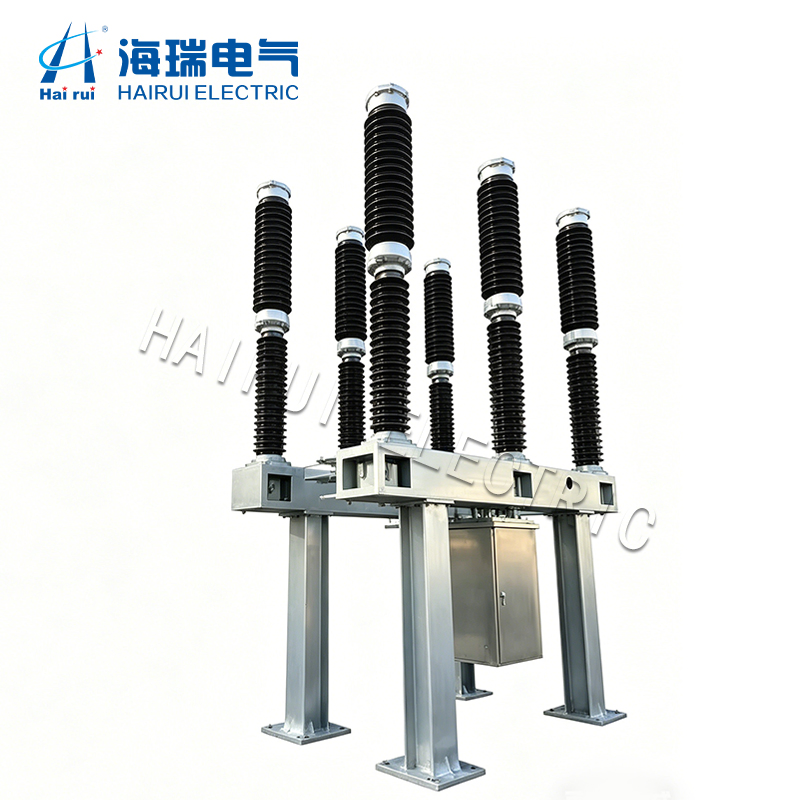
Product Overview
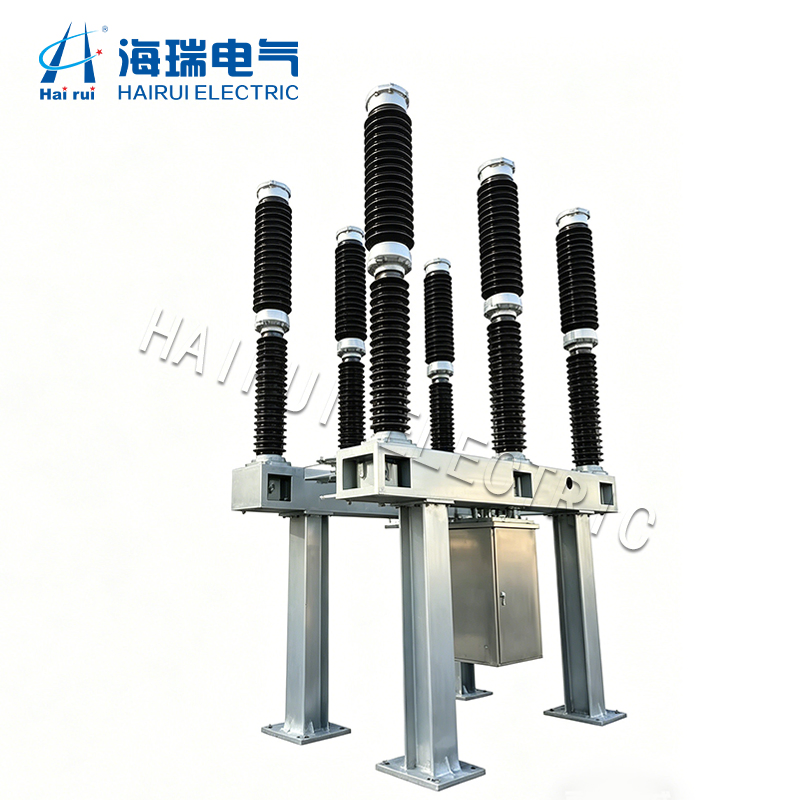
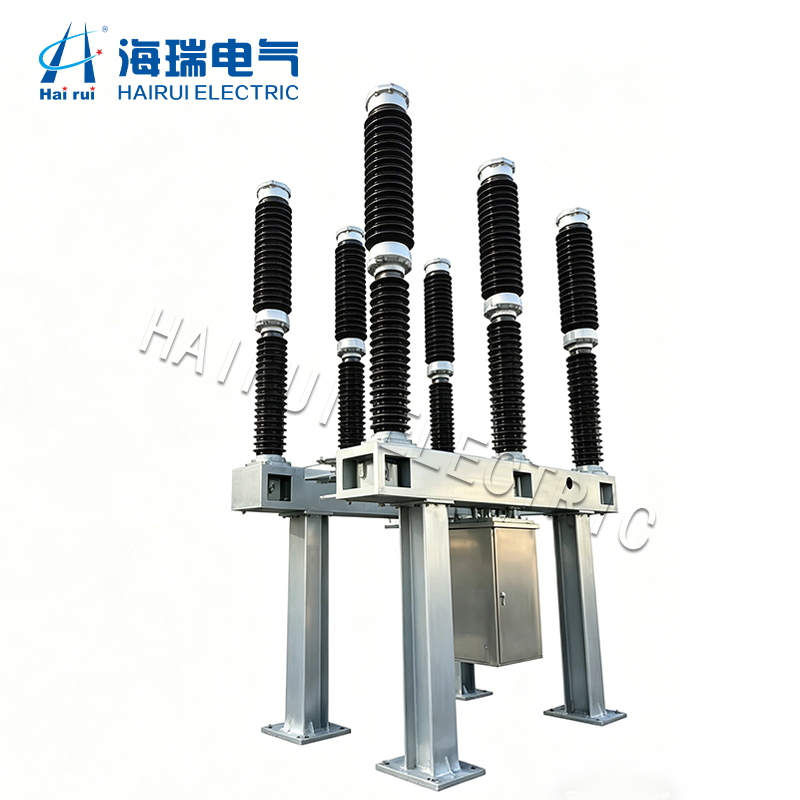
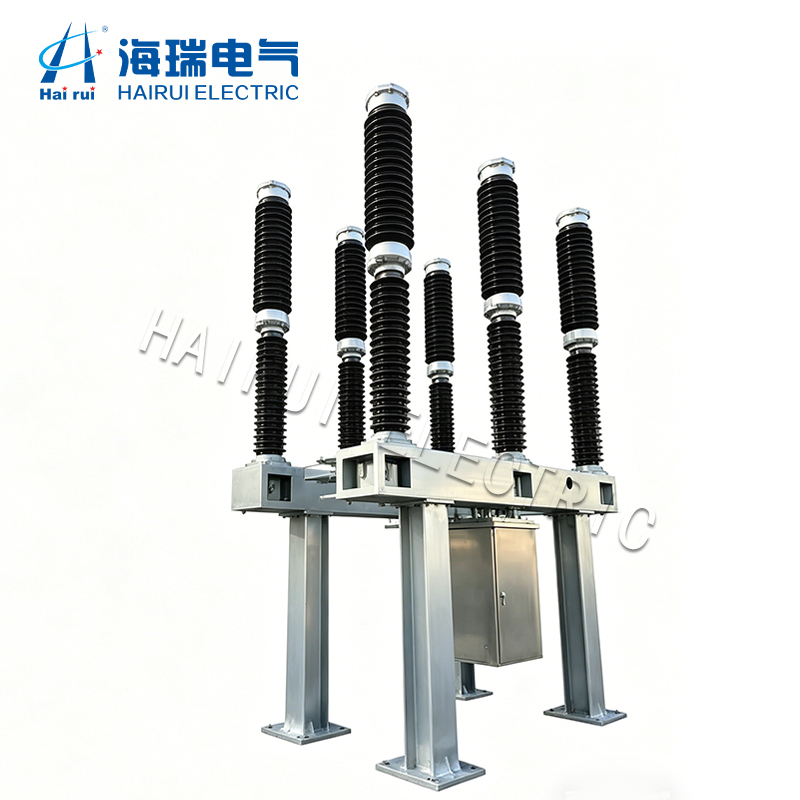
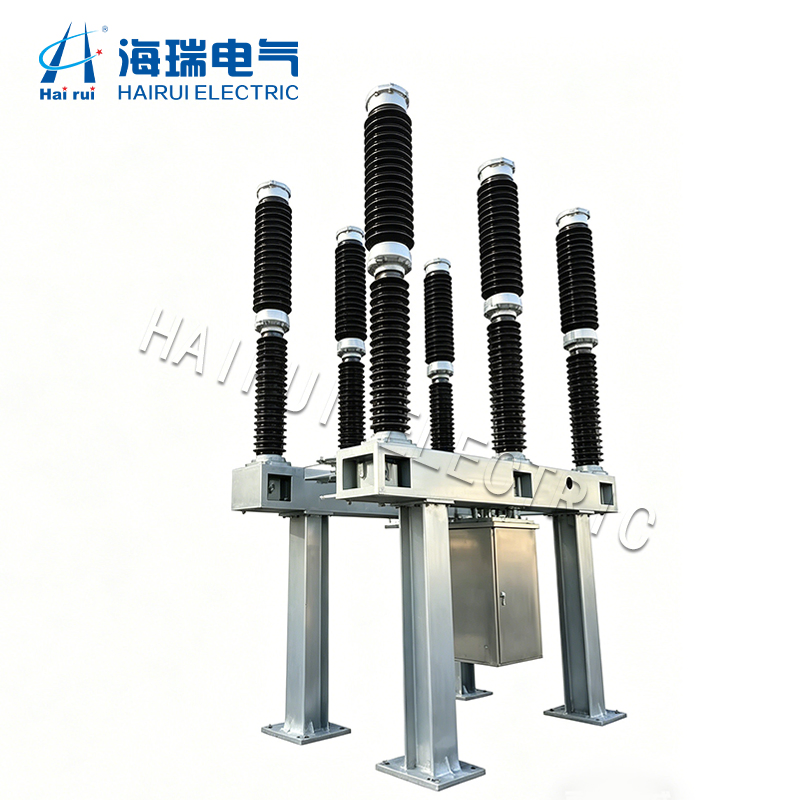
Insulation level is the specification that gets settled by a spreadsheet and then forgotten until the first thunderstorm. The LW9-72.5 is built to 350 kV lightning impulse to earth, 350 + 60 kV across the open break, 160 kV power frequency and 160 + 42 kV across the break — a 72.5 kV, 4000 A, 40 kA outdoor breaker for 66 kV networks.
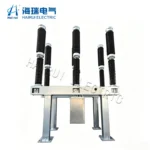
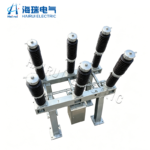
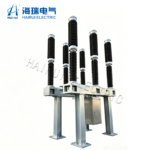
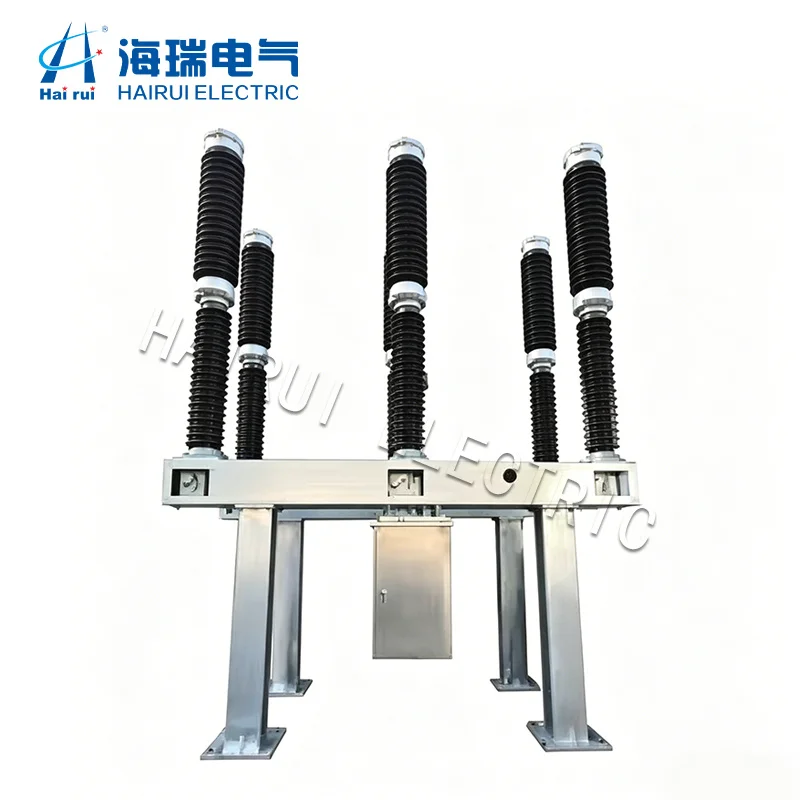
This page is about those four numbers: what each one governs, how they relate to the surge arresters protecting the same busbar, and where a site needs more than the minimum. Everything else about the breaker — three poles on one base frame, spring mechanism, SF6 interrupter, 40 kA breaking with 40 kA / 3 s short-time and 100 kA peak — is the same unit described on the other LW9-72.5 pages.
Reading the Four Insulation Ratings
A 72.5 kV breaker datasheet carries four insulation figures, and they are not interchangeable. Two describe the path to earth, two describe the path across the open contacts.
| Rating | Value | What it governs |
| Power frequency withstand, 1 min, to earth | 160 kV | Continuous insulation strength of the column under operating stress, dry and after assembly |
| Power frequency withstand, across the break | 160 + 42 kV | Strength between an open contact pair under power-frequency stress on the line side |
| Lightning impulse withstand, 1.2/50 µs, to earth | 350 kV | Strength of the column against a surge arriving from an overhead line |
| Lightning impulse withstand, across the break | 350 + 60 kV | Strength of the open gap during the dead time of a reclose sequence |
The two “+” values are what make a 72.5 kV breaker different from a 72.5 kV bushing catalogue entry: when the breaker is open, the fixed contact side and the moving contact side are at different potentials, and the gap between them needs its own rating. That gap is in service far more often than the to-earth path, because every reclose sequence and every line isolation leaves the breaker open with an energised line on one side.
Impulse strength is not a fixed property of the hardware. It depends on gas density inside the interrupter and on air clearance outside it. A breaker that has lost SF6 density has lost its impulse rating before it has lost anything else, which is why the density alarm matters as much as the test certificate; and a breaker installed at altitude has less external margin than the same unit at sea level even though the nameplate has not changed. The correction procedure is set out in cold climate and high altitude guidance.
Coordination with arresters is the other half of the calculation. The impulse level has to sit above the arrester’s residual voltage plus the volt drop along the leads between arrester and breaker, plus margin. Mount the arresters at the end of a long busbar run and a compliant breaker becomes an unprotected one. The test sequence that establishes the rating — impulse, power frequency and chopped wave — is covered in reading lightning impulse and power frequency tests.
Key Features
- 350 kV lightning impulse to earth: the column’s surge strength, valid at the operating gas density rather than at a laboratory fill.
- 350 + 60 kV across the open break: the rating that protects a busbar while the breaker is open and the line side is still exposed.
- 160 kV power frequency withstand: 160 kV to earth and 160 + 42 kV across the break, proven on every unit as a routine test.
- 40 kA breaking, 40 kA / 3 s short-time, 100 kA peak: the current side of the same unit, so insulation and switching capability are quoted together.
- Creepage specified separately from impulse level: shed profile and creepage distance are selected against pollution class, because impulse strength does not protect a contaminated surface.
- Spring operating mechanism: a surge that disturbs the auxiliary supply still leaves trip energy mechanically latched and available.
- Three poles on one base frame: one foundation, 2 mm alignment, and room to mount arresters close to the bushings where the coordination calculation assumes they are.
- ISO 9001 quality management, 12-month warranty, MOQ 1 piece, OEM/ODM: type test reports to IEC 62271-100 available with the offer.
Technical Specifications
Standard build. Insulation values are fixed by the design; creepage class, ambient range and auxiliary supply are selected against the site.
| Model | LW9-72.5 |
| Type | Outdoor, live-tank, three-pole SF6 circuit breaker |
| Rated voltage | 72.5 kV (66 kV system) |
| Rated current | 4000 A |
| Rated frequency | 50 Hz |
| Rated short-circuit breaking current | 40 kA |
| Rated short-time withstand current | 40 kA / 3 s |
| Rated peak withstand current | 100 kA |
| Power frequency withstand, 1 min, to earth | 160 kV |
| Power frequency withstand, across the break | 160 + 42 kV |
| Lightning impulse withstand, 1.2/50 µs, to earth | 350 kV |
| Lightning impulse withstand, across the break | 350 + 60 kV |
| Combined reactor switching current | 3150 A |
| Back-to-back capacitor bank switching current | 4000 A |
| Operating mechanism | Spring, motor-charged |
| Number of poles | 3, ganged |
| Installation | Outdoor, fixed on concrete foundation |
| Standards | IEC 62271-100 / GB 1984 (type test reports on request) |
| Certification | ISO 9001 quality management system |
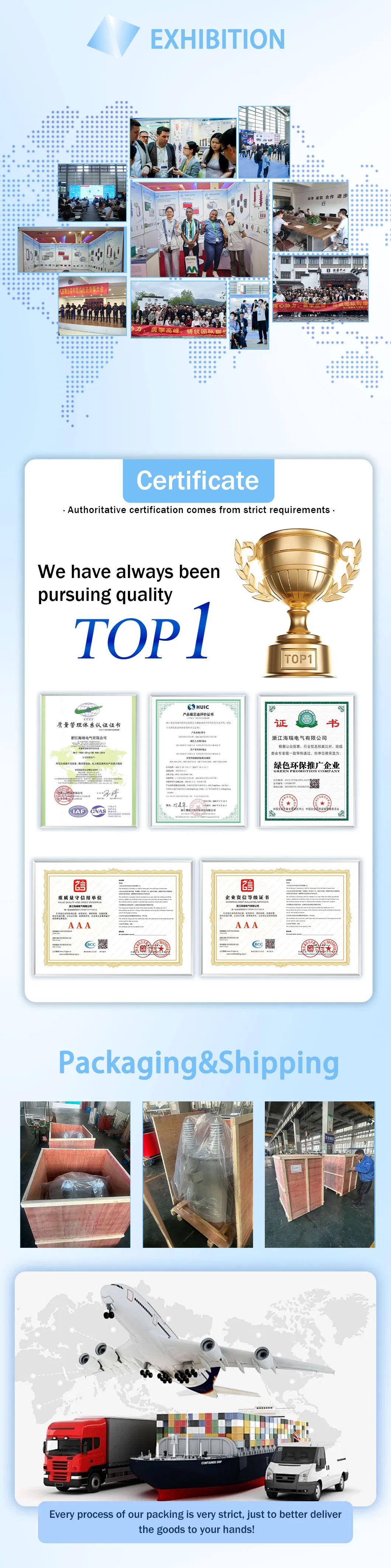
| Transport packing | Sea-worthy plywood case |
| Warranty | 12 months |
| MOQ | 1 piece |
| Origin | Zhejiang, China |
One caution about comparison shopping on this page. A quoted “350 kV” is only meaningful with the wave shape and the reference point attached: 1.2/50 µs to earth is the standard test, and a figure quoted without saying whether it is to earth or across the break tells you nothing. Ask for both, and ask for the across-break value separately — it is the one that fails first in service.
Where the Insulation Level Earns Its Margin
The five regions we ship to stress insulation differently, and the difference decides whether the standard level is enough.
Southeast Asia: high flash density, overhead entry
Indonesia, Malaysia, Vietnam, the Philippines and Thailand see tens of lightning strikes per square kilometre per year, and much of the 66 kV network is overhead. With 350 kV impulse and arresters at the bushings, the coordination holds; with arresters at the far end of a busbar run it does not. Coastal sites add salt to the same surfaces, which is a creepage rather than an impulse problem — see pollution class and salt spray selection.
Africa: long lines, few arresters
Rural 66 kV feeders in Nigeria, Kenya and Zambia run for tens of kilometres with sparse arrester coverage. A surge that starts far away arrives with most of its energy intact, and the substation breaker is often the best-protected asset on the line. Specifying insulation above the minimum is cheap relative to a failed transformer.
Central Asia: altitude reduces the margin
Above 1000 m the impulse strength of air falls and external clearance has to grow; parts of Tajikistan and Kyrgyzstan operate well above that. The correction cannot be bought back with a higher impulse rating alone, because the flashover path is external. Dust deposition in Kazakhstan and Uzbekistan further reduces effective creepage in the wet season.
Middle East: dust, not lightning
Iraq, Saudi Arabia, the UAE and Oman see relatively few thunderstorm days, but sand and salt haze on shed surfaces create conductive paths that no impulse rating protects. The specification that matters is shed profile, creepage and cleaning access.
CIS: winter is the stress case
In Russia, Belarus and northern Kazakhstan the highest-risk period is the freeze-thaw around winter: ice on the sheds, a wet surface, then a switching surge. Insulation that passes an impulse test in July is not automatically the same insulation in January.
Packing, Shipping Weight and Foundation Data
Packing does not change with insulation level, but crate count changes with voltage class. Reference figures for the two larger tiers below; the 72.5 kV unit’s own weight and case dimensions are issued with the proforma invoice.
| 126 kV / 110 kV system (LW36-126) | 252 kV / 220 kV system (LW-252) | |
| Interrupter columns shipped | 3 | 6 |
| Net weight | 1900 kg | approx. 3800 kg |
| Total shipping weight, packed | 2200 kg | approx. 4400 kg |
| Column packing | 3 cases, 3500 × 740 × 650 mm, 450 kg each | 6 cases, 3500 × 740 × 650 mm, 450 kg each |
| Base frame packing | 3880 × 700 × 2350 mm, 850 kg | 2 base cases, approx. 1700 kg total |
| Dynamic load, upward / downward | 24 kN | 24 kN per foundation |
| Height difference between the two foundation surfaces | ≤ 2 mm | ≤ 2 mm |
| Levelness of each foundation surface | ≤ 2 mm | ≤ 2 mm |
| Recommended container | 1 × 20 GP | 1 × 40 HQ or 40 FR |
The 252 kV line doubles the 126 kV line because a split-type pole carries two interrupter columns, so three poles mean six columns and two base frames. Loading from Ningbo or Shanghai, EXW through DAP, LCL consolidation available. Invoice, packing list, bill of lading, certificate of origin, routine test report and IEC 62271-100 declaration travel with the goods.
Price Guide
Indicative RMB prices, standard builds, ex-works Zhejiang, current as of 2026 — a budget reference rather than a quotation.
| Voltage class | Reference model | Interrupter columns | Indicative price |
| 40.5 kV (35 kV system) | LW8-40.5 | 3 | approx. RMB 40,000 |
| 72.5 kV (66 kV system) | LW9-72.5 | 3 | approx. RMB 75,000 |
| 126 kV (110 kV system) | LW36-126 | 3 | approx. RMB 80,000 |
| 252 kV (220 kV system) | LW-252 | 6 | approx. RMB 160,000 |
Insulation level is not a price driver inside a voltage class: the envelope is fixed by the class, so a unit built to 350 kV costs essentially the same as one built to any other compliant level. What moves the price is the class itself — and the 72.5 kV to 126 kV step is the cheapest upgrade in the range, adding only a few percent for nearly double the voltage.
Included: breaker, base frame, gas density monitor, foundation bolts, gas filling per contract and an English O&M manual. Quoted separately: spare SF6 cylinders, surge arresters, disconnectors, current transformers, special creepage bushings, third-party inspection and witness tests. Typical terms are 30% deposit with order and the balance against a copy of the bill of lading, with L/C at sight for container volumes. Cost structure is in SF6 circuit breaker price and cost drivers.
Ordering: What to Send in the Inquiry
For an insulation-led specification, these four items decide the answer:
- Site altitude and pollution class — the two corrections that change clearance and creepage.
- Arrester rating and mounting distance — so the margin is checked against real protection.
- Overhead or cable entry — overhead entry is what makes impulse performance a live question.
- Ambient range and ice loading — for cold-climate operation.
- Network voltage and continuous load — 66 kV system, load in amperes or MVA.
- System fault level — so breaking capacity is selected rather than assumed.
- Destination port and Incoterm — EXW, FOB, CFR, CIF or DAP.
- Documentation — type test reports, certificate of origin, third-party inspection.
Minimum order is one piece. The commercial sequence is in how to buy SF6 circuit breakers from a manufacturer; the current and switching side of the same unit is on the LW9-72.5 4000 A product page.
FAQ
What is the lightning impulse withstand voltage of the LW9-72.5?
The rated lightning impulse withstand voltage is 350kV to earth and 350+60kV across the fracture, providing insulation coordination for 72.5kV systems exposed to lightning surges.
What is the power frequency withstand voltage?
The 1-minute power frequency withstand voltage is 160kV to earth and 160+42kV across the fracture.
What is the rated short-circuit breaking current?
The rated short-circuit breaking current is 40kA, with a peak withstand current of 100kA and a short-time withstand current of 40kA for 3 seconds.
Is the breaker suitable for areas with high lightning activity?
The 350kV lightning impulse withstand rating is designed for overhead line installations where lightning surges are a concern. However, proper surge arrester coordination and grounding design should be verified by the project engineer.
What certification does the product carry?
The breaker is manufactured under ISO 9001 quality management standards. Factory test reports and certificates are provided with each unit.
What is the difference between the to-earth and across-break impulse ratings?
350kV is the level to earth, carried by the interrupter column. 350+60kV is the level across the open contacts, which is what protects the busbar while the breaker is open and the line side is still exposed to a surge.
How much does a 72.5kV SF6 circuit breaker cost?
The LW9-72.5 is approximately RMB 75,000 ex-works Zhejiang for a standard build. For reference: 40.5kV about RMB 40,000, 126kV about RMB 80,000 and 252kV about RMB 160,000. Final price depends on breaking capacity, creepage class, accessory set and freight term.
What is the shipping weight and how is the breaker packed?
Packing is a sea-worthy plywood case, with the LW9-72.5's own weight and case dimensions issued on the proforma invoice. For reference, the 126kV model is 1900kg net and 2200kg packed in four cases, and the 252kV split-type model doubles both column count and weight.
What is the MOQ and what documentation comes with the shipment?
MOQ is 1 piece, with OEM/ODM customization of ratings, nameplate and monitoring contacts. Documents include invoice, packing list, bill of lading, certificate of origin, routine test report and IEC 62271-100 declaration.
Request Quote
Tell us your specifications, quantity, or application scenario and we will reply with a tailored quote.