Oil Type Single Phase Transformer for Smarter Distribution
Published: Author: Lisa
When buyers ask me whether an Oil Type Single Phase Transformer is still worth serious attention in a market full of bigger systems and louder marketing, my answer is simple: absolutely. In real distribution work, especially in rural lines, light commercial loads, street lighting, remote facilities, and utility edge networks, the right single-phase unit is not a “small option” at all; it is often the most practical, most economical, and least headache-inducing choice.
I have seen this many times: a customer begins with a broad search, compares a single phase oil immersed transformer with a 3 phase distribution transformer, downloads something that looks like an oil immersed distribution transformer handbook, and still ends up asking the same real-world question: “Which transformer should I actually buy for my project?” Fair question. Spreadsheets rarely install themselves, and catalog pages never stand in the rain.
That is exactly where this article helps. I will talk about how these transformers fit actual distribution jobs, what technical points procurement teams should verify, how outdoor oil immersed Single-Phase transformer projects should be reviewed, what affects oil immersed Single Phase Transformer price, and how a manufacturer, factory, supplier, exporter, or wholesaler from China should be assessed from a B2B point of view.
Hairui ElectricalEquipment, with its background in low-, medium-, and high-voltage switchgear manufacturing, naturally sits in a business environment where transformer and distribution equipment decisions are connected rather than isolated.
Oil Type Single Phase Transformer Market Demand
The broader market context matters because buyers do not purchase transformers in a vacuum; they purchase them when load growth, network upgrades, and reliability expectations force action. Reporting on the IEA 2025 global electricity review said global power consumption rose 3% in 2025, and electricity demand grew around 2.3 times faster than total energy demand, with growth driven by EVs, data centers, industry, household appliances, and commercial buildings.
That trend is important for one reason: when electricity networks expand, distribution equipment stops being a back-office topic and becomes a frontline procurement decision. Public company listings for Hairui show a product range that includes three-phase transformers, single-phase transformers, oil-immersed transformers with oil conservators, and high- and low-voltage cabinets, which tells me the company is positioned around real distribution infrastructure rather than one isolated niche product.
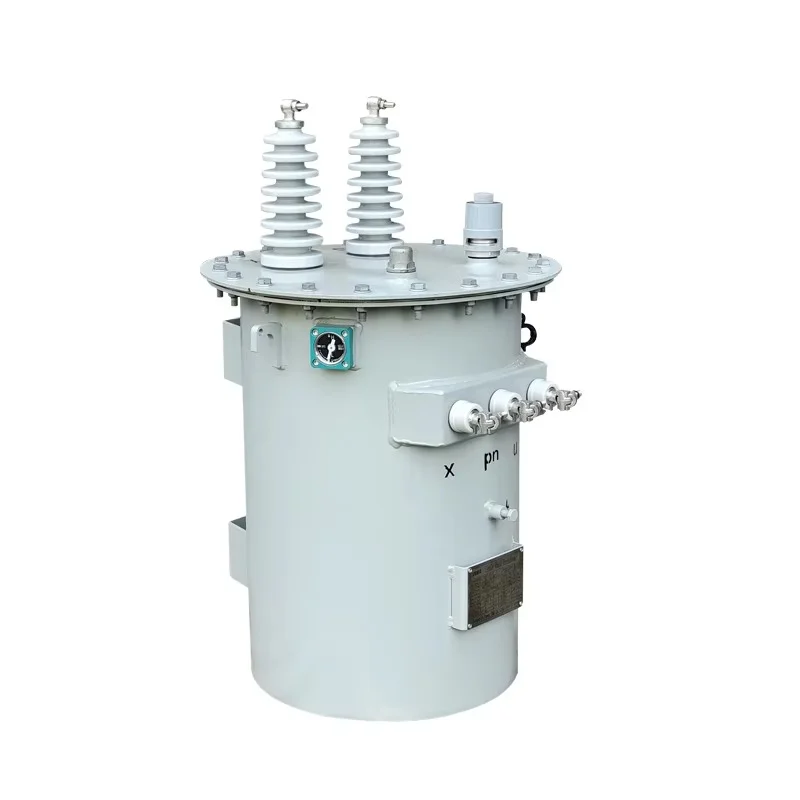
Public product listings also show a HaiRui D11 single-phase oil-immersed transformer with ONAN cooling, and the company is listed in Wenzhou, Zhejiang, China, which is useful B2B context for buyers looking for a china manufacturer or exporter with visible transformer-related offerings. That kind of public footprint does not replace technical due diligence, of course, but it does suggest market familiarity—and in this business, familiarity beats improvisation every single time.
Market signal
Why it matters for B2B buyers
Commercial meaning
Rising electricity demand
Distribution networks need more reliable last-mile equipment
More replacement and expansion projects
Utility and building load growth
Smaller distribution nodes still need efficient voltage conversion
Single-phase units remain relevant
Broader transformer + switchgear portfolio
Easier system matching across distribution equipment
Better cross-product sourcing potential
Visible oil-immersed product presence
Indicates product-market alignment
Useful for supplier prequalification
In short, the market is not moving away from the transformer you are targeting. If anything, it is making selection discipline more important, because once demand rises, mistakes become more expensive and patience becomes very rare.
Where Oil Type Single Phase Transformer Wins
Let me say something that buyers appreciate and sales slides often avoid: a Oil Type Single Phase Transformer is not “better” than a 3 phase distribution transformer in every situation. It is better when the load profile, installation method, and operating economics say it is better. That is a very different sentence, and it saves a lot of money.
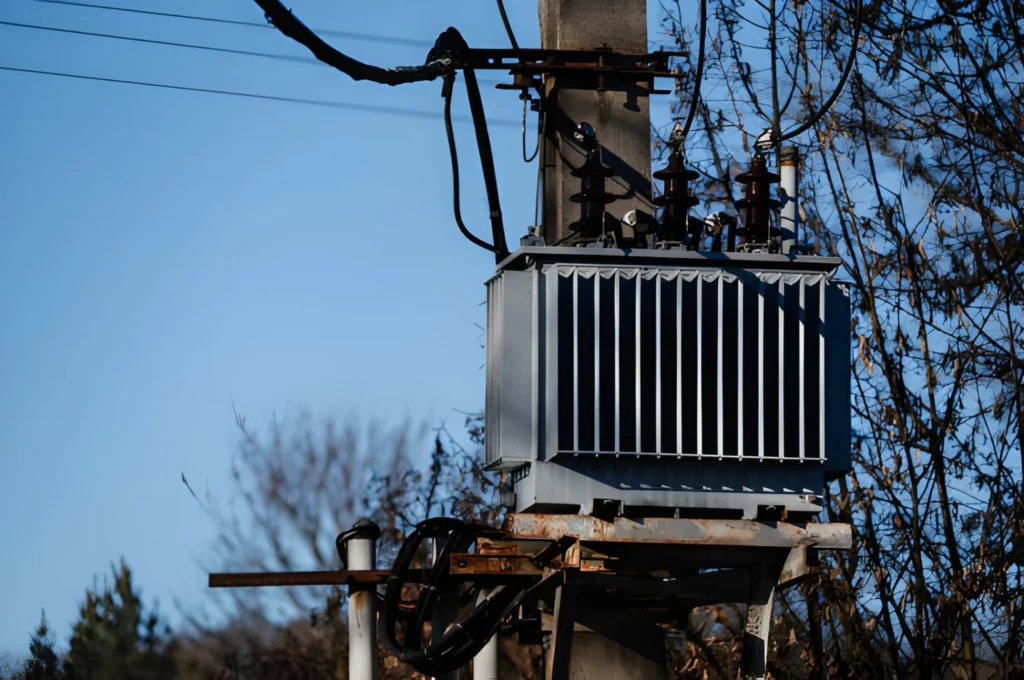
For dispersed loads, low-to-moderate kVA requirements, pole-mounted points, agricultural feeders, village distribution, road lighting circuits, temporary service, and small commercial connections, an Oil Type Single Phase Transformer often gives the cleanest answer. It is simpler to deploy, often easier to replace, and usually more sensible when the project does not justify the footprint or cost structure of a three-phase unit.
Now, if the load is balanced, industrial, motor-heavy, or clearly expanding, a 3 phase distribution transformer may be the right move. I always tell buyers not to fall in love with the phrase they searched online. Search intent is not load analysis. A transformer does not care what keyword brought you here; it cares what current will pass through it next July at 2 p.m.
Project type
Best-fit option
Why it works
Rural residential spur
Single phase oil immersed transformer
Lower capacity, easier pole or pad deployment
Street lighting feeder
Outdoor oil immersed Single-Phase transformer
Good for scattered, predictable loads
Small retail or remote office
Single-phase unit
Lower initial cost and simpler service layout
Workshop with mixed motors
3 phase distribution transformer
Better for balanced three-phase loads
Expanding industrial site
3 phase unit or staged hybrid approach
Supports future capacity growth
In practical selection work, I usually look at three things first: the actual connected load, the likely load growth over 24 to 36 months, and whether the customer wants low first cost or low lifecycle frustration. Those are not always the same thing. A customer who buys too small pays twice; a customer who buys the wrong phase configuration pays with downtime, rewiring, and a face that says, “Please do not cc my boss.”
This is also where product positioning matters for B2B content. If you are speaking to distributors, contractors, project engineers, or EPC buyers, do not sell only “transformer.” Sell the application: pole-mounted single phase oil immersed transformer, 10kVA single phase oil immersed transformer, 25kVA outdoor unit, 50kVA distribution use, copper winding version, ONAN cooled model, and utility-side compatibility. Buyers do not purchase a noun; they purchase risk reduction.
What Buyers Check
A serious buyer does not stop at rated capacity and voltage. For a single phase oil immersed transformer, the real decision lives in the details: insulation level, cooling method, tap range, winding material, loss performance, temperature rise, enclosure quality, bushing layout, and protection coordination with upstream and downstream devices. This is where a manufacturer becomes either a partner or a future apology.
Let us talk about “how to connect” without turning this article into a dry manual. In most practical field situations, the primary side must match the incoming network voltage exactly as shown on the nameplate, the secondary side must match the service requirement, the tank must be properly grounded, surge protection should be considered for exposed outdoor locations, and terminal polarity should be verified before energization. For distribution jobs, I also watch whether the buyer has thought through fuse coordination, lightning arrester placement, oil level inspection access, and maintenance clearance around the unit.
And then there is “which model should I choose?” My answer is always tied to the load story. A 10kVA or 15kVA unit may suit a light rural branch, a 25kVA to 50kVA model often fits mixed residential or light commercial demand, and higher capacities should be justified by actual demand data rather than optimism. Optimism is useful in sales meetings; in transformer sizing, it is an expensive hobby.
Technical item
What to confirm
Why it affects the order
Rated capacity
Actual kVA demand plus growth margin
Prevents undersizing or wasted budget
Primary / secondary voltage
Match network and end-use requirement
Avoids rewiring and unsafe mismatch
Cooling method
ONAN is common for many oil-immersed units
Impacts temperature control and operating reliability
Winding material
Copper or aluminum
Influences cost, losses, and durability
Tap changer range
Voltage adjustment ability
Helps handle line fluctuations
Insulation and test data
Routine test records, withstand performance
Confirms compliance and quality
Installation style
Pole-mounted, pad-mounted, outdoor
Affects enclosure and accessories
Protection coordination
Fuse, arrester, grounding, clearances
Reduces failure risk in service
From a content and conversion standpoint, this is also where valuable long-tail terms naturally fit. Buyers often search phrases such as “11kV single phase oil immersed transformer,” “pole mounted distribution transformer supplier,” “copper winding oil immersed transformer manufacturer,” and “ONAN cooled single phase transformer factory.” These are high-intent phrases because the buyer is already moving from awareness to specification.
If you want one sentence that nudges a real B2B inquiry without sounding desperate, use this kind of language in the article body: if your project already has a target voltage, installation environment, and estimated kVA, sending an inquiry now can save weeks of back-and-forth later.
Price and Outdoor Use
Let us address the phrase many buyers type with perfect honesty: oil immersed Single Phase Transformer price. The answer is never a single number, because pricing moves with kVA rating, voltage class, core material, winding choice, loss requirements, tank structure, accessory package, test scope, certification needs, and order quantity. In other words, the transformer is not playing hard to get; the specification is simply doing most of the talking.
For outdoor applications, the conversation gets even more specific. An outdoor oil immersed Single-Phase transformer must be treated as a service asset, not just a metal box with oil inside. The tank finish, sealing quality, bushing robustness, corrosion resistance, ambient temperature suitability, mounting method, and protection accessories all influence both reliability and price. A cheap outdoor unit that ages badly is not cheap. It is merely affordable on the wrong day.
This is also where wholesale buyers, project contractors, and regional distributors should be careful when comparing quotations from a supplier or wholesaler. One quote may include standard accessories only, while another includes arresters, brackets, test reports, documentation, and export packaging. A lower number can be a better deal—or a better illusion.
Price driver
Lower-cost direction
Higher-value direction
kVA rating
Smaller capacity
Larger capacity with future margin
Winding
Aluminum
Copper
Loss performance
Standard efficiency
Lower-loss design
Accessories
Basic package
Arresters, brackets, monitoring options
Testing
Standard routine tests
Expanded documentation and witness tests
Coating / tank finish
Standard indoor-friendly finish
Outdoor corrosion-resistant finish
Order size
Small batch
Wholesale or project-volume purchase
When I review outdoor projects, I usually tell buyers to think in operating scenes instead of abstract specs. Is this unit going beside a road, under strong sun, in a coastal area, near farmland dust, or in a utility yard with frequent switching events? Those answers change what “good price” really means. In many export projects, the best price is the one that reduces service calls, not the one that wins the first spreadsheet row.
For a china supplier, manufacturer, or exporter, this is a strong commercial opportunity. Buyers increasingly want the combination of factory-based cost control, flexible OEM or ODM service, and application-level communication. That means your content should speak to procurement teams, not only engineers: lead time, test records, packaging, batch consistency, customization, after-sales service, and export handling all matter. Technical confidence wins the first reply; supply confidence wins the purchase order.
Oil Type Single Phase Transformer Supplier
A reliable transformer partner should not sound impressive only in a catalog. The supplier should be able to discuss application matching, voltage combinations, outdoor configuration, routine testing, packaging for export, and how the unit fits with surrounding distribution equipment such as switchgear or protection components. That matters even more for buyers who want a manufacturer in China with factory support rather than a trading-only conversation.
Hairui public listings show a transformer-related portfolio alongside switchgear products, which is commercially useful because many B2B customers prefer suppliers that understand how distribution components work together instead of treating every order like an isolated SKU. Public product information also indicates exposure to oil-immersed single-phase transformer offerings with ONAN cooling, which supports the relevance of Hairui in this product discussion.
FAQ
What makes an Oil Type Single Phase Transformer attractive for B2B buyers?
It gives a strong balance of practicality, field reliability, and cost control for many low- to medium-capacity distribution points. For contractors, utilities, and regional distributors, it is often easier to deploy and maintain than an oversized alternative.
Can it work beside other distribution equipment from the same source?
Yes, and that is often a procurement advantage. When a supplier also understands switchgear, cabinets, and related distribution components, the communication around interfaces, protection, and installation usually becomes smoother.
Should buyers ask for copper winding?
If the project values durability, stable performance, and lower long-term concern, copper winding is often preferred. If the budget is tight and the application is well-defined, aluminum may still be acceptable—provided the design quality is solid and the quotation is transparent.
What is the smartest way to compare a factory, exporter, and wholesaler?
Look beyond price. Compare technical response speed, drawing accuracy, documentation, test evidence, packaging discipline, and how clearly they discuss your voltage and installation scenario. In B2B transformer sourcing, communication quality is often a preview of product quality.
Does “oil immersed distribution transformer handbook” traffic have business value?
Absolutely. It usually signals a buyer who is already researching specifications, installation conditions, or procurement criteria. That is warm traffic, and your content should meet it with practical detail rather than generic filler.
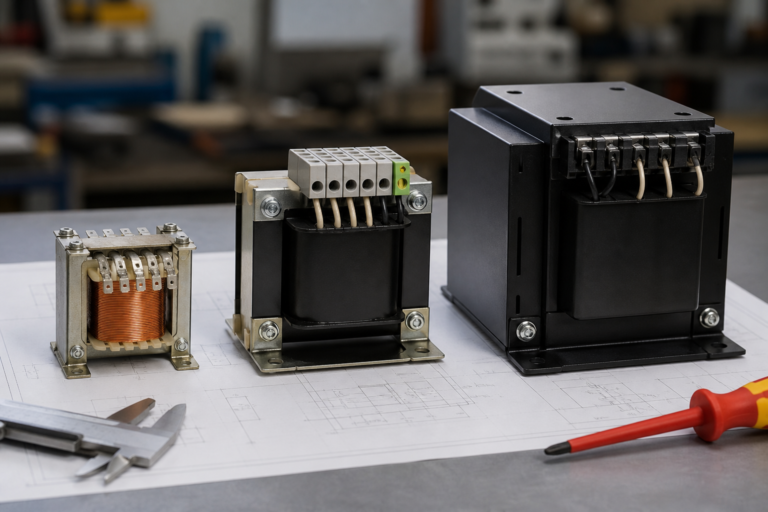
If you build, retrofit, or service CNC lathes, machining centers, or any automated production line, the control transformer you specify decides whether the cabinet powers up cleanly or trips at every cycle. This guide walks procurement engineers, panel builders, and OEMs through how to select and size a CNC machine tool control transformer with confidence […]
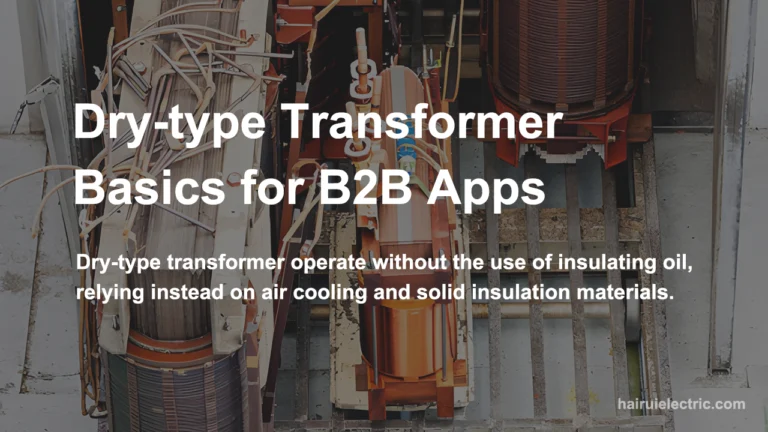
Dry-type transformer operate without the use of insulating oil, relying instead on air cooling and solid insulation materials. This design makes them inherently safer and more environmentally friendly compared to traditional oil-filled transformers. They are widely used in schools, hospitals, factories, and commercial buildings. This blog explains what a dry-type transformer is, why it matters […]