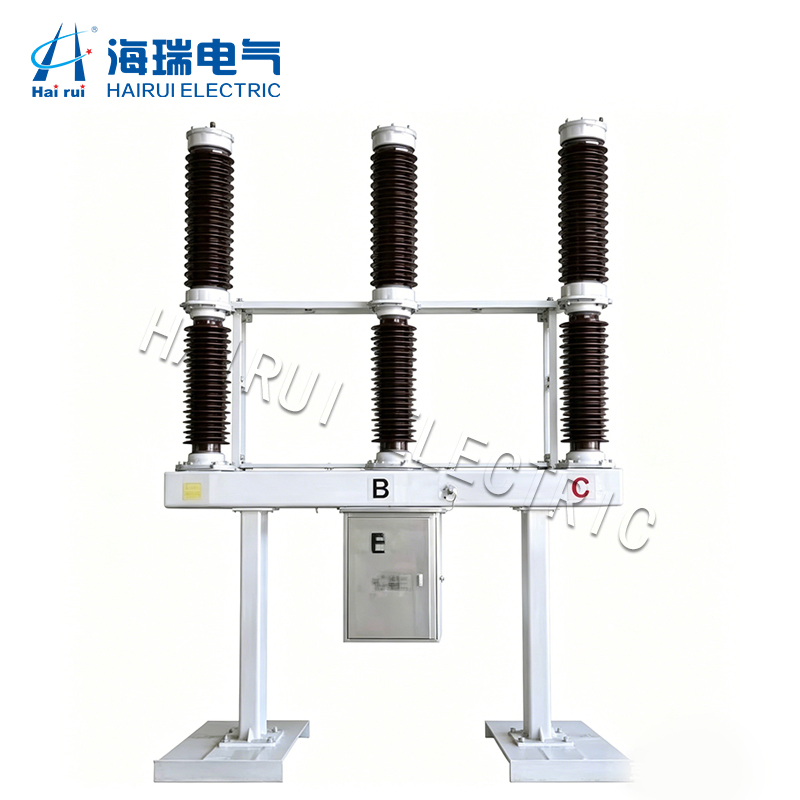
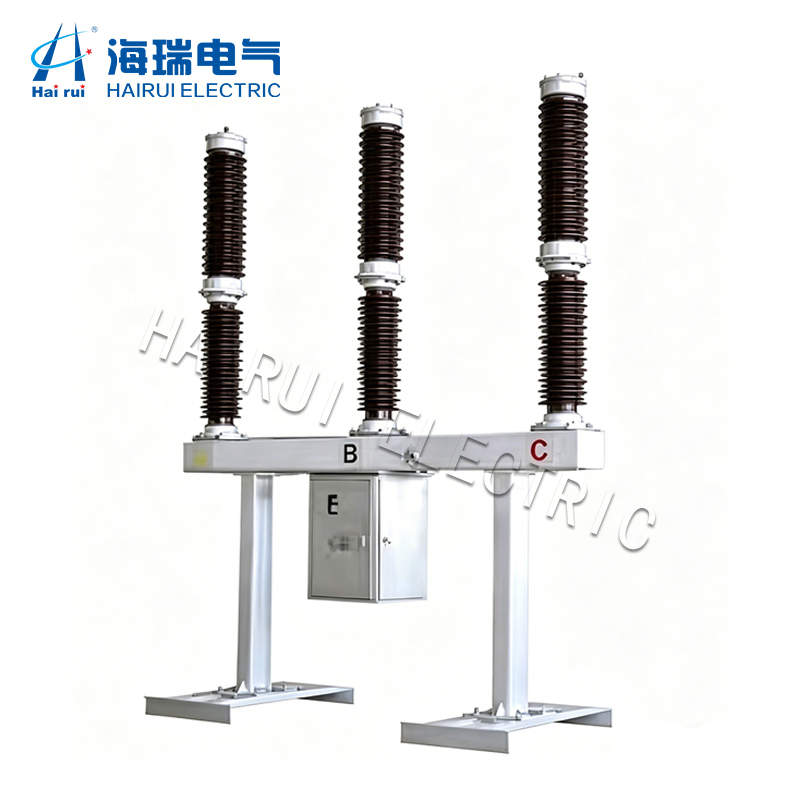
Product Overview
Frequency is the specification item that gets copied into a datasheet without anyone checking whether it is a design constraint or a paperwork one. For a 126 kV SF6 breaker it is mostly the second: the interrupting principle, the insulation and the mechanism do not change between 50 Hz and a few percent either side of it. What does change is the reactance of the network it sits in, and what must match is the nameplate, the relay settings and the test record.
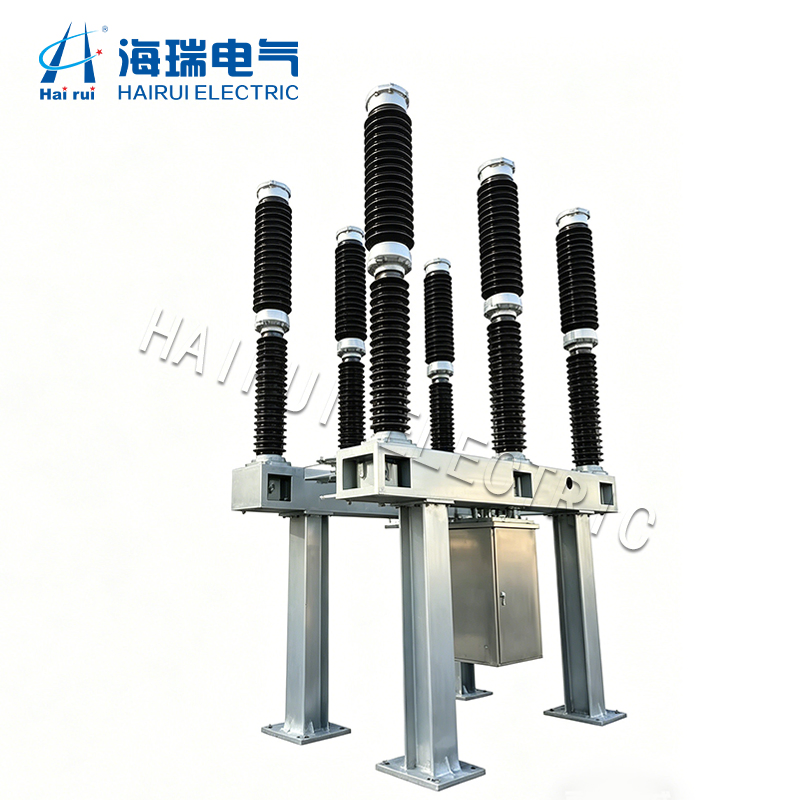
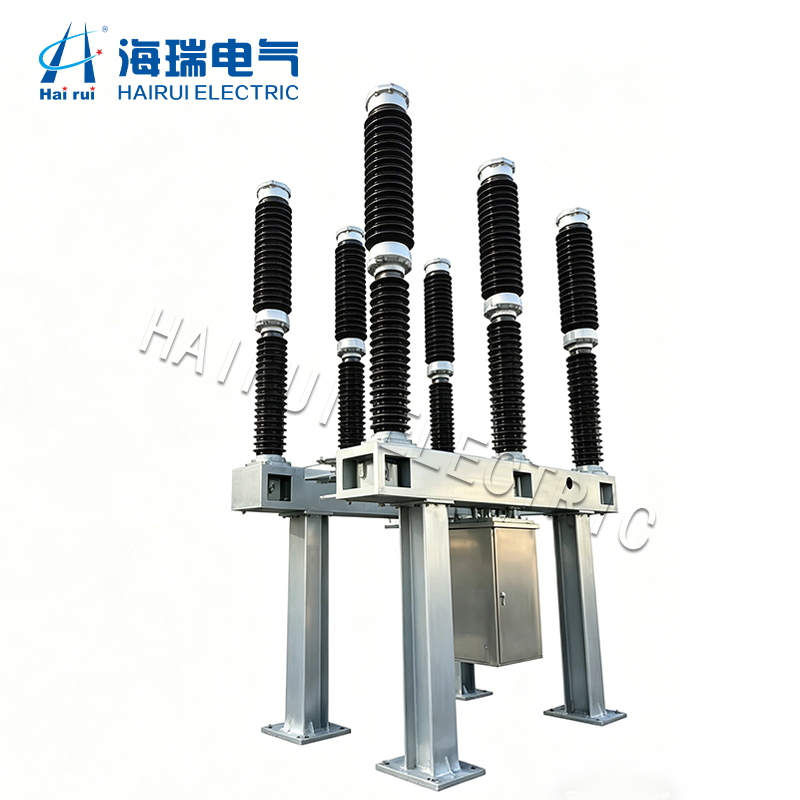
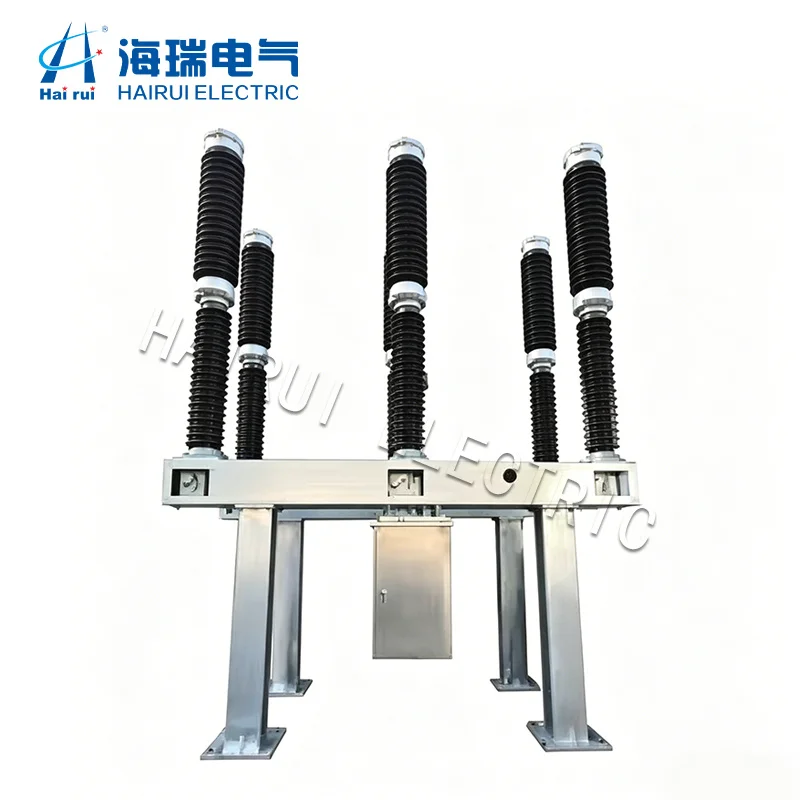
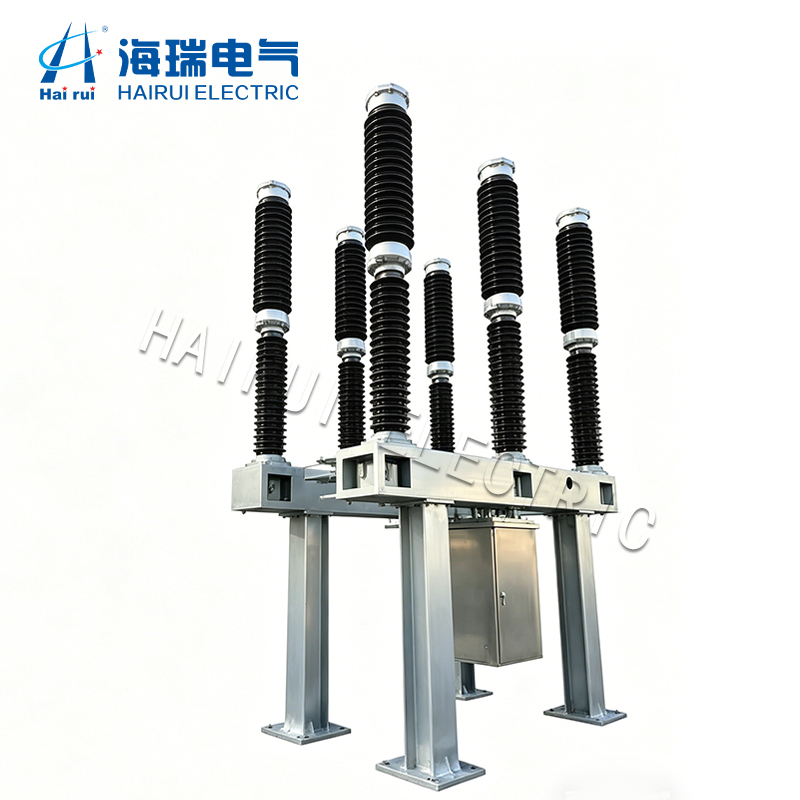
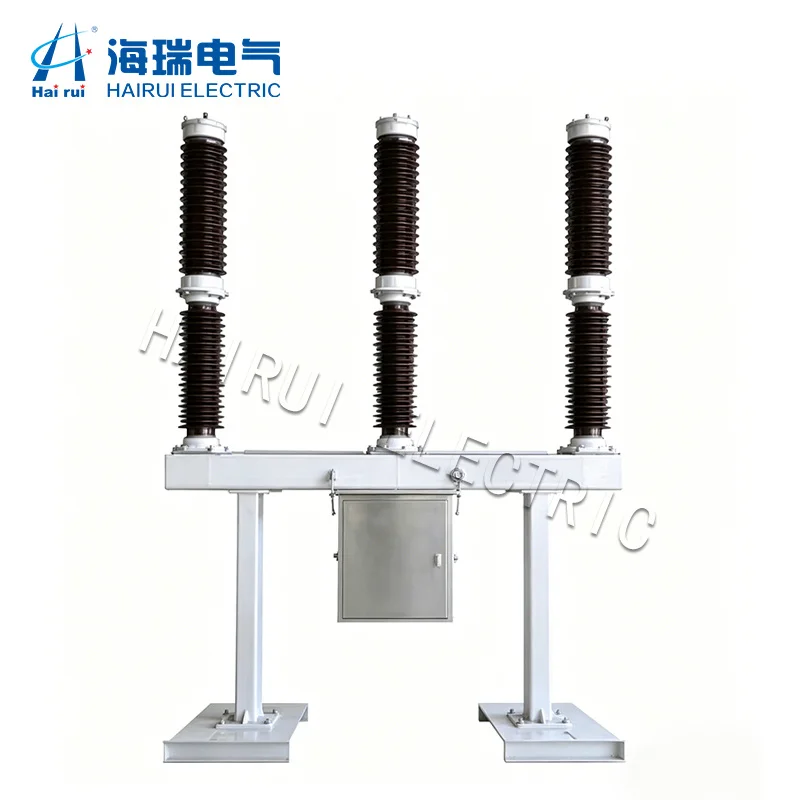
The LW36-126 is supplied at the frequency stated on the contract: 126 kV, 3150 A, 40 kA breaking, 40 kA / 3 s short-time, three poles, spring mechanism, 230 kV power frequency and 550 kV impulse insulation, 1900 kg net. This page sets out what a non-standard frequency — 52 Hz among them — actually changes.
What Changes at 52 Hz, and What Does Not
Start with the physics, because it decides the answer for every other item.
| Item | At 50 Hz | At 52 Hz | Consequence |
| Half cycle duration | 10.0 ms | 9.6 ms | Current zeros arrive slightly sooner; arc energy per half cycle falls marginally |
| Network reactance | X | about 1.04 X | Fault current falls by roughly 4% on reactance-dominated networks |
| Voltage drop across reactance | as designed | about 4% higher | Marginal on a 110 kV network, worth noting on long lines |
| Insulation level | 230 kV / 550 kV | 230 kV / 550 kV | Unchanged — the class envelope does not scale with 4% of frequency |
| Breaking capacity | 40 kA | 40 kA | Unchanged, and the actual duty falls because the fault current falls |
| Mechanism timing | spring-charged | spring-charged | Independent of system frequency |
| Relay settings | 50 Hz | must be 52 Hz | The item that actually fails in service when it is overlooked |
| Nameplate and test record | 50 Hz | must state the contract frequency | What an inspector or utility engineer checks first |
Read the bottom two rows first. A breaker that will interrupt perfectly well at 52 Hz can still be rejected at commissioning because the nameplate says 50 Hz, or misoperate because the protection relays were left on a 50 Hz setting and now measure every quantity about 4% low. The relay problem is the serious one: frequency-dependent measurement, time grading and impedance-based protection all drift, and the drift is systematic rather than random, which makes it harder to notice.
The physics above also explains why we do not treat 52 Hz as a special build. A 4% rise in reactance moves the fault current away from the breaker’s limit rather than toward it, and the half cycle shortens, so the arc has marginally less energy to dissipate. What the order changes is the declared frequency on the drawing, the nameplate and the routine test record — and, if the customer asks for it, the frequency at which the power-frequency withstand test is applied.
Key Features
- Built to the contract frequency: the declared frequency appears on the drawing, nameplate and test record, so commissioning documentation matches the network.
- 40 kA breaking at 126 kV: unchanged by a few percent of frequency, and with margin to spare because a 52 Hz network’s fault current is slightly lower.
- 230 kV power frequency / 550 kV impulse: the 126 kV class envelope, valid at 0.6 MPa rated gas density.
- 3150 A continuous: about 600 MVA at 110 kV; the 4% reactance change does not affect the thermal rating.
- 0.6 / 0.52 / 0.5 MPa gas supervision: density-based, so the alarm and lockout logic is frequency-independent.
- Spring mechanism: closing and tripping timing set by the mechanism, not by the system frequency — unaffected by a non-standard supply.
- Documentation matched to the declaration: nameplate, routine test report and IEC 62271-100 declaration all carry the same frequency, which is what an inspector compares.
- ISO 9001 quality management, 12-month warranty, MOQ 1 piece, OEM/ODM: frequency, ratings and monitoring contacts configured at order.
Technical Specifications
Standard build, declared at the contract frequency. Insulation and breaking ratings are the 126 kV class envelope; creepage, ambient and auxiliary supply follow the site.
| Model | LW36-126 |
| Type | Outdoor, live-tank, three-pole SF6 circuit breaker |
| Rated voltage | 126 kV (110 kV system) |
| Rated current | 3150 A |
| Rated frequency | 50 Hz standard; declared at the contract frequency (52 Hz specified at order) |
| Rated short-circuit breaking current | 40 kA |
| Rated short-time withstand current | 40 kA / 3 s |
| Rated peak withstand current | 100 kA (2.5 × breaking current at 50 Hz) |
| Power frequency withstand, 1 min | 230 kV |
| Lightning impulse withstand, 1.2/50 µs | 550 kV |
| Rated SF6 gas pressure at 20 °C | 0.6 MPa |
| Alarm pressure | 0.52 MPa |
| Lockout pressure | 0.5 MPa |
| Operating mechanism | Spring, motor-charged |
| Number of poles | 3, ganged |
| Installation | Outdoor, fixed on concrete foundation |
| Net weight | 1900 kg |
| Transport packing | Sea-worthy plywood case, 2200 kg packed |
| Standards | IEC 62271-100 / GB 1984 (type test reports on request) |
| Certification | ISO 9001 quality management system |
| Warranty | 12 months |
| MOQ | 1 piece |
| Origin | Zhejiang, China |
If your network frequency is not 50 Hz, two documents need to agree before shipment: the outline drawing and the routine test report. We state the frequency on both, because the mismatch shows up at commissioning rather than in the factory — usually as a protection engineer finding that the relay’s measured quantities are a few percent off nominal.
Where Non-Standard Frequency Enquiries Come From
Most of the enquiries we get for non-50 Hz 110 kV breakers fall into three situations, and each has a different consequence.
Industrial self-generation
A plant running its own generation sets the frequency it wants, and where the plant was built to a frequency other than the local grid’s, the 110 kV connection point may operate at that frequency while the utility side does not. The breaker at the boundary sees the frequency of whatever it is synchronised to, and the protection scheme has to be able to follow the transition. Where both sides must be accommodated, say so at inquiry rather than at commissioning.
Legacy plant and retrofit
Older industrial installations occasionally operate at a frequency that is neither 50 nor 60 Hz, and a replacement breaker has to match what the existing plant actually runs at rather than what a modern specification would assume. In a retrofit the determining document is the existing nameplate and the existing relay settings, not the utility’s standard.
Islanded systems and microgrids
Islanded networks and plant-level microgrids can run at a nominal frequency set by their own control scheme. Those installations usually have a wider normal operating band, which makes the frequency declaration on the breaker more important rather than less: an inspector comparing nameplate to protection settings will notice a mismatch immediately.
Packing, Shipping Weight and Foundation Data
Frequency does not change weight or crate count. This model’s own figures are in the first column, with the 252 kV split-type unit alongside.
| 126 kV / 110 kV system (LW36-126) | 252 kV / 220 kV system (LW-252) | |
| Interrupter columns shipped | 3 | 6 |
| Net weight | 1900 kg | approx. 3800 kg |
| Total shipping weight, packed | 2200 kg | approx. 4400 kg |
| Column packing | 3 cases, 3500 × 740 × 650 mm, 450 kg each | 6 cases, 3500 × 740 × 650 mm, 450 kg each |
| Base frame packing | 3880 × 700 × 2350 mm, 850 kg | 2 base cases, approx. 1700 kg total |
| Dynamic load, upward / downward | 24 kN | 24 kN per foundation |
| Height difference between the two foundation surfaces | ≤ 2 mm | ≤ 2 mm |
| Levelness of each foundation surface | ≤ 2 mm | ≤ 2 mm |
| Recommended container | 1 × 20 GP | 1 × 40 HQ or 40 FR |
The 252 kV column doubles the 126 kV one because a split-type pole carries two interrupter columns — six columns and two base frames for three poles. Loading from Ningbo or Shanghai, EXW through DAP, LCL consolidation for single units. Invoice, packing list, bill of lading, certificate of origin, routine test report and IEC 62271-100 declaration travel with the goods.
Price Guide
Indicative RMB prices, standard builds, ex-works Zhejiang, current as of 2026 — a budget reference rather than a quotation.
| Voltage class | Reference model | Interrupter columns | Indicative price |
| 40.5 kV (35 kV system) | LW8-40.5 | 3 | approx. RMB 40,000 |
| 72.5 kV (66 kV system) | LW9-72.5 | 3 | approx. RMB 75,000 |
| 126 kV (110 kV system) | LW36-126 | 3 | approx. RMB 80,000 |
| 252 kV (220 kV system) | LW-252 | 6 | approx. RMB 160,000 |
A non-standard frequency declaration is not a price item on this breaker, because the hardware does not change. What can add cost is extra documentation — witness testing at a specified frequency, a third-party inspection that requires the frequency to be stated on the certificate, or a customer-specific test protocol. All three are quoted as additions rather than built into the base price.
Included: breaker, base frame, gas density monitor, foundation bolts, gas filling per contract and an English O&M manual. Quoted separately: spare SF6 cylinders, disconnectors, current transformers, special creepage bushings, witness testing and third-party inspection. Typical terms are 30% deposit with order and the balance against a copy of the bill of lading, with L/C at sight for container volumes. Cost structure is in SF6 circuit breaker price and cost drivers.
Ordering: What to Send in the Inquiry
For a frequency-led specification, the declaration and the protection interface do most of the work:
- Contract frequency and its tolerance band — the nominal value plus the range the plant actually operates over.
- Protection relay model and settings — so the interface is checked against what the plant already runs.
- Nameplate and test-record requirements — whether the frequency must appear on the routine test certificate.
- Fault level at the declared frequency — fault current is lower than the 50 Hz study suggests on reactance-dominated networks.
- Continuous load and transfer case — in amperes or MVA.
- Ambient, altitude and pollution class — the site corrections.
- Destination port and Incoterm — EXW, FOB, CFR, CIF or DAP.
- Documentation — type test reports, wiring diagrams, language required.
Minimum order is one piece. The commercial sequence is in how to buy SF6 circuit breakers from a manufacturer; the standard-frequency reference for the same unit is on the LW36-126 126 kV page.

FAQ
What rated frequency is this breaker specified for?
The LW36-126 is listed with a 52Hz rated frequency in its specification table, matching power distribution systems that operate at that frequency.
Is the breaker suitable for continuous outdoor service?
Yes. It is an outdoor installation type breaker in a 3-pole configuration, designed for long-term exposure in open-air distribution substations.
What current and fault ratings does it carry?
It has a 3150A rated current, a 40kA rated short-circuit breaking current, and a 40kA/3s rated short-time withstand current at 126kV.
Can I order a customized version?
Yes. Customization is supported and OEM/ODM service is offered. The minimum order quantity is one piece, and each unit carries a 12-month warranty.
What quality certification does the manufacturer hold?
Manufacturing is covered by an ISO 9001 certified quality management system at the HaiRui facility in Zhejiang, China.
Can the LW36-126 be supplied at 52Hz?
Yes. The declared frequency is carried on the drawing, nameplate and routine test record, and the protection relay settings must match. The insulation and breaking ratings do not change, and fault current is about 4% lower than a 50Hz study suggests.
How much does a 126kV SF6 circuit breaker cost?
The LW36-126 is approximately RMB 80,000 ex-works Zhejiang for a standard build. For reference: 40.5kV about RMB 40,000, 72.5kV about RMB 75,000 and 252kV about RMB 160,000. Final price depends on breaking capacity, creepage class, accessory set and freight term.
What is the shipping weight and how is the breaker packed?
The LW36-126 is 1900kg net and 2200kg packed, in four cases: three column cases of 3500 x 740 x 650mm at 450kg each and a base case of 3880 x 700 x 2350mm at 850kg. One 20 GP carries a single unit.
What is the MOQ and what documentation comes with the shipment?
MOQ is 1 piece, with OEM/ODM customization of ratings, nameplate and monitoring contacts. Documents include invoice, packing list, bill of lading, certificate of origin, routine test report and IEC 62271-100 declaration.
Request Quote
Tell us your specifications, quantity, or application scenario and we will reply with a tailored quote.