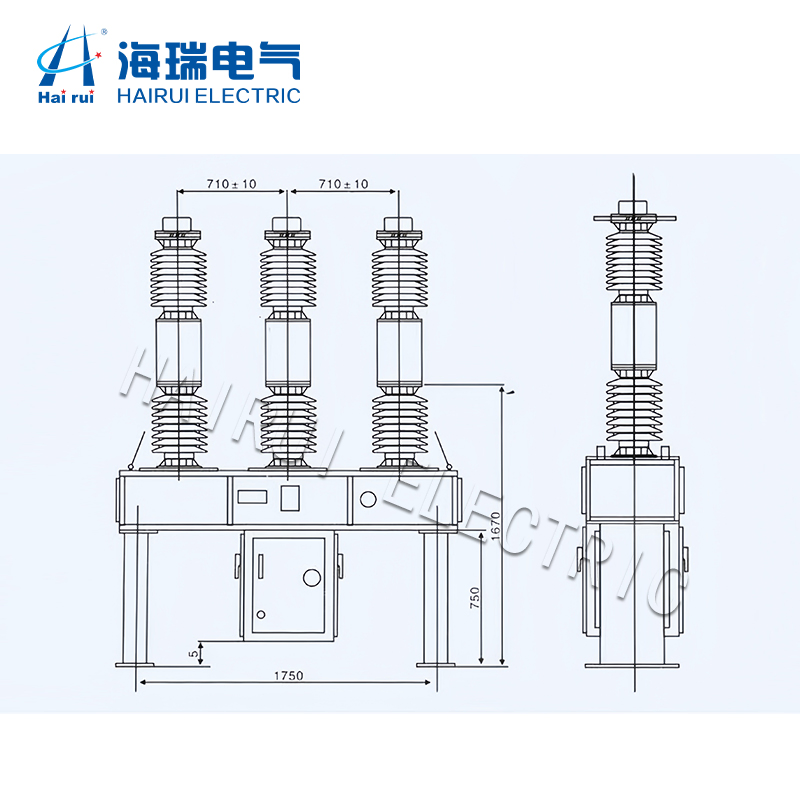
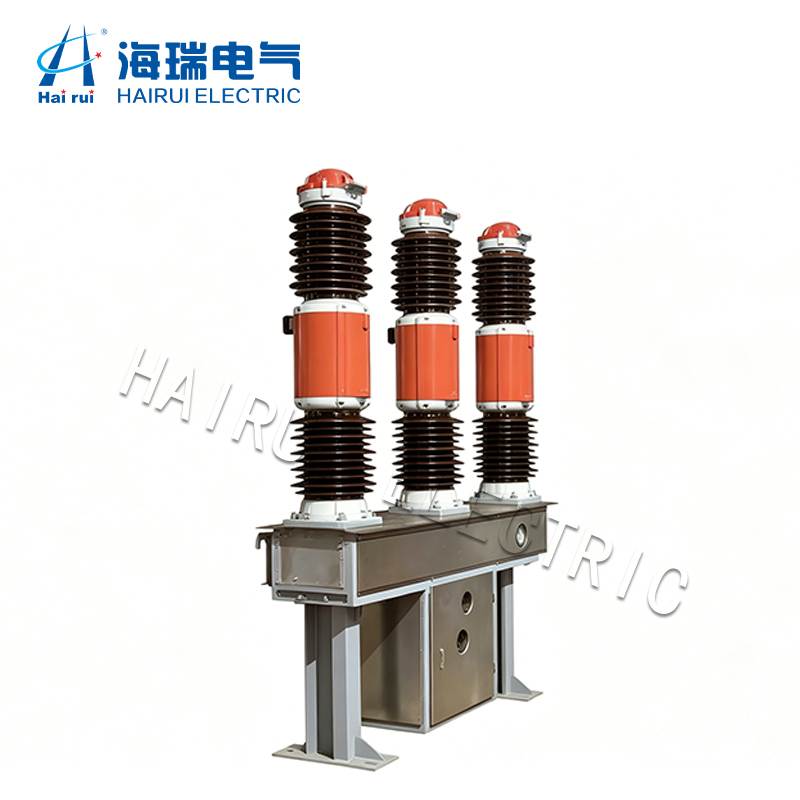
Product Overview
Most 33 kV and 35 kV breakers sold are 1250 A or 1600 A, because most feeders and most transformers do not need more. The 2000 A version of the LW8-40.5 exists for the minority of positions where the current genuinely is that high: transformer incomers on large substations, busbar sectionalisers that carry the combined load of two boards, and tie breakers that see the whole station’s demand during a transfer.
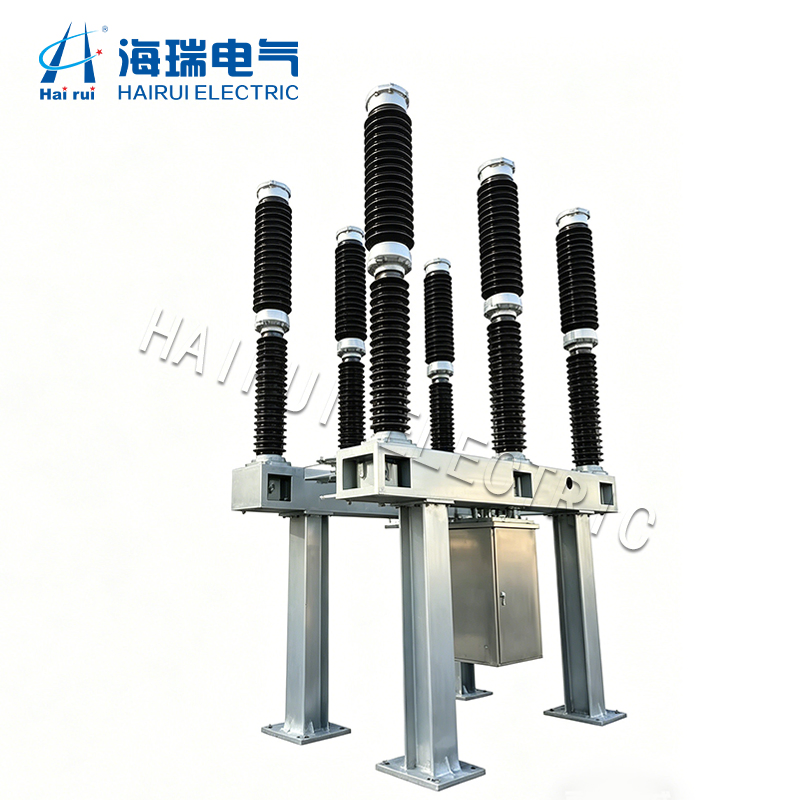
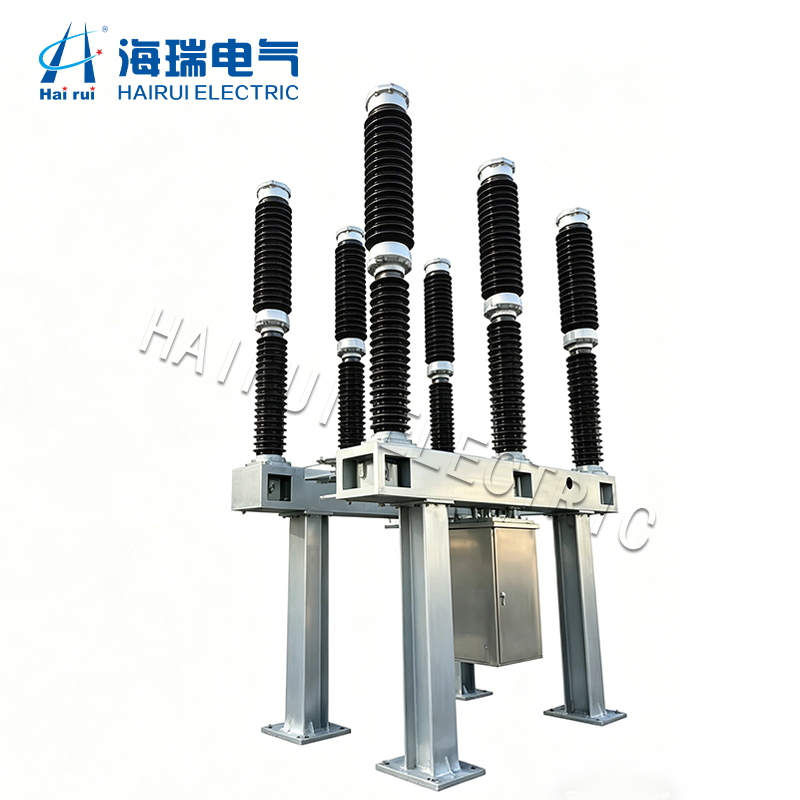
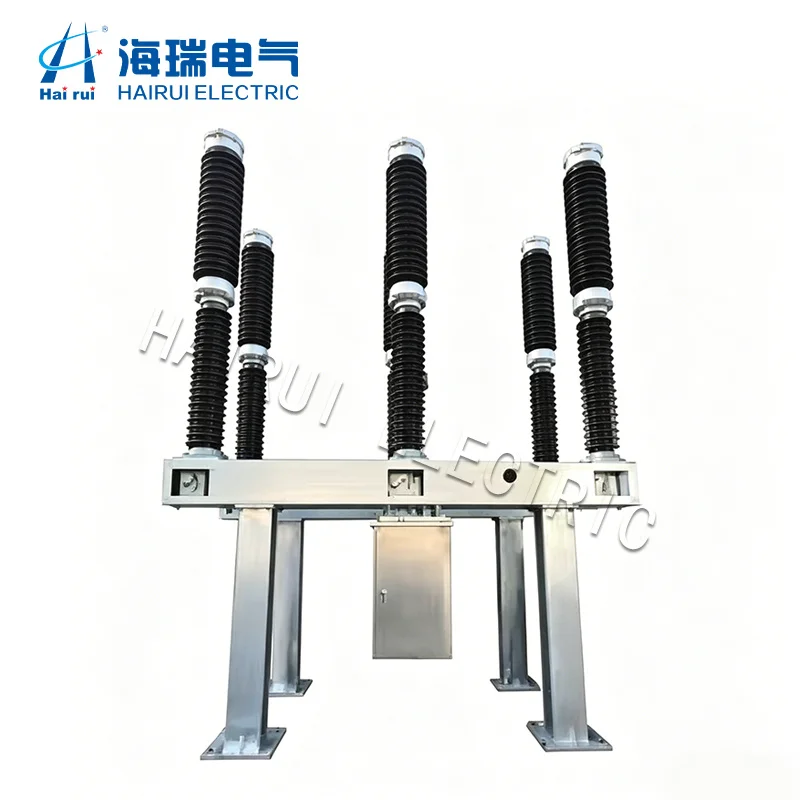
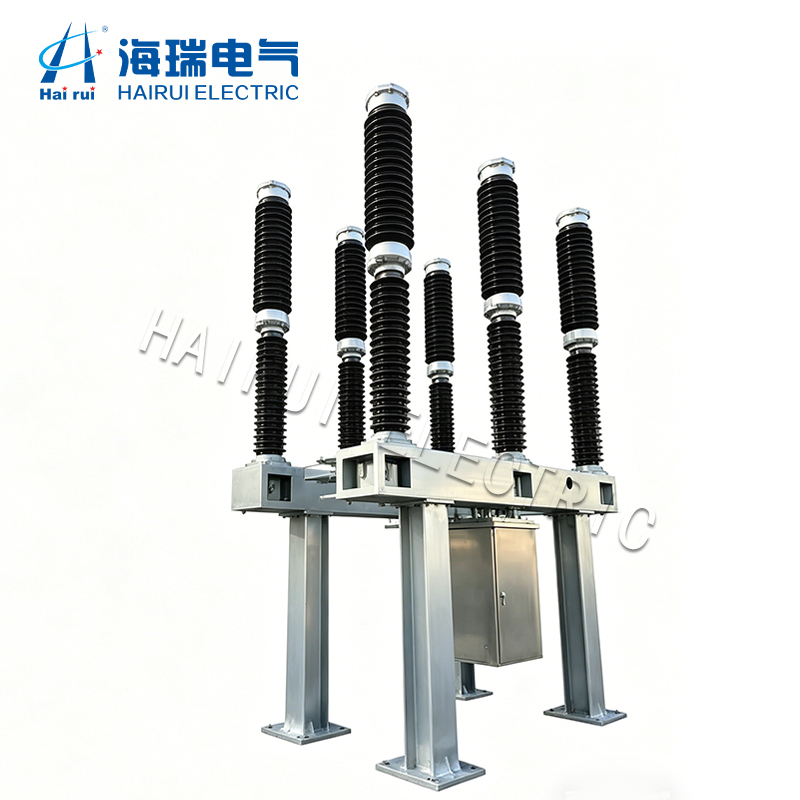
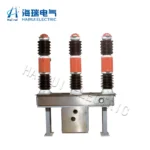
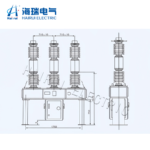
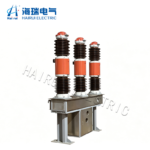
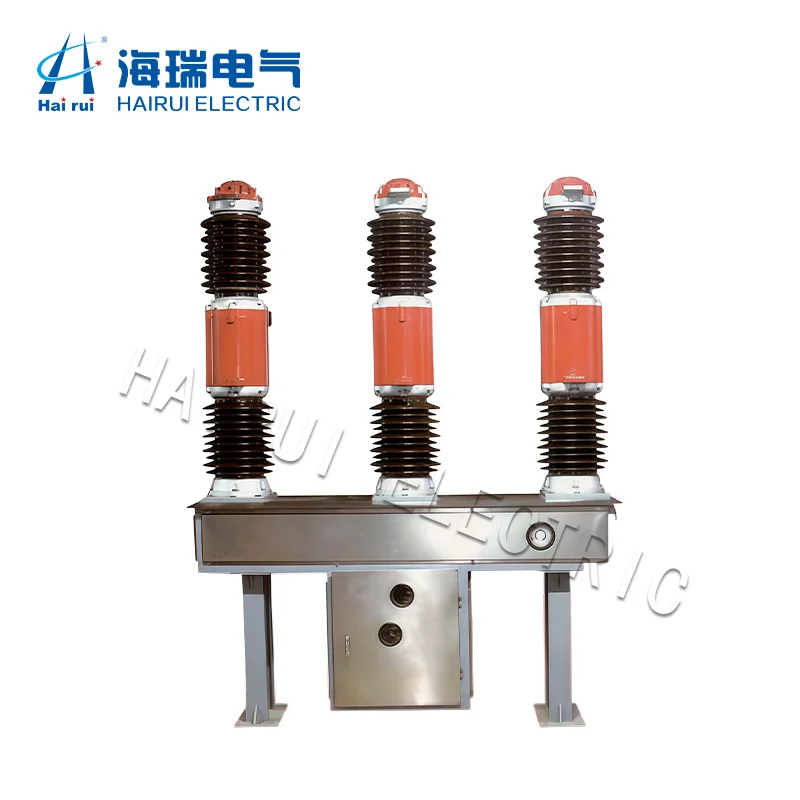
Physically it is the same three-pole live-tank outdoor breaker — 40.5 kV, spring mechanism, SF6 interrupter sealed at 0.5 MPa with a 0.47 MPa alarm and 0.15 MPa minimum functional pressure, 95 kV power frequency and 185 kV impulse withstand — with the current path and terminals sized for 2000 A. This page is about choosing between the two ratings, and about what “2000 A” stops meaning when the ambient rises.
1600 A or 2000 A: The Arithmetic, Then the Caveats
Start with the throughput each rating represents at the voltages this breaker serves.
| Rated current | At 33 kV | At 35 kV | Typical position |
| 1600 A | about 91 MVA | about 97 MVA | Feeder, transformer incomer up to 90 MVA, sectionaliser on a divided board |
| 2000 A | about 114 MVA | about 121 MVA | Main incomer, bus coupler, tie breaker carrying combined station load |
Those are steady-state figures at the reference ambient. Three things then erode them, in this order of importance.
Ambient. Rated current is declared at a reference ambient — 40 °C under IEC 62271-1 — and every degree above it reduces what the same copper can carry without exceeding the temperature-rise limits. In a 50 °C switchyard the nameplate figure is not the working figure, and the reduction is a property of the whole current path, not just the breaker: cable lugs, busbar joints and current transformers on either side are subject to the same arithmetic. Ask for the derating curve rather than accepting a percentage from a catalogue: the calculation is in temperature rise limits and derating above 40 °C ambient.
Load profile. A 2000 A breaker on a feeder that peaks at 900 A is money spent on copper that never carries current. Rating is set by the maximum demand plus the load-transfer case, not by the sum of connected transformer capacity.
Parallel operation. Two 1600 A incomers in parallel on one board are not a 3200 A solution; each still has to carry its share plus the transfer contingency, and the protection has to be arranged so a fault does not ask one breaker to take the whole station load. Where that contingency is real, 2000 A is usually the cheaper answer than an additional board.
The 95 kV power frequency withstand belongs to the same datasheet but answers a different question: it is the one-minute test that proves the insulation, dry and after assembly, at a level set by the 40.5 kV class. It is a routine test performed on every unit, which is why it appears on the test certificate that ships with the breaker.
Key Features
- 2000 A continuous current option: sized current path and terminals for main incomer, bus coupler and tie positions where 1600 A is the wrong number.
- 1600 A option on the same frame: the same breaker, mechanism and spare parts, so a board can mix both ratings without splitting the spares inventory.
- 95 kV power frequency withstand, 1 minute: routine-tested on every unit, with the certificate issued against the serial number.
- 185 kV lightning impulse: the insulation level for the 40.5 kV class, unchanged between the two current ratings.
- Sealed SF6 interrupter, 0.5 MPa rated: 0.47 MPa alarm and 0.15 MPa minimum functional; density relay contacts can be wired to SCADA.
- Spring mechanism, 3000 mechanical operations: no compressor or hydraulic plant, and trip energy held mechanically rather than in the station battery.
- Three poles on one base frame: alignment to within 2 mm at installation, one civil foundation, one commissioning window.
- ISO 9001 quality management, 12-month warranty, MOQ 1 piece, OEM/ODM: nameplate, auxiliary contacts and monitoring contacts customized at order.
Technical Specifications
The table lists the standard build at both current ratings. Breaking capacity, creepage and ambient range are selected at order time against your fault study and site conditions rather than fixed here.
| Model | LW8-40.5 |
| Type | Outdoor, live-tank, three-pole SF6 circuit breaker |
| Rated voltage | 40.5 kV |
| Rated current | 1600 A / 2000 A |
| Rated frequency | 50 Hz |
| Rated short-circuit breaking current | 25–31.5 kA (selected against your fault level) |
| Power frequency withstand voltage, 1 min | 95 kV |
| Lightning impulse withstand voltage, 1.2/50 µs | 185 kV |
| Rated SF6 gas pressure at 20 °C | 0.5 MPa |
| Alarm pressure | 0.47 MPa |
| Minimum functional pressure | 0.15 MPa |
| Operating mechanism | Spring, motor-charged |
| Mechanical life | 3000 operations |
| Number of poles | 3, ganged |
| Installation | Outdoor, fixed on concrete foundation |
| Auxiliary supply | DC 110 V / 220 V (confirmed at order) |
| Standards | IEC 62271-100 / GB 1984 (type test reports on request) |
| Certification | ISO 9001 quality management system |
| Transport packing | Sea-worthy plywood case |
| Warranty | 12 months |
| MOQ | 1 piece |
| Origin | Zhejiang, China |
One consequence of the shared frame is worth stating plainly: the physical breaker is almost identical between 1600 A and 2000 A, so the price difference is small and the decision should be made on load, not on cost. The dimension that does change is the terminal and conductor size, and that is what has to match the cable or busbar you are connecting.
Applications: Where 2000 A Earns Its Place
The five regions we ship to differ less in whether they need 2000 A than in why. These are the patterns that come up.
Middle East: the rating that derating eats first
In Iraq, Saudi Arabia, the UAE and Oman a 2000 A breaker specified against a 40 °C reference is often the position most exposed to a 50 °C yard, because high-current positions are usually the main incomer — the one place where losing margin has station-wide consequences. Specify the ambient, get the derating curve, and size the incoming cables for the derated figure; the breaker is rarely the weak link, the terminations are.
Africa: load growth on a fixed board
In Nigeria, Kenya, Tanzania and Ghana the pattern is a board built for today’s demand carrying tomorrow’s, with feeders added as customers connect. A 2000 A incomer buys headroom that a 1600 A unit does not, and the incremental cost is small relative to rebuilding the board in five years. The same sites value the spring mechanism for a different reason: no compressor to maintain when the station has no maintenance crew.
Southeast Asia: high load density, high humidity
Urban Indonesian, Vietnamese and Philippine substations carry dense mixed commercial load, and the tie breaker between two boards is where the current actually peaks. Humidity adds a second consideration on the same current path: joint preparation, torque and anti-corrosion treatment decide whether a 2000 A connection stays a 2000 A connection after three wet seasons.
Central Asia: cold reduces, heat decides
In Kazakhstan, Uzbekistan, Tajikistan and Kyrgyzstan the dimensioning case is usually summer — +45 °C yards with dust on the terminals — while winter sets a different constraint on mechanism behaviour. Both matter for a main incomer because it is the position that cannot be taken out for convenience; the winter minimum should be quoted so lubrication and any heater are specified for it.
CIS: planned load transfer
Networks in Russia, Belarus, Azerbaijan and Uzbekistan are often operated with planned transfers between boards during maintenance, which makes the tie breaker’s rating a scheduled condition rather than an emergency one. Where the transfer is written into the operating procedure, the 2000 A figure has to cover it with the derating applied — and the documentation has to say so in language an inspector will accept.
Packing, Shipping Weight and Foundation Data
Freight follows the voltage class rather than the current rating: a 2000 A breaker and a 1600 A breaker of the same class travel in the same size case. The reference figures below cover the two tiers where a single unit no longer fits in a light case.
| 126 kV / 110 kV system (LW36-126) | 252 kV / 220 kV system (LW-252) | |
| Interrupter columns shipped | 3 | 6 |
| Net weight | 1900 kg | approx. 3800 kg |
| Total shipping weight, packed | 2200 kg | approx. 4400 kg |
| Column packing | 3 cases, 3500 × 740 × 650 mm, 450 kg each | 6 cases, 3500 × 740 × 650 mm, 450 kg each |
| Base frame packing | 3880 × 700 × 2350 mm, 850 kg | 2 base cases, approx. 1700 kg total |
| Dynamic load, upward / downward | 24 kN | 24 kN per foundation |
| Height difference between the two foundation surfaces | ≤ 2 mm | ≤ 2 mm |
| Levelness of each foundation surface | ≤ 2 mm | ≤ 2 mm |
| Recommended container | 1 × 20 GP | 1 × 40 HQ or 40 FR |
The 252 kV line doubles the 126 kV line because the hardware doubles — six interrupter columns instead of three, two base frames instead of one. The LW8-40.5 on this page is a single three-pole unit on one base frame in one plywood case; its net weight, case dimensions and lifting points are issued with the proforma invoice, and mixed orders are consolidated where the loading plan allows.
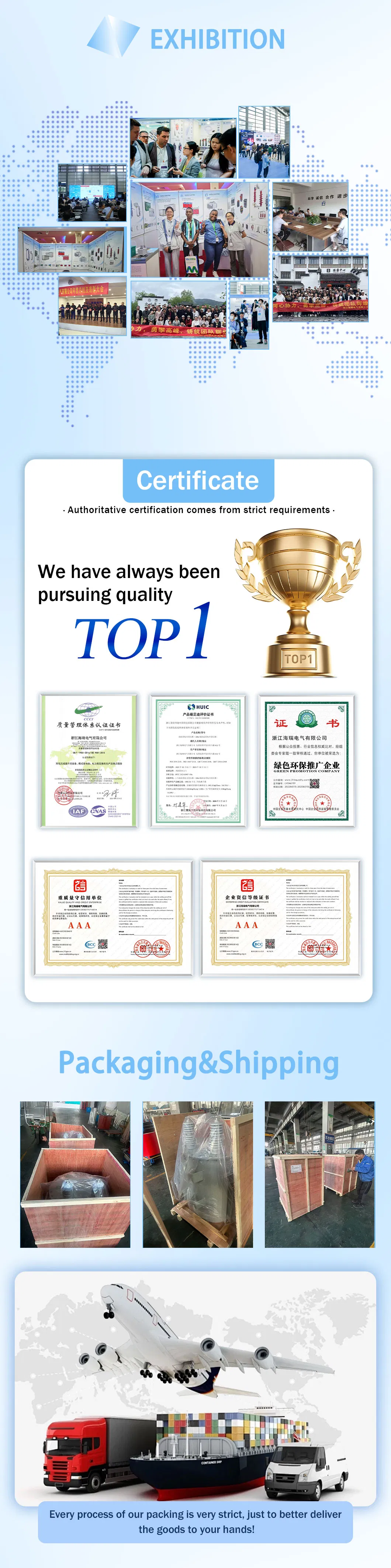
Shipment from Ningbo or Shanghai on EXW, FOB, CFR, CIF or DAP terms, LCL consolidation available. Invoice, packing list, bill of lading, certificate of origin, routine test report and IEC 62271-100 declaration travel with the goods; third-party inspection and witness testing can be arranged before loading.
Price Guide
Indicative RMB prices, standard builds, ex-works Zhejiang, current as of 2026 — a budget reference rather than a quotation. Breaking capacity, creepage class, accessory set and freight term move the final number.
| Voltage class | Reference model | Interrupter columns | Indicative price |
| 40.5 kV (35 kV system) | LW8-40.5 | 3 | approx. RMB 40,000 |
| 72.5 kV (66 kV system) | LW9-72.5 | 3 | approx. RMB 75,000 |
| 126 kV (110 kV system) | LW36-126 | 3 | approx. RMB 80,000 |
| 252 kV (220 kV system) | LW-252 | 6 | approx. RMB 160,000 |
Between 1600 A and 2000 A on the same frame the price step is small; the expensive decisions are elsewhere. Moving up a voltage class doubles the hardware at 126 kV to 252 kV, while going from 72.5 kV to 126 kV costs only a few percent more — which is why a buyer who needs 2000 A should price the whole board rather than the breaker alone.
Included: breaker, base frame, gas density monitor, foundation bolts, gas filling per contract and an English O&M manual. Quoted separately: spare SF6 cylinders, disconnectors, current transformers, special creepage bushings, third-party inspection and witness tests. Typical terms are 30% deposit with order and the balance against a copy of the bill of lading, with L/C at sight for container volumes. The cost structure is broken down in SF6 circuit breaker price and cost drivers.
Ordering: What to Send in the Inquiry
For a current-led specification, the maximum demand and the ambient are worth more than the rest of the list combined:
- Maximum demand and the load-transfer case — in amperes or MVA, for the position the breaker actually occupies.
- Design ambient and solar exposure — shade temperature, plus whether the structure is in direct sun.
- Conductor and terminal arrangement — cable size or busbar dimensions, since these set the real limit.
- Network voltage — 33 kV or 35 kV, and the earthing arrangement.
- System fault level — so breaking capacity is selected rather than assumed.
- Pollution class and altitude — coastal, desert or industrial, and metres above sea level.
- Destination port and Incoterm — EXW, FOB, CFR, CIF or DAP.
- Documentation — routine test certificate, type test reports, certificate of origin.
Minimum order is one piece. The commercial sequence is set out in how to buy SF6 circuit breakers from a manufacturer; the price reference for every tier and the gas pressure detail are on the LW8-40.5 main product page.
FAQ
What is the power frequency withstand voltage?
The rated power frequency withstand voltage is 95kV. This defines the insulation level of the breaker under sustained alternating overvoltage conditions on the 40.5kV system.
Which rated current should I choose, 1600A or 2000A?
Choose the rating based on the continuous load current of the circuit being protected, including a margin for load growth. The 2000A rating suits heavily loaded feeders; 1600A suits standard distribution loading.
How does power frequency insulation level affect equipment selection?
The 95kV power frequency withstand voltage must coordinate with the insulation levels of transformers, cables, and surge arresters in the same system to prevent insulation failure during overvoltage events.
What operating mechanism does the breaker use?
A spring operating mechanism with high-speed operation. Tripping energy is stored mechanically, so fault clearing does not depend on auxiliary power availability at the trip instant.
Can the breaker be customized for my system?
Yes. OEM/ODM customization is available with ISO 9001 quality management and a 12-month warranty. Contact HaiRui with your system voltage, load current, and insulation coordination requirements.
How much load can a 2000A 40.5kV breaker carry?
About 114MVA at 33kV and 121MVA at 35kV at the 40C reference ambient. Above that ambient the figure falls, so ask for the derating curve rather than assuming the nameplate value.
What is the shipping weight and how is it packed?
The LW8-40.5 ships in one sea-worthy plywood case; its weight and case dimensions are issued with the proforma invoice. For reference, the 126kV model is 1900kg net and 2200kg packed in four cases, and the 252kV model doubles both pole count and weight.
What is the MOQ and what documentation comes with the shipment?
MOQ is 1 piece, with OEM/ODM customization of ratings, nameplate and monitoring contacts. Documents include invoice, packing list, bill of lading, certificate of origin, routine test report and IEC 62271-100 declaration.
Request Quote
Tell us your specifications, quantity, or application scenario and we will reply with a tailored quote.