The Essential Guide to Choosing the Right Control Power Transformer for Industrial Applications
Published: Author: Hairui Electric
The heartbeat of every control panel isn’t flashy. It doesn’t get the attention that advanced PLCs, smart sensors, or buzzing relays do. Yet, without a dependable control power transformer, the most sophisticated system becomes just another jumble of wires and components. Are you evaluating new electrical equipment or seeking more reliable power solutions? This guide is designed for you—the industrial buyer, the technical manager, or the savvy procurement professional.
Let’s demystify control power transformers, explore critical selection factors, and highlight the features that really matter for longevity, compliance, and performance.
What Is a Control Power Transformer and Why Does It Matter?
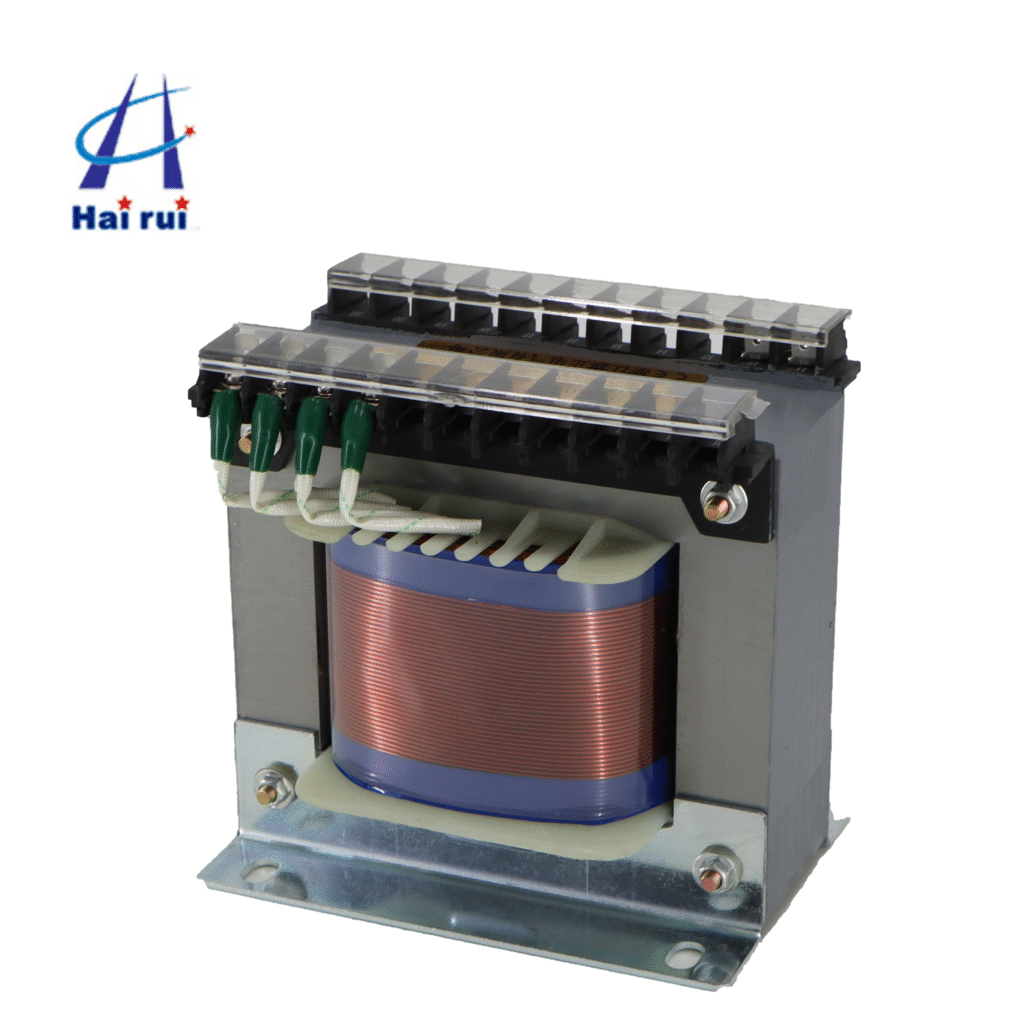
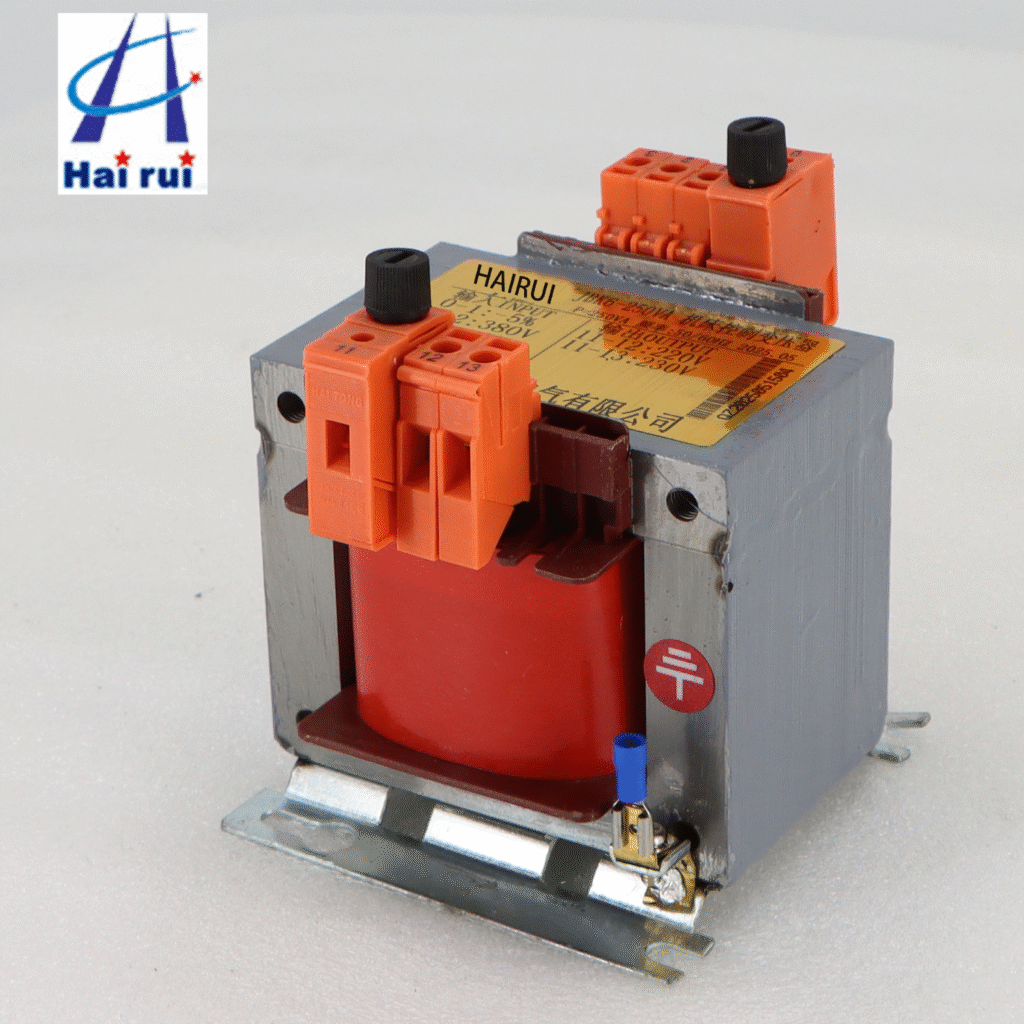
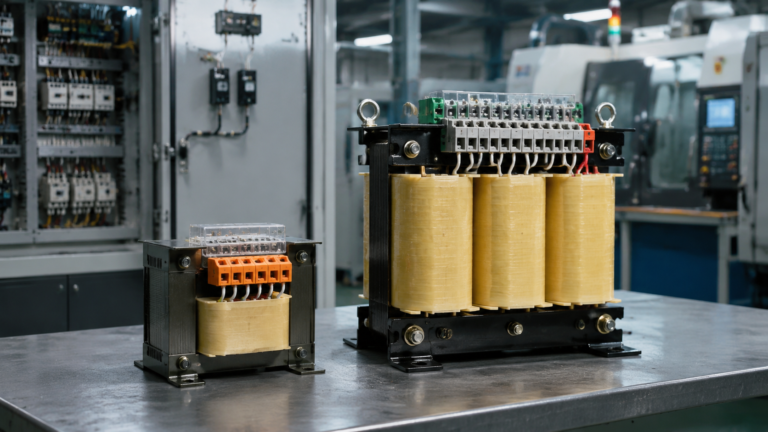
A control power transformer (CPT) is an industrial transformer specifically designed to provide stable, isolated voltage for control circuits in switchgear and automation panels. Think of it as the silent guardian, protecting sensitive control systems from fluctuations, surges, and electrical noise.
JBK3 Control Transformers
So why do procurement managers and technicians give so much attention to these devices? The answer is simple: reliability. A failing transformer can stop an entire process line, trigger shutdowns, or even damage valuable automation hardware. Reliability can’t be an afterthought.
Imagine if your control panel, stationed on a busy factory floor, suddenly loses voltage stability. Sensors misread. Relays misfire. Downtime costs surge. That’s why a quality control power transformer is not just nice to have—it’s essential.
Five Key Factors to Consider Before Purchasing a Control Power Transformer
Choosing the right control power transformer is about more than just ticking a box on a checklist. Each application is unique, so fit really matters.
Here are five must-consider factors:
Input and Output Voltage Requirements
Always verify supply voltage compatibility. Standard options include 208V, 240V, 480V input; output is often 120V or 24V—ideal for PLCs, relays, or pilot lights.
Power Rating and VA Capacity
Under-sizing leads to overheating, overloading, or even early failure. Consider the total load, add a buffer (typically 20%), and select the appropriate VA rating.
Environmental Conditions
Will your transformer operate in a dusty machine enclosure or a humidity-prone area? Look for products with NEMA-rated enclosures and high insulation classes.
Certification and Compliance
UL-listed or CE-marked transformers make audits and international shipments smoother. Don’t gamble on no-name electronics—compliance ensures operational safety.
Physical Dimensions and Mounting
Every panel build is unique. Review the unit’s footprint, choose between foot-mounted or DIN-rail variants, and check for compatibility with your control panel layout.
Need a quick visual comparison for your shortlist? Check the table below.
Feature
Importance for Selection
Typical Options
B2B Buyer Tips
Input Voltage
Critical
208V / 240V / 480V
Match to plant supply voltage
Output Voltage
High
24V / 120V
Ensure control compatibility
Rated VA (Power)
Essential
50VA to 1000VA+
Select based on total coil load
Mounting Style
Moderate
Foot, DIN-rail
Plan based on enclosure constraints
Certifications
Critical
UL, CE, RoHS
Insist on regulatory compliance
Protection/Enclosure
Very High
NEMA 1, NEMA 3R
Upgrade for harsh environments
Affordable price, huge discount!
Upgrade your power system today with reliable controltransformer! Contact us now for Control Power Transformer custom solutions and expert support.
Control Power Transformer Applications Across Industry
Let’s dig deeper into where these transformers make a meaningful difference. For many B2B buyers, industrial applications are broad—ranging from factory automation to wastewater treatment. In each, robust power management is essential.
Industrial transformers for control circuits power:
Programmable logic controllers (PLCs)
Relay coils and contactors
Pilot lamps and switchgear alarms
Safety circuits in production lines
Emergency stop and operator panels
Working directly with HVAC control panels or material handling equipment? You know how strict voltage requirements can be. Control circuit transformers keep things running smoothly—reducing troubleshooting headaches and maintenance calls.
A Practical Application Table
Application Area
Typical Voltage
Key Benefit
Example Device
Machine Controls
120V/24V
Stable relay operation
Packaging line panels
HVAC Systems
24V
Lower maintenance
Chiller/boiler controls
Industrial Automation
24V/110V
PLC reliability
Robotics cells
Water/Wastewater Plants
110V
Environmental safety
Pump station controls
Custom OEM Enclosures
Custom
Easy integration
Mobile generator control
Is your system suffering from erratic control voltage? It might be time to upgrade your transformer. For detailed specs or a tailored quote, reach out to our technical sales team—your smooth operation is our top priority!
Comparing Control Power Transformer Types
Not all control transformers are created equal. Differences in design, insulation, and efficiency can have real-world impacts—especially for critical processes.
Most common transformer types:
Encapsulated Control Transformers Resin encapsulation protects windings from dust, moisture, and vibration. They’re perfect for rugged or outdoor use.
Open Frame Control Transformers Cost-effective and easy to mount in enclosed panels, but less protection against harsh conditions.
Auto-transformers Offer single-winding voltage step-up or step-down, but lack isolation. Often used where isolation isn’t required.
Still unsure which to choose? Here’s a quick comparison chart:
Type
Isolation
Environment Suitability
Efficiency
Cost Range
Encapsulated
Yes
Harsh / Outdoor
High
Medium
Open Frame
Yes
Indoor / Protected
Medium
Low
Auto-transformer
No
Controlled/Non-critical
High
Lowest
Sizing Your Control Power Transformer: A Simple How-To
OK, picture this: it’s specification time. The panel’s near completion. You want to avoid last-minute surprises. Here’s how to make sure your transformer isn’t undersized:
List all control loads (PLCs, relays, lamps).
Add up their total VA (volt-ampere) ratings.
Multiply by a safety factor (1.25 is industry standard).
Round up to the next standard transformer size.
Sizing Calculation Example Suppose your total control circuit VA is 180 VA. Multiply by 1.25: 180 VA×1.25=225 VA180 VA×1.25=225 VA Select a 250 VA transformer to ensure a safety margin.
Convenient, right? Feel free to use this method in your next quote request.
Whether you maintain a fleet of automation panels or design custom electrical controls for OEM projects, the control power transformer is the real backbone behind reliable circuit performance. From selecting the right VA rating to choosing between encapsulated or open frame designs, a small decision today can translate into years of smooth, safe operation—and fewer headaches for your maintenance crew tomorrow.
Ready to enhance your control system’s reliability? Request a quote or product sample today, and let’s power your industrial progress—one control circuit at a time.
If you have specific technical requirements or would like tailored selection guidance, now’s the perfect time to connect with our specialist team!
FAQ
What is the main difference between control transformer and power transformer?
Control transformers provide isolated, stable low voltage for control; power transformers serve entire lines.
How do I know what size transformer I need for my control panel?
Sum all load VA, apply a 1.25–1.5 safety factor, and select the next higher size available.
Are control power transformers required to be UL certified?
For most industrial panels and compliance, yes—always check with your local code or standards body.
What are signs of a failing control transformer?
Overheating, humming, voltage drops, or circuit failures often indicate imminent issues.
Can I use a control transformer outdoors?
Yes, but always use encapsulated, NEMA-rated units built for weather resistance.
Is there an energy-efficient option?
Yes. Select models with high-efficiency cores and low standby losses to save on long-term power costs.
What is a “buck-boost” control transformer?
These adjust voltage slightly above or below nominal—handy for correcting supply variations in the panel.
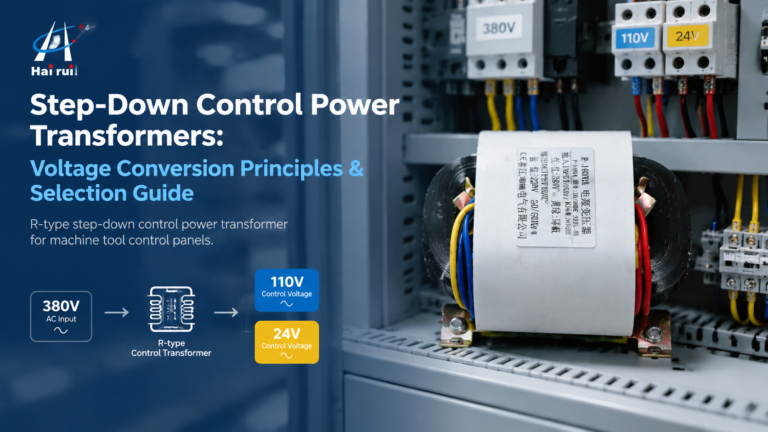
How step-down control power transformers convert 380V/480V line voltage to 110V or 24V control power: turns ratio, VA sizing with inrush, voltage-drop behaviour, wiring and selection.
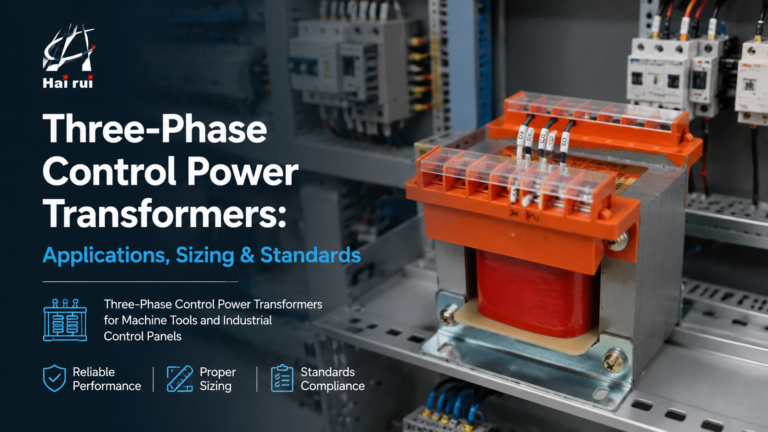
How three-phase control power transformers work, how to size them for machine tool and control-panel loads, and the delta/wye, standards and protection choices that matter in the field.