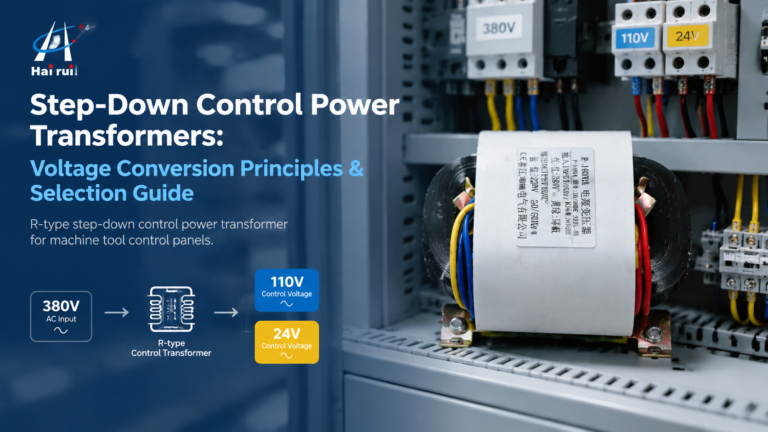
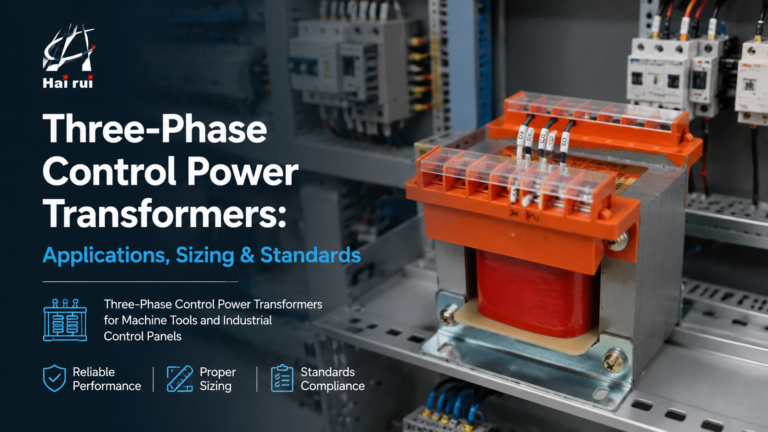
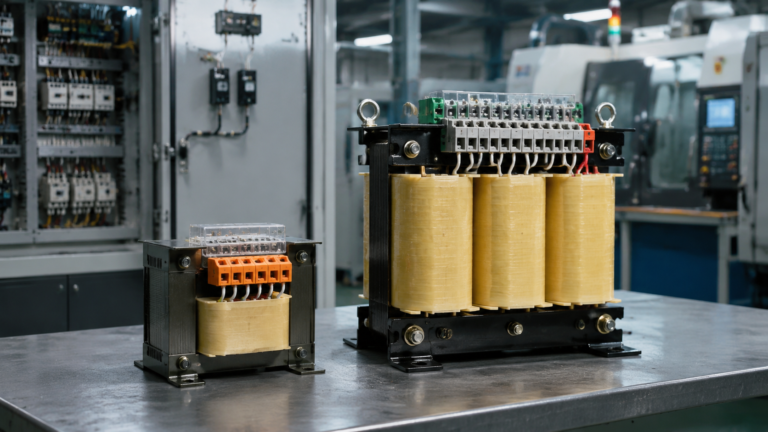
If you have ever specified a control panel, designed an automation cabinet, or sourced components for an industrial project, you have probably encountered control transformer — and perhaps underestimated how important that choice really is.
A control transformer may look small compared to motors, drives, or PLCs, but it quietly determines whether your control system runs reliably, safely, and efficiently. The wrong transformer can cause nuisance trips, overheating, unstable voltage, or even damage to sensitive control devices.
So how do you choose the right control transformer?
This guide is written for engineers, OEMs, system integrators, and procurement professionals who want a practical, clear, and supplier-aware explanation — not just theory. We will walk through:
- What a control transformer really does
- How it differs from power transformers
- Key technical parameters to evaluate
- How load behavior affects sizing
- How to select suppliers, manufacturers, and customization options
- Typical prices and procurement considerations
By the end, you should feel confident selecting a control transformer that fits your application — and avoids costly mistakes.
A control transformer is a transformer designed specifically to supply low-voltage power to control circuits, such as relays, contactors, timers, PLC inputs, indicator lamps, and sensors.
Unlike power transformers, which mainly deliver energy to loads like motors or heaters, control transformers are optimized for:
- Stable secondary voltage under changing load conditions
- High inrush current handling for contactors and solenoids
- Electrical isolation for safety
- Compact size for panel mounting
In simple terms: a control transformer ensures your control system behaves predictably, even when loads switch on and off rapidly.
Typical Control Transformer Use Cases
| Application Area | Example Use |
|---|
| Industrial automation | Powering PLC inputs and I/O modules |
| Motor control centers | Supplying contactor coils |
| Packaging machinery | Powering sensors and indicators |
| HVAC control panels | Supplying relays and thermostats |
| Renewable energy systems | Auxiliary control power |
Without a properly selected transformer, even a well-designed system can become unreliable.
Many buyers ask: “Can I just use a small power transformer instead?”
Technically yes — but practically no.
Control transformers are engineered differently.
| Feature | Control Transformer | Power Transformer |
|---|
| Voltage regulation | Tight regulation | Looser regulation |
| Inrush current capability | High | Moderate |
| Secondary voltage stability | High | Lower |
| Size and mounting | Compact, panel-ready | Larger, often floor-mounted |
| Typical load | Intermittent, inductive | Continuous, resistive/inductive |
A contactor coil, for example, draws a large inrush current when energized and much less afterward. A control transformer is designed to handle that surge without collapsing the voltage.
A power transformer often is not.
Choosing the right control transformer means balancing several technical parameters. Let us look at them one by one.
1. Primary and Secondary Voltage
You must match both the incoming supply and the required control voltage.
| Common Primary Voltages | Common Secondary Voltages |
|---|
| 480 V | 120 V |
| 400 V | 110 V |
| 380 V | 24 V |
| 240 V | 48 V |
Always confirm the actual available supply and the exact control voltage required by your devices.
2. VA Rating (Volt-Ampere Capacity)
The VA rating determines how much load the transformer can supply.
You should calculate:
- Total steady-state VA
- Total inrush VA (especially for contactors and solenoids)
A simplified approach:
| Device | Quantity | Steady VA | Inrush VA |
|---|
| Contactor coil | 2 | 50 VA | 300 VA |
| PLC I/O | 1 | 40 VA | 40 VA |
| Indicators | 4 | 5 VA | 5 VA |
Total steady VA: 150 VA
Total inrush VA: 350 VA
In this case, selecting a 500 VA control transformer would be reasonable.
3. Regulation and Voltage Stability
Good regulation keeps output voltage stable even when loads change quickly.
This matters because:
- Low voltage can cause contactors to chatter
- High voltage can shorten coil life
High-quality manufacturers specify regulation values in their datasheets.
4. Thermal Class and Insulation
Check:
- Insulation class (B, F, H)
- Ambient temperature rating
- Continuous vs intermittent duty
This ensures long-term reliability.
Understanding Load Behavior
Not all loads behave the same. Control transformers must handle dynamic loads gracefully.
| Load Type | Behavior | Transformer Requirement |
|---|
| Contactor coils | High inrush | High short-term VA |
| PLC electronics | Constant | Stable regulation |
| Solenoids | Pulsed | Fast recovery |
| Indicator lamps | Light | Minimal |
When in doubt, size for the worst-case inrush scenario.
Different applications favor different constructions.
| Type | Features | Typical Use |
|---|
| Encapsulated | Compact, sealed | Small control panels |
| Open core | Better cooling | Larger panels |
| DIN rail mount | Easy installation | Modular systems |
| Custom-built | Tailored | OEM machinery |
If you are working with a manufacturer or wholesaler, ask whether customization is available for mounting, terminal style, or voltage combinations.
Suppliers, Manufacturers, and Sourcing Strategy
Choosing the right supplier is just as important as choosing the right transformer.
What to Look for in Suppliers
| Criterion | Why It Matters |
|---|
| Certification | UL, CE, ISO indicate compliance |
| Engineering support | Helps with sizing and selection |
| Customization | Voltage, mounting, labeling |
| Lead time | Affects project schedules |
| Documentation | Datasheets and drawings |
Manufacturers often offer more customization, while wholesalers offer faster delivery and better stock availability.
A balanced sourcing strategy often uses both.
Pricing and Cost Considerations
Control transformer prices vary based on rating, certification, and customization.
| Rating | Approximate Price Range |
|---|
| 50–100 VA | $20–$40 |
| 200–500 VA | $40–$90 |
| 1 kVA+ | $100–$200+ |
Customization, special insulation, or certifications can increase cost.
Always compare total cost, not just unit price — including lead time, reliability, and technical support.
When Should You Consider Customization?
Customization makes sense when:
- Standard voltages do not match your needs
- Space or mounting constraints exist
- Special environmental conditions apply
- You are building OEM equipment at scale
Many manufacturers support custom primary/secondary combinations, special enclosures, or branding.
If your project involves repeat production, a custom control transformer can reduce long-term cost and simplify installation.
A Practical Example
An OEM building packaging machines needs:
- 480 V primary
- 24 V and 120 V secondary
- 800 VA inrush capacity
- DIN rail mounting
A standard catalog product does not fit.
Working directly with a manufacturer allows them to specify a dual-secondary control transformer with the exact ratings, reducing wiring complexity and panel size.
If you are specifying a new control panel, upgrading equipment, or sourcing for production, this is the right moment to verify your control transformer selection.
If you are unsure, consulting with a qualified supplier or manufacturer can save time and prevent costly rework later. A quick inquiry with your technical requirements can often result in better pricing and better-fit solutions.
FAQ
Can I oversize a control transformer?
Yes, slightly oversizing improves stability and lifespan.
Can I use one transformer for multiple control voltages?
Yes, with multi-secondary designs or separate transformers.
Are control transformers energy efficient?
Yes, especially modern designs with low core loss.
Do I need isolation?
Yes, isolation improves safety and protects sensitive electronics.
How long do control transformers last?
Typically 10–20 years with proper sizing and cooling.