Copper vs Aluminum Control Transformer Windings: How to Choose
Published: Author: Hairui Electric
Choosing between copper and aluminum isn’t a cosmetic decision. In a control transformer Windings, the winding material quietly shapes voltage stability, heat, size, reliability at terminals, and—most importantly for B2B buyers—the total lifecycle cost. If you’re a procurement lead trying to standardize parts across panels, or an engineer trying to keep cabinets cooler and smaller, this decision shows up later as fewer nuisance trips (or more), simpler maintenance (or headaches), and predictable lead times (or surprise re-quotes).
So let’s talk about it in practical terms: what changes when you pick copper vs aluminum for a Control Transformer Winding, how to evaluate suppliers/manufacturers, and how to write specs that protect you on price, performance, and compliance—without overbuying.
Why winding material matters in control transformers
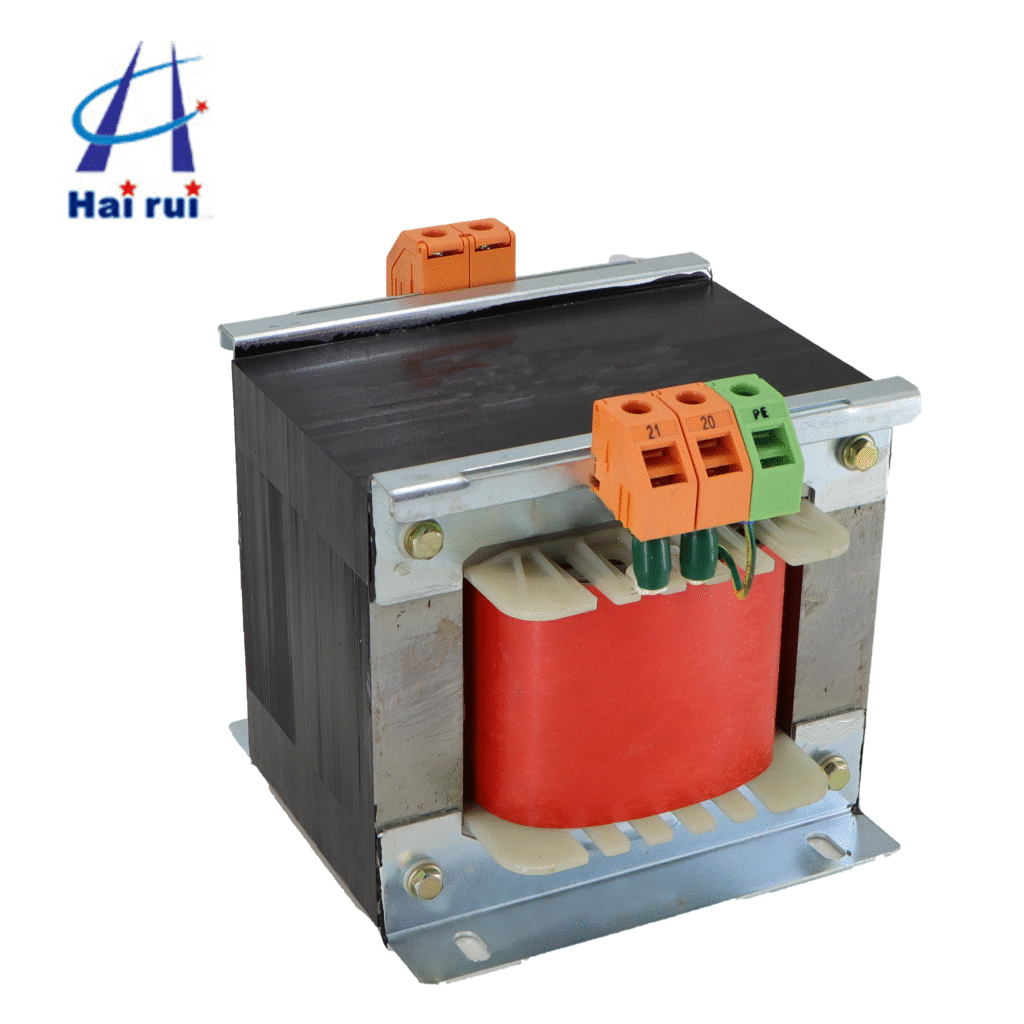
BK Series Control Transformer are often treated as “small” components. But they sit at the center of control power quality: contactor pull-in, PLC inputs, relays, and safety circuits can all become sensitive when secondary voltage sags during inrush or when the transformer runs hot inside a crowded enclosure.
Here’s the uncomfortable truth: many “equivalent” transformers are only equivalent on the nameplate. The winding material affects resistance and temperature behavior, which then affects secondary voltage regulation under load and the transformer’s temperature rise in real cabinets.
Decision factor
Copper winding tends to favor
Aluminum winding tends to favor
What it means for B2B buyers
Cabinet thermal margin
Cooler operation at same size
Acceptable if sized correctly
Impacts panel derating and fan/filter needs
Footprint constraints
Smaller for same performance
Larger conductor cross-section needed
Impacts enclosure size and layout
Terminal reliability
Easier terminations
Termination needs more care
Impacts field quality and warranty risk
Price sensitivity
Higher material cost
Lower material cost
Impacts unit price and project budget
Supply strategy
Stable quality across vendors
Vendor capability varies
Impacts supplier qualification effort
If you only care about unit price, aluminum can look attractive. If you care about repeatability across sites, heat, and long service life, copper often becomes the default. The best choice depends on where your risk really sits: energy/heat, space, installation variability, or budget.
BK Series Control Transformer
Copper vs aluminum: the material properties that drive performance
Let’s keep this simple: copper conducts electricity better than aluminum. Aluminum is much lighter and often cheaper per kilogram. But because aluminum’s conductivity is lower, it typically needs a larger cross-section to carry the same current with similar losses. That can push the coil size up (or increase losses if it’s not upsized).
Property (typical reference values)
Copper
Aluminum
Why you should care
Electrical resistivity at ~20°C (Ω·m)
~1.68×10⁻⁸
~2.82×10⁻⁸
Higher resistivity means more I²R loss and heat if not compensated
Conductivity (IACS concept)
100% IACS ≈ 58.108 MS/m
Often cited around ~61% IACS (pure Al)
Drives conductor sizing and regulation behavior
Density (g/cm³)
~8.96
~2.70
Aluminum windings can reduce overall weight significantly
Thermal conductivity (W/m·K)
~401
~237
Copper generally moves heat away faster
These numbers are why copper-wound designs can be more compact for the same temperature rise, and why aluminum-wound designs often need physical “room” to stay cool and efficient.
A practical takeaway for engineers: if a supplier claims an aluminum-wound unit is “drop-in equivalent” to a copper-wound unit at the same size, ask what changed—core size, temperature rise rating, or allowable regulation. Something has to give.
Reliability in the field: terminations, oxidation, and thermal cycling
In real projects, most failures don’t happen inside the coil. They happen at connections: lugs, leads, terminal blocks, and any place vibration and thermal cycling loosen the stack-up.
Aluminum introduces two practical issues:
Oxide layer behavior that can interfere with low-resistance contact if terminations aren’t designed and installed correctly.
Thermal expansion differences, which can increase the chance of loosened connections over time if hardware and procedures are not matched to aluminum.
None of this makes aluminum “bad.” It makes aluminum less forgiving when installation quality varies across contractors or sites. Many transformer manufacturers address this by transitioning from aluminum winding to copper lead wires/bus or using certified connectors designed for Al/Cu interfaces.
Field risk
More common with
What to specify or verify with manufacturers
Hot terminals / discoloration
Aluminum (if termination is poor)
Al/Cu rated connectors, proper lead transition, torque specs, terminal design
If your product ships worldwide (OEM panels), assume installation variability. In that case, copper windings often reduce risk simply because they’re more forgiving during termination and rework.
Prices vs total cost of ownership: the procurement view
If you buy by unit price alone, you can win the PO and lose the project.
A better way to compare copper vs aluminum is TCO: purchase price + energy loss + downtime risk + maintenance effort + redesign cost (if size changes).
Cost bucket
What changes with copper vs aluminum
What buyers should ask suppliers/wholesalers
Unit price
Aluminum often lower
Quote both options; confirm what specs change (temp rise, size, VA rating)
Panel cost
Copper may allow smaller enclosure
Ask for dimensions/weight and heat dissipation data
Operating losses
Depends on design; copper has an advantage if all else is equal
Request efficiency/loss data at rated load (or temperature rise test results)
Quality cost
Aluminum is more sensitive to termination quality
Ask about lead material, connector method, and field failure history
Lead time risk
Market-driven; vendor-dependent
Ask for MOQ, lead time, and substitution policy
When you negotiate with manufacturers, be explicit: you’re not just comparing “copper vs aluminum,” you’re comparing system outcomes. If you need to reduce BOM cost, aluminum may help—especially for large volumes with controlled installation procedures. If you need fewer surprises across mixed installers and harsh environments, copper often pays back.
One simple line you can use internally: “Cheaper metal is not cheaper downtime.” (Procurement teams tend to remember that one.)
Design and customization levers that matter more than the metal
Many buyers focus on winding material first, but several design choices can outweigh the difference—especially for control transformers in control cabinets.
When you request Control Transformer Winding details from manufacturers, also look at: insulation class, temperature rise, taps, impregnation/varnish, lead style, mounting, and compliance.
Also, do not overlook standards alignment. For many markets and OEM customers, compliance is non-negotiable. UL low-voltage transformer standards and IEC control transformer safety requirements are commonly referenced in global supply chains.
If you need customization, ask for drawings and a controlled revision process. This is where experienced suppliers shine: they can lock specs, manage tolerances, and keep reorders consistent.
How to evaluate suppliers, wholesalers, and manufacturers for winding choices
For B2B buyers, the real question is often not “copper or aluminum?” It’s “which supplier can deliver consistent performance at scale with the paperwork and support we need?”
Here’s a practical RFQ structure that reduces ambiguity and prevents quote games.
RFQ line item
What to request (clear and measurable)
Why it protects you
Electrical
Primary/secondary voltages, VA rating, frequency, duty cycle
Prevents undersized designs
Thermal
Ambient temperature, max cabinet temperature, required temperature rise
Aligns design to real panel conditions
Winding material
Copper or aluminum; if aluminum, require lead transition details
A strong manufacturer will answer quickly with: drawings, test approach, and a clear statement of what changes when you switch winding material. A weak one will simply say “available” and push a low price.
If you’re sourcing at volume, ask for process controls (incoming conductor checks, winding tension control, hipot testing, temperature-rise validation). It’s not glamorous, but it’s the difference between a stable supplier and a rework factory.
If you want, you can also add a simple call-to-action in your spec or email: “Please quote both copper and aluminum options, including dimensional drawings and temperature rise data, and advise recommended option for continuous operation in enclosed panels.” That forces clarity and reduces back-and-forth.
Practical decision matrix: when copper wins, when aluminum wins
Here’s the decision logic many engineers use (even if they don’t say it out loud).
Scenario
Recommended default
Rationale
Tight panel space / heat-dense cabinet
Copper
More compact designs and better heat handling margin
High reliability expectation, low maintenance access
Copper
More forgiving terminations; fewer field variability risks
Highly cost-sensitive project with controlled installation
Aluminum (often)
Can reduce unit cost if the design is properly sized and terminations are well-managed
Large volume OEM with locked process
Either (engineered)
Optimization depends on TCO, cabinet design, and supply chain stability
Harsh vibration or frequent thermal cycling
Often copper
Mechanical and termination robustness tends to be easier to manage
If you’re unsure, start with copper as the baseline, then evaluate aluminum as a controlled cost-down—but only after you confirm size, heat, and termination method.
And if you’re ready to request pricing: reach out with your voltages, VA, ambient/cabinet temperature, mounting style, and compliance needs. A capable manufacturer can propose both winding options and recommend the safer pick for your duty cycle and panel environment.
Copper vs aluminum is not a debate you win with opinions. You win it with requirements: cabinet temperature, available space, installation variability, compliance obligations, and the cost of failure.
If your priority is compact size, thermal margin, and predictable field reliability, copper windings are usually the safer default for control transformers—especially in mixed contractor environments. If your priority is upfront cost and you have the discipline to control design sizing and termination practices, aluminum can be a smart, scalable option.
Either way, the most important step is to work with suppliers and manufacturers who will document the trade-offs: dimensions, temperature rise, termination method, and compliance. That’s how you buy confidently, avoid hidden redesign costs, and keep your control power stable across every panel you ship.
FAQ
Is copper always better than aluminum?
Not always. Copper is more conductive and often smaller for the same rating, but aluminum can be cost-effective when properly sized and terminated.
Will aluminum windings run hotter?
They can if not upsized. With proper design adjustments, losses and temperature can be comparable, but dimensions may change.
Are aluminum terminations unsafe?
Not inherently. The risk comes from improper termination or mismatched connectors. Many designs use Al-to-Cu transitions or certified connectors to manage this.
What should procurement ask for in quotes?
Drawings, temperature rise data, compliance documents, lead time/MOQ, warranty terms, and a clear statement of differences between copper and aluminum options.
Which is better for long service life in control cabinets?
Often copper, because it gives more thermal and connection margin when cabinet conditions and installation quality vary.
Which standards matter for control transformers?
Common references include UL low-voltage transformer standards and IEC 61558-2-2 for control transformers, depending on your market and customer requirements.
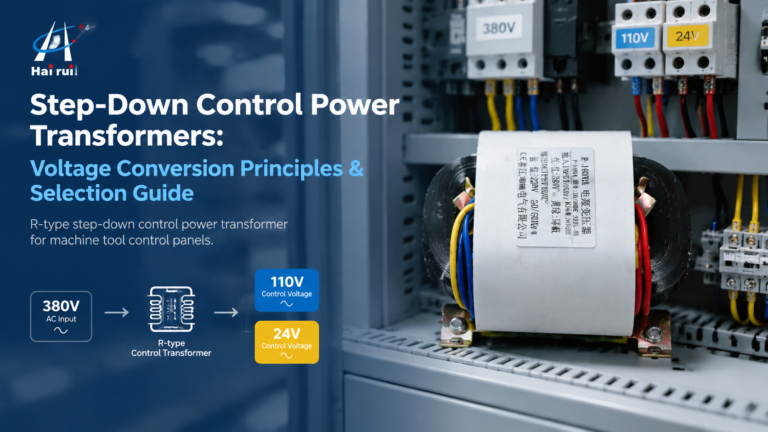
How step-down control power transformers convert 380V/480V line voltage to 110V or 24V control power: turns ratio, VA sizing with inrush, voltage-drop behaviour, wiring and selection.
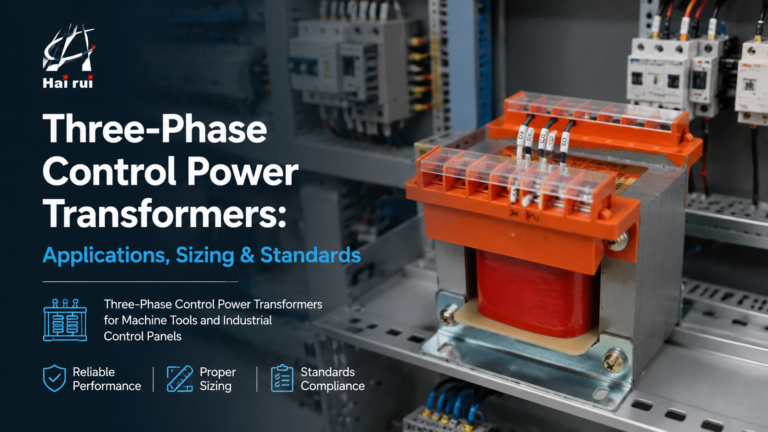
How three-phase control power transformers work, how to size them for machine tool and control-panel loads, and the delta/wye, standards and protection choices that matter in the field.