What Makes a Control Transformer Different From a Power Transformer?
Published: Author: Hairui Electric
Transformers are everywhere in electrical systems. But not all transformers serve the same purpose. If you work with industrial machines, HVAC equipment, CNC systems, or automation control panels, you’ve likely heard the term control transformer. So what makes a control transformer different from a power transformer?
In this article, we’ll explore their differences in function, features, applications, and how to choose the right one. By the end, you’ll know exactly why a control transformer matters—and why choosing a reliable manufacturer can improve the safety and efficiency of your system.
Let’s dive right in!
✅ What is a Control Transformer?
A control transformer is a specialized transformer designed to supply stable voltage to control circuits, not large power loads. Think of it as the reliable heart of the machine’s “brain” — providing clean and consistent power to controls like:
Contactors
Relays
PLC units
Signaling lamps
Sensors
Industrial automation panels
Control transformers protect sensitive equipment from voltage drops caused by sudden startup loads.
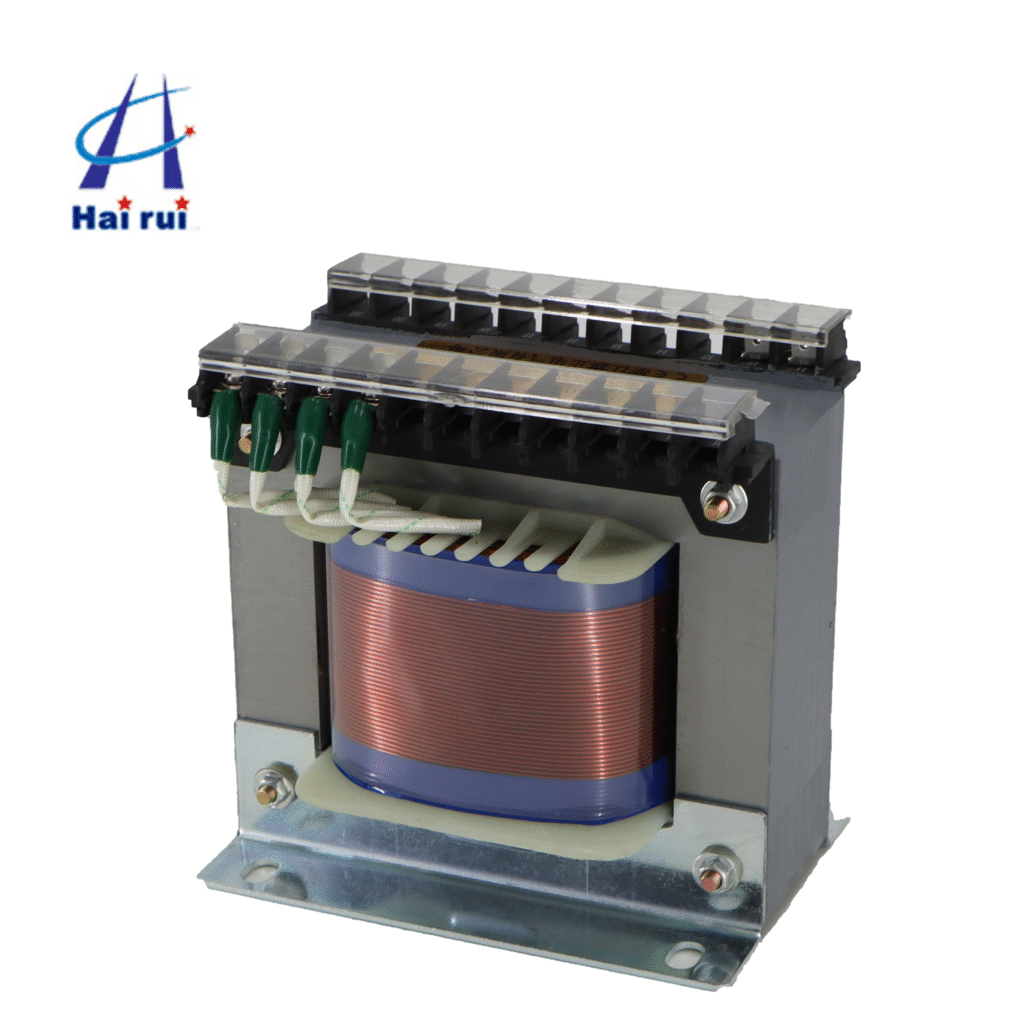
JBK3 Machine Tool Control Transformer
Here’s a simple way to understand it:
Feature
Control Transformer
Power Transformer
Purpose
Power for control circuits
Power for main systems / heavy loads
Voltage Stability
Very high
Moderate
Overload Handling
Excellent momentary overloads
Designed for continuous loads
Size
Small / compact
Larger
Application
Industrial control panels
Power distribution networks
Control transformers are often rated in VA (Volt-Ampere) rather than kilovolts. This ensures the power supplied to control components stays stable—even when motors suddenly start and draw large current spikes.
If your control circuit keeps malfunctioning, unstable control voltage may be the reason. A high-quality control transformer can solve it.
✅ Control Transformer vs Power Transformer — What’s the Real Difference?
Although both devices step voltage up or down, their design priorities are totally different.
A power transformer focuses on efficient energy transfer for high-power loads. It’s big, strong, and made for long-term, continuous operation supplying large networks.
A control transformer, on the other hand, is designed to handle short-term overload peaks to keep control devices working smoothly.
Think of them like athletes:
Power transformer = Marathon runner (long endurance)
Control transformer = Sprinter (handles fast peak demands)
Here’s a deeper technical comparison:
Characteristics
Control Transformer
Power Transformer
Load Type
Intermittent, fluctuating
Continuous, high-capacity
Voltage Regulation
Very good, prevents voltage drop
Standard
Rated Power
VA capacity (50VA–5000VA typical)
kVA/MVA
Response to Motor Loads
Holds voltage steady during inrush
Voltage may sag
Safety for Controls
High
Not specifically designed for controls
Typical Voltage
24V, 48V, 110V, 220V, 480V
10kV, 35kV, 220kV etc.
Why does this matter? Because control circuits are extremely sensitive. Even a small drop in voltage can trigger machine shutdown or safety alarms.
If you’re designing an automation cabinet or upgrading your industrial system, using a proper control transformer ensures:
✅ Longer equipment life ✅ Reduced downtime ✅ Increased safety ✅ Smooth startup of motors and controls
And that means fewer headaches for your maintenance team. If you want stable performance, ask about industrial-grade control transformers today.
✅ Why Control Transformers Matter in Industrial Control Panels
Control transformers are crucial in industries like:
HVAC
Packaging
Metal processing
Elevators
CNC machinery
Automation lines
Pump control panels
They protect the brain of the system so machines won’t crash due to unstable voltage.
Here’s how they actively improve performance:
Benefit
Description
Absorbs Inrush Current
Keeps voltage stable when motors start
Protects Controls
Prevents relay/PLC failure
Supports Safety Circuits
Ensures emergency stop systems stay powered
Noise Reduction
Cleaner power = fewer false signals
Imagine running an automated factory where a small voltage dip causes relays to drop out. That moment can stop an entire line… causing lost production and money.
Choosing a durable and well-designed control transformer is an investment in uninterrupted operation.
If you are sourcing control transformers for OEM equipment, now is the perfect time to get a quote.
✅ How to Select the Right Control Transformer
Choosing the right control transformer doesn’t have to be complex. Just consider these key factors:
1️⃣ Primary & Secondary Voltage Match the voltage of your power supply and control components.
2️⃣ VA Rating (Capacity) Higher VA rating = better handling overload peaks.
3️⃣ Frequency Compatibility 50Hz, 60Hz, or both.
4️⃣ Mounting Style Panel mount, DIN rail, or customized structure.
Tip: Choose a VA rating 20–50% higher than the calculated load for better reliability.
Still unsure? Send your load and control panel specs — a technical specialist can match the perfect control transformer for you.
✅ Common Applications of Control Transformers
You’ll see control transformers everywhere mechanical automation meets electricity:
Machine tools and CNCs
Conveyors
Textile equipment
Smart manufacturing
Robotics systems
Energy management controllers
Below is a quick application reference:
Industry
Typical Use
Voltage Output
HVAC
Fan motor control
24V
Elevators
Relay control
48V–110V
Factories
PLC control & sensors
24V–220V
Pumps
Safety interlocks
24V
Packaging
Motor start circuits
110V
Whenever safety or automation control exists, you’ll find a control transformer working silently behind the scenes.
If you are building or upgrading electrical equipment, choosing a reliable control transformer supplier ensures long-term stability.
A control transformer may look small, but its role is huge. It protects control circuits from unstable voltage, reduces machine downtime, and ensures every relay, PLC, and safety device works exactly as expected.
Let’s recap the key differences:
Control transformers provide stable voltage for automation controls → very high reliability
Power transformers deliver high-power supply for industrial and commercial electrical networks
If you are working with industrial automation, CNC machinery, pumps, or HVAC systems, using a high-quality control transformer is essential.
Need a trusted control transformer manufacturer or want to request pricing? Tell us your voltage and VA requirements — we’re happy to help you choose the perfect solution.
Thanks for reading — and may your control circuits always stay stable! ⚡😄
FAQ
Why not use a power transformer for control circuits?
Because power transformers cannot handle sudden inrush current that control circuits often experience, causing voltage drops and failure.
What is inrush current capability?
It means the ability to maintain stable voltage during short peaks in current—something control transformers are designed for.
Do control transformers support different voltage options?
Yes! Common secondary outputs: u003cstrongu003e24V, 48V, 110V, 220Vu003c/strongu003e.
Can I customize VA rating and size?
Absolutely. OEM customization is widely available for industrial customers.
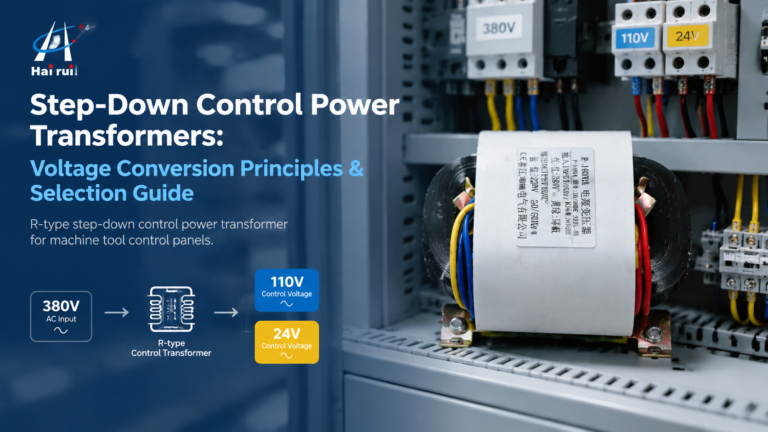
How step-down control power transformers convert 380V/480V line voltage to 110V or 24V control power: turns ratio, VA sizing with inrush, voltage-drop behaviour, wiring and selection.
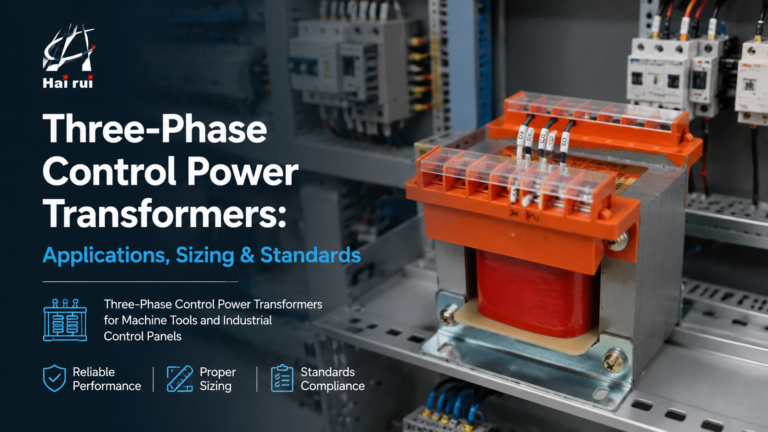
How three-phase control power transformers work, how to size them for machine tool and control-panel loads, and the delta/wye, standards and protection choices that matter in the field.