Dry type Transformer and oil-immersed 9 difference
Published: Author: Hairui Electric
Dry type Transformer are indispensable devices in power systems, responsible for the transmission and transformation of electrical energy. Among various types, dry type and oil-immersed transformer are the most common. With increasing industrial safety and environmental standards, dry-type transformers have become a focus for B2B customers due to their unique advantages.
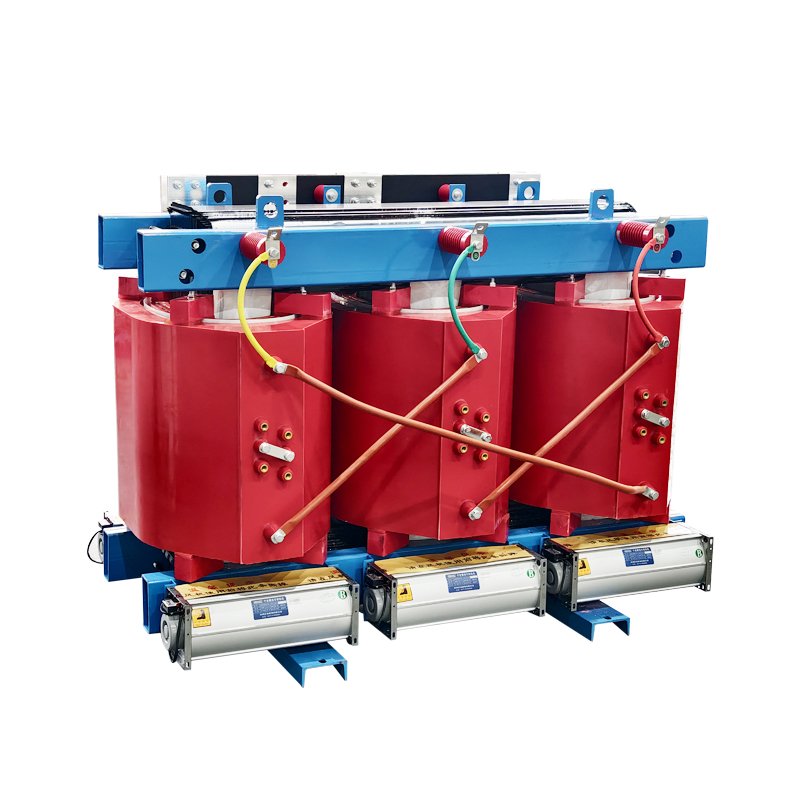
A dry-type transformer is a transformer that uses no liquid insulating medium; its insulation and cooling rely mainly on air. Common types include resin cast transformers and open-type transformers. These are widely used in locations requiring high safety and environmental protection, such as large commercial buildings, subway systems, and hospitals.
Type
Definition
Features
Resin Cast Transformer
Coil and core encapsulated with epoxy resin
Excellent fire resistance, suitable for high-safety sites
Open-type Dry Transformer
Exposed coils cooled directly by air
Faster heat dissipation, requires high dust and moisture protection
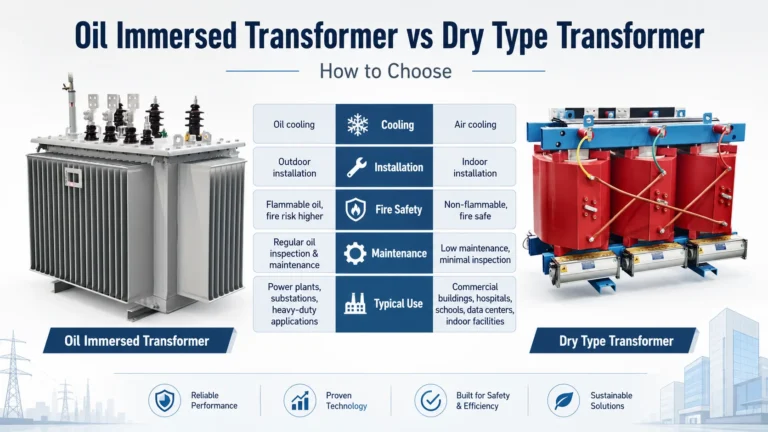
Core Differences Between Oil-immersed and Dry type Transformer
While dry-type transformers generally have higher upfront costs and are limited to medium and small capacities, their eco-friendly and low-maintenance nature often offsets these drawbacks. In contrast, oil-immersed transformers cover wider voltage and capacity ranges but need more rigorous safety and environmental control measures. Thus, the choice between them depends on specific operational, safety, and environmental needs.
Comparison Aspect
Dry-type Transformer
Oil-immersed Transformer
Cooling Medium
Air-cooled, natural or fan-assisted
Oil-cooled, oil circulates to radiators for heat dissipation
Maintenance
Simple maintenance, no oil testing or replacement needed
Requires regular oil quality check and maintenance
Safety
Oil-free, fire and explosion resistant, ideal for high safety areas
Oil is flammable, risk of leaks, needs safety safeguards
Environmental Impact
Environmentally friendly, no oil leakage risk
Risk of oil pollution, requires containment
Application Scenarios
Indoor, power distribution, high-rise buildings, hospitals
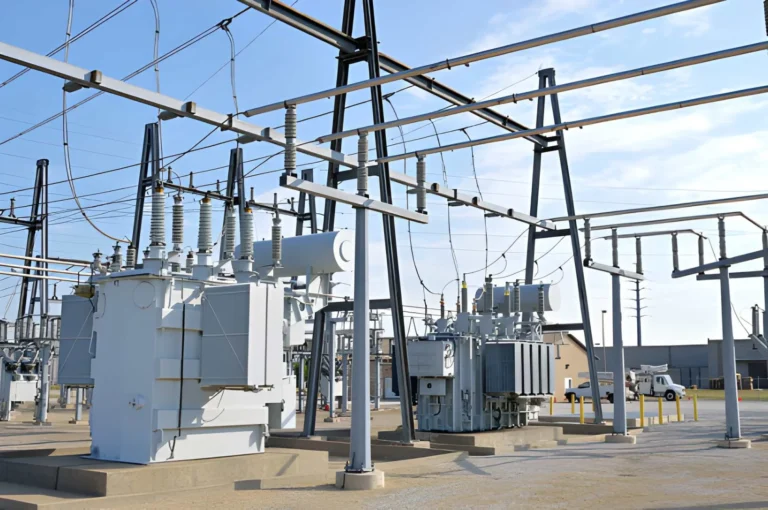
Outdoor, high capacity, high voltage load
Capacity & Voltage Range
Typically suitable for medium to small capacities (≤2500kVA), low voltage (≤35kV)
Wide range, from small to ultra-high voltage (up to 1000kV)
Cost
Higher purchase cost but saves on fire safety and environmental facilities
Lower initial cost but higher maintenance and safety expenses
Load Handling
Operates near rated capacity, limited overload capability
Good overload capacity, suitable for heavy loads
Structure
Coil and core visible, epoxy resin encapsulated or open structure
Sealed oil tank, coils immersed in insulating oil
Ready to upgrade your power system?
Ensure safety and efficiency with dry type transformer. Get your personalized quote today!
Advantages and Disadvantages of Dry-type Transformers
Advantage
1️⃣High Safety and Fire Resistance: Oil-free design greatly reduces fire and explosion risks, perfect for densely populated or high-safety locations.
2️⃣Environmentally Friendly: No oil leaks, green and compliant with environmental regulations.
3️⃣Easy Maintenance: No need for oil quality checks or oil replacement, saving labor and cost.
4️⃣Compact and Flexible Installation: Ideal for indoor use, space-saving, suitable for installation in buildings or factories.
Disadvantage
❶ Higher Initial Investment: Typically 20-30% higher purchase cost than oil-immersed transformers.
❷ Limited Cooling Capability: Requires controlled temperature and humidity; weaker overload capacity.
❸ Capacity Limits: Best suited for medium and small capacities; challenging for large loads.
Advantage
Explanation
Disadvantage
Explanation
High Safety
No oil fire risk, good explosion resistance
High Investment
Higher material and design costs
Easy Maintenance
No oil testing or change required
Cooling Limitations
Air cooling less efficient
Environmentally Friendly
No oil leakage, regulation-compliant
Capacity Restrictions
For medium and small loads only
Flexible Installation
Suitable for complex indoor environments
Sensitive to Humidity
Requires dust and moisture control
Industry Applications and Case Studies
Dry-type transformers are increasingly applied in industries requiring high safety, environmental protection, and reliability:
Industry
Applications
Selection Reasons
Commercial High-rises
Offices, Shopping Malls
Indoor installation, fire safety, easy maintenance
Medical Institutions
Emergency Rooms, Labs
Stable power, high safety standards
Subway and Rail Transit
Subway Stations and Equipment Rooms
Strict fire and explosion resistance
Data Centers
Server Rooms
Low noise, pollution-free, equipment safety
Renewable Energy
Wind and Solar Power Stations
Green, energy-saving, adaptable to environments
How to Choose a Dry type Transformer? Customer Guide
👉Consider Environmental Requirements If safety and environmental regulations are strict (e.g., indoor public buildings, hospitals), dry-type transformers are recommended.
👉Capacity Needs Dry-type transformers suit medium and small capacities (generally ≤2500kVA); oil-immersed transformers are better for larger loads.
👉Budget Consideration While dry-type transformers have higher upfront costs, they save on maintenance and safety costs in the long run.
👉Maintenance Resources Low maintenance needs suit customers with limited service resources.
👉Installation Conditions For indoor use, dry-type is preferable, especially where moisture and dust control can be ensured.
Selection Factor
Dry-type Transformer
Oil-immersed Transformer
Environmental Safety
High
Requires extra safety measures
Capacity Range
Medium and small
Wide range, including ultra-high
Initial Investment
Higher
Lower
Maintenance Frequency
Low
Higher
Suitable Installation
Indoor, high-rise buildings, hospitals
Outdoor and heavy load areas
Interested in dry-type transformers? Contact us to learn more about our products and customized solutions. We are ready to provide you with professional and efficient service.
Dry type transformer stand out as the preferred option for many safety- and environmentally-conscious locations due to their superior safety, environmental friendliness, and easy maintenance. Although they have a higher initial cost and limited load capacity compared to oil-immersed transformers, their long-term savings and safety benefits make them a key choice for sustainable power distribution.
By choosing wisely and applying appropriately, dry type transformers help businesses raise electric safety levels and contribute to sustainable development. If you’re seeking reliable, safe, and green power solutions, dry-type transformers are your trusted partner.
For more information or consultation, feel free to contact us. Let our experts tailor the best solution for your needs.
FAQ
u003cstrongu003e1. What is a dry type transformer?u003c/strongu003e
A dry-type transformer uses air instead of oil for insulation and cooling. It is safer, environmentally friendly, and ideal for indoor and high-safety environments.
u003cstrongu003e2. How often should I maintain a dry-type transformer?u003c/strongu003e
Maintenance is usually annual in clean environments and every six months in humid or dusty areas, focusing on cleaning and inspection.
u003cstrongu003e3. Can dry-type transformers be used outdoors?u003c/strongu003e
Yes, but typically only in moderate climate conditions and with proper protective enclosures to prevent moisture and dust ingress.
u003cstrongu003e4. What are the main advantages of dry type transformers over oil-immersed ones?u003c/strongu003e
They have higher fire safety, lower maintenance needs, no risk of oil leakage, and are more environmentally friendly.
u003cstrongu003e5. Are dry-type transformers suitable for large power capacities?u003c/strongu003e
They are best suited for medium and small capacities (generally ≤2500kVA). For larger capacities, oil-immersed transformers are more common.
u003cstrongu003e6. What causes a dry type transformer to overheat?u003c/strongu003e
Common causes include dust accumulation, loose connections, and prolonged overload conditions.
u003cstrongu003e7. How do I choose between a dry-type and an oil-immersed transformer?u003c/strongu003e
Consider your installation environment, safety requirements, capacity needs, budget, and maintenance resources.
u003cstrongu003e8. Is specialized training required to maintain dry-type transformers?u003c/strongu003e
Maintenance is simpler than oil transformers but requires knowledge of electrical safety and inspection of insulation and cooling systems.
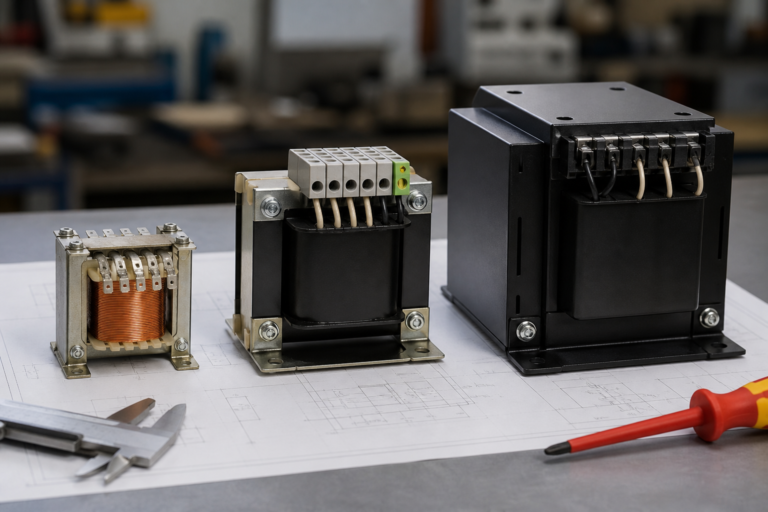
If you build, retrofit, or service CNC lathes, machining centers, or any automated production line, the control transformer you specify decides whether the cabinet powers up cleanly or trips at every cycle. This guide walks procurement engineers, panel builders, and OEMs through how to select and size a CNC machine tool control transformer with confidence […]
When buyers ask me whether an Oil Type Single Phase Transformer is still worth serious attention in a market full of bigger systems and louder marketing, my answer is simple: absolutely. In real distribution work, especially in rural lines, light commercial loads, street lighting, remote facilities, and utility edge networks, the right single-phase unit is […]