If you have ever sourced electrical components for an industrial panel, a machine tool, or a building automation system, you have probably come across the term control transformers. And if you are a buyer, engineer, or project manager, you have likely faced the classic question:
“Should I use a 24V or a 120V control circuit?”
At first glance, the difference seems simple — just a voltage level. In reality, this choice affects safety, compliance, wiring cost, component availability, reliability, and long-term operating cost.
This article is written for B2B decision-makers: engineers, system integrators, OEMs, procurement teams, and wholesalers. We will walk through:
- What control transformers do
- How 24V and 120V control circuits differ
- When each option makes more sense
- How this choice impacts suppliers, pricing, customization, and sourcing
Along the way, we will also look at common buying questions, market considerations, and a short FAQ.
Let’s start with the basics.
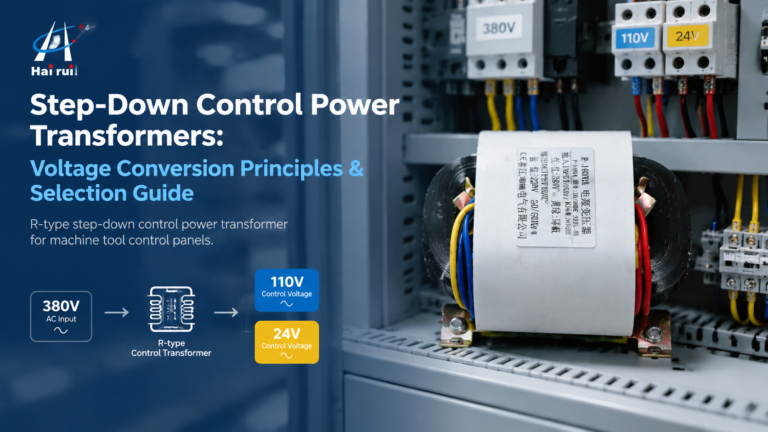
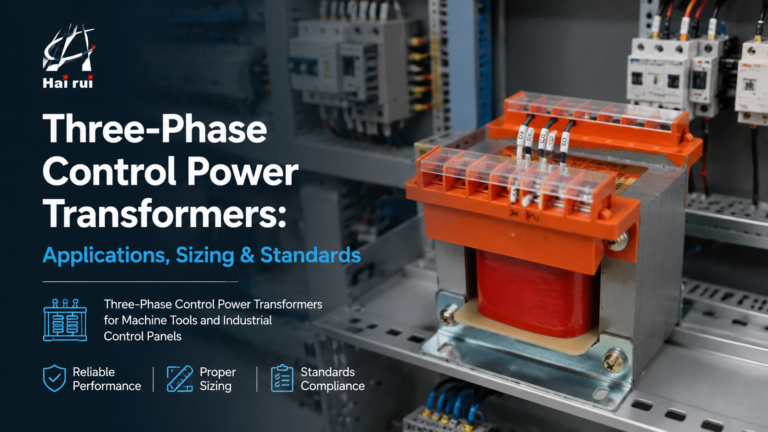
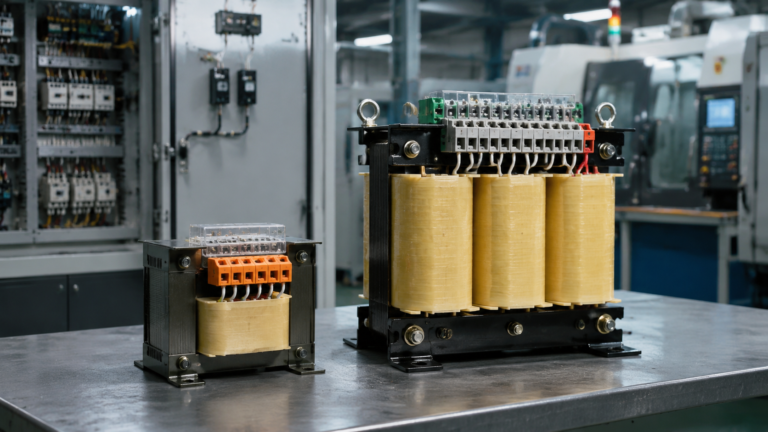
A control transformer is a specialized transformer designed to supply stable, low-voltage power to control circuits inside industrial and commercial electrical systems.
It steps down a higher line voltage (for example, 480V or 240V) to a safer and more usable control voltage such as 24V or 120V.
Typical loads powered by control transformers include:
- Contactors and relays
- PLC inputs and outputs
- Sensors and actuators
- Indicator lights and push buttons
- Timers, counters, and safety relays
The key role of a control transformer is voltage reduction with isolation, which improves safety, protects sensitive components, and stabilizes control power.
24V vs 120V Control Circuits — Core Differences
The primary difference between 24V and 120V control circuits is the voltage level, but the impact goes much further.
Overview Comparison
| Aspect | 24V Control Circuit | 120V Control Circuit |
|---|
| Typical standard | 24V AC or DC | 120V AC |
| Safety level | Very safe for humans | Higher shock risk |
| Component size | Small and compact | Larger components |
| Wiring | Thinner cables | Thicker insulation |
| Global standard | Widely accepted | Mainly North America |
| Energy consumption | Lower | Higher |
| Cost (components) | Often slightly higher | Often slightly lower |
This table gives a high-level view. Let’s go deeper.
Safety and Compliance
Safety is often the first reason engineers move toward 24V control circuits.
Safety Comparison
| Factor | 24V | 120V |
|---|
| Touch safety | Safe to touch | Dangerous |
| Arc flash risk | Very low | Moderate |
| Regulatory acceptance | Global | Region-specific |
| Lockout requirements | Less strict | More strict |
24V systems are considered “safe extra-low voltage” in many standards, including IEC and EN. This means technicians can work on control wiring with much lower risk of injury.
By contrast, 120V is classified as hazardous voltage. It requires stricter safety procedures, labeling, insulation, and personal protective equipment.
For companies operating globally or exporting machinery, 24V simplifies compliance and reduces legal exposure.
Control transformers are not only about stepping down voltage — they are about delivering stable and reliable power.
Reliability Comparison
| Parameter | 24V Control | 120V Control |
|---|
| Noise sensitivity | Lower | Higher |
| Signal interference | Less | More |
| Voltage drop impact | More sensitive | Less sensitive |
| Equipment life | Longer | Shorter in harsh conditions |
24V systems are often paired with modern electronics such as PLCs and sensors. These devices are designed for low voltage, low current operation and are less tolerant of voltage spikes.
120V systems, while robust for simple relays and coils, can introduce electrical noise and stress sensitive electronics.
Installation and Wiring
From a project cost perspective, installation matters just as much as component price.
Installation Comparison
| Installation Factor | 24V | 120V |
|---|
| Wire size | Smaller | Larger |
| Cable routing | Flexible | More restricted |
| Grounding | Simpler | More complex |
| Panel density | Higher | Lower |
With 24V, you can use thinner wires, route them more easily, and pack more components into the same cabinet.
120V wiring requires larger insulation spacing, stricter segregation from signal lines, and more careful routing.
Component Availability and Market Trends
From a sourcing perspective, availability matters.
Market Comparison
| Market Aspect | 24V | 120V |
|---|
| Global availability | Excellent | Limited |
| Automation compatibility | High | Medium |
| Smart factory readiness | High | Low |
| Supplier ecosystem | Very large | Smaller |
Most modern automation components are designed for 24V, especially in Europe and Asia. This means:
- More manufacturers
- More wholesalers
- More customization options
- Better long-term availability
120V is still widely used in North America, especially in legacy systems, but its growth is slower.
Cost and Pricing Considerations
Many buyers assume 120V is cheaper. That is sometimes true at the component level, but not always at the system level.
Cost Comparison
| Cost Factor | 24V | 120V |
|---|
| Transformer price | Slightly higher | Slightly lower |
| Wiring cost | Lower | Higher |
| Labor cost | Lower | Higher |
| Compliance cost | Lower | Higher |
In many projects, 24V systems end up being cheaper overall because they reduce installation time, safety measures, and long-term maintenance.
Typical Use Cases
24V Control Circuits Are Best For:
- PLC-based automation systems
- Food and beverage equipment
- Packaging machines
- Robotics and motion control
- Export equipment
120V Control Circuits Are Best For:
- Legacy industrial equipment
- Simple relay logic systems
- North American retrofit projects
- Small standalone machines
Buying from Suppliers, Wholesalers, and Manufacturers
When sourcing control transformers, buyers should consider more than just voltage.
Key Purchasing Factors
| Factor | Why It Matters |
|---|
| Load capacity (VA) | Prevents overheating |
| Inrush current rating | Protects coils and relays |
| Thermal class | Ensures long service life |
| Certifications | UL, CE, CSA compliance |
| Customization | Mounting, terminals, enclosure |
Many manufacturers and wholesalers offer customization, such as:
- Dual voltage primaries (240/480V)
- Multiple secondary outputs (24V + 120V)
- DIN rail or panel mounting
- IP-rated enclosures
For OEMs and system integrators, working directly with a control transformer manufacturer or specialized supplier can reduce cost and lead time.
Before placing an order, ask yourself:
- Where will this machine be used?
- Who will service it?
- What standards apply?
- Will it be exported?
- What is the long-term expansion plan?
Decision Summary
| Priority | Recommended Choice |
|---|
| Safety | 24V |
| Global compliance | 24V |
| Legacy compatibility | 120V |
| Automation | 24V |
| Simple retrofits | 120V |
If in doubt, 24V is usually the safer and more future-proof choice.
The difference between 24V and 120V control circuits goes far beyond voltage numbers on a datasheet.
It affects:
- Safety
- Compliance
- Reliability
- Installation cost
- Global usability
- Long-term maintenance
For modern automation, global deployment, and safety-focused design, 24V control transformers are usually the superior choice. For legacy systems and simple North American applications, 120V can still be practical and economical.
Understanding this difference allows engineers to design better systems, buyers to make smarter purchases, and manufacturers to deliver more competitive solutions.
In short: choose the voltage that supports not only your current project, but also your future business.
FAQ
What is the main function of a control transformer?
A control transformer reduces and isolates voltage to safely power control circuits such as relays, PLCs, sensors, and indicator devices.
Can I replace a 120V control circuit with 24V?
Yes, but it usually requires replacing coils, relays, and sometimes wiring. It is a design decision, not a drop-in change.
Is 24V always better than 120V?
Not always. For simple, local, low-cost, legacy systems, 120V can still be practical.
Do 24V systems require AC or DC?
Both are used. AC is common for coils, while DC is common for electronics and sensors.
How do I size a control transformer?
Add the VA ratings of all connected loads and include a safety margin of at least 25%.