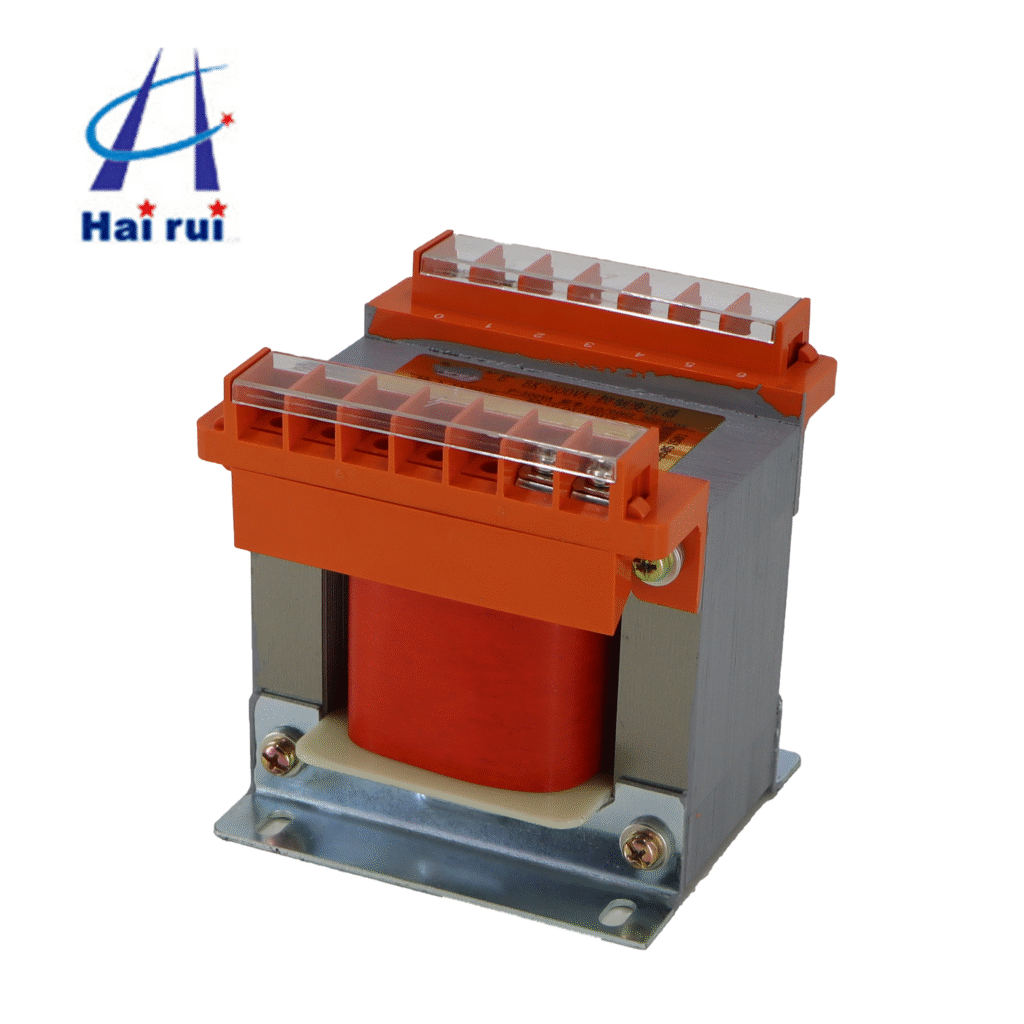
Buying a Control Transformer Prices sounds simple until you actually try to source one across borders. Suddenly, you are not just comparing a “price”—you are comparing standards, copper and steel exposure, certifications, lead time, logistics, payment terms, and how much customization a supplier is willing to do without turning your RFQ into a science project.
This article is written for B2B buyers, procurement teams, panel builders, and engineers who need to compare JBK3 Machine Tool Control Transformer pricing globally without being misled by apples-to-oranges quotes. We’ll keep it practical, slightly opinionated, and focused on what moves the final number on your purchase order.
What really drives control transformer pricing
When you see large price differences between similar-looking transformers, it is usually not “someone is expensive.” It’s that the underlying cost stack is different—or the quote is missing something important.
Here are the most common drivers:
Raw materials: copper windings and core steel typically dominate the bill of materials; market commentary on transformer costs repeatedly points to copper and electrical steel as major cost inputs.
Design margin for inrush and voltage stability: control transformers often need to tolerate high inrush currents from contactors and solenoids without excessive secondary voltage drop (this requirement can push a design into heavier copper and larger cores).
Compliance and certification: UL/CSA or IEC compliance changes insulation systems, spacings, markings, test regimes, and documentation. For example, many industrial control circuit transformers are marketed as compliant to UL 5085-1 / UL 5085-2 and EN/IEC 61558.
Manufacturing model: a true manufacturer quoting ex-works is very different from a wholesaler quoting DDP with inventory risk baked in.
Commercial terms: Incoterms, payment terms, warranty, and after-sales support can easily outweigh a small unit-price delta.
Cost drivers at a glance
Cost driver
What it changes in the product/offer
Typical effect on price
Buyer takeaway
Copper & core steel markets
Winding mass, core size, losses
Medium to high
Ask for quote validity window; avoid “open-ended” pricing
Required standards (UL/CSA vs IEC)
Insulation, spacings, labeling, tests, docs
Medium
Specify destination market and required marks up front
VA rating + inrush tolerance
Copper size, thermal headroom
Medium
Provide load type (contactors/solenoids) not just VA
Global differences: why the “same transformer” costs different in different regions
Global comparison is not just geography—it’s infrastructure around the product: certification ecosystems, distribution patterns, freight lanes, and common specs.
A practical way to think about it:
North America tends to price in UL/CSA expectations, documented traceability, and distributor support.
Europe/UK often centers on IEC/EN 61558 alignment, panel integration conventions, and touch-safe requirements.
Asia (including China) frequently competes on manufacturing scale and customization speed, but pricing can swing depending on certification scope and whether you need third-party test evidence.
Middle East / LatAm / Africa sourcing often depends heavily on import logistics, agent structures, and availability of compliant alternatives.
Regional comparison table (procurement reality, not stereotypes)
Missing test docs unless asked; differences in interpretation of “equivalent”
India / South Asia
Mixed IEC + local approvals
Manufacturers + wholesalers
Competitive pricing, variable lead time
Specification drift unless drawings are controlled
Middle East
Project-driven specs
Importers/wholesalers
CIF/DDP common
Freight, duties, and documentation can overshadow unit-price savings
If you only remember one thing: the cheapest unit price is rarely the cheapest landed, compliant, and accepted unit.
Suppliers, wholesalers, manufacturers: how the channel changes the price
Many buyers compare quotes without noticing they’re comparing different business models.
Manufacturer (direct): best for customization, engineering support, and stable long-term pricing—especially if you can forecast volumes.
Wholesaler: useful when you need mixed SKUs quickly, but you pay for inventory risk and consolidation.
Authorized distributor: often highest unit price, but fastest delivery, local returns, compliance confidence, and paperwork support.
Trading company / broker: can be cost-effective, but quality and traceability depend on how they control the upstream factory.
Channel comparison table
Channel type
Strengths
Where it’s risky
Best fit for
Manufacturers
Customization, engineering, cost-down at scale
Longer setup time; MOQ for custom
OEMs, panel builders, repeat projects
Wholesalers
Quick consolidation, mixed items
Limited customization; variable documentation
Maintenance spares, small batches
Distributors
Fast lead time, local support
Higher prices, fixed catalog options
Urgent projects, strict compliance needs
Brokers/agents
Price shopping, sourcing flexibility
Traceability and consistency
Non-critical replacements (only with strong QA)
If you are building a long-term supply chain, the “supplier type” question matters as much as the unit price. This is also where long-tail procurement terms—suppliers, wholesalers, manufacturers, customization—start to change the economics.
Specification choices that move the price fast
Engineers often define a transformer with a few headline specs (primary/secondary voltage and VA). Procurement then receives quotes that vary wildly. The reason is that control transformer design includes many “silent” decisions.
Here are the spec items that typically shift pricing the most:
Spec-to-price impact table
Spec decision
What it changes
Typical price impact
Practical guidance
VA rating with inrush loads
Copper mass + thermal design
Medium to high
Describe load type (contactors/solenoids), duty cycle
Multi-tap primary
Additional windings/leads
Low to medium
Helpful for global panels (e.g., 200/220/380/400/415/480V)
50/60 Hz dual frequency
Core sizing and losses
Low to medium
If exporting, ask for 50/60 Hz design explicitly
Temperature rise / insulation class
Material system, winding design
Medium
Higher class costs more but improves reliability
Enclosure / IP rating
Sheet metal, sealing, touch-safe
Low to medium
If inside a cabinet, you may not need high IP
Noise/vibration limits
Core build and varnish processes
Low
Specify only if required—otherwise you pay for quiet you don’t need
Compliance marks
Testing, audits, labeling
Medium
Align requested standard with end-market requirements
A quick joke that is painfully true: the fastest way to increase transformer cost is to say “just make it to every standard.” Pick the standards that match your market and customer requirement, and your quotes become comparable.
How to compare quotes globally without getting tricked
If you want meaningful comparisons of Control Transformer Prices, you need a consistent RFQ structure. Otherwise, one supplier quotes the bare device EXW, another quotes with terminal cover + inspection report + export packaging, and you end up debating whose “price” is real.
A solid RFQ does two things:
Locks the technical scope.
Locks the commercial scope.
RFQ checklist table (use this to standardize offers)
RFQ item
Why it matters
What to write (example)
Electrical specs
Prevents under-designed quotes
Primary/secondary volts, VA, taps, 50/60 Hz
Load description
Inrush drives design
“Feeds contactor coils, 10× inrush possible”
Required compliance
Affects build + docs
“UL 5085-1/2 + CSA, or IEC/EN 61558 per project”
Mechanical interface
Avoids mounting surprises
Dimensions, mounting pattern, terminal type
Accessories
Often omitted to look cheaper
Touch-safe covers, fuse holders, brackets
Testing/documents
Impacts acceptance
Hi-pot report, routine test record, labeling photos
Incoterms
Changes landed cost
EXW/FOB/CIF/DDP (state destination)
Packaging
Prevents transit damage
Export carton + pallet + moisture protection
Warranty & lead time
Real operational cost
Warranty months + promised production lead time
A simple rule: if a quote is dramatically lower, assume something is missing until proven otherwise—usually accessories, certification scope, or shipping terms.
Pricing strategy for B2B buyers: cost-down without quality surprises
Once you have comparable quotes, you can optimize cost the same way experienced procurement teams do: by reducing uncertainty and aligning incentives.
Here are the levers that typically work well in industrial electrical sourcing:
Standardize a small family of part numbers across multiple panels/projects.
Dual-source where practical (one local distributor for emergencies, one direct manufacturer for base volume).
Bundle customization: instead of custom on every order, freeze one custom design and repeat it.
Use framework pricing tied to agreed assumptions (e.g., raw material adjustment windows), rather than re-quoting every time.
Market pressure and supply chain constraints have affected transformer lead times and pricing volatility in the broader transformer space, especially when demand spikes and materials tighten. Even if your control transformer is smaller than a utility transformer, the same raw material realities often ripple through.
Cost-down levers table
Lever
Why it reduces cost
What to ask suppliers/manufacturers
MOQ planning
Reduces setup + procurement overhead
“Price at 50/100/300 pcs with same spec”
Blanket order
Stabilizes production
“Quarterly releases, fixed spec for 12 months”
Controlled customization
Avoids re-engineering
“One drawing revision, locked BOM after approval”
Packaging optimization
Cuts freight damage + cost
“Drop-test packaging; pallet size optimization”
Incoterms optimization
Removes hidden costs
“Compare FOB vs DDP side-by-side”
QA alignment
Reduces incoming failures
“Routine test sheet format + acceptance criteria”
If you want a practical next step: send one RFQ with your target annual volume and your must-have compliance marks. Serious suppliers respond differently when they know you are building a program, not buying a one-off.
And yes—this is the moment for a gentle nudge: if you are ready to benchmark suppliers or request a fast quotation with optional customization, sending an inquiry with your spec sheet and destination country will usually get you better pricing and cleaner documentation.
Compliance and standards: why they affect price (and acceptance)
For B2B buyers, compliance is not paperwork—it’s project risk. If your end customer rejects a transformer for missing markings or mismatched standards, the “cheaper” option becomes the most expensive.
Two common frameworks appear in industrial control transformer sourcing:
UL 5085 (North America): UL describes UL 5085-1 as covering general requirements for low-voltage transformers (up to 600 V in the U.S. context).
IEC 61558 (global / Europe-aligned): IEC publishes IEC 61558 parts covering safety requirements for transformers and related power supply units; for example, IEC 61558-2-6 addresses safety isolating transformers.
Many industrial catalog lines explicitly claim compliance to both UL 5085 and EN/IEC 61558, which can simplify global panel builds when done correctly.
Standards impact table
Standard family
Where it commonly matters
What it changes for pricing
Buyer tip
UL 5085 (1/2)
U.S./Canada industrial control panels
Test program, markings, insulation system
Ask for evidence of scope (what exactly is certified)
IEC/EN 61558
Europe and many export markets
Safety design expectations, documentation
Specify the exact part(s) relevant to your application
Mixed claims (“meets”)
Everywhere
Sometimes marketing-only
If you need formal acceptance, request test reports or certification details
A helpful mindset: compliance costs money, but non-compliance costs schedules.
Comparing Control Transformer Prices globally is absolutely doable—but only if you compare complete offers. The unit price is just the headline. The real story is underneath: compliance scope, inrush capability, documentation, accessories, Incoterms, and lead time.
If you standardize your RFQ and evaluate suppliers (manufacturers, wholesalers, or distributors) based on landed, compliant, accepted cost, pricing becomes far less mysterious. You also gain leverage: when suppliers know you are comparing fairly, they compete on what matters—design correctness, documentation, reliability, and sustainable commercial terms.
FAQ
Why do quotes for the same VA rating vary so much?
Because “same VA” can still mean different inrush tolerance, insulation class, enclosure, and compliance scope.
Are direct-from-manufacturer prices always lower?
Often, yes on unit price—but not always lower on landed and risk-adjusted cost if you need local stock or support.
What should I include to get accurate control transformer pricing?
Not always. One-time engineering may add cost, but repeated orders of a frozen custom design can be cheaper than repeatedly buying “near-fit” catalog items.
Should I buy from wholesalers or manufacturers?
Wholesalers are great for speed and mixed SKUs; manufacturers are best for programs, customization, and cost-down at scale.
How can I reduce risk when sourcing globally?
Standardize RFQs, request routine test records, clarify compliance scope, and compare offers on the same Incoterms.
When you’re sourcing electrical components for industrial systems, you’ll quickly realize that control transformers are not one-size-fits-all. They come in a wide range of types and configurations, each designed to suit different control circuits and operational environments. Whether you’re an engineer, a procurement specialist, or an industrial equipment wholesaler, understanding these variations can make a big difference in performance, reliability, […]
When you think about powering modern industrial systems, control transformers Wiring play a crucial role that often goes unnoticed. These compact devices step down voltage levels to safely supply control circuits, motor starters, and automation equipment throughout facilities worldwide. But getting the wiring right? That can make all the difference between smooth operations and costly […]
In today’s competitive manufacturing and automation world, Industrial Control Transformer power stability is everything. When you’re running machines 24/7, a single voltage drop or short circuit event can cause unwanted downtime—and in industries like processing or automation, downtime equals lost revenue. That’s where an industrial control transformer steps in. Let’s break down why this small but crucial component deserves […]
We use cookies to enhance your browsing experience, serve personalised ads or content, and analyse our traffic. By clicking "Accept All", you consent to our use of cookies.