The Purpose of a Standard Control Transformer Why It Matters for Industrial Power Systems
Published: Author: Hairui Electric
In every industrial facility, behind the hum of machines and the glow of control panels lies a quiet hero — the standard control transformer. It doesn’t grab headlines or require much attention, but without it, the electrical systems that monitor, automate, and protect your operation simply wouldn’t function reliably.
In this article, we’ll take a closer look at the purpose of a standard control transformer, its role in industrial automation, common types and specifications, and how engineers and procurement professionals can choose the right model for their application. Whether you’re designing a new control panel or upgrading existing equipment, understanding this key component will help you build safer, more efficient electrical systems.
What Is a Standard Control Transformer?
A standard control transformer, also called an industrial control transformer or machine tool transformer, is a special type of step-down transformer that provides stable voltage to control circuits and auxiliary devices. Unlike a power transformer, which transmits energy over long distances, a control transformer is designed to handle smaller loads with high voltage stability—even during short bursts of high inrush current.
In simpler terms: it supplies clean, stable low-voltage power (such as 24 V, 110 V, or 230 V) to control components like contactors, relays, timers, and sensors. By isolating these low-voltage circuits from the main power supply, it reduces electrical noise and protects delicate control equipment from surges and faults.
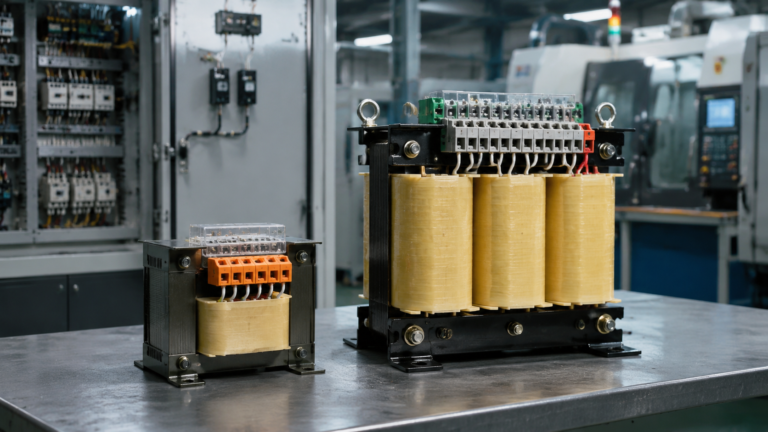
JBK3 Machine Tool Control Transformer
Why Is a Control Transformer So Important?
Imagine running a large automated assembly line. One voltage drop or surge could disrupt sensors, reset controllers, or even stop production. That’s exactly what a standard control transformer prevents.
The main purposes of a control transformer include:
Voltage Regulation: It ensures consistent voltage to control devices, regardless of fluctuations in input power.
Electrical Isolation: It separates the primary power circuit from secondary control circuits, ensuring operator safety.
Surge Protection: It helps absorb transients and prevent damage to low-voltage electronics.
Reduced Downtime: By maintaining signal stability, it minimizes system interruptions.
Enhanced Equipment Lifespan: Regular, clean voltage reduces wear on sensitive control devices.
Function
Description
Benefit to Industrial Systems
Voltage regulation
Maintains constant output regardless of load
Prevents control errors and overloads
Electrical isolation
Separates primary and secondary windings
Ensures operator safety
Noise filtering
Reduces harmonic and transient interference
Improves signal accuracy
Surge absorption
Handles high inrush currents safely
Protects control devices
Energy efficiency
Converts input voltage efficiently
Reduces operational costs
Common Applications in Industry
Control transformers are everywhere in industrial automation and electrical control systems. You’ll find them in:
Motor control centers (MCCs) — Supplying voltage to contactors and relays
CNC machinery — Providing stable voltage for precision control units
HVAC systems — Ensuring smooth operation of thermostats and control boards
Conveyor automation lines — Stabilizing power for sensors and actuators
Panel building — Used by OEMs and system integrators to design control cabinets
Engineers often pair industrial control transformers with circuit breakers, PLCs, frequency drives, and motor starters, forming the core of any modern control panel design.
How a Control Transformer Works
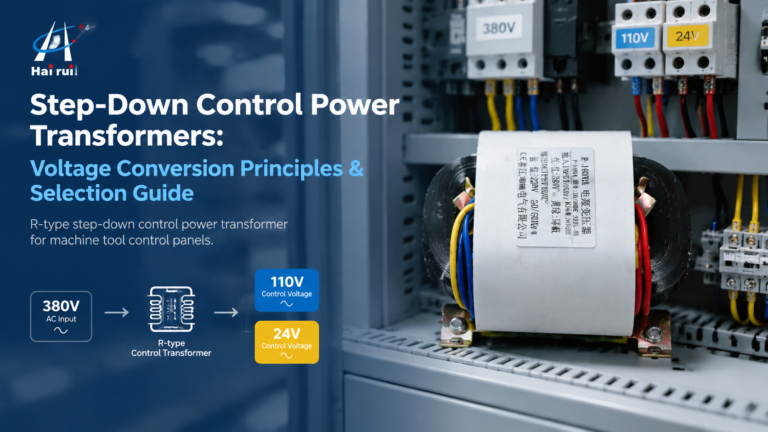
A control transformer works on basic electromagnetic induction. The primary winding connects to the input voltage (e.g., 480 V AC), and the secondary winding delivers the required lower voltage (e.g., 120 V or 24 V) to the control circuit. A laminated steel core in between the windings enhances magnetic flux while minimizing losses.
When the load suddenly demands more current—say, a relay energizes—the transformer absorbs the inrush without causing a large dip in voltage. That’s why its volt-ampere (VA) rating and impedance are crucial specs for engineers to evaluate.
Key Parameters to Consider When Selecting a Control Transformer
When specifying a control transformer, choosing the right one isn’t just about voltage. It’s about performance, safety, and reliability over time. Below are the most important parameters to review before purchasing.
Parameter
What It Means
Recommendation
Primary Voltage
Line voltage the transformer connects to (e.g. 240V, 480V)
Match your supply line
Secondary Voltage
Output voltage for control circuits (typically 24V, 120V)
Match device requirements
VA Rating
Indicates load capability in volt-amperes
Choose 125–5000 VA depending on load
Frequency
50 Hz or 60 Hz operation
Select according to local grid
Temperature Class
Determines thermal endurance of insulation
Higher class = longer lifespan
Efficiency
Ratio of output power to input power
Target ≥95% for energy efficiency
Tip for engineers: Always include a buffer — select a transformer with at least 25% higher VA than your total connected control load to handle inrush without voltage drop.
The Difference Between a Standard and Isolation Transformer
You might wonder: isn’t a control transformer just an isolation transformer?
They share similarities in construction, but their design targets differ. A standard isolation transformer focuses on voltage separation, while a control transformer emphasizes voltage stability and inrush performance. That’s precisely why control transformers use heavier cores and superior laminated materials to handle short-duration overloads.
Aspect
Control Transformer
Isolation Transformer
Purpose
Stable low-voltage supply for control circuits
Safety isolation between circuits
Load Type
Intermittent or variable control loads
General-purpose equipment loads
Inrush Handling
Excellent
Moderate
Efficiency
High under intermittent duty
High under continuous duty
Application
Industrial control panels, machinery
Medical equipment, data centers
Benefits for Engineers and Procurement Teams
For engineers designing control systems, choosing the right transformer ensures smooth performance and less troubleshooting down the road. For purchasers or sourcing managers, reliable standard control transformer suppliers mean fewer warranty issues and consistent specification compliance.
Key benefits include:
Improved system reliability — Stabilizes voltage for PLCs, relays, and signaling systems.
Compliance with international standards — UL, CE, and RoHS certifications ensure safety.
Customizability — Transformers can be tailored for multi-voltage inputs or specific VA ratings.
Lower lifecycle cost — High efficiency reduces energy losses and heat dissipation.
If your team is currently sourcing control transformers for OEM control panels, consider requesting quotes or datasheets from reputable manufacturers with proven test reports and after-sales support.
Trends in Control Transformer Technology
Modern transformer design is evolving, just like the rest of the industrial automation sector. Some recent innovations include:
Encapsulated epoxy resin cores for moisture resistance in harsh environments.
Compact and modular designs to save cabinet space.
Smart transformers with built-in temperature and overload monitoring.
Energy-efficient materials that reduce losses up to 10%.
Many factories now demand transformers with eco-friendly insulation and recyclable cores to meet sustainability goals and ESG compliance requirements.
How to Maintain a Control Transformer
A transformer may seem maintenance-free, but regular checks can significantly extend its life:
Inspect for overheating or discoloration of windings.
Tighten terminal screws periodically to prevent arcing.
Check insulation resistance annually.
Clean ventilation paths to avoid dust accumulation.
Listen for humming — noise can indicate loose components or overload.
Preventive maintenance not only saves money but also prevents downtime — a top concern for industrial automation managers.
Now that you understand the purpose of a standard control transformer, you can see why it’s such a fundamental piece of electrical infrastructure. It ensures safety, performance, and longevity across countless industrial applications — from automation lines to HVAC systems.
Whether you’re an engineer designing new control circuits or a procurement manager evaluating product specs, choosing the right control transformer is key to maintaining stable, dependable operations.
If you’re sourcing high-quality industrial control transformers, consider reaching out for a quote or technical consultation today — reliable voltage starts with the right transformer.
FAQ
u003cstrongu003eWhat is the main purpose of a standard control transformer?u003c/strongu003e
To provide stable, isolated low-voltage power for control circuits in industrial systems.
u003cstrongu003eHow do you size a control transformer?u003c/strongu003e
Add up the total VA of connected devices, then choose a transformer rated at least 25% above that total to handle inrush current.
u003cstrongu003eCan I use a standard power transformer instead?u003c/strongu003e
Not recommended. Power transformers are not designed to handle the frequent inrushes and switching transients typical in control circuits.
u003cstrongu003eWhat are common voltages for control transformers?u003c/strongu003e
Primary: 230V, 380V, or 480V. Secondary: 24V, 110V, or 120V AC.
u003cstrongu003eHow long does a control transformer last?u003c/strongu003e
Typically 10–20 years with proper ventilation, loading, and maintenance.
u003cstrongu003eWhere should I buy industrial control transformers?u003c/strongu003e
Partner with certified suppliers or manufacturers offering flexible configurations and after-sales technical support. For inquiries or custom specs, feel free to contact the supplier directly.
How step-down control power transformers convert 380V/480V line voltage to 110V or 24V control power: turns ratio, VA sizing with inrush, voltage-drop behaviour, wiring and selection.
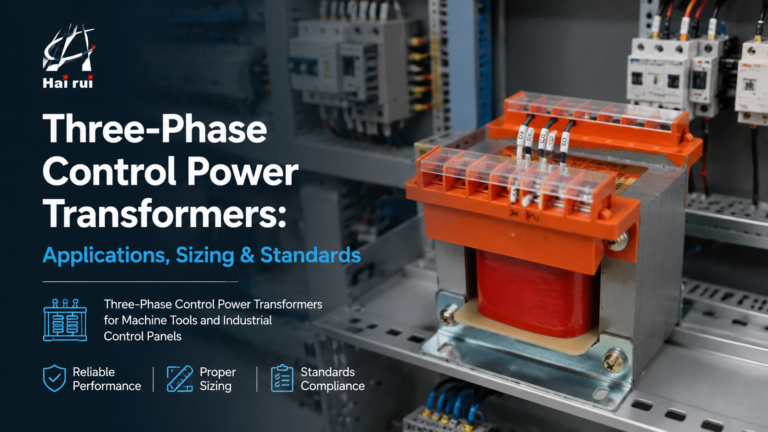
How three-phase control power transformers work, how to size them for machine tool and control-panel loads, and the delta/wye, standards and protection choices that matter in the field.