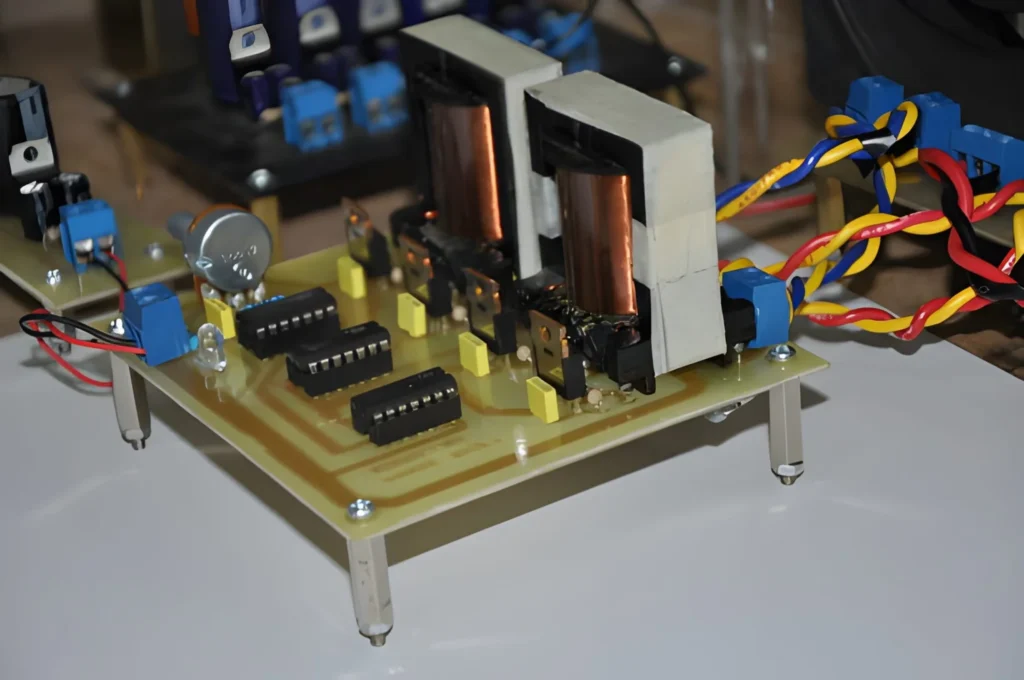
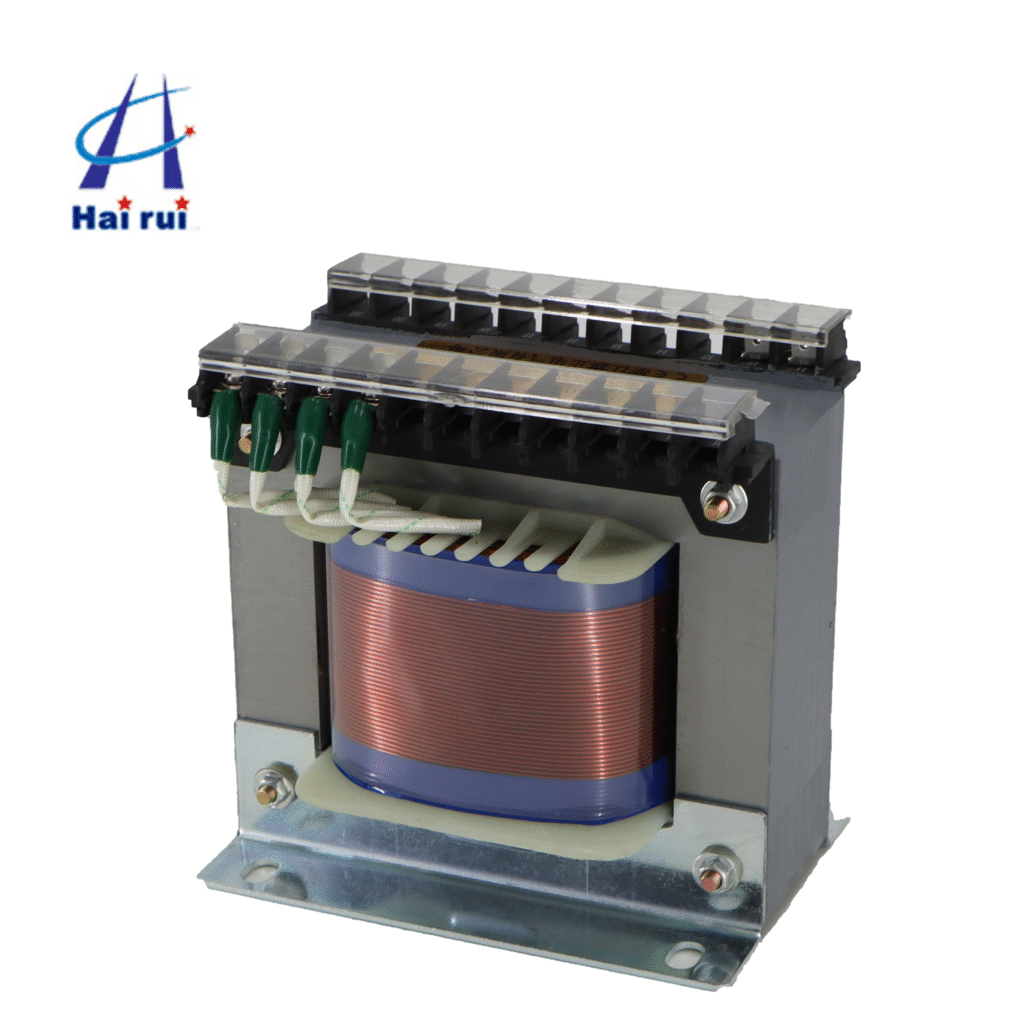
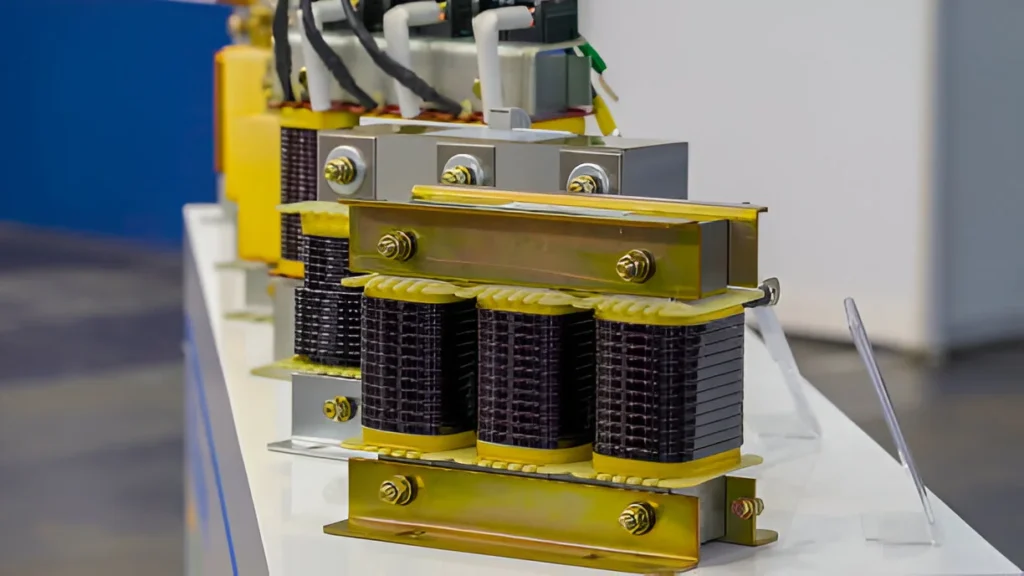
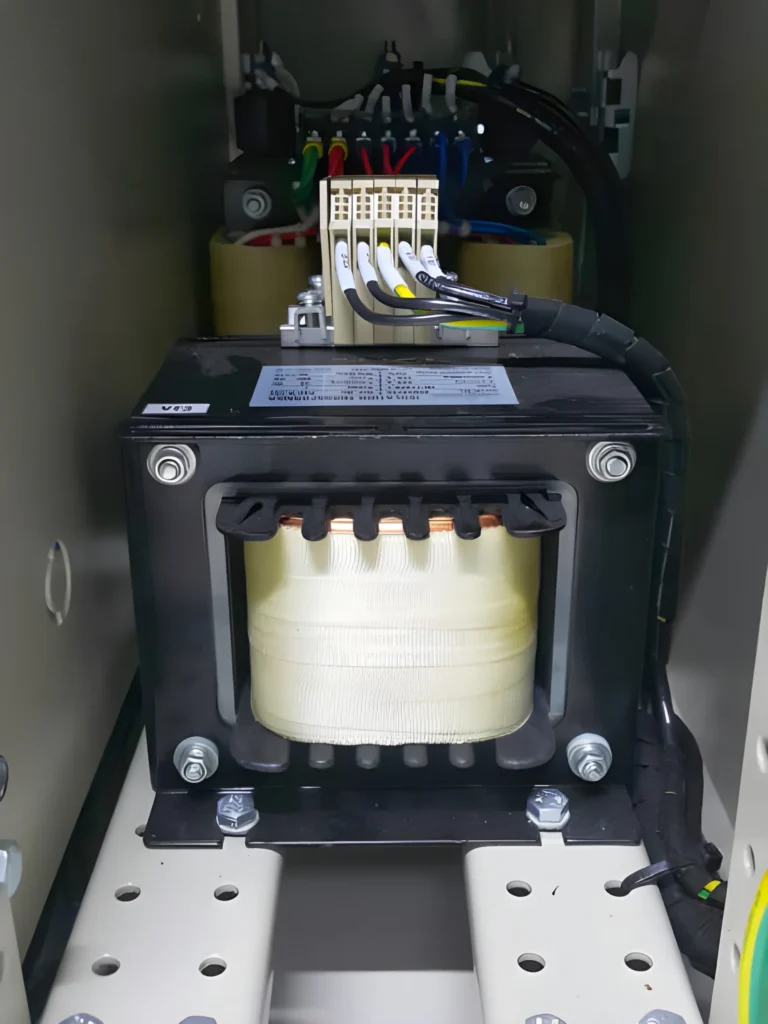
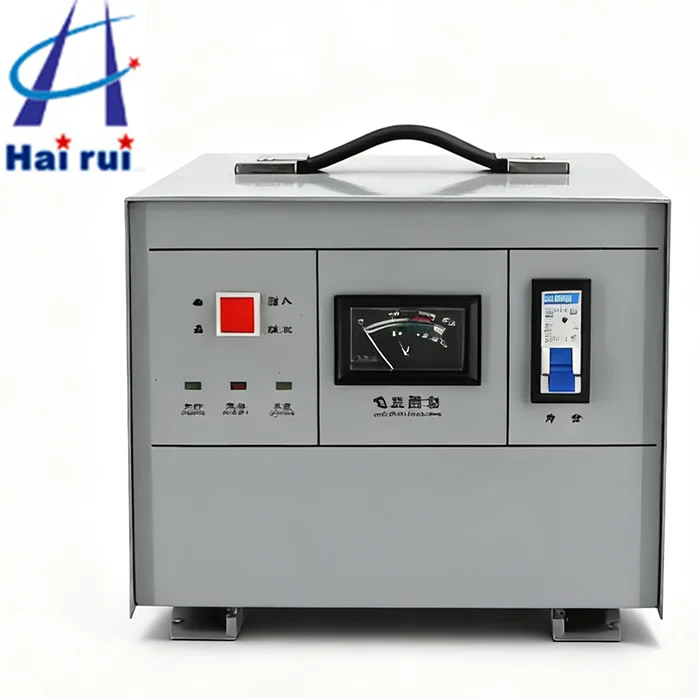
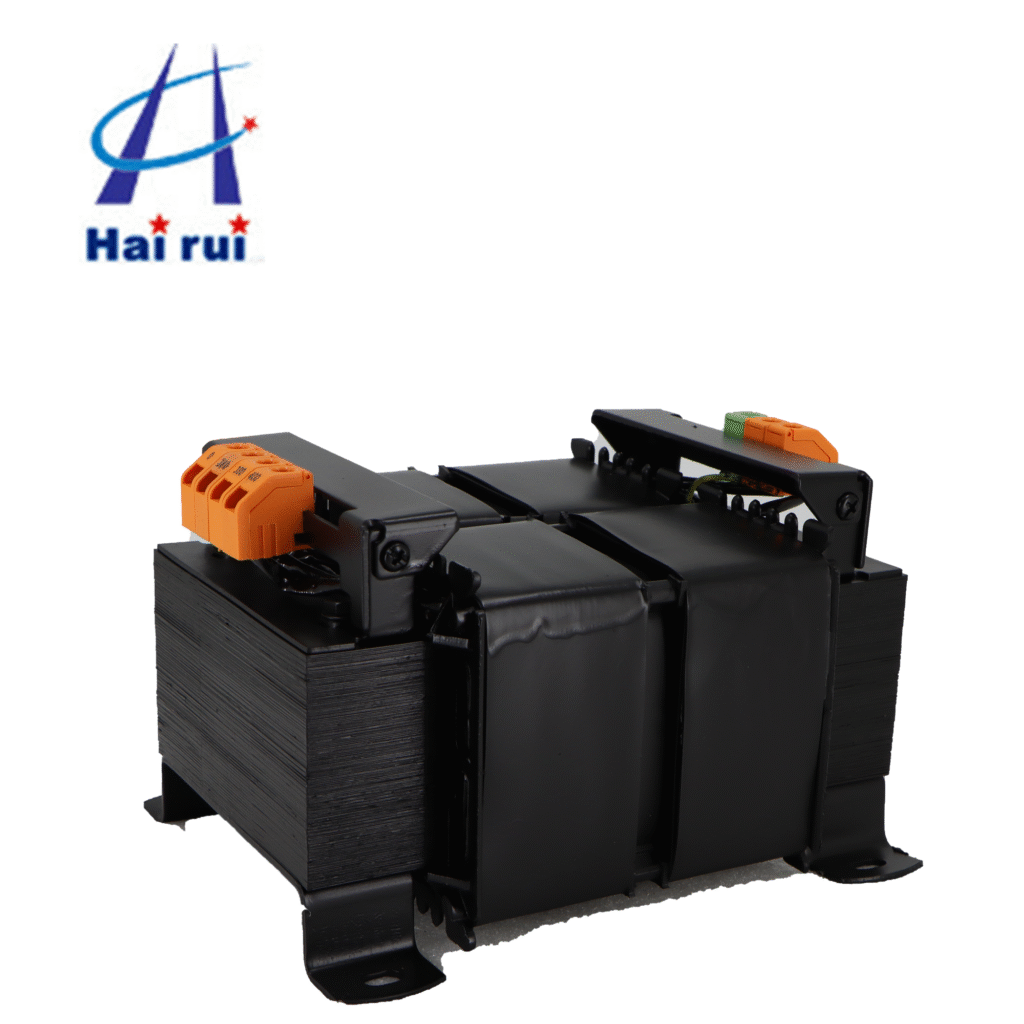
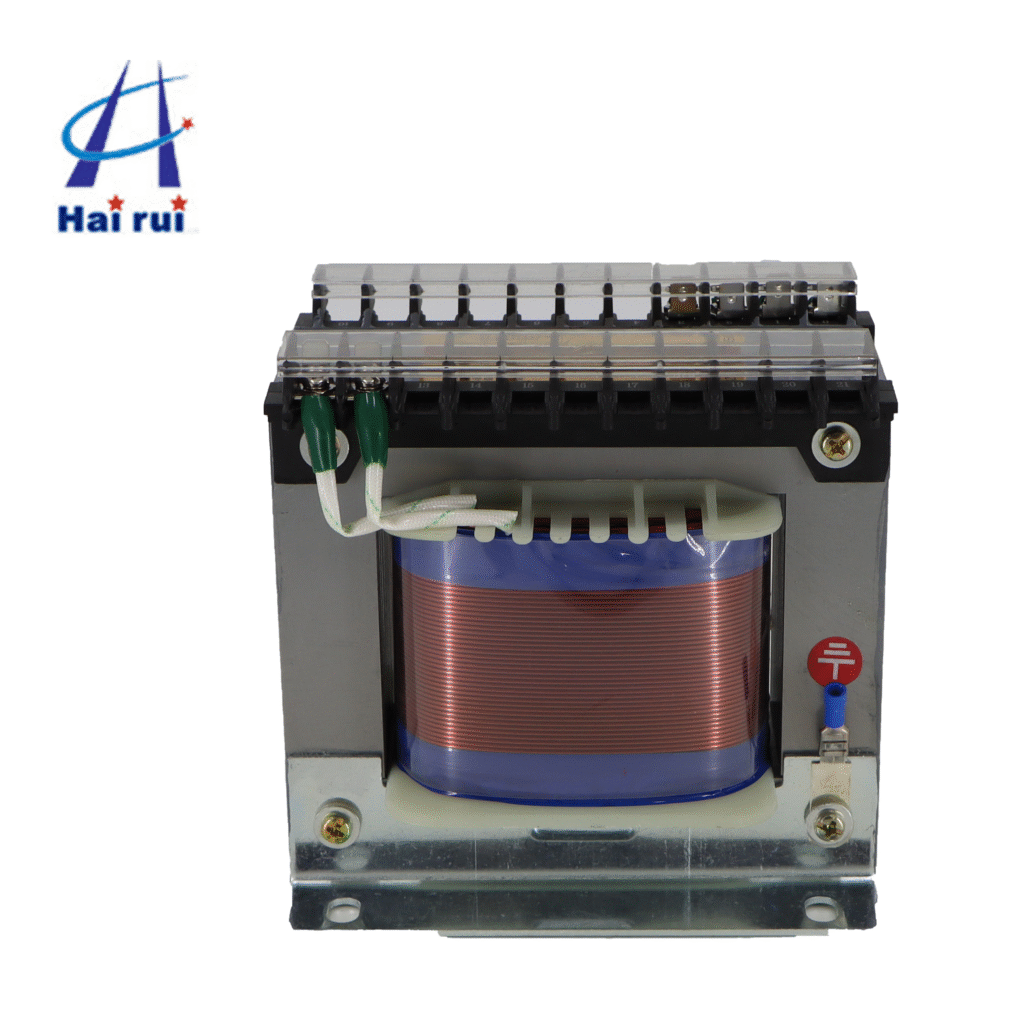
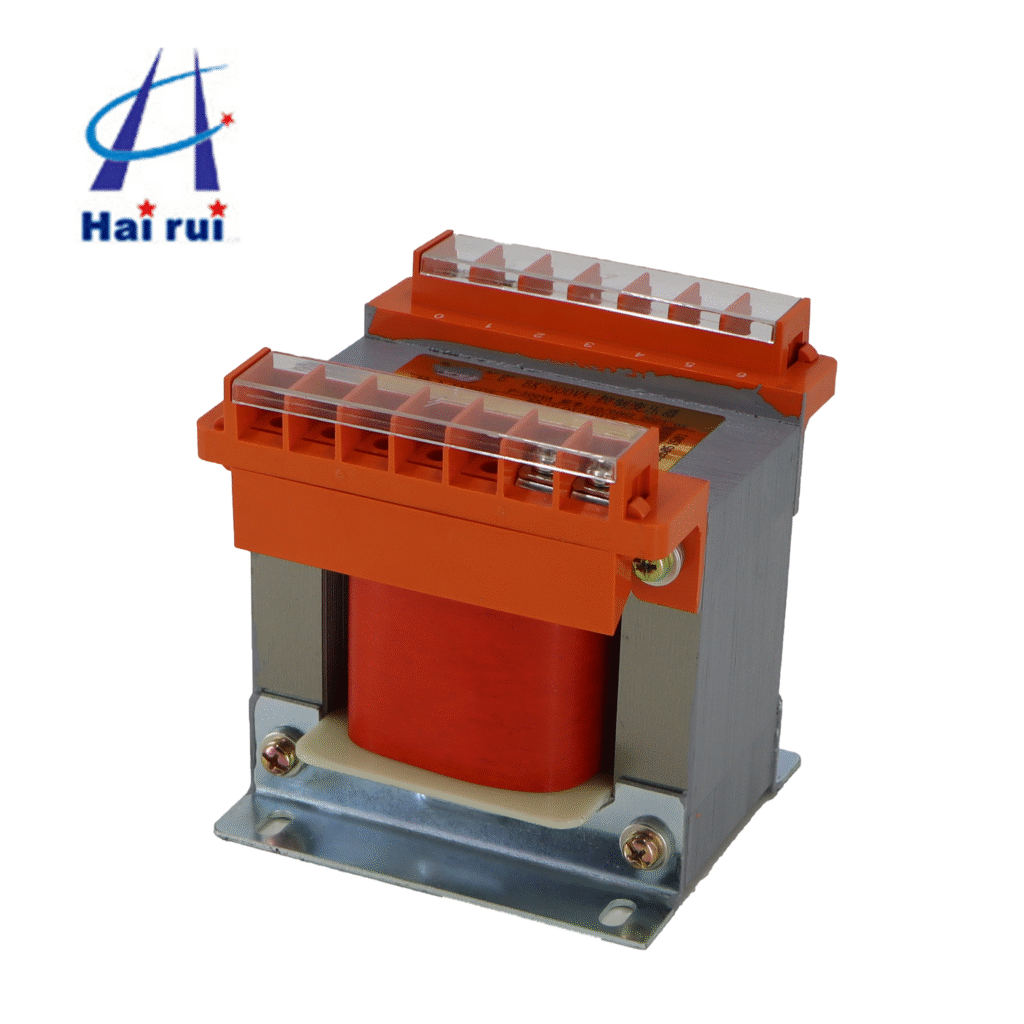
A JBK3 Control Transformer is a device that steps down voltage from a higher level to a lower, safer level for use in control circuits. These transformers are commonly used in industrial automation, HVAC systems, and machinery. They help protect sensitive equipment by providing stable, low-voltage power for relays, contactors, and other control devices.
What Is a Control Transformer? Core Role
Control transformers sit at the heart of many automation and control panels. They deliver a stable, low-voltage supply to control circuits such as relays, timers, indicator lights, and signal processors. In practice, this stability matters because industrial environments are noisy and inconsistent—the momentary dips or surges can cause a control loop to hiccup.
A well-chosen control transformer minimizes these disturbances, ensuring that the control logic receives clean power even when the incoming line voltage wobbles. This reliability translates into fewer nuisance trips, more predictable operation, and easier maintenance. When you think about control transformer applications, picture a panel that houses relays, contactors, and a small PLC.
The transformer is the quiet workhorse, quietly delivering consistent power so the control system can do its job without drama. If you’re evaluating control transformer wiring, the key is to ensure proper isolation and correct VA rating to match the load profile. This approach protects both the control circuitry and the main power circuit from cross-talk and electrical noise.
Want a smoother automation rollout? Start with a transformer that aligns with your control transformer selection guide and your system’s load characteristics. Interested in learning how to compare control transformer types for your specific application? Let’s explore.
Prevents control circuits from voltage spikes on the power side
Look for Class II or reinforced isolation ratings where applicable
VA rating vs load
Undersizing leads to overheating and nuisance trips
Size for peak inrush, not just steady-state load
Thermal endurance
Harsh environments demand durability
Choose higher temperature ratings and rugged housings
Mounting and enclosure
Workspace and accessibility affect serviceability
Panel mount or DIN-rail options; consider ingress protection
This topic also touches on control transformer applications in diverse industries, from manufacturing automation to HVAC control panels. When you map out your control system, include a dedicated section for the transformer’s role in lighting circuits and signaling, as both areas benefit from a stable low-voltage supply.
If you’re preparing a spec sheet, present the transformer’s isolation class, VA rating, voltage ratios, enclosure IP rating, and temperature class in a compact table to aid quick decisions. Are you ready to review a sample specification?
Why Use a Control Transformer?
Control transformer offer several benefits. They improve safety by isolating control circuits from high-voltage sources. They also help reduce electrical noise and prevent damage to control components. In many cases, using a control transformer is required by electrical codes and standards.
Choosing the right size is crucial. The transformer must be able to handle the total load of the control circuit. To calculate the required size, add up the power requirements of all connected devices. For example, if your control circuit includes a relay (10VA), a contactor (20VA), and a timer (5VA), you’ll need a transformer with at least 35VA capacity.
Proper wiring ensures safe and efficient operation. Always follow the manufacturer’s instructions and local electrical codes. Typical wiring involves connecting the primary side to the power source and the secondary side to the control devices. Make sure to use the correct wire gauge and secure all connections.
Control Transformer vs. Power Transformer
Understanding the distinction between control transformers and power transformers is essential for correct system design. A control transformer focuses on providing reliable low-voltage power for control circuits, with emphasis on fast response, thermal stability under intermittent loads, and compact form factors suitable for panel mounting.
In contrast, a power transformer typically handles higher voltage levels and continuous loads, distributing substantial power to motor drives or distribution networks. The design priorities diverge: control transformers optimize for short-duration inrush and isolation quality, while power transformers emphasize efficiency, cooling, and large-scale reliability.
Criterion
Control Transformer
Power Transformer
Typical output
12 to 480 V AC
1 kV and above
Primary use
Control circuits, signaling
Main power distribution, heavy loads
Inrush behavior
Short, manageable
Moderate to high inrush depending on size
Form factor
Compact, panel-mountable
Larger, floor or pole-mount or pad-mounted
Duty cycle
Intermittent to moderate
Continuous operation
When selecting between these transformer types, the decision hinges on the actual load profile and the environment. If your panel is crowded with relays and contactors, a compact control transformer can simplify wiring and reduce enclosure heat load. For main power distribution or heavy machinery, a larger power transformer is the appropriate choice.
For readers seeking practical steps, a control transformer selection guide can walk you through voltage ratios, VA sizing, and mounting considerations. Need examples of how this choice plays out in real plants? We’ll cover typical case scenarios in the FAQ.
Industrial Control Transformer Selection Guide
A thoughtful selection process starts with a clear picture of the control circuit’s needs. Identify the required secondary voltage to match coil voltages, relay coils, sensors, and indicator devices. Then determine the VA rating by analyzing the worst-case inrush across all connected devices, not just the steady-state load.
Consider environmental factors such as ambient temperature, humidity, and the presence of dust or chemicals. The enclosure type matters; ensure the transformer fits within the control panel’s space and meets IP ratings for dust and water ingress. Finally, verify that the selected transformer complies with local electrical codes and industry standards to ensure safe operation.
Primary considerations:
Secondary voltage and coil requirements
VA sizing for peak inrush
Mounting style and enclosure fit
Temperature class and environmental protection
Certification and standards compliance
Would you like a ready-to-use specification template for a control transformer that you can tailor to your project? We can tailor a version that aligns with your industry and component standards.
Wiring and Installation Best Practices
Proper wiring ensures that the control transformer delivers clean, reliable power to the control circuit. Start by labeling primary and secondary leads to avoid mix-ups during maintenance. Use wires with appropriate insulation ratings for the voltage and environment. Keep secondary wiring short and well organized to minimize inductive loops and electromagnetic interference with nearby sensing lines.
Secure the transformer firmly to the panel or enclosure to withstand vibration in industrial settings. If your system uses a DIN-rail, ensure the mounting clip engages properly and that the device remains accessible for service. The goal is to maintain clear separation between power and control wiring to reduce noise transfer.
Below is a compact table you can reference when evaluating wiring considerations:
Wiring aspect
Guidance
Practical tip
Wire gauge
Match to current and insulation rating
Use AWG or mm² standards appropriate for VA load
Routing
Separate from high-power conductors
Use channeling and grommets for protection
Grounding
Attach the transformer core to protective earth
Verify continuity with a multimeter after installation
Safety checks
Follow wiring diagrams from the manufacturer
Do a live-test with current-led indicators before full power
During installation, ask: How will this transformer improve control reliability in this panel? Will the chosen transformer reduce nuisance trips and ensure stable signaling? If you’re not fully confident, consider a professional who specializes in control transformer wiring and panel design. This is a good moment to invite inquiries or schedule a consult.
Emerging Trends in Control Transformer Technology
The field is moving toward smarter, more efficient control transformers that integrate better with modern automation stacks. Some trends include tighter tolerance voltage regulation, improved thermal management through advanced core materials, and compact designs that maintain high isolation in smaller enclosures. Manufacturers are also offering extended temperature ranges, improving reliability in harsh environments such as outdoor enclosures or dusty plants.
In addition, modular enclosure options allow easier upgrades as control circuits evolve, supporting a more flexible control transformer selection strategy. For readers exploring long-tail keywords, consider terms like control transformer applications in smart factories, industrial control transformer in automation panels, and low-voltage control transformer efficiency.
Example Application Scenarios
Scenario A: A mid-sized plastics plant adds a new line of automation controllers. The control panel requires a 120 V secondary to power relay coils and PLC input modules. Selecting a 120 V secondary with a 150 VA rating ensures adequate headroom for peak startup currents. The DIN-rail mounted transformer keeps the enclosure compact and neat.
Scenario B: An HVAC service group outfits a commercial building with a network of sensors and valve actuators. The panel uses a 24 V secondary to energize relays and control fans. A transformer with a 60 VA rating and reinforced isolation helps prevent interference from motor start currents.
Scenario C: A packaging line adds a PLC-based control scheme with multiple sensing lines. A compact, epoxy-encapsulated transformer provides robust isolation and a tight footprint, enabling easier service in a crowded control cabinet.
If you’d like, I can tailor these scenarios to your exact industry and equipment lineup, and generate a bespoke set of long-tail keyword targets for each use case.
Customer Considerations and Ordering Triggers
When customers read about control transformers, they often want to know not only the technical specs but also how the product will affect operation and maintenance. Emphasize reliability, safety, and ease of installation. Include prompts to contact for a quote or to request a detailed spec sheet. For online content, embed clear calls to action like “Contact us for a tailored control transformer solution” or “Request a datasheet and installation guide for your panel.”
FAQ
What is a control transformer used for?
A control transformer provides a stable, low-voltage supply for control circuits such as relays, timers, and indicator lights within industrial automation panels.
How is a control transformer different from a power transformer?
A control transformer focuses on low-voltage, isolated control circuitry with emphasis on reliability and compact design, while a power transformer handles higher voltages and larger, continuous loads.
How do I choose the right VA rating?
Size for peak inrush rather than steady-state load. Include all devices that draw current on startup.
Can I mount a control transformer on a DIN-rail?
Yes, many models are designed for DIN-rail mounting for compact panel layouts.
What safety standards should I look for?
Certifications such as UL, CSA, CE, and relevant insulation and isolation ratings are important to verify.
Do epoxy-encapsulated transformers offer better reliability?
They can provide improved environmental sealing, but the best choice depends on your application and service conditions.
When you wire a 480V to 120V control transformer Wiring correctly, you get stable low‑voltage power for control circuits, PLC I/O, contactor coils, and panel auxiliaries—wired incorrectly, you get nuisance trips, overheated transformers, or even damaged equipment. This guide walks engineers, panel builders, and purchasing teams through how the wiring diagram works, typical 480V primary […]
Buying a Control Transformer Prices sounds simple until you actually try to source one across borders. Suddenly, you are not just comparing a “price”—you are comparing standards, copper and steel exposure, certifications, lead time, logistics, payment terms, and how much customization a supplier is willing to do without turning your RFQ into a science project. […]
In this fast-paced industrial era, reliability matters, and that’s where control transformers take center stage. When was the last time you thought about what powers your machinery, your lighting systems, or those buzzing control panels in your factory? Probably not today. Yet, hidden behind the scenes, control transformers quietly keep electrical systems stable and smooth. Let’s dive […]
We use cookies to enhance your browsing experience, serve personalised ads or content, and analyse our traffic. By clicking "Accept All", you consent to our use of cookies.