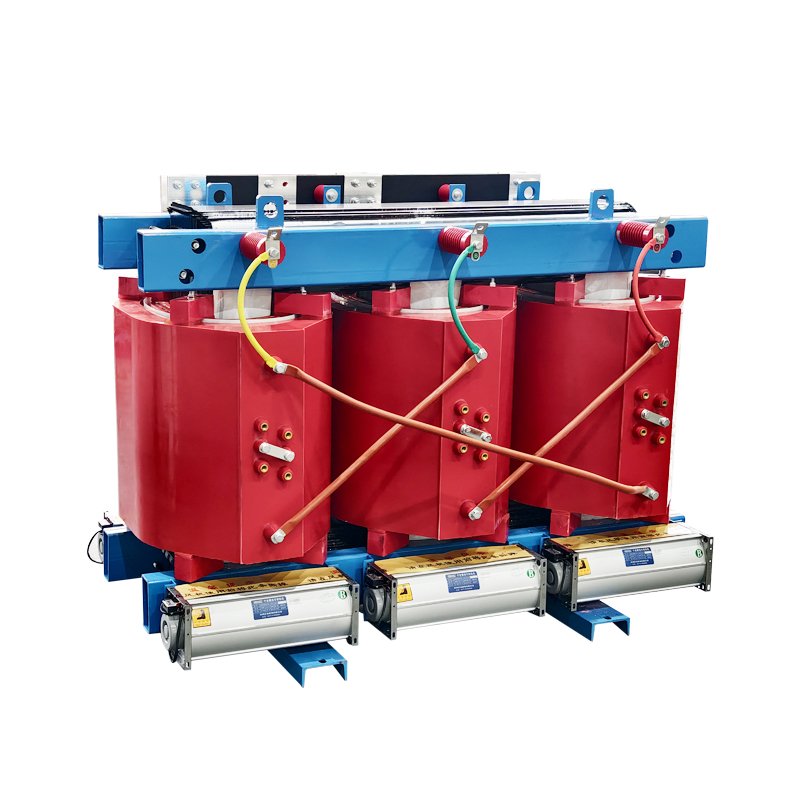
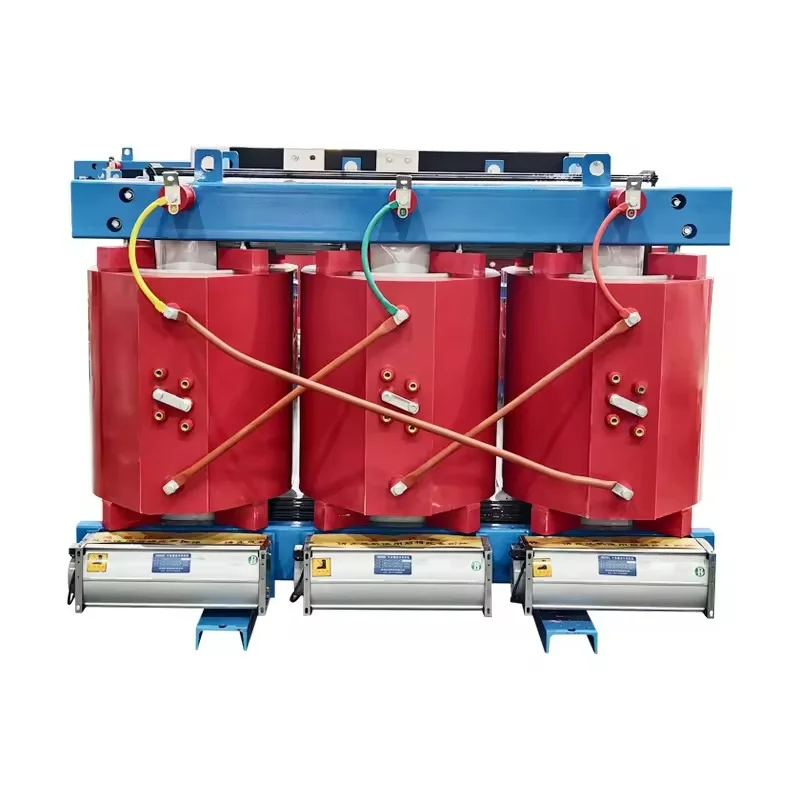
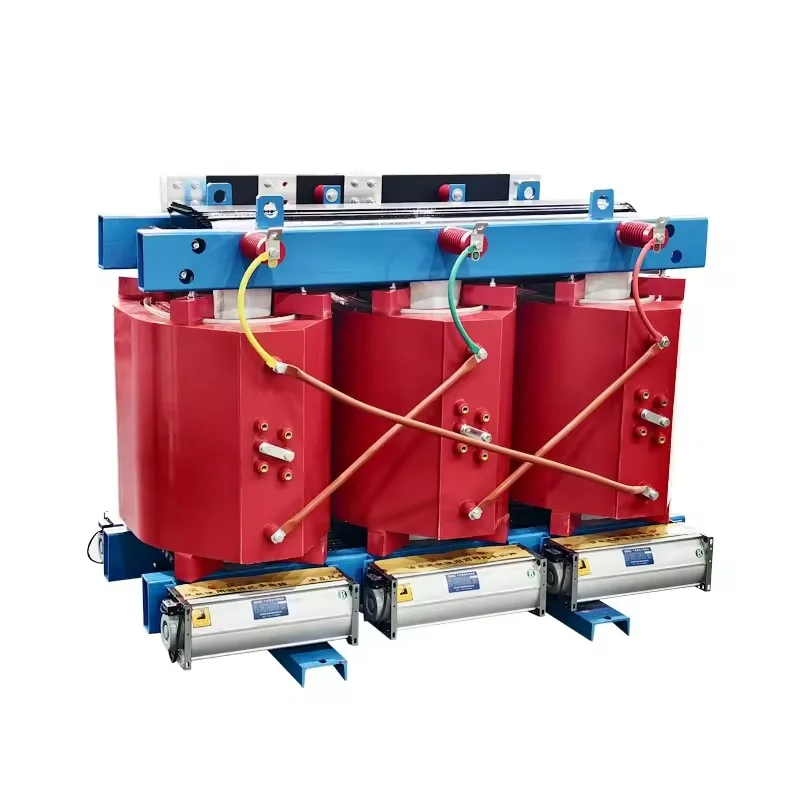
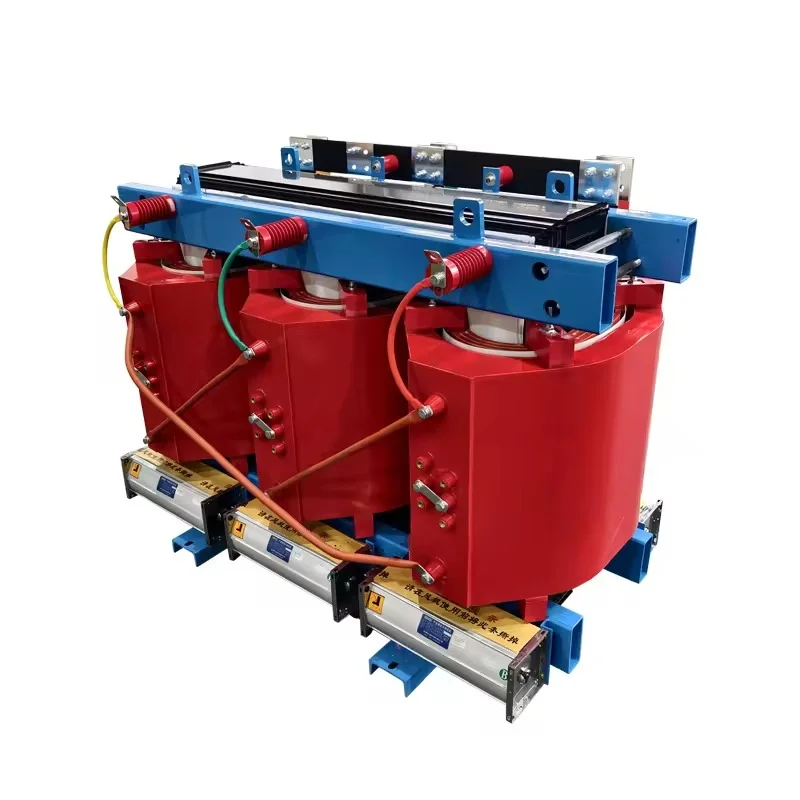
Product Overview
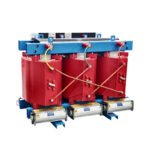
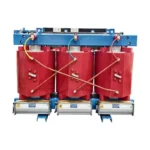
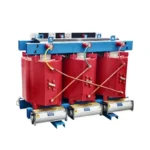
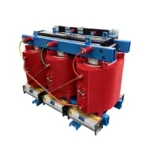
This dry-type transformer page contains 20 kV-class performance data for a 50–2500 kVA range. The listed high-voltage options are 20, 22, and 24 kV, with 0.4 kV low voltage, Dyn11 or Yyn0 connection groups, and B, F, or H insulation-temperature grades. Dimensions and individual loss values vary by rating; final project data must be confirmed from the selected model drawing and datasheet.
Key Selection Data
- Rated capacity range in the performance table: 50–2500 kVA.
- High-voltage options: 20 / 22 / 24 kV.
- Low voltage: 0.4 kV.
- Connection groups: Dyn11 / Yyn0.
- High-voltage tapping range: ±5% or ±2 × 2.5%.
- Insulation level as written in the source: L1125AC50 / L10AC3.
- Insulation-temperature grades: B (100°C), F (120°C), and H (145°C).
- Short-circuit impedance: 6.0% or 8.0%, depending on rating.
Reference Dimensions
| Rated Capacity (kVA) | L | W | H | D | A | |
| 50 | 1180 | 750 | 1010 | 820 | 820 | |
| 100 | 1210 | 780 | 1060 | 820 | 820 | |
| 160 | 1260 | 800 | 1100 | 820 | 820 | |
| 200 | 1310 | 840 | 1100 | 820 | 820 | |
| 250 | 1370 | 880 | 1170 | 820 | 820 | |
| 315 | 1420 | 880 | 1230 | 820 | 820 | |
| 400 | 1450 | 910 | 1280 | 820 | 820 | |
| 500 | 1470 | 910 | 1380 | 820 | 820 | |
| 630 | 1545 | 950 | 1495 | 820 | 820 | |
| 800 | 1600 | 980 | 1560 | 820 | 820 | |
| 1000 | 1620 | 1050 | 1560 | 950 | 820 | |
| 1250 | 1760 | 1050 | 1560 | 950 | 820 | |
| 1600 | 1800 | 1070 | 1660 | 950 | 820 | |
| 2000 | 1840 | 1100 | 1710 | 1070 | 950 | |
| 2500 | 1900 | 1160 | 1880 | 1070 | 1070 | |
| 3150 | 1980 | 1240 | 1920 | 1070 | 1070 | |
| Note:As product dimensions may be continuously improved,the outline dimensions provided in this sample are for reference only.For special dimensions,we can design and manufacture according to user requirements.Please contact our company in a timely manner! The voltage can be interchanged between 20kV and 10kV,and the technical parameters comply with the standards of 20kV class. | ||||||
The dimension table is for reference. The source note states that product dimensions may be improved and that the final outline drawing governs.
20kV-Class Performance Data
| Rated high voltage:20kV Rated low voltage:0.4kV | Connection Group:Dyn11 or Yyn0 | |||||||||
| Insulation Level:L1125AC50/L10AC3 | ||||||||||
| High voltage tapping range:±5%or 2×2.5% | ||||||||||
| Rated Capacity (KVA) | Voltage Combination(kV) | Connection Group Designation | No-load Loss(kW) | Load Losses(kW)under Different Insulation Temperature Resistance Grades | No-load Current % | Short-circuit Impedance UK(%) | ||||
| High Voltage | High voltage tapping range | Low Voltage | B(100℃) | F(120℃) | H(145℃) | |||||
| 50 | 20 22 24 | ±5 ±2×2.5 | 0.4 | Dyn11 Yyn0 | 0.380 | 1.230 | 1.300 | 1.390 | 2.4 | 6.0 |
| 100 | 0.600 | 1.980 | 2.100 | 2.250 | 1.8 | |||||
| 160 | 0.750 | 2.470 | 2.600 | 2.800 | 1.8 | |||||
| 200 | 0.820 | 2.950 | 3.100 | 3.310 | 1.6 | |||||
| 250 | 0.940 | 3.440 | 3.500 | 3.910 | 1.5 | |||||
| 315 | 1.080 | 4.100 | 4.300 | 4.600 | 1.4 | |||||
| 400 | 1.280 | 4.900 | 5.100 | 5.460 | 1.4 | |||||
| 500 | 1.500 | 5.800 | 6.100 | 6.500 | 1.2 | |||||
| 630 | 1.700 | 6.880 | 7.200 | 7.750 | 1.2 | |||||
| 800 | 1.950 | 8.230 | 8.700 | 9.300 | 1.2 | |||||
| 1000 | 2.300 | 9.720 | 10.300 | 11.000 | 1.0 | |||||
| 1250 | 2.650 | 11.500 | 12.150 | 13.000 | 1.0 | |||||
| 1600 | 3.100 | 13.780 | 14.600 | 15.650 | 1.0 | |||||
| 2000 | 3.600 | 16.300 | 17.250 | 18.500 | 0.8 | |||||
| 2500 | 4.300 | 19.350 | 20.400 | 21.800 | 0.8 | |||||
| 2000 | 3.600 | 17.800 | 18.800 | 20.000 | 0.8 | 8.0 | ||||
| 2500 | 4.300 | 21.300 | 22.400 | 23.900 | 0.8 | |||||
| Note:The load losses listed in the table are values at the reference temperature in parentheses(as specified in GB1094.11). | ||||||||||
The source table references GB1094.11 for the listed load-loss reference temperatures. Confirm the applicable standard and all guaranteed values for the ordered model.
Selection Guidance
Provide capacity, primary and secondary voltages, frequency, connection group, tapping range, impedance, loss requirements, insulation and temperature class, enclosure, cooling arrangement, installation environment, applicable standard, dimensions, accessories, and quantity. Do not use range-level values as a guaranteed single-model specification.
Frequently Asked Questions
What capacity range is covered by the performance table?
The listed performance table covers 50–2500 kVA. A separate reference-dimension table also contains a 3150 kVA row, but no corresponding 3150 kVA performance row is shown.
What high- and low-voltage values are listed?
High-voltage options are 20, 22, and 24 kV, with 0.4 kV low voltage.
Which connection groups are listed?
Dyn11 and Yyn0 are listed. Confirm the required group for the selected model.
Are the displayed dimensions final?
No. The source note identifies them as reference values and states that the final product drawing governs.
What should be provided for a quotation?
Provide capacity, voltage ratio, frequency, connection group, tapping range, impedance, loss and efficiency requirements, insulation class, enclosure, dimensions, applicable standard, quantity, and destination.
Request a Quote
Send the required transformer rating and project conditions for model-specific data confirmation and quotation.
FAQ
What capacity range is covered by the performance table?
The listed performance table covers 50–2500 kVA. A separate reference-dimension table also contains a 3150 kVA row, but no corresponding 3150 kVA performance row is shown.
What high- and low-voltage values are listed?
High-voltage options are 20, 22, and 24 kV, with 0.4 kV low voltage.
Which connection groups are listed?
Dyn11 and Yyn0 are listed. Confirm the required group for the selected model.
Are the displayed dimensions final?
No. The source note identifies them as reference values and states that the final product drawing governs.
What should be provided for a quotation?
Provide capacity, voltage ratio, frequency, connection group, tapping range, impedance, loss and efficiency requirements, insulation class, enclosure, dimensions, applicable standard, quantity, and destination.
Request Quote
Tell us your specifications, quantity, or application scenario and we will reply with a tailored quote.