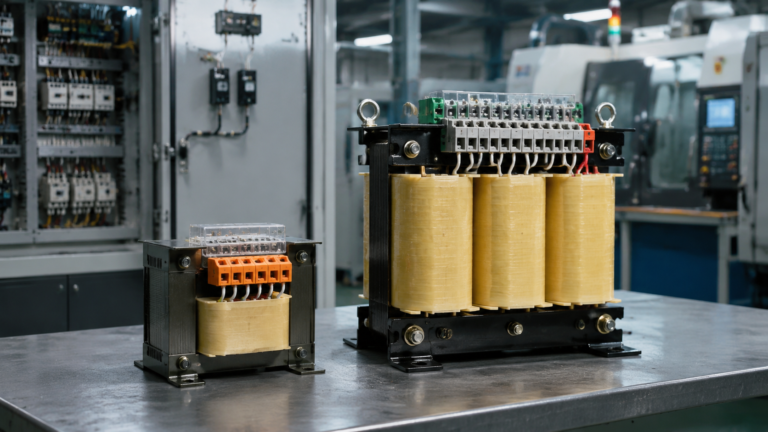
Industrial Control Transformer Enhancing Power Reliability with the Right
Published: Author: Hairui Electric
In today’s competitive manufacturing and automation world, Industrial Control Transformer power stability is everything. When you’re running machines 24/7, a single voltage drop or short circuit event can cause unwanted downtime—and in industries like processing or automation, downtime equals lost revenue. That’s where an industrial control transformer steps in.
Let’s break down why this small but crucial component deserves a big spot in your design considerations.
What Is an Industrial Control Transformer?
An industrial control transformer (ICT)—sometimes called a machine tool transformer—is a specialized electrical transformer designed to provide precise, stable voltage to control circuits in industrial systems. Unlike general-purpose transformers, ICTs are optimized for short-term overloads that occur during equipment startup or relay operation.
In simple terms, it ensures that your control panel always gets the power it needs—clean, consistent, and safe—even when the main power supply fluctuates.
Feature
Description
Primary function
Supplies stable voltage for control circuits
Typical input voltage
230V, 380V, 480V AC
Output range
24V, 110V, 120V AC control signals
Applications
CNC machines, motor starters, automation panels
Design focus
Withstands inrush currents and voltage surges
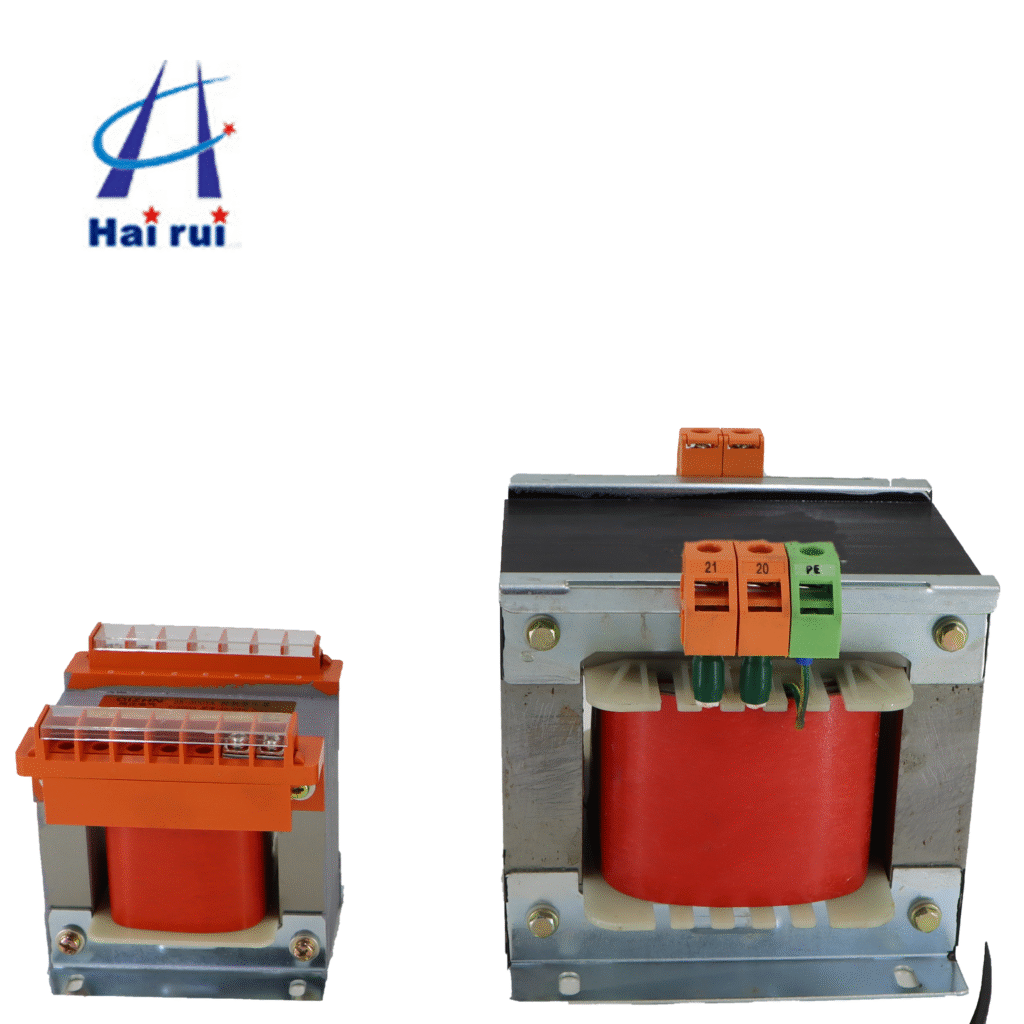
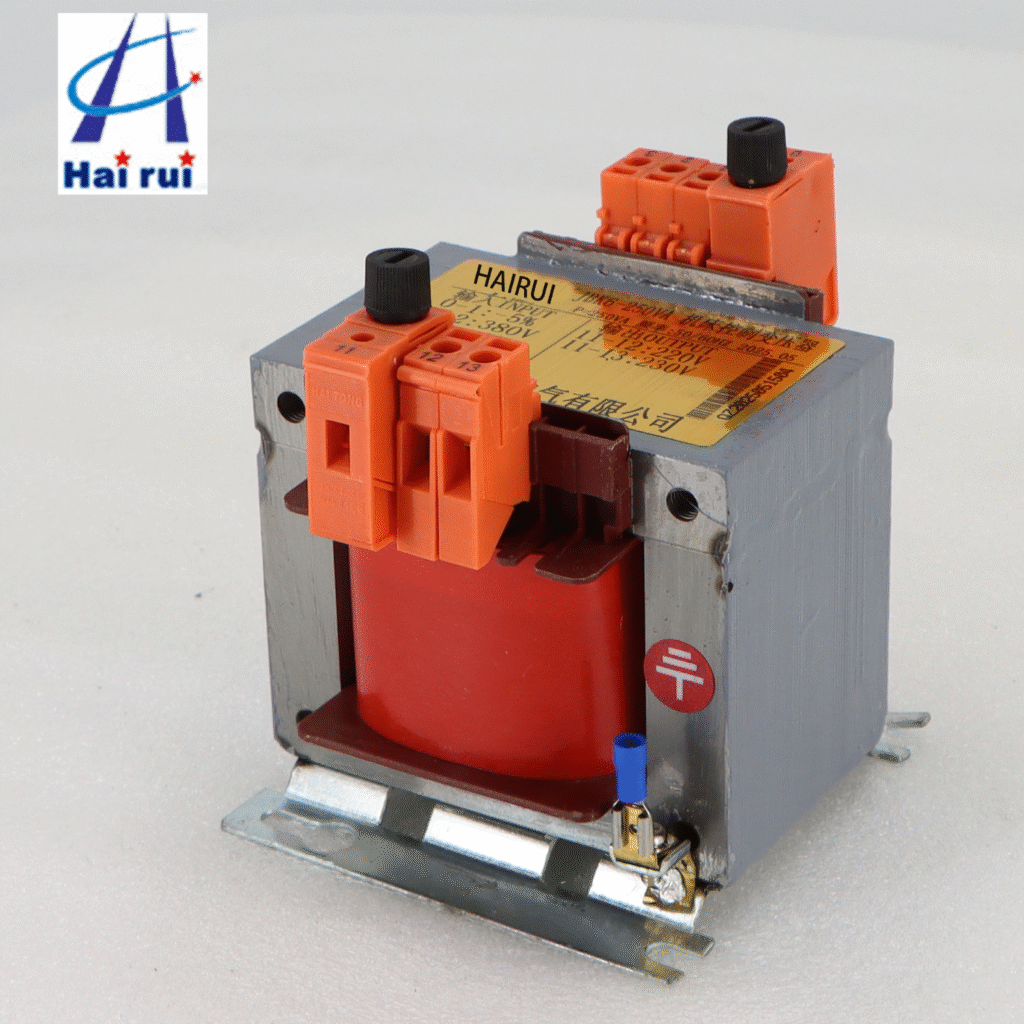
BK Series Industrial Control Transformer
Why Industry Uses Control Transformers
Have you ever noticed why motor starters and relays in factory automation panels rarely fail from voltage dips? That’s often because of industrial control transformers.
These transformers isolate the control circuit from the main power circuit—ensuring worker safety and equipment longevity. They also protect delicate electronic components from surges and harmonics, which are common in heavy-duty industrial environments.
Here’s why B2B procurement teams and project engineers prioritize high-quality ICTs:
Voltage stability: Keeps current consistent to avoid nuisance tripping in automation panels.
Reduced downtime: Protects against fluctuations during motor startup or overloads.
Long equipment life: Extends the lifespan of control components like relays and sensors.
Safety compliance: Meets UL, IEC, and CE regulatory standards.
If your system demands reliability—particularly in harsh conditions—this is not an accessory. It’s essential equipment.
Industrial Applications Where Industrial Control Transformer Shine
Control transformers are the backbone of many electrical systems, particularly those that use control circuits for signals and commands. You’ll find them working quietly inside:
Industry
Application
Purpose
Automation and Robotics
PLC cabinets and servo circuits
Provides isolated control voltage
Manufacturing
Machine tool panels
Maintains consistent relay operation
Oil & Gas
Pump stations and field equipment
Protection against unstable supply
HVAC systems
Motor drive controllers
Reduces start-up voltage spikes
Renewable energy
Solar and wind control gear
Ensures safety and voltage balance
A reliable industrial control transformer increases system performance while decreasing risk—particularly in medium to large-scale facilities with complex control systems.
How to Select the Right Industrial Control Transformer
Choosing the correct ICT for your project is more than just matching voltage ratings. You need to assess several parameters that affect performance and safety.
Selection Criteria
What It Means
Example
Input voltage
Must match your supply line
480V, 400V, or 230V AC
Output voltage
Control circuit requirement
Typically 24V or 110V
VA rating (Power capacity)
Determines load capacity
50 VA – 5000 VA
Frequency
Match with system frequency
50/60 Hz compatible
Environment tolerance
Depends on installation site
Dust, heat, vibration ratings
Certifications
Safety and compliance marks
UL, CE, ISO
A transformer that’s underpowered or uncertified might look cheaper upfront but can fail prematurely—costing far more in replacement and maintenance.
Looking to size your transformer correctly? Always allow a 20–25% safety margin for inrush current to prevent overload.
Affordable price, huge discount!
Upgrade your power system today with reliable Industrial Control Transformer! Contact us now for control transformer custom solutions and expert support.
Key Differences Industrial vs. General-Purpose Transformers
While standard power transformers distribute energy efficiently, they lack the short-term overload capability and low impedance characteristics required by control circuits.
Category
Control Transformer
General-Purpose Transformer
Design Goal
Supplies stable low voltage control power
Transfers bulk power efficiently
Inrush Handling
High (can handle surge loads)
Moderate
Voltage Regulation
Tight, even under short loads
Varies with load
Safety Isolation
Yes, between circuits
Not always present
Applications
Control panels, PLCs, machines
Lighting, power distribution
If your system involves relay triggers, solenoid valves, or PLC-based automation, don’t risk downtime—opt for an industrial-grade transformer.
Benefits for OEMs and System Integrators
From a B2B standpoint, investing in premium transformers streamlines both manufacturing and maintenance operations. OEM engineers, panel builders, and automation integrators benefit from:
Smooth component integration – Easy panel mounting and wiring compatibility.
Custom voltage and VA options – Flexibility for global manufacturing standards.
Consistent quality assurance – Long-term supply reliability for multiple sites.
Imagine your control cabinet built for a 15-year lifecycle—with minimal unplanned service interruptions. That’s the power of a high-performing ICT.
Energy Efficiency and Sustainability
Modern control transformers are designed not only for power reliability but also for energy efficiency.
Manufacturers now use low-loss laminated cores and thermal Class B or F insulation to reduce wasted heat. For facilities adopting green initiatives or ISO 50001 energy management systems, switching to efficient ICTs can contribute to measurable power savings.
Even better, smart monitoring add-ons—like digital temperature and voltage sensors—integrate easily with industrial IoT dashboards. This lets engineers diagnose issues remotely before they escalate.
Maintenance Tips for Longer Transformer Life
Proper installation and care dramatically affect transformer longevity.
Ensure adequate ventilation to prevent overheating.
Keep a tight torque on connection terminals to prevent arcing.
Regularly inspect insulation and coils for dust or moisture buildup.
Avoid sustained operation above 80% of rated load.
Schedule thermal scans during preventive maintenance checks.
Proactive care means fewer unexpected shutdowns—and less strain on your maintenance budget.
In industrial systems, small electrical components often make the biggest difference. A thoughtfully chosen industrial control transformer protects your automation system, reduces maintenance, and ensures safety—all while maintaining consistent performance under demanding conditions.
If you’re sourcing transformers for new control panels, contact our engineering team today for a quote or technical consultation. Whether you need standard models or customized designs, we’ll help you get the most stable and efficient solution for your operation.
FAQ
u003cstrongu003eWhat size industrial control transformer do I need?u003c/strongu003e
Choose based on your control circuit’s total VA load plus a 20–25% inrush margin.
u003cstrongu003eCan I use a general transformer instead of a control transformer?u003c/strongu003e
Not recommended—control transformers are designed specifically for transient overloads and stable secondary voltage regulation.
u003cstrongu003eHow do I know if my transformer meets standards?u003c/strongu003e
Look for trusted certifications like u003cstrongu003eUL 5085u003c/strongu003e, u003cstrongu003eCSAu003c/strongu003e, or u003cstrongu003eIEC 61558u003c/strongu003e printed on the nameplate.
u003cstrongu003eWhat’s the typical lifespan of an industrial control transformer?u003c/strongu003e
Usually u003cstrongu003e10 to 20 yearsu003c/strongu003e, depending on load cycles, ambient temperature, and maintenance frequency.
u003cstrongu003eCan you customize voltage or VA ratings?u003c/strongu003e
Yes! Many suppliers offer u003cstrongu003ecustom-built transformersu003c/strongu003e tailored to your project’s input/output specifications and enclosure rating.
Affordable price, huge discount!
Upgrade your power system today with reliable Industrial Control Transformer! Contact us now for control transformer custom solutions and expert support.
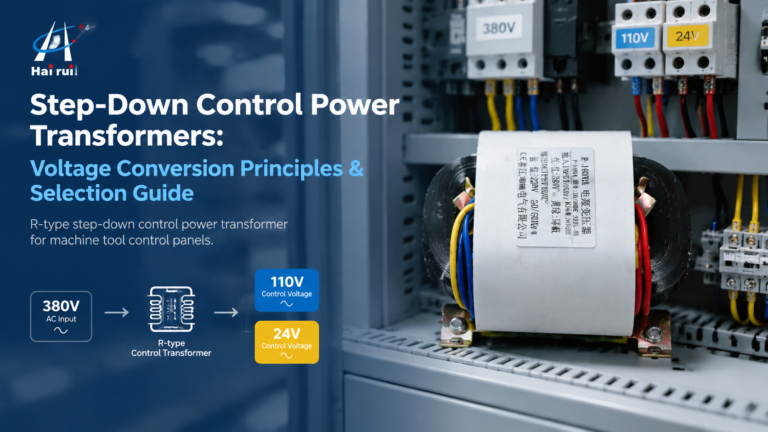
How step-down control power transformers convert 380V/480V line voltage to 110V or 24V control power: turns ratio, VA sizing with inrush, voltage-drop behaviour, wiring and selection.
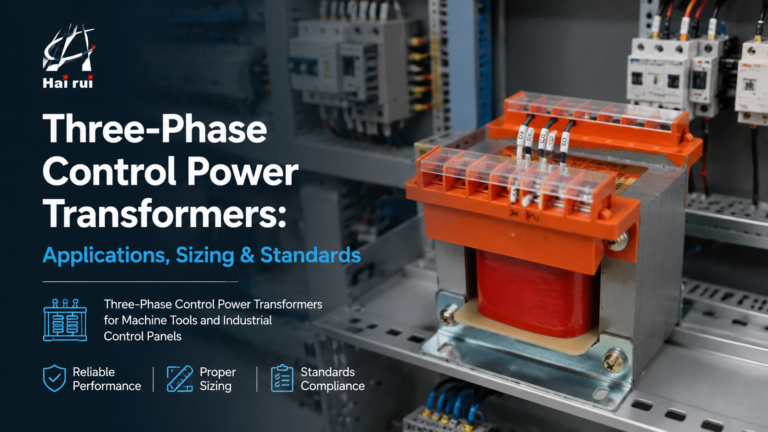
How three-phase control power transformers work, how to size them for machine tool and control-panel loads, and the delta/wye, standards and protection choices that matter in the field.